The American Institute of Architects (AIA) has announced Paul Revere Williams, FAIA as the posthumous winner of the 2017 AIA Gold Medal. With a portfolio of nearly 3,000 buildings over five decades, Williams’ career was notable for breaking boundaries within the profession as the first black member of the AIA.
Digitally modeling objects from real life has just become easier.
Tech innovation company InstruMMents has unveiled a new functionality to their 01 portable dimension scanner that allows you to capture the 3D curves of any surface. Logging in to the Pro App, users can then track, share and export the curves into key 3D formats, allowing you to quickly recreate any desired object in 3D.
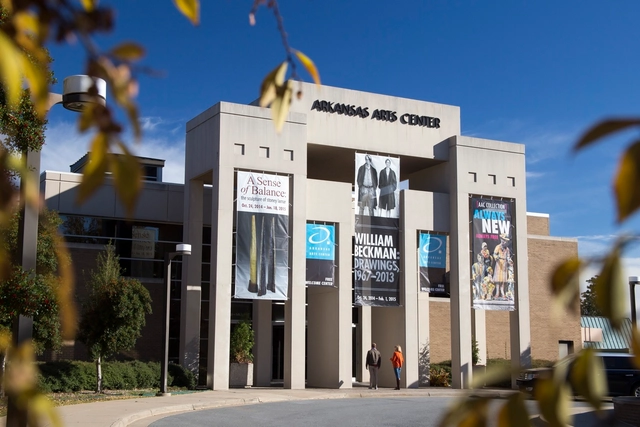
Studio Gang has been announced as the design architect for the $55-65 million expansion of the Arkansas Arts Center (AAC), located in Little Rock, Arkansas, beating out finalists Allied Works, Shigeru Ban Architects, Thomas Phifer and Partners and Snøhetta. Consisting of a renovation to existing theater and studio spaces, new education facilities for families and gallery space to house the museum’s expanding art collection, the project will be Studio Gang’s first art museum commission.
This week London's Science Museum will open The Winton Gallery, a new space dedicated to the study and exploration of mathematics, designed by Zaha Hadid Architects. While this is the practice's first permanent public museum exhibition, it also represents the first UK project to open since the death of its eponymous founder and director.
Inspired by the Handley Page aircraft, the design of the space was conceived through observing equations of airflow used in the aviation industry. The layout and lines of the gallery therefore represents the movement of air that would have flowed around this historic aircraft in flight – a metaphor which extends from the positioning of the showcases and benches to the three-dimensional curved surfaces of the central pod structure.
https://www.archdaily.com/801015/inside-zaha-hadid-architects-new-mathematics-gallery-for-the-london-science-museumAD Editorial Team
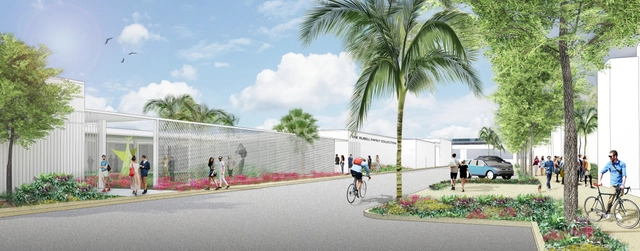
The Rubell Family Collection/Contemporary Arts Foundation announces its move to a newly design space by Selldorf Architects, a 100,000 square foot museum in Miami's Allapattah District that will open in December 2018.With 40 exhibition galleries, a research library, lecture hall, event space, sculpture garden, and restaurant, the Rubell Family will be able to expand their programming and showcase a large proportion of their collection.
Silver Medal: Crafts Vault / Thomas Chee. Image Courtesy of RIBA
The Royal Institute of British Architects (RIBA) announced the President’s Medals Student Awards at a special event today in London. The awards, recognised as the world’s most prestigious in architectural education, were inaugurated in 1836 (making them, including the RIBA Gold Medal, the institute's oldest award). Three medals in particular—the Bronze for a Part I student (Bachelor level), the Silver for a Part II student (Masters level), and the Dissertation Medal—are awarded to “promote excellence in the study of architecture [and] to reward talent and to encourage architectural debate worldwide.” In addition to these, the winners of the Serjeant Award for Excellence in Drawing and the SOM Foundation Fellowships alongside a rostra of commendations have also been announced.
https://www.archdaily.com/800953/2016-riba-presidents-medals-winners-announcedAD Editorial Team
Videos
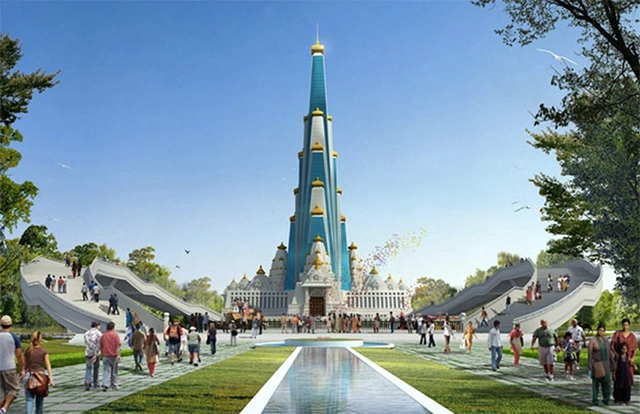
Courtesy of Vrindavan Chandrodaya Mandir, InGenious Studio
Construction is underway on a 700 foot (213 meter) tall Hindu temple in Uttar Pradesh, India that, upon completion, will be the world’s tallest religious building. Designed by Indian firm InGenious Studio, the structure (named “Vrindavan Chandrodaya Mandir”) will surpass the Ulm Minster in Germany, the current tallest church at 530 feet (162 meters).
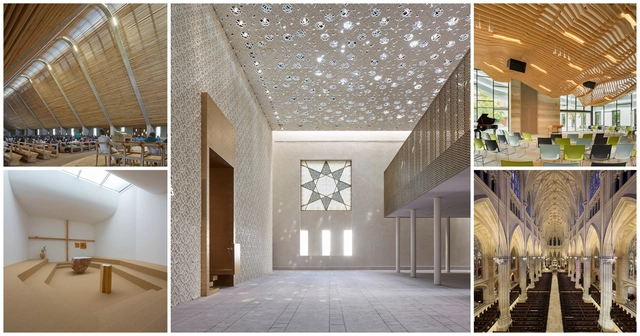
Each year, Faith & Form magazine and the Interfaith Forum on Religion, Art and Architecture (IFRAA) reward the best religious architecture, design and art for religious spaces. In their 2016 awards, the jury recognized 28 projects across 10 categories, with almost half of the winners designed for sites outside of North America. Aside from this diversity of location, another trend in the awards was a tendency toward material honesty and simplicity. "Several jurors were impressed with how designers used an economy of means with simple, elegant materials to meet the needs of congregations," said Michael J Crosbie, editor-in-chief of Faith & Form, adding that "a reverence for natural materials was seen in many submissions, and in winning projects." Read on to see all 28 winners.
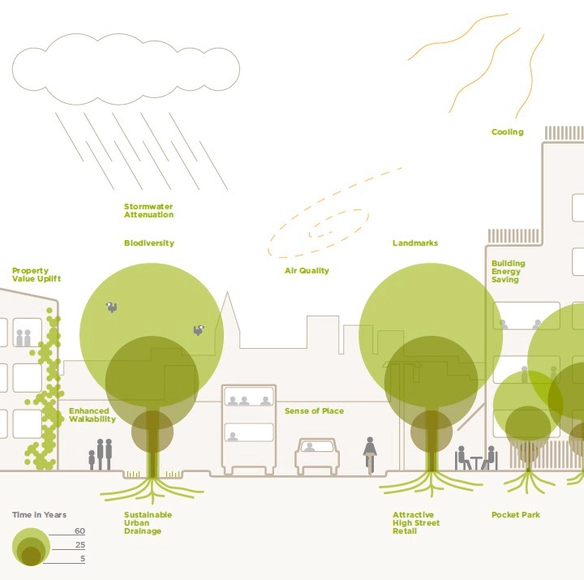
Tree and Design Action Group is a group that “shares the collective vision that the location of trees, and all the benefits they bring, can be secured for future generations through better collaboration in the planning, design, construction and management of our urban infrastructure and spaces.”
“Trees make places look and feel better, as well as playing a role in climate proofing our neighborhoods and supporting human health and environmental well-being, trees can also help to create conditions for economic success.” The Trees in the Townscape guide presents a modern approach to urban forestry, providing officials and professionals with the principles and references needed to realize the potential of vegetation in urban areas.
This is an approach that keeps pace with and responds to the challenges of our times. “Trees in the Townscape offers a comprehensive set of 12 action-oriented principles which can be adapted to the unique context of [any] own town or city.”
Novotown is China’s latest cultural and creative incubator, designed by Aedas as an iconic destination on Hengqin Island in Zhuhai, China. Located just five minutes from Macau, the 120,000-square meter cultural and entertainment complex aims to straddle the roles of tourist destination and local icon.
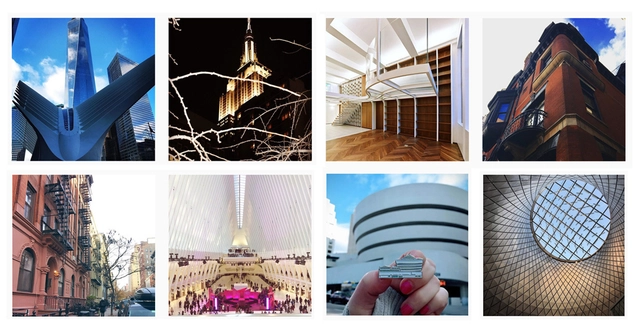
In 2016, Instagram grew from popular picture viewing app to essential social media tool with over 300 million active users and 95 million photos and videos per day. A digital journal of sorts, the platform is now the best way to let your friends and followers know where you are, what you’re doing or what inspires you.
Our own instagram page, curated by our founder and Editor-in-Chief David Basulto, is a travel feed of fantastic architecture from around the world. But which places and buildings were Instagram users’ favorites this year? Check out the list of most geotagged cities, locations, museums and hotels below!
It's that time of year again! At ArchDaily we clearly appreciate holiday cards with an architectural spin, and we want to see your card designs. Whether that involves a Paul Rudolph the red-nosed reindeer, an ornament detail or even a gingerbread Villa Savoye, here's a chance to submit your own architectural holiday card to be hung above ArchDaily's digital mantle.
https://www.archdaily.com/800565/call-for-submissions-2016-holiday-card-challengeAD Editorial Team
Wendell Burnette Architects has released images of their design for Saudi Arabia’s 1st UNESCO World Heritage Site, the MADA’IN SALEH or HEGRA south of Petra; which has recently been approved by The Saudi Commission for Tourism & National Heritage.
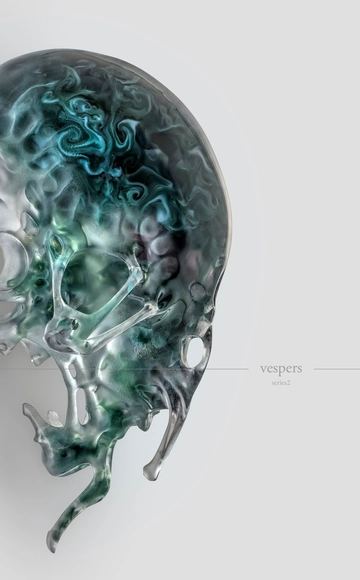
In the ancient world, traditional death masks were believed to strengthen and protect the soul of the dead as they progressed to the afterlife. It was this mythical notion of transition from death to new life that inspired Vespers, a collection of death masks from Neri Oxman and her team at MIT’sMediated Matter Group.
Ziya Imren Architects has released its plans for Re-Naturing the Kizilirmak in Turkey, a new eight-kilometer-long urban design project around the Kizilirmak River. As the longest inland river in Turkey, the Kizilirmak, also known as the Red River, “has been regarded as a hard edge to the city due to access and safety concerns.” After recent municipal advancements, many areas around the river have been opened to a design competition with the goal of integrating the riverfront into the existing city fabric.
MAD Arkitekter and Asplan Viak have collaborated to create a feasibility study for Visjon Dokken, an idea for a 25-hectare urban development dock that could become a new center for “residential, business park, commute, and energy sufficient systems.”
Located in Bergen Harbor in Norway, the project would be the second largest development in the country and could house 3,500 dwellings and 8,000 workspaces, 37,000 square meters of public parks, as well as a connected walkway system and bicycle paths.
M CO Design has released its designs for “Dragon’s Link,” a new dragon-inspired, mixed-use infrastructure on the south side of Hong Kong Island “that will serve a large part of the community and will enhance a local historic monument,” the Tai Tam Dam, which will celebrate its 100th anniversary this coming February.
Drawing inspiration from local traditions and the natural topography of Hong Kong, the project will create new connections within an existing network of roads and hiking trails in Tai Tam Country Park in “a juxtaposition of old and new,” in order to improve user experience and infrastructure.
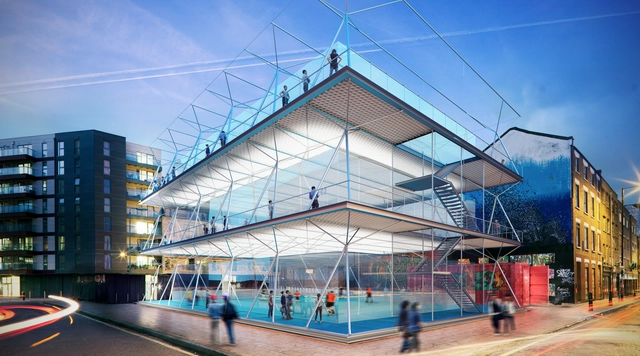
Architectural firm AL_A has unveiled its design for Pitch/Pitch, a series of 5-a-side soccer pitches designed for unused or temporarily vacant lots across London, as well as in other cities internationally.
Created as a response to shortage of sport space in inner cities, the project is meant to be fast and easy to construct, “meaning it could be set up for a fortnight to coincide with a World Cup tournament, or last for a year, bringing use to vacant sites that might otherwise lie dormant.”
After working with Arup, the practice developed a modular system that utilizes a lightweight carbon-fiber structure, a material generally associated with the aerospace industry, but that is emerging architecturally at larger scales.
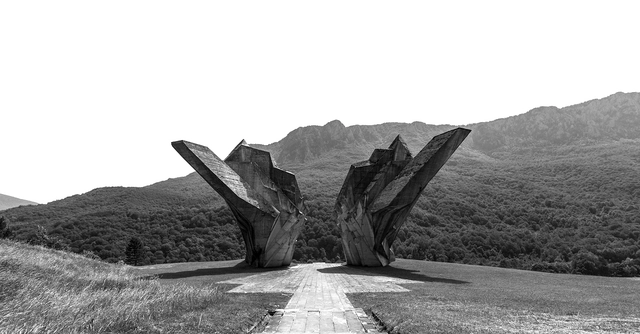
For many years, Yugoslavia’s futuristic “Spomenik” monuments were hidden from the majority of the world, shielded from the public eye by their remote locations within the mountains and forests of Eastern Europe. That is, until the late 2000s, when Belgian photographer Jan Kempenaers began capturing the abstract sculptures and pavilions and posting his photographs to the internet. Not long after, the series had become a viral hit, enchanting the public with their otherworldly beauty. The photographs were shared by the gamut of media outlets (including ArchDaily), often attached to a brief, recycled intro describing the structures as monuments to World War II commissioned by former Yugoslavian president Josip Broz Tito in the 1960s and 70s.
This accepted narrative, however, may not be entirely accurate, as Owen Hatherley writes in this piece for the Calvert Journal. In the article, Hatherley explains the true origins of the spomenik, and how this misconception has affected the way we view the structures and the legacies of the events they memorialize.
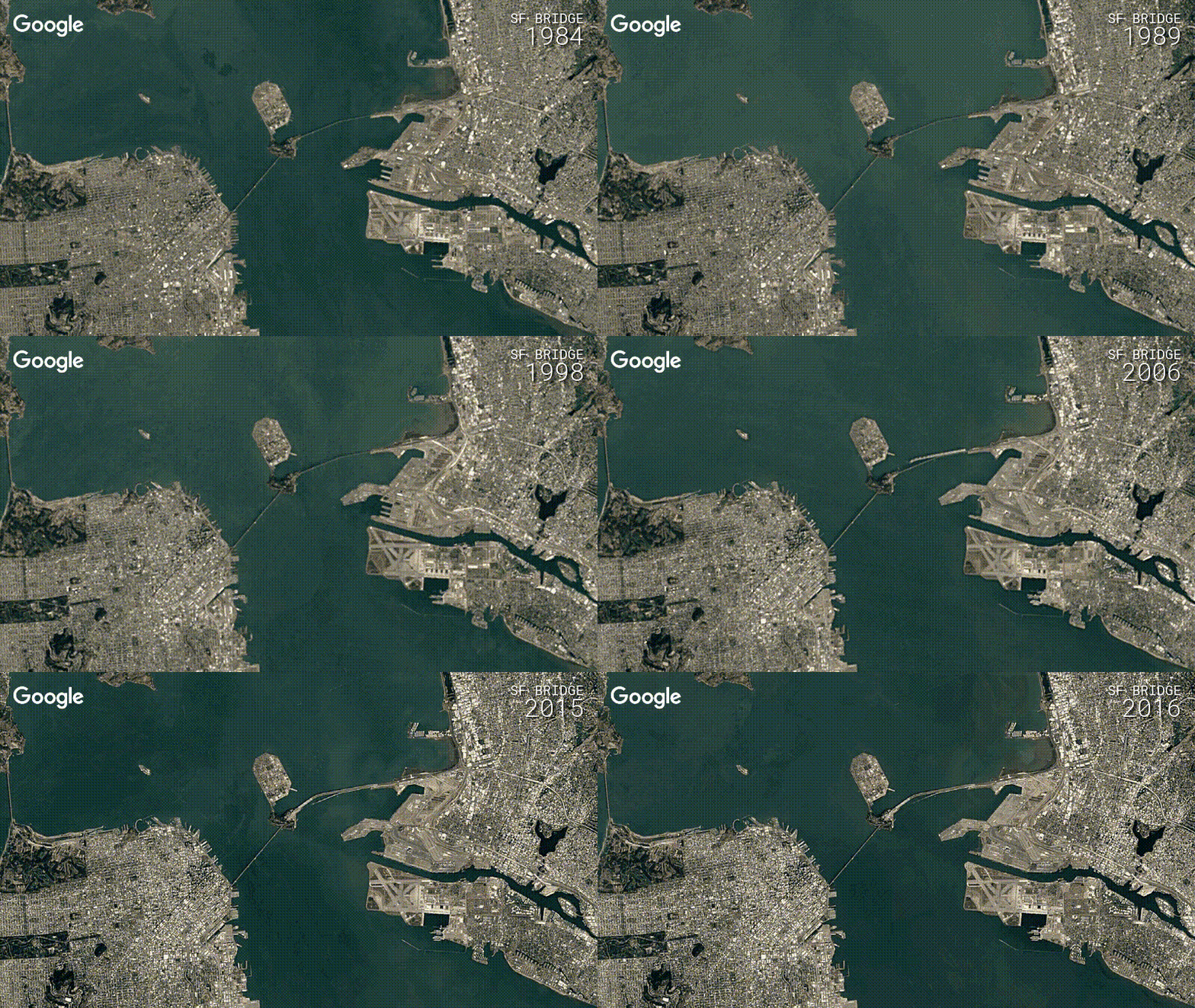
Google Earth has released an update to its Timelapse feature, giving viewers a better look at the rapid expansion of the world’s urban areas between 1984 and 2016.
Originally released in 2013 in partnership with TIME and NASA, the update adds in four more years of data, as well as petabytes of imagery data from two new satellites, Landsat 8 and Sentinel-2, to provide clearer views of new developments and the recent effects of climate change on our natural environments.
Even as architecture moves deeper into the digital realm, drafting and rendering by hand remains quintessential to the craft. The George Architect channel on YouTube—managed by Reza Asgaripour and Avdieienko Heorhii—aims to inspire both practitioners and fans of architecture by demonstrating new ways of depicting the built environment with impeccable style. Tune in to see how you can improve your own sketches.
In collaboration with Kistefos Museum, photographer Frédéric Boudin has captured Jeppe Hein's installation "Path of Silence," now permanently located in Jevnaker near Oslo. The sculpture is inspired by the topography of the Kistefos Sculpture Park, creating a conversation between the installation and its site by adapting the park's stepped slope and terraces to a freeform profile.
The designs of the Zaha Hadid-created statuettes to be handed out at this year’s BRIT Awards have been unveiled. One of Hadid’s final commissions before her death this March, the design consists of a family of 5 interrelated trophies take the form of abstracted female figures representing diversity. One of those family members, meant to represent Britannia, the female personification of Great Britain, will be awarded to musicians for their victories in the BRIT Awards ceremony this February.
The Lisbon Architecture Triennale seeks a Chief Curator or Curatorial Team for its fifth international edition, to be held in Lisbon (Portugal) from October to December 2019.





_-_Aerial_view.jpg?1480578499&format=webp&width=640&height=580)
_-_Heart_of_China_Garden.jpg?1480578509 "© Aedas")
_-_Project_overview.jpg?1480578525 "© Aedas")
_-_Creative_studios_1.jpg?1480578494 "© Aedas")
_-_Western_entrance_to_the_retail_ring.jpg?1480578516 "© Aedas")
_-_Aerial_view.jpg?1480578499)

.jpg?1480955128&format=webp&width=640&height=580)
.jpg?1480954917 "model images by Bill Timmerman")
.jpg?1480955095 "Courtesy of Wendell Burnette Architects")
.jpg?1480955043 "Courtesy of Wendell Burnette Architects")
.jpg?1480955462 "Courtesy of Wendell Burnette Architects")
.jpg?1480955128)


.jpg?1480654086&format=webp&width=640&height=580)
.jpg?1480654159 "Courtesy of Ziya Imren Architects")
.jpg?1480654024 "Courtesy of Ziya Imren Architects")
.jpg?1480654143 "Courtesy of Ziya Imren Architects")
.jpg?1480654189 "Courtesy of Ziya Imren Architects")
.jpg?1480654086)
_web.jpg?1480391508&format=webp&width=640&height=580)
_web.jpg?1480391485 "Courtesy of Mad Arkitekter and Asplan Viak")


_web.jpg?1480391497 "Courtesy of Mad Arkitekter and Asplan Viak")
_web.jpg?1480391508)