
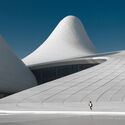
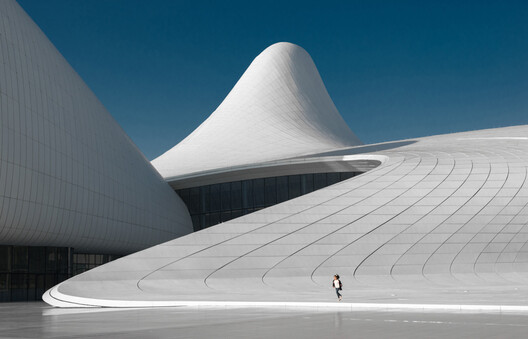
The Heydar Aliyev Center in Baku, Azerbaijan, rises in fluid curves and folds in the midst of a wide clearing in the city's gridded forest of urban blocks. The striking structure, completed in 2013 by Zaha Hadid Architects, acts as a primary venue for the country's cultural programs. Its curvaceous form sits in contrast to its rectilinear surroundings, marking its importance. The carefully curated curves epitomize a constant ambition in the studio's work–to dissolve the distinction between the horizontal and the vertical, between inside and outside, and between landscape and building. Needless to say, its complexity marks it as a feat of construction as well as of architecture. As Zaha Hadid Architects note, "Advanced computing allowed for the continuous control and communication of these complexities among the numerous project participants." Indeed, it is computing that made the building of the center possible, as well as other projects by the studio. As architecture becomes increasingly entangled with the digital realm, one can even ask if this is a triumph of the discipline or that of computation.

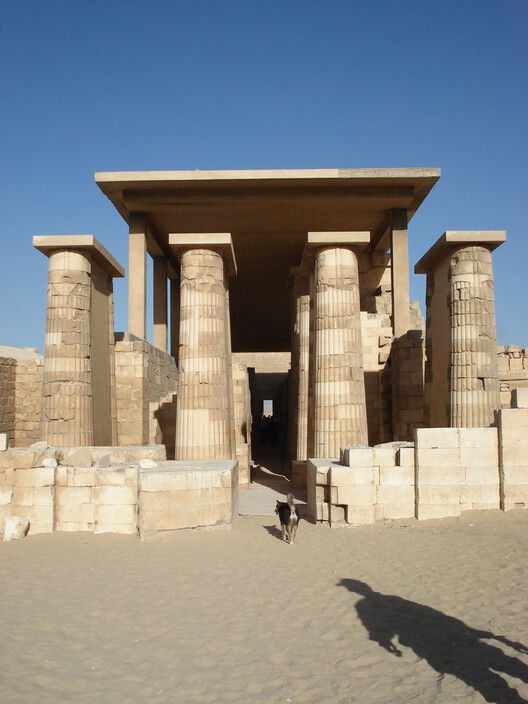
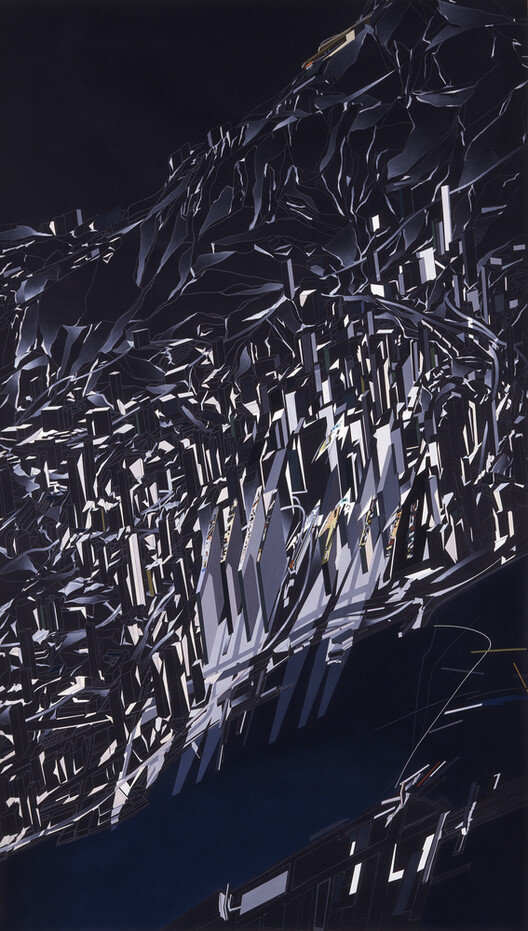
Zaha Hadid's built projects may have been propelled by computational development, but her early unbuilt projects were characterized by geometric hand-painted proposals that blended the intervention with its context. This is an example of architecture's relationship with technology, which is as old as the profession itself, at times exhibiting a slow adoption, and at times being transformed. When Imhotep pioneered stone construction in Saqqara, Egypt, the pillars were carved to resemble the reeded construction, while the triglyphs on the entablature of the Doric Order in Greek architecture were a feature of the timber construction that preceded it. New construction technology was adopted piecemeal, while retaining the familiarity of the old.
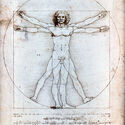
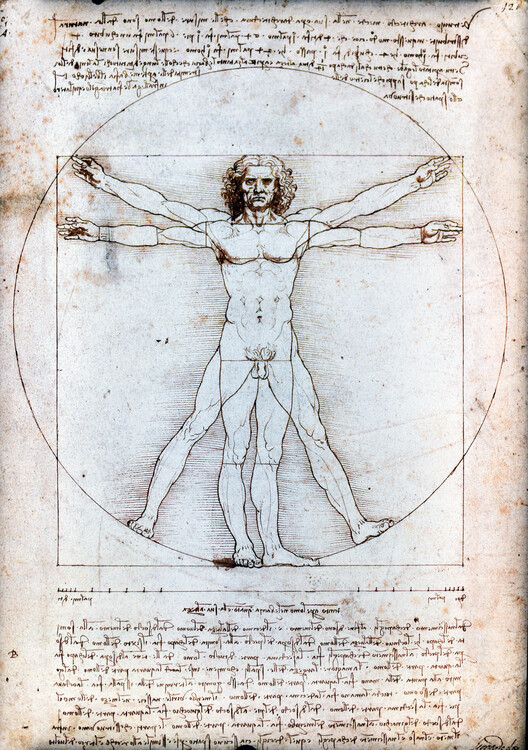
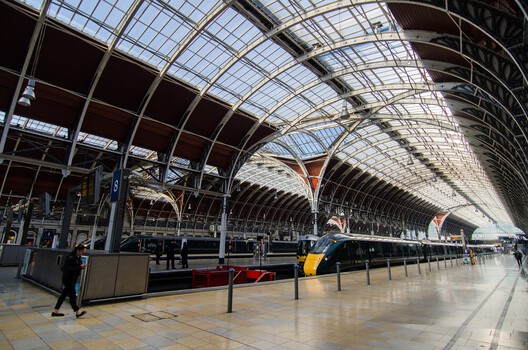
Although numbers and geometry are fundamental in building, developments in mathematics gradually entered architecture and construction also. In Renaissance Europe, studies in proportions and mensuration became guiding principles in architectural composition. In the Islamic world, complex mathematical geometry and tessellating forms were adopted. The advent of engineering during the Industrial Revolution gave mathematics in building new importance. The knowledge that was used to power the steam engine and construct the railways was applied to the great roofs of the train stations, bringing engineering to buildings. The relationship between architecture and engineering is key, as computation would later also reach the realm of architecture through engineering.
Related Article
Digital Worlds and the Limits of Frictionless Space: Rethinking Scale and MaterialityAt the time of writing, two recent books explore the relationship between architecture and computation. The Evolution of Computation in Architecture by Bradley Bell and Michael Fox, published in 2024, presents an overview of the pioneers who led the paradigm shift in architecture through computation. A year earlier, Beyond Digital: Design and Automation at the End of Modernity by Mario Carpo was published, reviewing the history that led to the role of computation today, but also identifying trends away from standardization and mass production to bespoke manufacture and specificity.
Bell and Fox detail the cycle through which a new technology enters a discipline in seven steps. This starts with context, where there is a coalescence of both technological and socioeconomic forces, followed by several stages of pioneering and innovation, culminating in a new paradigm of operation. An example of a full cycle would be the use of CAD in architecture, while a yet-incomplete cycle example is that of artificial intelligence.
It is fair to say that the relationship between architecture and computing began in the 1960s. After the invention of electronic transistors and the exponential growth of computing power since the Second World War, mainframe computers in large institutions became the frontier of this new technology. Alongside this were genuine attempts at bringing architecture and computing together, including visionary speculation well beyond the computing power of the time. The Fun Palace by Cedric Price and Joan Littlewood was one such example, designed as a framework with multiple and continuously changing functions that suit the users' needs. Through feedback and computation, this adaptation can be automated such that the building changes and reorganizes itself.
Perhaps the most significant attempt came from Nicholas Negroponte's Architecture Machine Group, a lab and think-tank established in 1967 at MIT to study human-computer relations. It included the creation of a computer program that would effectively replicate the job of an architect, produced by feeding the machine a vast collection of architectural rules that would inform the algorithms. Partly due to the processing power available at the time, and partly due to the rule-based approach, the program was not a success, and many of its failures were captured in Negroponte's eponymous book, The Architecture Machine, published in 1970.
The next decade or two saw computation take a different direction. Devices became smaller and cheaper, and therefore more accessible, culminating in the home computer. Instead of the focus on computing power and ever more complex expectations, communication and representation came to the fore. Computer-Aided Design (CAD) was a term coined in the 1950s and largely used in mechanical engineering, but in the 80s and 90s the technology gradually crept into architectural practice. Imagery and graphics, which were too heavy for 1960s processors, could later be handled by the smaller personal computers in architecture firms.
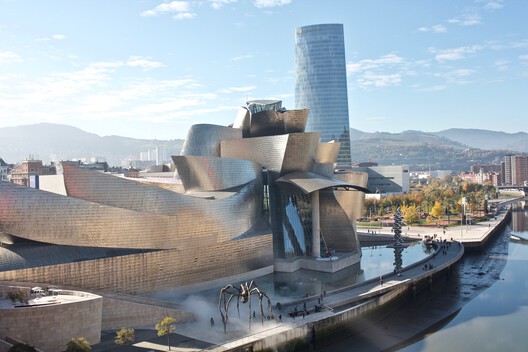
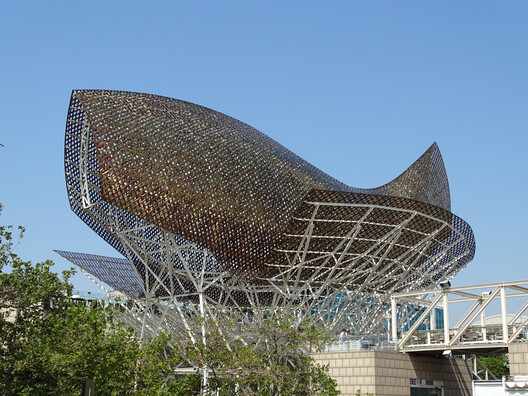
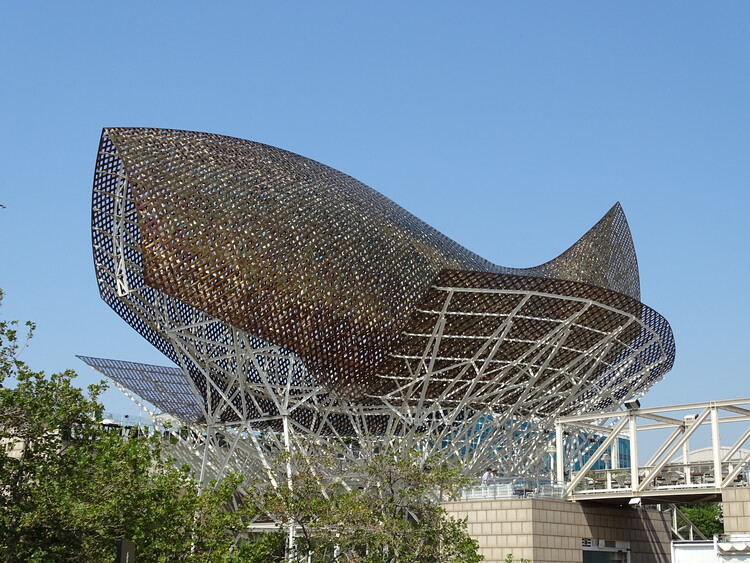
Thus, computing became a method for architectural firms to gain efficiency and improve communication. But when did computing begin to take an active role in design, and not just act as a graphical tool? Enter Frank Gehry and the fish. The 'Peix' sculpture (meaning 'fish' in Catalan) was constructed on the Barcelona waterfront for the 1992 Olympic Games. After it was first conceived, managing its structural behavior and construction method proved impossible without the use of CATIA, a software package used by the aeronautics industry and famously used to design the Boeing 777 aircraft. Not long after, the Guggenheim in Bilbao was built in 1997, firmly announcing the arrival of computation in the design of buildings.

The 1990s saw the beginning of a second wave of excitement with computation in architecture. Programs originally created for other disciplines, like Rhino, entered the field. The term 'parametricism' was often used by Patrik Schumacher of Zaha Hadid Architects, describing computer-generated elements with the ability to adapt and easily integrate into CAD-CAM production. Elsewhere, software was used for data mapping, including GIS, and for highly sophisticated environmental modelling, such as with Ecotect.
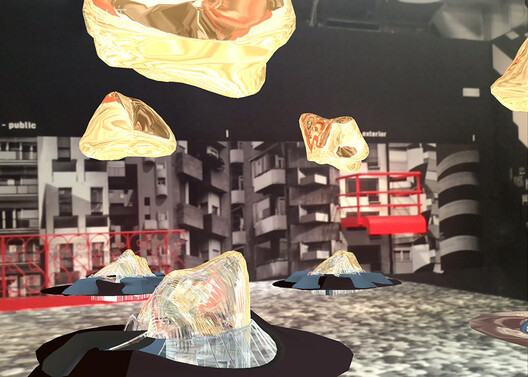
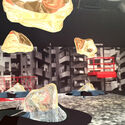
Alongside these real-world applications, theoretical speculation also returned. There was Greg Lynn's Embryonic House, a blob of splines which could be manipulated to produce various permutations of forms. In design, the Computational Chair by Philippe Morel celebrated the 'voxel' (volumetric pixel), produced by a computer program that generated thousands of potential forms, but only 25 were chosen for production. Digital Grotesque I by Michael Hansmeyer and Benjamin Dillenburger was a speculative narrative space installation, with no function, but that explored the potential of digital technologies. Similarly, artist Philip Beesley created interactive environments combining 'synthetic biology, artificial intelligence, mechanics, sound, light, and filtering systems'. Architect Hernan Diaz Alonso took things further, creating surreal digital spaces that only existed in digital space. This was the digital for the sake of the digital.
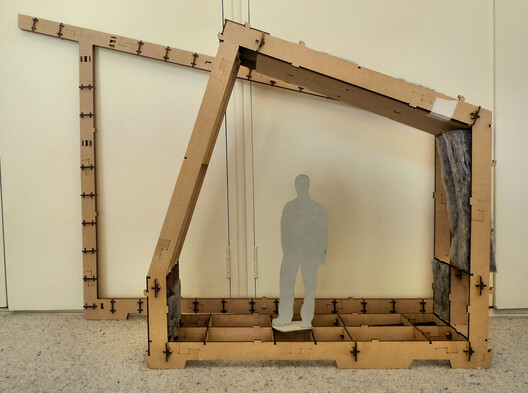
The question then becomes: is this a triumph of architecture entering new realms, or of computation overwhelming the discipline? Should architects think more like programmers, imagining adaptable digital creatures that would eventually become our dwellings? With the speed of development in artificial intelligence, will buildings simply be vibe-coded into existence? Time will tell. What is certain, however, is that movements in any direction always have a reaction. MP3 and streaming have not killed vinyl. Additionally, digital systems have been deployed to democratize architecture and improve its affordability. The WikiHouse project, for example, aims to make well-designed net-zero homes available to the wider public. The Block Research Group at ETH Zurich aims to refine structures so they use the least material, using digital tools. The Heydar Aliyev Center may be a visually breathtaking feat of digital design. But it is one stepping stone on the arc of digital history.
This article is part of the ArchDaily Topic: Beyond Buildings: Architectural Imaginaries and the Evolving Language of Design, proudly presented by Gendo.
Gendo is an AI design canvas built for architecture studios. Gendo supports this topic because the tools architects use to imagine have always shaped what they build. Understanding that shift matters more than any single render.
Every month we explore a topic in-depth through articles, interviews, news, and architecture projects. We invite you to learn more about our ArchDaily Topics. And, as always, at ArchDaily we welcome the contributions of our readers; if you want to submit an article or project, contact us.


