

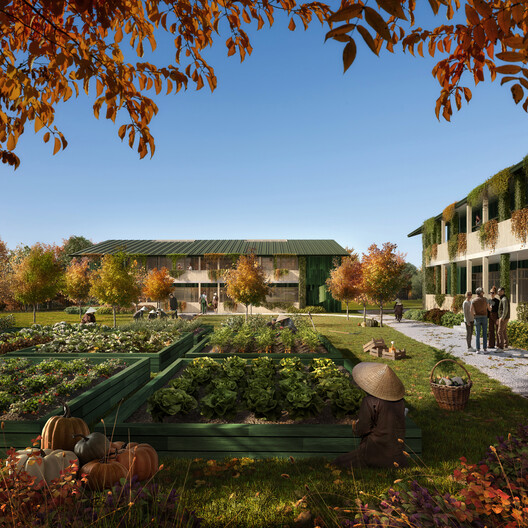
The Plum Village Buddhist Monastery in southern Dordogne, France, has received construction approval for the first phase of its ongoing collaboration with Dutch architecture studio MVRDV. The approvals cover the Upper Hamlet masterplan phase, including the construction of new guest houses and the renovation and expansion of the monastery's bookshop, as well as a new nunnery building at the Lower Hamlet. Developed in collaboration with co-architect MoonWalkLocal and consultants OTEIS, VPEAS, and Emacoustic, the wider project includes two masterplans for the Monastery's Upper and Lower Hamlets, four communal guest houses, a new nunnery, and the transformation of an existing bookshop. Working on a non-profit basis, the design team prioritises renovation alongside the use of circular and bio-based materials, aligning the architectural approach with the monastery's philosophical principles. The proposed additions aim to better accommodate the annual visitors who travel to Plum Village to engage with the teachings of Engaged Buddhism.
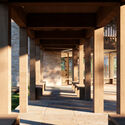
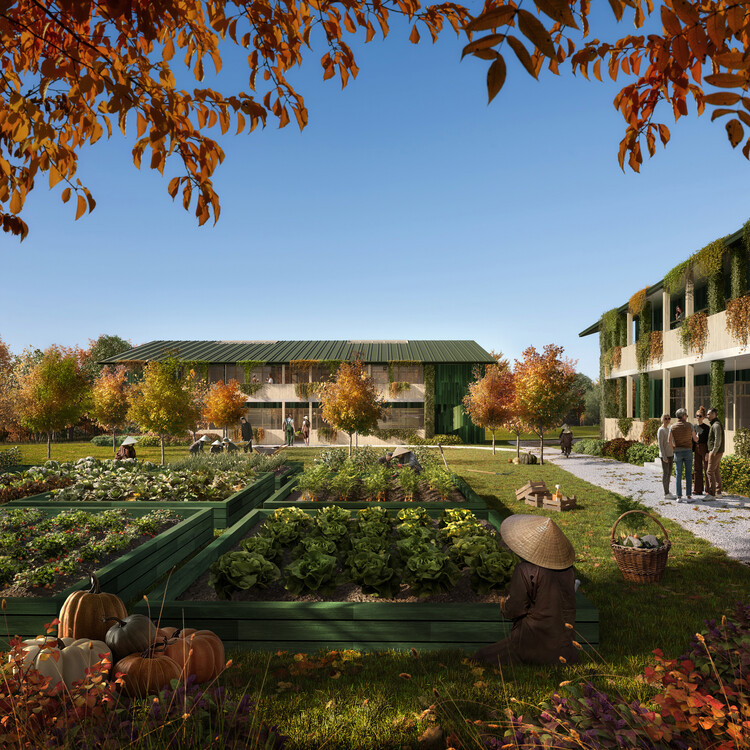
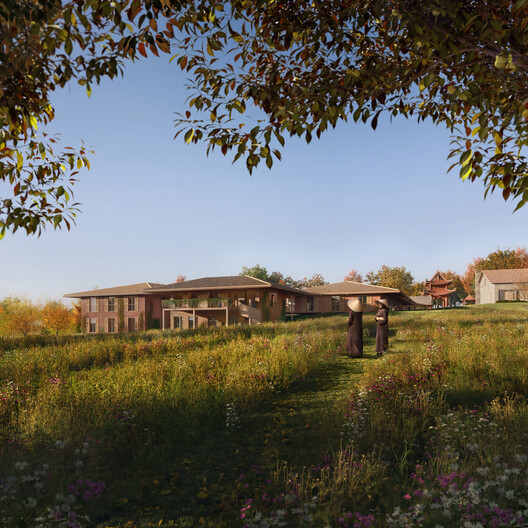
Plum Village Monastery was founded in 1982 by Vietnamese monk Thích Nhất Hạnh, recognised for his role in developing Engaged Buddhism and for his influence on the transmission of Buddhist practices in the West. Today, Plum Village is the largest Buddhist monastery in Europe. Its French site comprises three distinct locations, including the Lower Hamlet, home to around half of the community's nuns, and the Upper Hamlet, which houses the monks and the Dharma Cloud Temple, the root temple of the Plum Village tradition. Practitioners of the Plum Village tradition apply Engaged Buddhism's ethical framework to contemporary social and environmental issues, placing sustainability and respect for nature at the centre of daily life. These principles inform the new architectural proposals, which seek to respond to climate change through both spatial organisation and material choices.
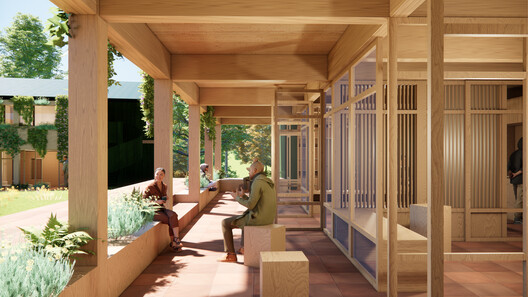
Each year, Plum Village hosts a wide range of retreats, attracting visitors from around the world in numbers that can reach up to 800 at a time. This popularity has created increasing logistical pressures. During peak periods, some monastics sleep in tents to make room for guests, shoes accumulate at building entrances, and service vehicles disrupt the contemplative atmosphere. According to MVRDV, demand for the monastery's teachings has exceeded the capacity of the existing facilities. Since 2023, the architects have worked closely with Plum Village's monastic residents, analysing these challenges and developing responses through dialogue-based workshops with monks and nuns. The joint MVRDV and MoonWalkLocal project aims to renovate existing structures and introduce new buildings in a manner that respects the site's character while adapting it to contemporary needs.
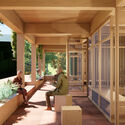
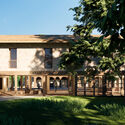
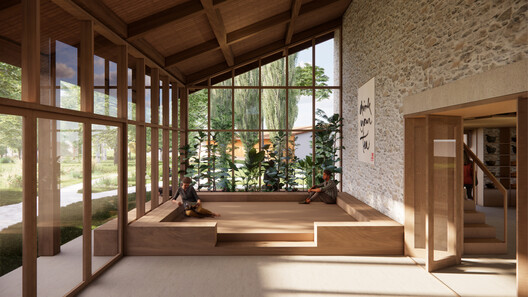
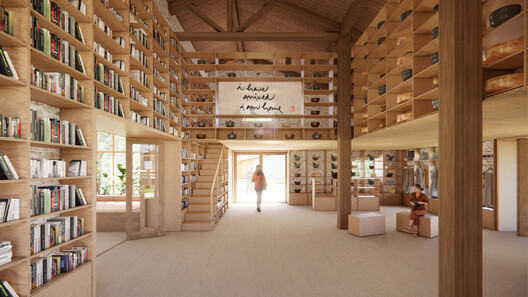
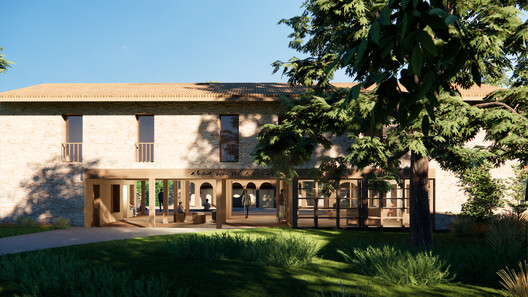
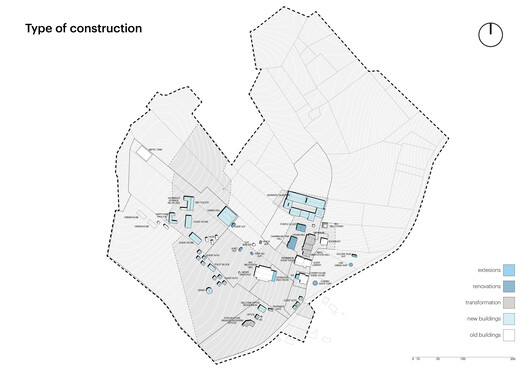
The project is organised around two master plans, one for the Upper Hamlet and one for the Lower Hamlet, sharing common objectives and a consistent design approach. Each plan defines areas with distinct characters and functions, creating clearer and calmer arrival sequences while reorganising circulation to establish largely car-free environments. Landscape strategies are used to address environmental challenges, such as creating habitats for birds to help manage the site's mosquito population. Both master plans also identify suitable locations for solar panels. At the Lower Hamlet, the proposals include a new nunnery and dining hall. At the Upper Hamlet, the first phase approved by the municipal council of Thénac includes the construction of new guest houses and the renovation and expansion of the existing bookshop, located in a former stone barn. The bookshop renovation introduces a covered terrace for reading and socialising, along with a modular wooden shelving system designed to display books, calligraphy, and other monastery items.
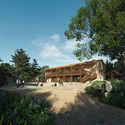
The guest houses proposed across the two master plans are two-storey timber buildings with simple floor plans. Accommodation is arranged in a U-shape around shared living spaces intended for Dharma sharing circles, with circulation provided by external staircases, balconies, and verandas. Four guest houses are planned, each responding to its immediate context. The Gate House, located on the entrance square, provides accommodation for 16 people above a ground floor containing reception areas, workspaces, and a laundry. Two Garden Houses frame the vegetable garden and each house 31 people. The Veranda House, situated in the more secluded Son Ha area of the site, also accommodates 31 people and features a large veranda extending into the surrounding landscape. Materials and finishes vary across the buildings to reflect their specific settings.
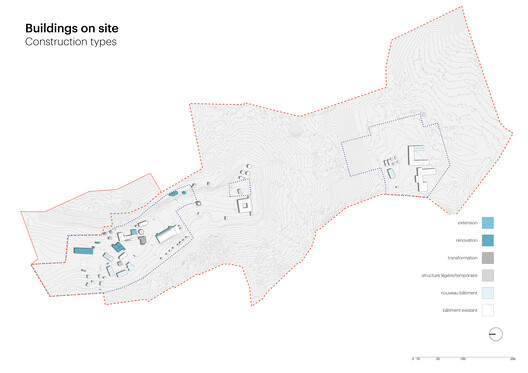
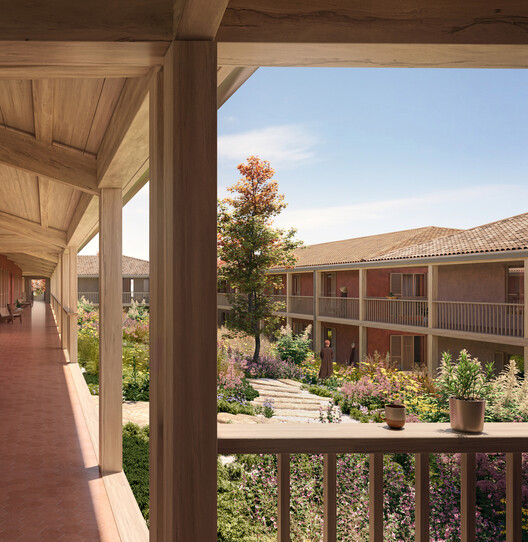
The largest new structure proposed in either masterplan is the nunnery, a courtyard-style building located on a sloping site at the Lower Hamlet. Designed to provide accommodation and training facilities for 76 monastics and aspirants from 12 nationalities, the building will include dormitories, a zendo, a library, classrooms, and shared communal spaces. Verandas encircle the courtyard, connecting the various living and working areas. To reduce embodied carbon, the nunnery will be constructed using a prefabricated timber frame system with straw insulation. This building has received construction approval from the municipal council of Loubès-Bernac.
For this project, we really had to un-learn what we learned as architects, engaging in the practice of deep listening and understanding the very unusual needs of our clients. The things we know a lot about are things they don't need. Things we initially didn't understand, they need. The lives they lead, their daily routines, are very different from the users we typically design for. They live in harmony with nature and work closely together in their community. Plum village works as an organism that adjusts to the seasons, the weather, and most importantly, the people. — Sanne van der Burgh, Associate Director at MVRDV and leader of the architect's Climate Team
In other recent religious building transformations, MVRDV and Zecc Architecten have won the competition to convert the St. Francis of Assisi Church in Heerlen into a public swimming pool. Earlier this year, the inaugural Bukhara Biennial 2025 hosted a contemporary musalla: a flexible space for prayer and reflection designed by EAST Architecture Studio to be dismantled and reassembled. Additional recent project announcements include White Arkitekter's timber-based neighbourhood inspired by traditional Dutch farmsteads in Hoofddorp, Frida Escobedo Studio's design for Qatar's new Ministry of Foreign Affairs headquarters through the adaptive reuse of Doha's modernist General Post Office, and UNS's 10-Minute Walkable City masterplan for multigenerational living in Seoul, South Korea.


