PORTO ALEGRE, RS, BRAZIL, 05/07/2024 - General photos of floods, Av Loureiro da Silva, CAFF and region. Photos: Gustavo Mansur/ Piratini Palace. Flickr user licensed under CC BY-NC 2.0 DEED Attribution-NonCommercial 2.0 Generic
The world has changed, and accepting this fact is no longer a matter of choice but survival. Our rainfall patterns, periods of drought, average temperatures, sea levels—everything is in constant flux. The denialist stance of many countries, including Brazil, has led to catastrophic situations like the one we are facing now.
The floods that devastated the southern region of the country in recent days cannot be considered isolated incidents. Due to global warming, climate events like this will become increasingly frequent. In other words, unfortunately, we cannot prevent them from happening, but we can—and must—make our cities more resilient to these situations.
Protest has always been a powerful tool for creating change, and public spaces provide a platform for social engagement in societies. As part of the International Day of Democracy, we examine Africa, its series of emerging protests in the past year, and how citizens in various countries question political justice, demand better living standards from their government, and interrogate their nation’s sovereignty. With demonstrations ranging from organized large-scale marches to smaller spontaneous outbursts, residents of these countries have explored public spaces in symbolic and significant ways to amplify their voices. These spaces include public squares with cultural and historical meaning, sites of political buildings, or makeshift protest areas such as roads and open areas. Through this, African cities show how people make these spaces their own and how the power of their conglomeration cannot be ignored in unwrapping the democratic essence of public spaces.
Energy efficiency wall renovation for energy saving. Exterior house wall heat insulation with mineral wool, building under construction. Image via Shutterstock / brizmaker
The buildings and construction sectors are key players in the fight against climate change –Combined, they are responsible for 30% of global final energy consumption and 27% of total energy sector CO2 emissions. Further, energy demand from buildings and construction continues to rise, driven by improved access to energy in developing countries, growing need for air conditioning, greater ownership and use of energy-consuming appliances, and a rapid growth in global floor area. Without targeted policy actions, the energy used in buildings could increase up to around 70% in 2050.
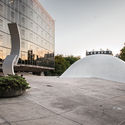
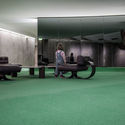
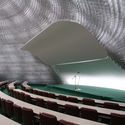
Few places in the world have an overlap of complexities as intense as Brasília. Even so, its architecture symbolizes the Republic and democracy of Brazil, and any act of attack on these symbols carries meanings and consequences for Brazilian memory and cultural heritage. The terrorist acts of January 2023 destroyed part of the heritage and raised questions beyond objects and architecture, touching on education, culture, and national political capital.
In 1969, ‘The Architects' Resistance’, a collective of students from Yale University, Columbia University, and the Massachusetts Institute of Technology (MIT), published a manifesto titled ‘Architecture: whom does it serve?’
With this manifesto, the group sought to place the practice of architecture in a broader economic, social and environmental context than the one taught in their university lecture rooms. In just two and a half pages, we find a powerful call to reclaim a more social and ecologically conscious architecture. It unambiguously denounces the role architecture played during those years as a practice in service to those in power while adding that “the architect's submission to the system begins with the belief that they possess special skills and knowledge that are inaccessible to the general public.”
Beinecke Rare Book Library, Yale University, Gordon Bunshaft, 1963.. Image via Barry Winiker / Getty Images
Some years end up being cultural pivot points. 2021 was one such year, with COVID-19 as the first existential threat to our culture since World War II. Architecture will change as a result, and may evolve in public perception to value motivations as a criteria for understanding it, versus valuing outcomes as the validation of any particular aesthetic.
When examining the world of African cinema, there are few names more prominent than that of Senegalese director Ousmane Sembène. His films ‘La Noire de…’ and ‘Mandabi’, released in 1966 and 1968 respectively, are films that tell evocative stories on the legacies of colonialism, identity, and immigration. And whilst these two films are relatively slow-spaced, ‘slice-of-life stories, they also offer a valuable spatial critique of the setting where the films are based, providing a helpful framework to understand the intricacies of the post-colonial African city, and the contrast between the African and European metropolises.
"When we enter the restroom, we are never alone. Instead, we are entangled in a network of bodies, infrastructures, ecosystems, cultural norms, and regulations". Although restrooms are often overlooked facilities that cater to the needs of individuals, they are, however, spaces where gender, religion, race, hygiene, health, and the economy are defined and expressed. For the 17th International Architecture Exhibition at La Biennale di Venezia, Matilde Cassani, Ignacio G. Galán, Iván L. Munuera, and Joel Sanders designed two pavilions that exhibit how restrooms are political architectures, serving as battlegrounds for the world's disputes.
For most people, calling a place “sacred” designates it as an important location, one usually associated with spirituality. It might be the setting for religious rituals (the sacred space of a church, synagogue, or mosque), a spot where some event described as “miraculous” has occurred (such as the reported sighting of the Virgin Mary in Lourdes, France, which became a pilgrimage site), or a place which held the body of deity (think of the Church of the Holy Sepulchre in Jerusalem, built upon what is believed the be the tomb of Jesus Christ).
https://www.archdaily.com/955561/assault-on-a-sacred-placeMichael J. Crosbie
The inertia of politics and governance in a time when major societal changes occur at an increasingly faster pace and the dissatisfaction with the decision process makes room for bottom-up actions, activism and bold endeavours. In the light of so many examples of social activism, do architects have the tools to make their own stand? Does architecture have the power to disrupt the status quo?
The new Met under construction in May 1964 (Photo: Metropolitan Opera Archives)
The Metropolitan Opera offers a free stream each night on the Met website for a period of 23 hours, from 7:30 p.m. EDT until 6:30 p.m. EDT the following day.
Beginning on Saturday, May 9 at 7:30 p.m. EDT, the Met will present a free stream of "The Opera House" by award-winning filmmaker Susan Froemke.
The 2017 documentary is about the fascinating creation of the new Metropolitan Opera House at Lincoln Center, which opened in 1966. Through rarely seen archival footage and recent interviews, discover the untold stories of the artists, architects, and politicians who shaped the cultural life of New
Welcome to 2019; polarizing political views are an ever-present reality and it doesn't seem to be improving. Whether you live in the US or on the other side of the globe our environments are actors in the theater of influence. What happens when design becomes part of the equation? How does architecture and the built-environment play a role in the social and political lives of the people in power and those on the fringes?
Write a short story that puts into narrative how you think about architecture's role in power. How does it aid the status quo or give opportunity for
Editor's Note: This article was originally published on 30 June, 2016. While the debate surrounding the terms of the UK's exit from the European Union continues to rage, the Tate remains a steady icon for London and the UK. But the building has also become a symbol in a new fight: one between the capital's elites and the general public. As the political sands in Britain continue to shift, it may be interesting to see how - and with whom - the building aligns in the future. - Katherine Allen, Managing Editor
In March 1972, an article in The Architectural Review proclaimed that this structure was “probably the best building in Paris since Le Corbusier’s Cité de Refuge for the Salvation Army.”[1] The article was, of course, referring to Brazilian architect Oscar Niemeyer’s first project in Europe: the FrenchCommunist Party Headquarters in Paris, France, built between 1967 and 1980. Having worked with Le Corbusier on the 1952 United Nations Building in New York and recently finished the National Congress as well as additional iconic government buildings in Brasilia, Niemeyer was no stranger to the intimate relationship between architecture and political power.[2]
If you were to identify, categorize and map the 21st century’s emergent architectural practices from the world over, all on one diagram, what would it look like? Considering how the current architectural landscape consists of several different approaches, attitudes and political stances, how would you map them without being too reductive? And how would you ensure that out of hundreds of emergent practices and firms across the globe, you don’t leave anyone out? Perhaps the Global Architectural Political Compass V 0.2 could offer a clue.
Created by Alejandro Zaera-Polo and Guillermo Fernandez-Abascal, the diagram is part of an ongoing inquiry into “the state of the art in (global) architectural practice” [1]. In 2016, Zaera-Polo explored the subject in a comprehensive essay for El Croquis titled “Well into the 21st Century” in which he set down the framework for 11 political categories that now form the compass diagram.
https://www.archdaily.com/882843/have-your-say-on-the-landscape-of-emerging-practices-with-the-interactive-architectural-political-compassZoya Gul Hasan
In the context of the XX Biennial of Architecture and Urbanism in Chile, we spoke with the Spanish architect Andrés Jaque, founder of the Office for Political Innovation. In a conversation named Lucha Libre Jaque argued that "all architects are politicians" by default and the real question is what forms of policy we are willing to defend.
Earlier today, the UK Prime Minister Theresa May made her closing speech at the Conservative Party Conference in Manchester. In a speech which focused on the fallout of Brexit and the economy, May devoted considerable attention to the issue of the UK housing market, announcing a plan to add £2 billion to the government's existing £7 billion affordable housing fund—a fund which local governments, private housebuilders, and housing associations can apply to for grants to subsidize construction of affordable housing.
However, the Royal Institute of British Architects (RIBA) has strongly criticized the government's proposal, arguing that £2 billion will not be nearly enough to address the scale of the problem—by most estimates, the country is falling short of housing demand by hundreds of thousands of units annually, and house prices are increasingly out of reach for the young and the poor. In response, the RIBA argues for a much greater investment in social housing, highlighting its recent decision to award its Gold Medal to 20th Century social housing architect Neave Brown and stating that "we need a concerted program of public investment in new social housing across the country and that means spending a lot more than was announced today." Read on for RIBA President Ben Derbyshire's full statement:








.jpg?1467325496)