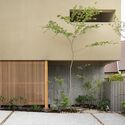
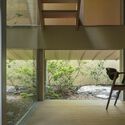
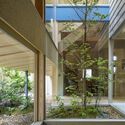
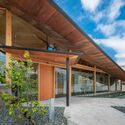
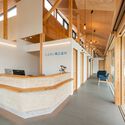
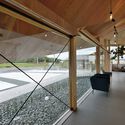
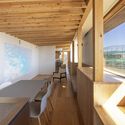
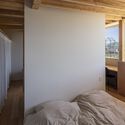
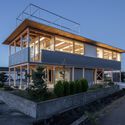
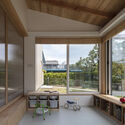
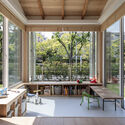
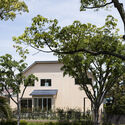
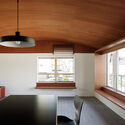
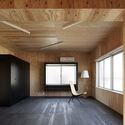
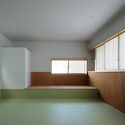
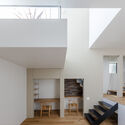
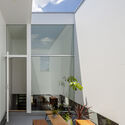
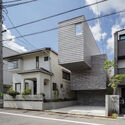
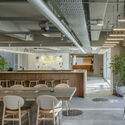
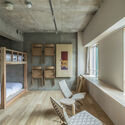
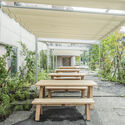
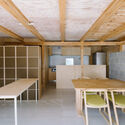
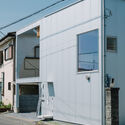
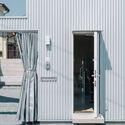
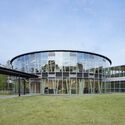
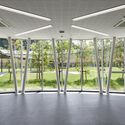
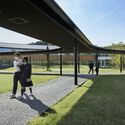
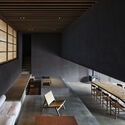
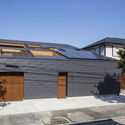
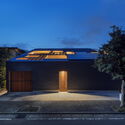
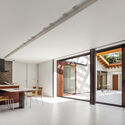
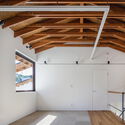
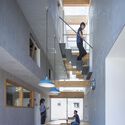
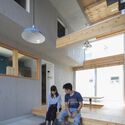
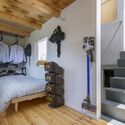
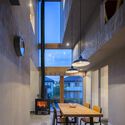
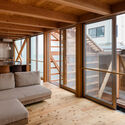
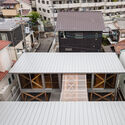
House in Saitama / Satoru Hirota Architects

Architects: Satoru Hirota Architects – Satoru Hirota & Yasuko Hirota
Location: Saitama, Japan
Client: Private
Contractor: Yamazaki Construction Company
Site Area:153.95 sqm
Building Area:61.99 sqm
Total Floor Area:109.43 sqm
Completion: 2010
Photographs: Satoru Hirota
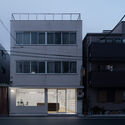
House in Megurohoncho / TORAFU ARCHITECTS

Architect: TORAFU ARCHITECTS
Location: Meguro, Tokyo, Japan
Project area: 123,7 sqm
Site area: 109,8 sqm
Completion: 2011
Structural design: OHNO-JAPAN
Production: TSUKI-ZO
Facility design: MAXRAY (Lightings)
Photographs: Daici Ano
House of Maple / Edward Suzuki Associates

Architects: Edward Suzuki Associates – Edward Suzuki, Toshiharu Nanba
Location: Karuizawa, Japan
Completion: 2010
Site Area: 6,182.97 sqm
Ground Coverage: 512.00 sqm
Floor Areas: 1F 402.50 sqm, 2F 274.75 sqm
Total Floor Area: 677.25 sqm
Photographs: Yasuhiro Nukamura
House on the Bluff / Edward Suzuki Associates

Architects: Edward Suzuki Associates - Edward Suzuki, Toshiharu Nanba
Location: Yamate,Yokohama, Japan
Site Area: 767.54 sqm
Completion: 2012
Structure: RC
Total Floor Area: 384.59 sqm
Photographs: Yasuhiro Nukamura
House Like a Museum / Edward Suzuki Associates

Architects: Edward Suzuki Associates - Edward Suzuki, Toshiharu Nanba
Location: Kamakura City, Kanagawa Prefecture, Japan
Completion: 2008
Site Area: 776.4 sqm
Ground Coverage: 425.38 sqm
Floor Area: 1F 419.85 sqm; 2F 118.49 sqm; Total 538.34 sqm
Photographs: Yasuhiro Nukamura
House NA / Sou Fujimoto Architects

You may remember Sou Fujimoto Architects radical House NA from this video we shared with you last November. Designed for a young couple in a quiet Tokyo neighborhood, the 914 square-foot transparent house contrasts the typical concrete block walls seen in most of Japan’s dense residential areas. Associated with the concept of living within a tree, the spacious interior is comprised of 21 individual floor plates, all situated at various heights, that satisfy the clients desire to live as nomads within their own home.
Continue after the break for more images and information on House NA.
House Overlooking The Sea / Edward Suzuki Associates

Architects: Edward Suzuki Associates - Edward Suzuki, Toshiharu Nanba
Location: Hayama, Japan
Completion: 2011
Total Floor Area: 540.02 sqm
Site Area: 2,620.84 sqm
Photographer: Yasuhiro Nukamura
Mimanimochida / Coordinate House NOGAMI

Architects: Coordinate House NOGAMI – Yuki Nogami
Location: Mathuyama, Ehime, Japan
Site Area: 310.13 sqm
Total Floor Area: 160.82 sqm
Project Year: 2008
Photographers: Touru Kitamura, Yuki Nogami
HA Tower / Frontoffice + Francois Blanciak

The HA Tower, designed by Frontoffice + Francois Blanciak, proposes a hybrid model for urban life that embraces the city, pulling it in the heart of the units, while still offering large open spaces that otherwise are only available on the urban fringe. Located in Higashi-Azabu, within walking distance of a cluster of rail lines, Shiba Park, and the iconic Tokyo Tower, the corner site is small, covering only 130 square meters and is constrained by a floor area ratio that limits construction to 8 floors. More images and architects’ description after the break.
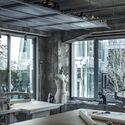
Aiji Inoue / Doyle Collection

Architects: Doyle Collection – Aiji Inoue, Yuki Kanai
Location: Kagoshima, Japan
Completion: October 2011
Floor Space: 161.9 sqm
Collaborators: Tully’s Coffee Japan
Seats: 75 seats
Photographer: Nacasa & Partners
Fukoku Tower / Dominique Perrault

Architects: Dominique Perrault Architecture
Location: 2-4, Komatsubara, Kita-ku, Osaka, Japan
Client: Fukoku Mutual Life Insurance Company
Associated Architect: Shimizu Corporation Architects & Engineers
Engineering: Shimizu Corporation Architects & Engineers
Development Director: Mitsubishi Estate Group
Site Area: 3,900 sqm
Built Area: 68,500 sqm (including car park)
Completion: 2010
Photographs: Daici Ano
Citadel Skyscraper / Victor Kopeikin + Pavlo Zabotin

The design for the Citadel Skyscraper by Victor Kopeikin and Pavlo Zabotin is a symbiosis of a skyscraper and a residential tank creating a defensive shield to protect the island from the inside against external natural and anthropogenic influences. The project provides carrying the residential functions of cities in the land out to self-supporting residential units located in the sea (residential skyscrapers, citadels).These citadels interact with each other on the shoreline, forming a single closed defensive chain that operates both on the surface and underground. Thereby proceeds the mastering of new territories for the human life. More images and architects’ description after the break.
Rouge / APOLLO Architects & Associates

Architects: APOLLO Architects & Associates - Satoshi Kurosaki
Location: Bunkyo, Tokyo
Structure Engineers: Denbo Nakamura / Denkohbo
Facility Engineers: Zenei Shimada / Shimada Architects
Construction: Honma Construction
Date of Completion: 2012
Site Area: 55.00 sqm
Photographs: Koichi Torimura
Le 49 / APOLLO Architects & Associates

Architects: APOLLO Architects & Associates – Satoshi Kurosaki
Location: Kamakurayama, Kamakura city, Kanagawa, Japan
Date of Completion: December 2011
Structure: Steel
Site Area: 111.92 sqm
Total Floor Area: 182.70 sqm (79.29m2/1F, 103.41m2/2F)
Structural Engineer: Taro Yokoyama
Mechanical Engineer: Zenei Shimada
Photographer: Masao Nishikawa
10 Ken House / Coordinate House NOGAMI

Architects: Coordinate House NOGAMI – Yuki Nogami
Location: Mathuyama, Ehime, Japan
Site Area: 274.00 sqm
Total Floor Area: 217.12 sqm
Project Year: 2009
Photographs: Naoto Kawai, Yuki Nogami
Yomogino Ryokan Hot Spa / Ryuichi Sasaki + Sasaki Architecture

Architects: Ryuichi Sasaki + Sasaki Architecture
Location: Fukushima, Japan
Client: Tios Group
Contractor: Oba Corporation
Completion: 2011
Photographs: Ryuichi Sasaki, Ryota Atarashi
Learning from the Great East Japan Earthquake

Reena Jana of SmartPlanet recently interviewed the award-winning, Japanese architect Hitoshi Abe on the lessons he has learned from the March 11, 2011 earthquake that destroyed his hometown in Sendai, Japan. Abe believes that the memory of the 9.0 magnitude earthquake that hit the coast of northeaster Japan, triggering a tsunami that sent waves as far as six miles inland must remain fresh in our minds. His goal is to educate everyday citizens around the globe, as well as future generations, on how to better cope with large-scale natural disasters. Currently, he is serving as a guest-curator for a travel exhibition entitled Moving Forward: Life After the Great East Japan Earthquake. This exhibit brings to life the haunting reality of the devastation through a series of large-scale photographs and photographic essays that reveal individual stories of survival immediately following the disaster. The exhibit commemorates the victims and struggles of the survivors, while highlighting the reconstruction and recovery efforts.
Continue reading for more.
GaW / Satoru Hirota Architects

Architect: Satoru Hirota Architects – Satoru Hirota
Location: Tochigi, Japan
Structural Design: Cremona Institute / Masahiro Shirasu
Machinery Design: Ymo / Hiroyuki Yamada
Contractor: Maruyama Kogyo / Hitoshi Akutsu + Katsuaki Ito
Interior Coordination: Ozone / Miki Sakamoto
Total Floor Area: 1,094.05 sqm
Year of Completion: 2010
Photographers: Atsushi Nakamichi, Satoru Hirota Architects