Whether rising to the highest room of the tallest tower in a Disney-esque castle, giving an admirer the chance to confess their love on an apartment buildingfire escape, or connecting a basement or attic room with a decorative period feature, there’s something unavoidably romantic about spiral staircases. But there’s more function behind these coiling forms than just their good looks.
One common-held theory is that spiral staircases were first installed in historic castles as vertical baffles, tiring out enemy infiltrators before they could make it to the top. This is why – it is said – many are set to turn clockwise on the ascent, so attackers have a smaller arc for swinging weapons (mostly held in right hands) than defenders making their descent.
Enhancing the energy performance of existing buildings through refurbishment processes provides the opportunity to create more comfortable and sustainable environments, while also improving their functionality, aesthetics, and safety. Architectural approaches to these renovations encompass various aspects of a building, including interior spaces, structure, internal systems, and facades.
When it comes to rethinking a building's envelope, STACBOND’s composite panel solutions delve into the development of ventilated facades. These facade systems serve as an architectural strategy for energy-efficient building renovations. Minimizing energy consumption for heating and cooling, the rehabilitation strategy incorporates thermal insulation, moisture management, and thermal mass optimization.
The design of a facade defines its architectural identity. Besides being a barrier against diverse weather conditions, providing acoustic comfort, and regulating light penetration, the external skin of a building determines its character and perception. At first glance, a facade can make the building stand out or blend with its urban environment, or even convey different levels of brightness, translucency, and smoothness. Simultaneously, the structure and color of interior walls and ceilings can leave a lasting impression when entering a room.
Following news of Edelburg Development's plans to completely remodel the modernist facade of Dytiachyi Svit (Kids’ World), one of Kyiv's most notable modernist buildings from the Soviet era, and replace it with an "unrecognizable" vibrant and contemporary design, members of the community and activists protested against the intervention, forcing all parties to agree on a design competition to restore the historical facade. Dmytro Aranchii Architects was selected as the winner of the competition, with a proposal that "traces the transition from the original building to the new one" in a minimalistic and recognizable stylization, preserving the original facade and complimenting it with a contemporary intervention.
Westfield Mall of the Netherlands / MVSA Architects. Image Courtesy of Kriskadecor
In architecture and interior design, ceilings are fundamental elements that combine functionality with aesthetic features such as colors, textures, and materials. While providing quality and comfort, unique and well-thought ceilings can create a dramatic visual impact, defining a building’s tone and character. However, even though a room’s “fifth wall” is a crucial design component, it is not frequently emphasized in architectural projects – or not nearly as much as decor, furniture, wallpaper, or other elements that define interior ambiance. It is therefore important to explore the numerous creative opportunities that a ceiling can offer, beyond the typical plain white shade that continues to dominate in most interior spaces.
Door handles are a ubiquitous part of daily life, being used constantly in almost every space but rarely given thought by the passing user. Nevertheless, the chosen material of each handle can vary widely in terms of aesthetics, durability, and sustainability, with good choices going noticeably right and poor choices going noticeably wrong. For objects that are seen and used multiple times every day without fail, it’s imperative that designers get the choice right.
To deepen this topic, FSB helps us to lay out the properties of four of the most common handle materials below, allowing you to make an informed decision on which material aligns best with your project’s needs.
https://www.archdaily.com/929360/stainless-steel-bronze-brass-or-aluminum-how-to-choose-handle-materialsLilly Cao
The Union of architects of Russia invites you to participate in the Russian competition with international participation «Aluminum in architecture 2020».
The Union of architects of Russia invites you to participate in the Russian competition with international participation «Aluminum in architecture 2020», which will be held as a part of the 2d international forum «Aluminum in Architecture and Construction» / AlumForum 2020 from May 19-21, 2020 in the Technopark Skolkovo simultaneously with the 3d international forum of architectural glass industry ArchGlass 2020.
This is the only competition in Russia that demonstrates the capabilities of aluminum in realized projects and the prospects for its use in architecture and construction.
Among the laureates of 2019 there are: - Rhythmic Gymnastics Center by Irina Viner-Usmanova in Moscow
As ingenious solutions for environments that require additional space and ventilation, articulated or accordion doors and windows operate by folding their leafs one over the other and onto the sides of the opening. They moving via upper and lower rails which can be embedded into masonry and allow separation and integration rooms while adding aesthetic value to the project.
This system generates a similar effect to that of a sliding door or window, but it differs in that all its leafs remain in the same plane when they are closed, giving a clean appearance to the façade.
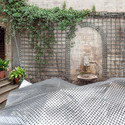
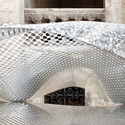
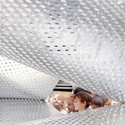
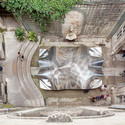
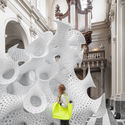
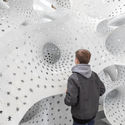
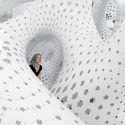
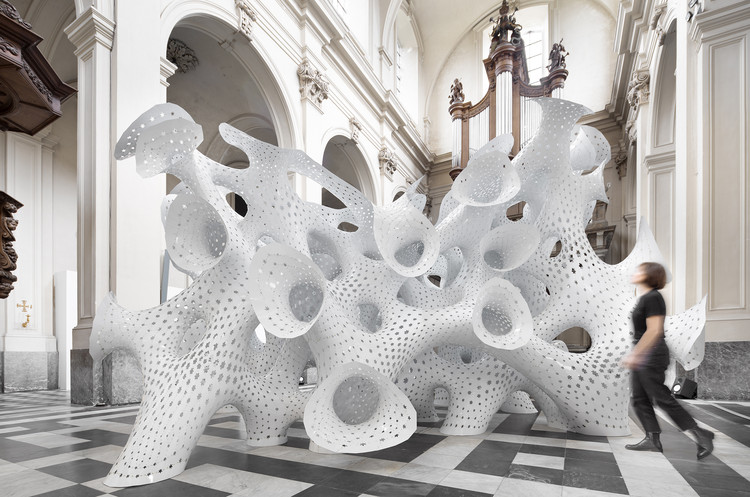
As a part of the second Art and Architecture Triennial in Bruges, Marc Fornes / THEVERYMANY’s prototype pavilion entitled nonLin/Lin has been taken out of storage and placed on public display for the first time. First commissioned and displayed in 2011 by the FRAC Centre in Orleans, France, the exhibition will explore the rise of computational form-making. The work will spend the summer installed in the nave of the Grootseminarie, a 17th century Cistercian Abbey hosting an exhibition curated by Abdelkader Damani entitled Liquid Architectures.
Videos
Courtesy of Team Aesop (Josh Draper, Lisa Ramsburg, Powell Draper, Edward M. Segal, and Max Dowd)
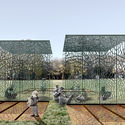
Cast & Place has been announced as the winner of the 2017 City of Dreamscompetition to create a pavilion for New York City’s Governors Island. Held by not-for-profit arts organization FIGMENT, the AIANY Emerging New York Architects Committee, and the Structural Engineers Association of New York, the competition called for a design to be the hub of FIGMENT’s free community arts festival during Summer 2017, based on questions of the future of New York, how design can confront environmental challenges, and how architecture can be built from recycled or borrowed material.
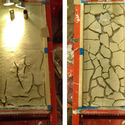
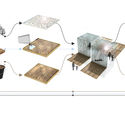
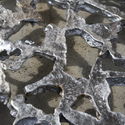
With these questions in mind, Cast & Place was conceptualized as a pavilion made entirely from waste. 300,000 recycled aluminum cans, cast into the cracks of dried clay, will form structural panels that assemble into shaded spaces for performance and play.
The advent of parametricism has brought architects many new design capabilities; form finding, sun shading and visual texturing are just a few of the ways the technology has impacted structures. But perhaps its most noble function is its ability to optimize structure, especially through the folding of thin, rigid materials. This is the function that architect Tal Friedman has chosen to explore in his Origami Pavilion.
Daniel Libeskind teamed up with the professionals at Immersive and Innovision to realize the four 10-meter-high, "shimmering" sculptures that are outlining the Milan Expo 2015's central square. The LED-lit aluminium structures, dubbed "the Wings," were designed to "animate the public space with a constant flow of pulsating patterns and imagery related to the theme of the Expo: health, energy, sustainability and technology." They will remain on view through the duration of the Expo, which concludes October 31.
FAKT, an up-and-coming studio based out of Berlin and Zurich, has created an architectural installation for the Festival des Architectures Vives, which uses perforated aluminum sheets to produce a cloudscape. Sponsored by metalworking companies Karl Dieringer and AMAG Austria Metall, the exhibition explores aluminum's material properties and its ability to create new forms.
Richard Meier & Partners has unveiled designs for their first project in Bogota: Vitrvm. Conceptualized as two towers united at the base, the new 13-story residential development will provide 36 apartments along Septima Avenue in the north section of the city.
“The project is contextually inspired by the beauty of its immediate surroundings,” described the architects. “It aims to reflect and to engage the beautiful gardens and large trees at the Chico Park and the Seminario Mayor,” one of the largest and most important seminaries in Colombia.
Reforma Towers. Image Courtesy of Richard Meier & Partners
Richard Meier & Partners has unveiled the “Reforma Towers,” a 40-story, mixed use development planned for Mexico City’s historic Paseo de la Reforma. Comprised of two high-rise towers, clad in Meier’s signature white concrete, the new development will bring high end office, hotel, and retail space, as well as restaurants and a fitness center to the city’s distinguished Boulevard upon completion in 2015.
After months of design refinement and engineering, Synthesis Design + Architecture (SDA), winners of the "Switch to Pure Volvo" architecture competition, have launched a free-standing mobile pavilion capable of harnessing solar energy to power the new Volvo V60, the world's first diesel plug-in hybrid car. The 'Pure Tension' Pavilion was birthed by SDA's extensive research on dynamic mesh relaxation, utilizing bendable, lightweight aluminum structures with flexible fabrics that can be stored in the trunk of the car and easily mounted within one hour, similar to a tent.
https://www.archdaily.com/449054/architects-and-volvo-collaborate-to-create-portable-car-charging-pavilionJose Luis Gabriel Cruz
Each December, Design Miami/ commissions early-career architects to build a designed environment for the fair's entrance as part of its biannual Design Commissions program. This year's winning proposal, dubbed "Tent Pile," was designed by the New York-based architectural practice formlessfinder. Its design harnesses the properties of sand and aluminum to create shade, seating, cool air and a space to play for Miami's public.





.jpg?1636467268)











.jpg?1436636949)