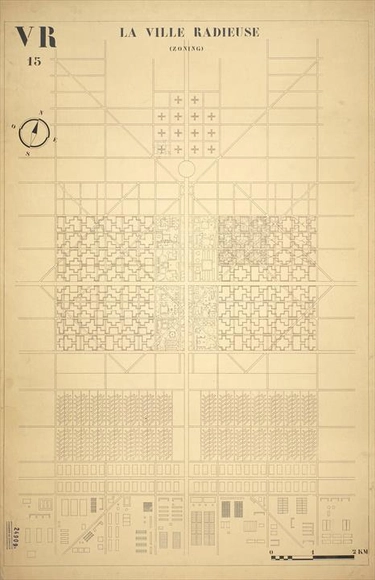
The Master Plan of the Radiant City. Image Courtesy of LE CORBUSIER FOUNDATION
Throughout history, religious reformers and visionary starchitects have attempted to envision the future of our cities: from the Venetian model city of Palmanova to the multi-story housing complex for 5,000 people drafted by Italian architect Paolo Soleri, from Frank Lloyd Wright’s Broadacre City to Le Corbusier’s Radiant City, numerous masterplans have been crafted to illustrate some of the most unprecedented ambitions.
Photo: Programa de Aceleração do Crescimento (PAC), via VisualHunt.com / CC BY-NC-SA
How is the housing deficit calculated? Did the Minha Casa Minha Vida program improve housing affordability? What is the Onerous Grant of the Right to Build? To answer these and other questions, Caos Planejado hosted Tainá Pacheco and Vanessa Nadalin for a conversation.
Manufacturers: Assa Abloy, STENI, Alavus Ikkunat Oy, Alfacom, Deutsche FOAMGLAS®, +7Ecophon, Fakro Oy, Kone Oy, Lännen betoni Oy, MASTERTOP 1326, Ruukintiili Punainen, Siparila-7
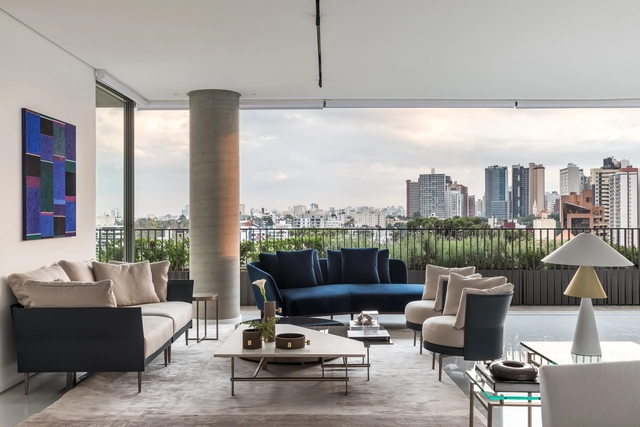
Manufacturers: Alma Light, Artefacto, AutoDesk, Automacao Domotica, Fau Home, +7Galeria Simoes de Assis, Marmoraria Via mar, Meble, ODA DESIGN CLUB, Ornare, Persépolis, Trimble Navigation-7
To live in the city and to experience the city is to be open to any and every event. Within a single day, we pass through different places and spatialities, with distinct compositions and tempos. No day is like another, as we are in constant motion, facing a random combination of events that affect both objects and subjects—shaping the spaces we traverse and the perceptions we experience. In light of this reflection, a discussion emerges on the effects of architecture and urbanism beyond the visual realm, linked to the individual's sense of belonging to space and based on urban form and dynamics. How can we grasp the effects of the object on the subject and vice versa? What is the materialized reading of the city as a reflection of societal actions?
https://www.archdaily.com/1127912/urban-fabrics-sao-paulo-society-as-a-reflection-and-extensionCamila Yumi de Campos




_(11).jpg?1612264256)

.jpg?1611711516)

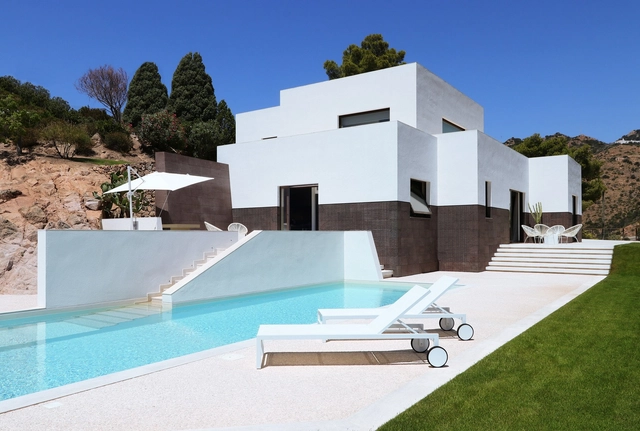












_(PM)_(12).jpg?1612264197 "© Praveen Mohandas")
_(17).jpg?1612264950 "© Praveen Mohandas")
_(27).jpg?1612265116 "© Praveen Mohandas")
_(11).jpg?1612265238 "© Praveen Mohandas")
_(11).jpg?1612264256)












.jpg?1611711651 "© Tuomas Uusheimo")
.jpg?1611711516)

_-_copyright_Dietrich_Steinmetz.jpg?1613683835 "© Dietrich Steinmetz")