1. ArchDaily
  2. Women in Architecture

Women in Architecture: The Latest Architecture and News

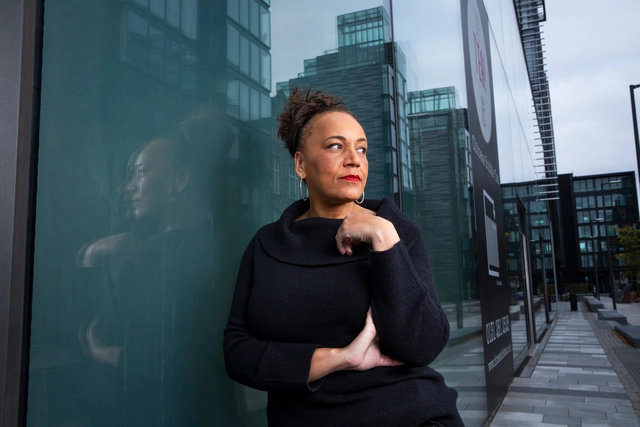
Lesley Lokko Appointed Curator of the 2023 Venice Architecture Biennale

The Board of La Biennale di Venezia, has appointed Ghanaian-Scottish architect, academic, and novelist Lesley Lokko as Curator of the 18th International Architecture Exhibition - La Biennale di Venezia. The 18th International Architecture Exhibition will be held from Saturday 20 May to Sunday 26 November, 2023.

Opinion: Women in Architecture Need a New Set of Role Models—Beyond the Star System

Opinion: Women in Architecture Need a New Set of Role Models—Beyond the Star System - Image 1 of 4
Sesc Pompéia / Lina Bo Bardi. Image © Nelson Kon

This article was originally published on CommonEdge as "Women in Architecture Need a New Set of Role Models—Beyond the Star System"

Women in Architecture Photography: 12 Names to Know

Subscriber Access | 

In many parts of the world, more women have architectural degrees than men. However, this fact hasn’t translated past university into the working world as women continue to be underrepresented across nearly all levels of practice.

The conversation regarding women in architecture gained tremendous traction back in 2013 with the petition for Denise Scott Brown to be recognized as the 1991 Pritzker Prize winner, alongside her husband and the consequent rejection of that request by Pritzker. The Architectural Review and Architect's Journal have, since 2015, jointly presented awards to the exceptional female practitioners as part of their Women in Architecture Awards program. The swelling of these movements have helped to promote not only the role but also the recognition of women in architecture.

What It’s Like to Be an Architect Who Doesn’t Design Buildings

There's an old, weary tune that people sing to caution against being an architect: the long years of academic training, the studio work that takes away from sleep, and the small job market in which too many people are vying for the same positions. When you finally get going, the work is trying as well. Many spend months or even years working on the computer and doing models before seeing any of the designs become concrete. If you're talking about the grind, architects know this well enough from their training, and this time of ceaseless endeavor in the workplace only adds to that despair.

Which is why more and more architects are branching out. Better hours, more interesting opportunities, and a chance to do more than just build models. Furthermore, the skills you learn as an architect, such as being sensitive to space, and being able to grasp the cultural and societal demands of a place, can be put to use in rather interesting ways. Here, 3 editors at ArchDaily talk about being an architect, why they stopped designing buildings, and what they do in their work now. 

The 9 Architecture Topics You Need To Know About in 2018

2017 is in the past. Nevertheless, the year has left us a series of lessons, new wisdom and better tools to help us face the challenges of 2018. What surprises will this year bring us?

We asked our editors at Plataforma Arquitectura (ArchDaily's Spanish arm) to make predictions based on what they've learnt in 2017, and to share with readers the topics they expect to be in the limelight in 2018.

5 Zaha Hadid Buildings Seen From Above

Subscriber Access | 

This week marks the first anniversary of the death of Zaha Hadid, the most successful and influential female architect in the architectural discipline. Born in Baghdad (Iraq) in 1950, Hadid became the first woman to receive the Pritzker Prize in 2004, and twelve years later received the gold medal from the Royal Institute of British Architects (RIBA).

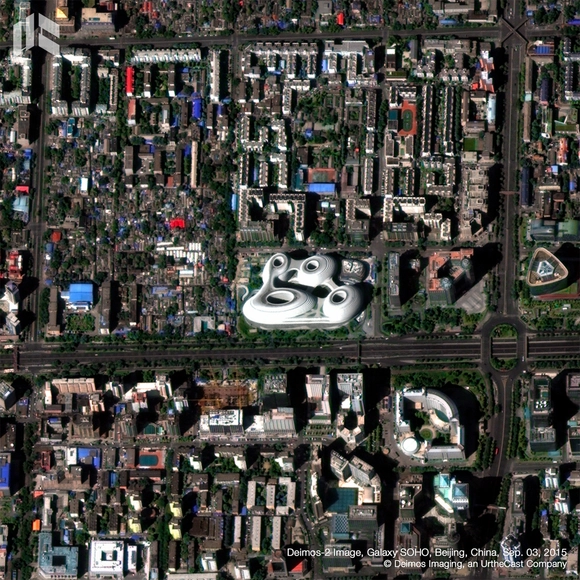
Hadid's untimely death left a fascinating and inspiring legacy. Meanwhile her firm, Zaha Hadid Architects, continues to work on nearly a hundred projects worldwide. To remember her legacy, Spanish company Deimos Imaging has shared a series of photographs focusing on Hadid's work in five countries.

The images were captured by the Deimos-2 satellite, which was launched in 2014 and designed for very high-resolution Earth observation applications, providing multispectral images of just 75 centimeters per pixel. Hadid's incredible works take on a new dimension when you contemplate their proportions from the sky—or rather, from a satellite.

5 Zaha Hadid Buildings Seen From Above - Image 1 of 45 Zaha Hadid Buildings Seen From Above - Image 2 of 45 Zaha Hadid Buildings Seen From Above - Image 4 of 45 Zaha Hadid Buildings Seen From Above - Image 5 of 45 Zaha Hadid Buildings Seen From Above - More Images+ 21

Mexican Architects Gabriela Carrillo and Rozana Montiel Win AR's 2017 Women in Architecture Awards

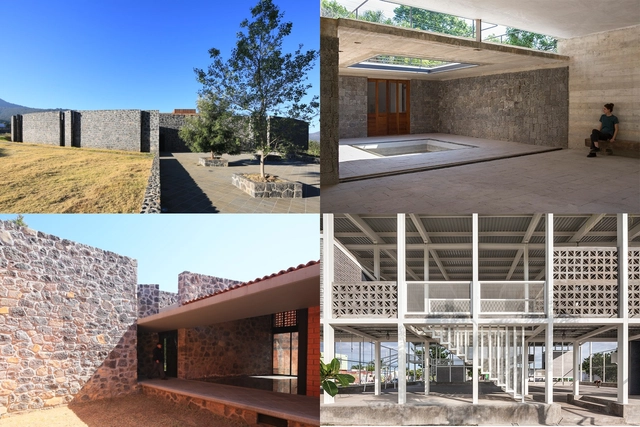
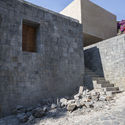
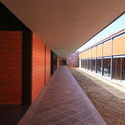
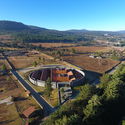
The Architectural Review and The Architects’ Journal have announced two Mexican architects as winners of their 2017 “Women in Architecture” Awards. This year’s Architect of the Year is awarded to Gabriela Carrillo of Taller Mauricio Rocha + Gabriela Carrillo, while Rozana Montiel Estudio de Arquitectura’s Rozana Montiel was named the winner of the Moira Gemmill Prize for Emerging Architecture. Both women were selecting for demonstrating “excellence in design and a commitment to working both sustainably and democratically with local communities.”

Mexican Architects Gabriela Carrillo and Rozana Montiel Win AR's 2017 Women in Architecture Awards - Image 1 of 4Mexican Architects Gabriela Carrillo and Rozana Montiel Win AR's 2017 Women in Architecture Awards - Image 2 of 4Mexican Architects Gabriela Carrillo and Rozana Montiel Win AR's 2017 Women in Architecture Awards - Image 3 of 4Mexican Architects Gabriela Carrillo and Rozana Montiel Win AR's 2017 Women in Architecture Awards - Image 4 of 4Mexican Architects Gabriela Carrillo and Rozana Montiel Win AR's 2017 Women in Architecture Awards - More Images+ 14

Interview with Toshiko Mori: “Rather Than Working With Forms, We Work With Forces”

As a Japanese immigrant who has spent much of her life in the United States, the architecture of Toshiko Mori occupies an interesting space: on one hand, the material and tectonic culture of Japan is, as she puts it, her “DNA.” On the other hand, her work clearly draws inspiration from the Modernists of 20th century America, and most notably from Mies van der Rohe. In this interview from his “City of Ideas” series, Vladimir Belogolovsky speaks with Mori (his former architecture professor) about materials, details, and the inspiration behind her work.

Interview with Toshiko Mori: “Rather Than Working With Forms, We Work With Forces” - Image 7 of 4Interview with Toshiko Mori: “Rather Than Working With Forms, We Work With Forces” - Image 14 of 4Interview with Toshiko Mori: “Rather Than Working With Forms, We Work With Forces” - Image 36 of 4Interview with Toshiko Mori: “Rather Than Working With Forms, We Work With Forces” - Image 42 of 4Interview with Toshiko Mori: “Rather Than Working With Forms, We Work With Forces” - More Images+ 52

AD Round Up: Women Architects Part II

Subscriber Access | 

In honor of International Women's Day, we've once again rounded up some stunning architecture designed by female architects (In case you missed Part 1, featuring work by Zaha Hadid, Jeanne Gang, and more, click here).

Why Was Patty Hopkins Photoshopped Out of This Image?

Architect's Journal has reported on an embarrassing - and controversial - fumble from the BBC. Not only has the media outlet been criticized for "largely ignoring women architects in its series The Brits Who Built the Modern World," but it's now come under fire for an image (appearing at the beginning of episode 3) in which Patty Hopkins is photoshopped out of a group that includes her husband Michael Hopkins, Norman Foster, Richard Rogers, Nicholas Grimshaw, and Terry Farrell.

The six architects are featured in RIBA's tie-in-exhibition; however, as the series chose to focus on the five male architects, the photographer removed Ms. Hopkins from the shot (unbeknownst to the BBC).

Lucy Mori of KL Mori Business Consulting for Architects told Architect's Journal: ‘I am shocked that women’s contribution to architecture has again been “airbrushed” from this populist history programme."

Take the 'Equity in Architecture Survey 2014'

The Missing 32% Project has a mission: to understand why in the US women represent about 50% of students enrolled in architecture programs, but fewer than 18% of licensed architects (and fewer in leadership roles). If you too are curious about this unusual discrepancy, you can help find an answer by participating in the Equity in Architecture Survey. The Missing 32% Project (along with AIA San Francisco) will use the results to determine best practices for attracting, promoting, and retaining talent in architecture.For more information about the project and to take the survey, go to http://themissing32percent.com/.

AJ Releases Shortlist for 2014 Woman Architect of the Year

Architects’ Journal has just released the shortlist for theirWomen in Architecture Awards, which aim to "raise the profile of women architects in a sector where women still face an alarming degree of discrimination."

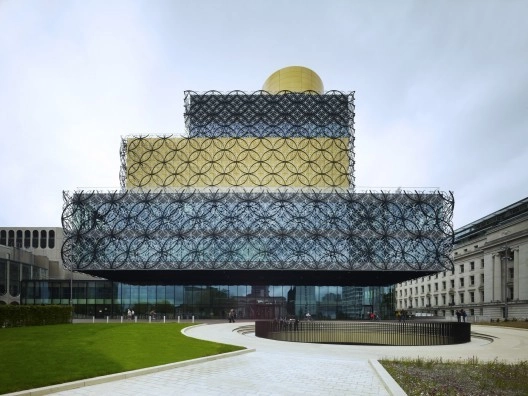
Christine Murray, Editor of Architects’ Journal, commented:“I’m delighted to announce this year's shortlist, which includes the women behind the celebrated Library of Birmingham, the new Stonehenge development and the Giant's Causeway visitor centre. The awards celebrate design excellence and leadership — qualities needed to succeed as an architect — and especially among women, who are under-represented in the construction industry.”See the list, after the break.

AJ Releases Shortlist for 2014 Woman Architect of the Year - Image 1 of 4AJ Releases Shortlist for 2014 Woman Architect of the Year - Image 2 of 4AJ Releases Shortlist for 2014 Woman Architect of the Year - Image 3 of 4AJ Releases Shortlist for 2014 Woman Architect of the Year - Image 4 of 4AJ Releases Shortlist for 2014 Woman Architect of the Year - More Images+ 3

The Indicator: Why 2013 was Denise Scott Brown’s Year

Subscriber Access | 

A lot of things happened in 2013. Zaha was in the news about every other week. She was copied in China and then accused of designing a giant vagina in Qatar. Rem’s son is producing a documentary about his dad. We lost Prentice Women’s Hospital. We almost lost the American Folk Art Museum. There were a lot of stellar exhibitions and one that took things On the Road. It was the year of high-rise after high-rise, with Rem changing the game yet again by lifting the podium off the ground and sticking to his formal guns, refusing to indulge in curvy shapes.

Things at Architecture for Humanity were shaken up with the departure of co-founders Cameron Sinclair and Kate Stohr. Resiliency became the new sustainability. China suddenly became defined less for its adventurous architecture and urbanism and more for its darker, smoggier flipside. My hometown, Los Angeles got a few more bike lanes, some big plans for its concrete river, plus a new Bloomberg-esque mayor with attendant sustainability tsar. There were people complaining about architecture and telling us why they left the profession. Kanye got attacked for daring to tell us why he likes architecture, and then architecture loved talking about Kanye for weeks on end until we just wanted architecture to shut up about Kanye. Poor Kanye. There are so many things we could say were key in 2013. It’s been a great year. And there were also a lot of fantastic buildings.

On Gender, Genius, and Denise Scott Brown

"In the 10 years I’ve been running my architectural practice, I [...] have gotten accustomed to people assuming that my male employees — whether younger or older — are the lead architects who will be making final decisions. Yet this time a lingering frustration colored the rest of my day, a sense that while feminism has made significant progress on a conscious level, little change has trickled down into the unconscious of our culture." Check out the rest of Esther Sperber's column for Lilith, in which she details the past travails of female architects (particularly Denise Scott Brown's), and their future mission, here.

Necessary Hauntings: Why Architecture Must Listen to its Forgotten Women

Subscriber Access | 
Necessary Hauntings: Why Architecture Must Listen to its Forgotten Women - Image 2 of 4
Courtesy of Women in Architecture, via Metropolis Mag

This article, by Alexandra Lange, originally appeared on Metropolis Magazine as "Architecture's Lean In Moment."

“Women are the ghosts of modern architecture, everywhere present, crucial, but strangely invisible,” writes historian Beatriz Colomina in “With, Or Without You,” an essay in the Museum of Modern Art’s 2010 catalog, Modern WomenArchitecture is deeply collaborative, more like moviemaking than visual art, for example. But unlike movies, this is hardly ever acknowledged.” 

Colomina goes on to chronicle the history of modernism’s missing women, acknowledged, if at all, as working “with” Mies van der Rohe, Le Corbusier, Alvar Aalto, or Charles Eames. To put yourself in the shoes of Lilly Reich, Charlotte Perriand, and Aino Aalto, simply watch the cringe-worthy video of the Eameses on the Home show in 1956; Ray['s] introduced as the “very capable woman behind him” who enters after Charles has bantered with host Arlene Francis.

This spring, these ghosts came back to haunt us: Arielle Assouline-Lichten, a student at the Graduate School of Design at Harvard, read excerpts from an interview with Denise Scott Brown in which she mentioned her own absence from partner Robert Venturi’s 1991 Pritzker Prize. “They owe me not a Pritzker Prize but a Pritzker inclusion ceremony,” Scott Brown said. “Let’s salute the notion of joint creativity.”

Read all of Alexandra Lange's essay, after the break...

"Women In Architecture" Dollars, Hours Away From Reaching Campaign Goal

UPDATE: "WIA" has now reached its goal. A group of women fed up with the state of architecture today have started a campaign to transform the profession, to "redefine the ideas of success and compensation within our discipline [..., to create] healthful trends both within the academy and profession with real life/work balance [..., and] create more women leaders within the discipline." As they put it: "We want an approach appropriate to this century." The campaign, run by Nina Freedman, the Director of Projects for Shigeru Ban Architects, and Lori Brown, an architect, author and associate professor at Syracuse University, needs to earn only a few hundred dollars more to reach their $7,000 dollar goal. However, only 35 hours remain - if you're interested in learning more, check out their video here.

Could Goldiblox Get Girls Into Architecture?

TechCrunch reported today that GoldieBlox, the startup that created “GoldieBlox and the Spinning Machine," a girl-oriented alternative to LEGO, has struck its first nationwide distribution deal with Toys ‘R’ Us. Responding on twitter, the Harvard GSD (@HarvardGSDExecED) asked its followers: could GoldieBlox be one of the answers to encouraging women to enter the architecture and engineering professions? The response from Tabitha Ponte (@tcpg) became an interesting exchange - check it out, after the break...