1. ArchDaily
  2. Virtual Reality

Virtual Reality: The Latest Architecture and News

The Top 5 Virtual Reality and Augmented Reality Apps for Architects

This article was originally published by Archipreneur.

Virtual reality and augmented reality tools for the AEC industry are getting increasingly better and more optimized. As prices keep dropping, there are fewer reasons why every architect, engineer, contractor, and owner shouldn’t use some form of VR/AR in bringing their projects to life.

From being a novelty a few years ago, VR/AR solutions are slowly becoming a medium that’s transforming the way professionals in the AEC industry communicate, create and experience content. Offering a more immersive experience of architectural designs, but also products and areas related to space building, VR and AR tools are becoming an industry standard that offers rapid iterations and opportunity to refine designs in collaboration with clients and colleagues.

Why Henning Larsen Architects Believe that VR Is "a Gift for the Future of Architecture"

Subscriber Access | 

Currently, virtual reality and 360-degree video are somewhat niche tools, but they are rapidly gaining in popularity. These immersive technologies give architects a means to better decipher a client’s expectations—everything from a building’s natural lighting to the choice of tile backsplash can be actively assessed at any point in the design and construction process. This transformative technology has already been fully incorporated into some practices. ArchDaily interviewed Henning Larsen’s Chief Engineer of Sustainability Jakob Strømann-Andersen to better understand the current and future applications of virtual immersion in architecture.

Why Every Architect Should Use a 360-Degree Camera to Capture Their Projects

Subscriber Access | 

As we know, architects are inveterate travelers. They like to see, understand, and capture the details of their favorite works. For this reason, at ArchDaily we believe that every architect should carry a 360-degree camera with them to capture and share their experiences across the world. Below are five reasons why.

This Accurate, Augmented Reality Virtual Ruler Is Pretty Impressive

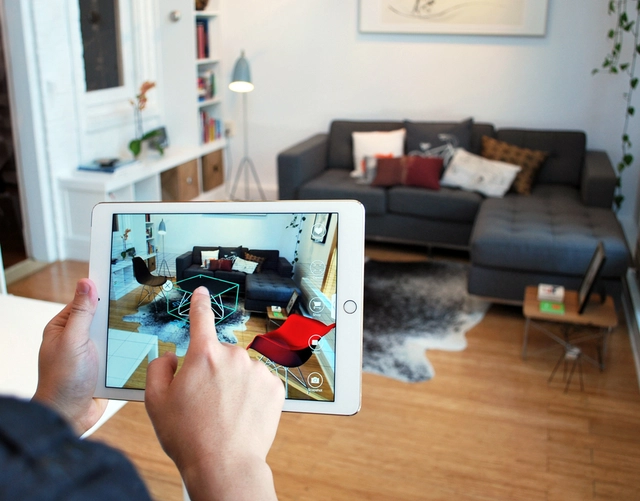
Not many people would consider augmented reality particularly useful; it makes for fun dog selfies and other filtered images. But our tunes will probably change with the release of AR Measure™, an app that turns your phone into an accurate ruler. Using augmented reality, the app can calculate distances in 3D spaces captured with your phone's camera.

Created by Laan Labs, the same company who brought us FaceSwap, the app is developed on top of Apple's ARKit framework. How does it work, you ask?

Call for Entries: Vimania Architecture Competition

Augmented reality provides us with new research field of architecture. Now you do not need architectural models. We can see the building as it is with all the details as a virtual model. These properties of augmented reality give us new opportunities. For example, we can compare the buildings from different regions of the world, from different eras in the same scale. We can make collections of buildings, unimaginable compositions.

Explore Frank Lloyd Wright's Curvaceous Unbuilt House Design for Marilyn Monroe

Subscriber Access | 

Some unbuilt designs—the hopes they reveal and the reasons they stayed unbuilt—tell a powerful story. So it is with the home Frank Lloyd Wright designed for Marilyn Monroe and Arthur Miller. Or perhaps it’s what we think we know about Marilyn that makes it so poignant?

The union between a quiet-living intellectual and the world’s greatest sex symbol was baffling to the public, and the conflict between their aspirations and personalities seems to have played out in their plans for this Connecticut home. After moving into Miller’s country retreat, Monroe asked Wright to design a new house for them on this vast piece of land.

Tour Frank Lloyd Wright's Final (Unbuilt) House Design With this 3D Model

Subscriber Access | 

The last house designed by Frank Lloyd Wright was never built, with its plans being delivered to the client just days after Wright’s funeral. But the realization of his vision is tantalizingly possible, as those plans, and the parcel of land it was designed for, are still held by the same family—and are for sale, along with the adjoining plot and an existing Wright house.

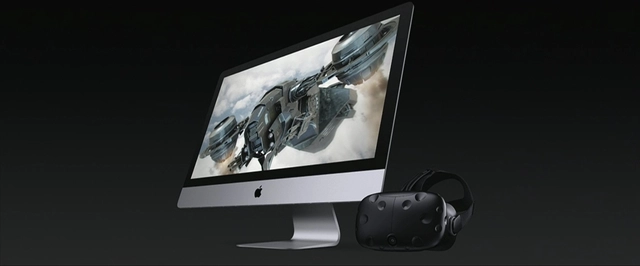
Updated Displays and Graphics Processors Improve iMacs’ Capabilities for Architectural Software

At Apple's Worldwide Developers Conference (WWDC) today, the US-based tech giant announced the latest slate of performance updates to their software and hardware products. Targeting software developers and other high-end users, the event was highlighted by the announcement of significant upgrades to their computer’s graphics and processing capabilities—or in architect’s terms—the components required to work on projects like creating content within a VR experience or real-time 3D rendering.

Updated Displays and Graphics Processors Improve iMacs’ Capabilities for Architectural Software - Image 1 of 4Updated Displays and Graphics Processors Improve iMacs’ Capabilities for Architectural Software - Image 2 of 4Updated Displays and Graphics Processors Improve iMacs’ Capabilities for Architectural Software - Image 3 of 4Updated Displays and Graphics Processors Improve iMacs’ Capabilities for Architectural Software - Image 4 of 4Updated Displays and Graphics Processors Improve iMacs’ Capabilities for Architectural Software - More Images+ 6

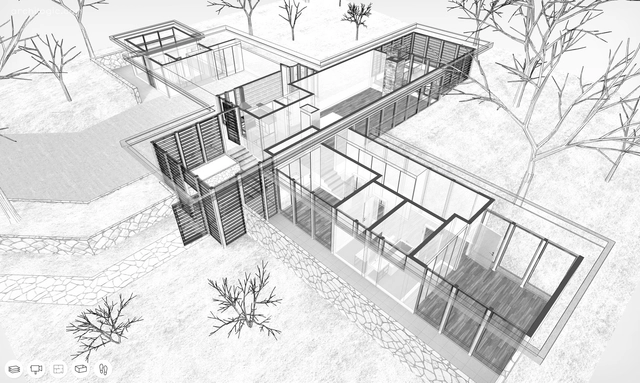
A Virtual Look Inside the Case Study House #2 by Sumner Spaulding and John Rex

Subscriber Access | 

The second house in Arts & Architecture magazine’s Case Study Houses program shows the hallmarks of the series: an emphasis on light-soaked living areas, indoor-outdoor living, strong horizontal lines dominated by a flat roof, and so on. It is distinguished, though, by particularly creative details linking the indoor and outdoor areas, and by a strong awareness of function.

Will Virtual Reality Transform the Way Architects Design?

Over fifty years ago, Bob Dylan sang the words that we still know so well today, “the times, they are a changin’.” He was right.

We’ve seen change happen all around us. Architecture looked pretty different 50, 30, and even 10 years ago. And the technology powering the industry has evolved to keep pace. First, with a move from the drafting table to the computer screen with 2D CAD, and now to Building Information Modeling (BIM) where information-rich 3D models allow architects to create in unprecedented ways.

Architecture Gear Giveaway: Complete Samsung 360 Set

Are you planning an architectural odyssey between the months of June and August? If so, we’ve got some exciting news! We want to equip two ArchDaily readers with a full set of virtual reality products from Samsung--a Galaxy S8 phone, a Gear 360 camera, and a Gear VR headset! With this top-of-the-line, brand new technology you can record, 30 minutes of live stream, and share your site visits between a wide range of devices.

For the past year we have been committed to exploring and furthering the potential of Virtual Reality for architectural applications. As part of this initiative, we are thrilled to partner with Samsung, creating the opportunity to collect and disseminate 360 experiences of important projects with the help of the ArchDaily mind hive.

Applying for a chance to take the gear on the road is simple!

Trends in Architectural Representation: Understanding The Techniques

Subscriber Access | 

The representation of architecture is important in the absence of tangible space. Throughout a lifetime, even the most devoted, well-travelled design enthusiast will experience only a small percentage of architectural works with their own eyes. Consider that we exist in only one era of architectural history, and the percentage reduces even further. Many architectural works go unbuilt, and the buildings we experience in person amount to a grain of sand in a vast desert.

Then we consider the architecture of the future. For buildings not yet built, representation is not a luxury, but a necessity to test, communicate and sell an idea. Fortunately, today’s designers have unprecedented means to depict ideas, with an explosion in technology giving us computer-aided drafting, photo-realistic rendering, and virtual reality. Despite these vast strides, however, the tools of representation are a blend of old and new – from techniques which have existed for centuries, to the technology of our century alone. Below, we give five answers to the question of how architecture should be depicted before it is built.

This New VR Analytics Tool Allows Architects to Track Users' Attention Within a Virtual Model

With virtual reality technology becoming a more and more common tool in architecture offices, engineers have already begun thinking about the next wave of advancements that could add even more functionality into their products. One of these advancements is through the use of one of the information age’s biggest revolutions: analysis of user feedback.

Lauching today, 3D visualization company InsiteVR has implemented these features into their software for the first time – allowing architects to learn about how people are viewing their models in real time.

Envisioning the City of the Future: Making the Invisible Visible

The international contest is open to students, graduates and experts and its aim is to imagine and design possible scenarios of the city of the future: How will smart and sharing cities look like in the future? How are these changes going to impact on people’s lives in cities?

Take a Virtual "Fly-Through" of the Star Wars Millennium Falcon With This 3D Model

The Star Wars universe contains some impressive buildings. However, in the original trilogy, it's actually the Millennium Falcon, Han Solo's non-descript yet highly tuned ship, that provides the most important architectural setting for the story's events, acting as the de facto base for our heroes' scheming. While it's certainly not the largest or most complex floor plan in the universe, the interior of the Millennium Falcon is intriguing for the way it resolves the ship's circular shape.

With this model from Archilogic of the Millennium Falcon's main floor, Star Wars fans can get a sense of what it's like to tag along with Luke, Han, and the rest of the group—whether that's by hanging out in the living area, traversing the ship's curved corridors, or even sitting in the cockpit as an Imperial Star Destroyer approaches, the model has it all.

A Virtual Look Inside the Case study house #12 by Whitney R Smith

Subscriber Access | 

In designing his (unbuilt) house for the Arts & Architecture Case Study program, Whitney Smith, like Richard Neutra, prioritized the connection to outdoor space. His motivation, however, was more specific than a desire to extend the living area of a small house. Rather, he wanted to create a highly personal space, geared to the passion of his hypothetical client. Seeing conventional plans as a straitjacket for residents who craved appropriate working space within their home (be it a sewing studio or a photography darkroom), he aspired to fit this house to the needs of a keen horticulturist.

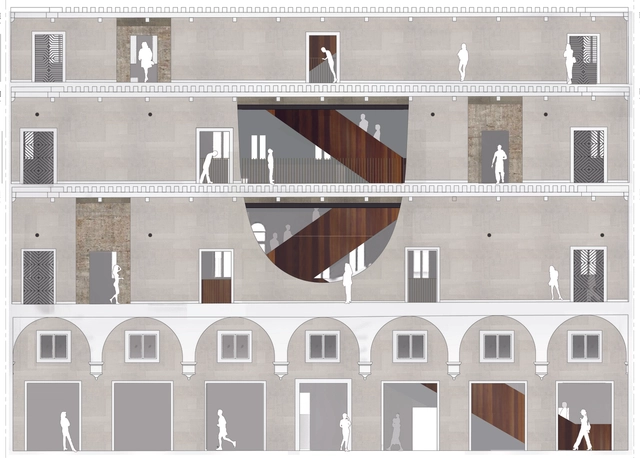
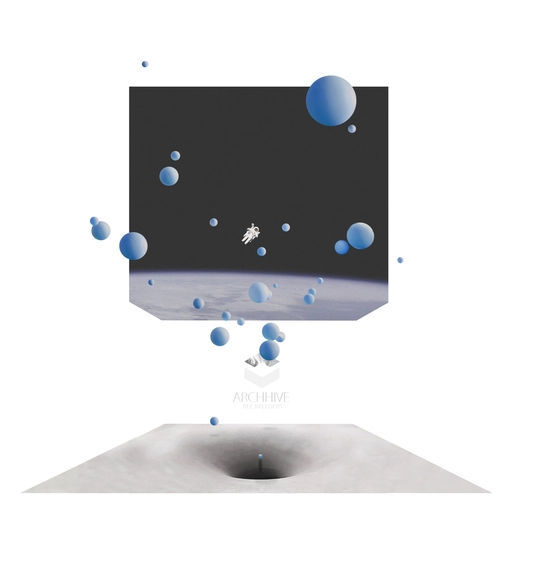
Archhive: Architecture in Virtual Reality Competition Winners Announced

Bee Breeders has announced the winners of its Archhive: Architecture in Virtual Reality competition, which asked participants to design a virtual exhibition gallery to showcase future Bee Breeders competition winners. In this virtual gallery, visitors would be able to “walk” around and explore the work of selected winners and guest contributors.

The three winners of Archhive: Architecture in Virtual Reality are:

Archhive: Architecture in Virtual Reality Competition Winners Announced - Image 1 of 4Archhive: Architecture in Virtual Reality Competition Winners Announced - Image 19 of 4Archhive: Architecture in Virtual Reality Competition Winners Announced - Image 26 of 4Archhive: Architecture in Virtual Reality Competition Winners Announced - Image 39 of 4Archhive: Architecture in Virtual Reality Competition Winners Announced - More Images+ 39

This Kickstarter Camera Mimics Human Eyesight

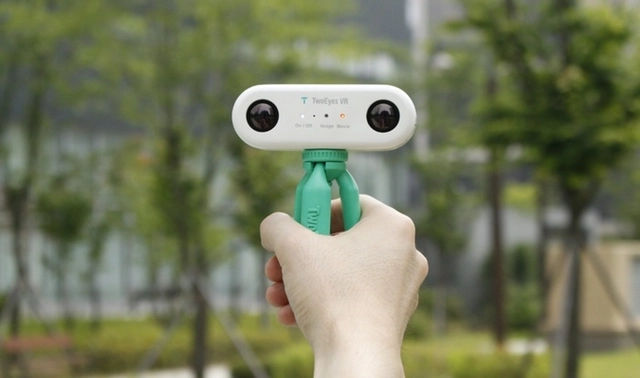
The team at TwoEyes Tech made up of HunJoo Song, SeonAh Kim, and Vivek Soni has launched a kickstarter campaign for its TwoEyes VR 360 camera, which is the first binocular 360-degree VR, 4K camera that mirrors human eye sight.

Using two pairs of 180-degree lenses that are placed 65 millimeters apart—the average distance between a person’s eyes—the camera captures 360-degree footage, “just like your natural eyes would view the world.” This footage can be uploaded to 360-degree-compatible social media platforms like YouTube 360, Facebook 360, and Twitter 360, or enjoyed through virtual reality binoculars or 3D television.

This Kickstarter Camera Mimics Human Eyesight - Image 1 of 4This Kickstarter Camera Mimics Human Eyesight - Image 2 of 4This Kickstarter Camera Mimics Human Eyesight - Image 3 of 4This Kickstarter Camera Mimics Human Eyesight - Image 4 of 4This Kickstarter Camera Mimics Human Eyesight - More Images