The Bothy Project - Pig Rock Bothy. Scottish National Gallery of Modern Art, Edinburgh, Scotland. 2014. Image Courtesy of The Building Centre
As part of the Dylan Thomas in Fitzrovia festival, The Building Centre is examining the space Dylan Thomas and other writers depend on to create their work. A Shed of One's Own is a photographic exploration of unique sheds with architectural significance and literary connections. From award-winning studios in Central London to weathered bothies in Scotland, this exhibition explores the importance of space for creativity and inspiration.
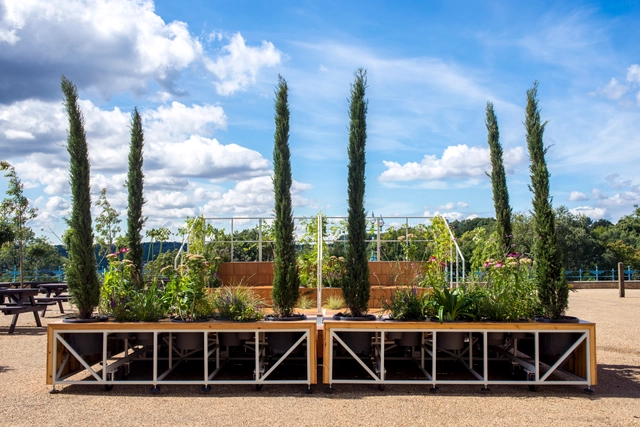
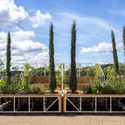
The Decorators, an interdisciplinary group of practitioners working with space in London, recently transformed the terrace overlooking the city at Alexandra Palace by installing a mobile Italian garden. As a "landscape of scattered objects" which geometrically piece together to resemble a formal garden, the designers describe the project as somewhere between "grotto and folly, garden and landscape, stage and amphitheater," all the while drawing from the historical character of the surrounding context. The scheme ultimately "breaks the monumental proportions of the main building to meet visitors with a more intimate scale on their first encounter" with the palace.
In the first part of their new micro documentary series on architecture and water, Ellis Woodman and a team at the Architectural Review (AR) have collaborated with architects, developers, urbanists and thinkers to examine the latent connections between water infrastructure and our built environment. Taking a journey by narrowboat through London, discussing a raft of radical ideas which may offer the keys to unlocking the potential of the river along the way, the films discuss how we might begin to shape the contemporary city's relationship with its urban waterways. Can "floating parks, amphibious houses, floodable public squares, new wetlands or brand new canals foster a more meaningful relationship between the citizen and the city’s waters?"
The Royal Institute of British Architects (RIBA)'s Future Trends Survey for September showed that, for yet another month, confidence is high among UK architects, with the workload index up fractionally to +29 from +28 in August. Again, this positive figure was spread right across the country, with the most optimistic reports coming from Northern Ireland and the North of England, reporting workload index figures of +80 and +46 respectively - promising figures considering that these two areas were "slowest to show signs of recovery" after the recession, according to the RIBA.
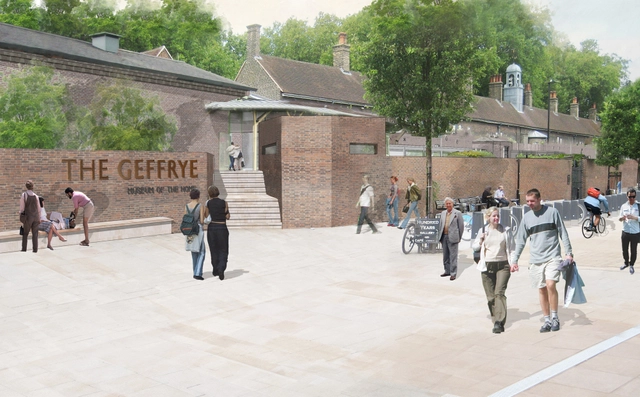
Wright & Wright Architects has revealed their designs for the Geffrye Museum in East London, a £15 million redesign that will increase the museum's total space by almost 40% through "unlocking" previously unused areas of the museum's 18th century almshouses. The design replaces a scheme by David Chipperfield Architects, which last year failed to secure planning permission in part because of the hugely controversial proposal to demolish the former Marquis of Lansdown Pub that occupies the corner of the site.
On the heels of Mayor Boris Johnson’s announced plan to construct an 18-mile protected bike lane by March 2016, architect David Nixon and artist Anna Hill have released their vision for relieving London’s congested streets with a floating “Thames Deckway” for cyclists. The proposal, though just in its preliminary design phase, claims the river Thames is currently a missed opportunity that could serve as a major travel artery for cyclists. If constructed, the £600 million project would run east-west for seven miles along the river’s southern bank, from Battersea to Canary Wharf, and harness it’s own energy through solar, tidal and wind power. Nixon and Hill have founded the River Cycleway Consortium in support of the project, which includes Arup and Hugh Broughton Architects.
London's Mayor Boris Johnson has largely rejected the proposals by the Skyline campaign, organized by the Architects' Journal and the Observer, which aimed to introduce measures to allow more considered development in London, following the news that the UK's capital is currently going through its biggest building boom in recent memory.
The Architects' Journal reported on Friday that the mayor rejected proposals for a presumption against tall buildings submitted for planning permission, a review of over 200 tall buildings currently either proposed or being constructed, a more rigourous system of masterplanning, and an independent skyline commission to examine new proposals. However, he did support the idea of a city-wide 3D model containing both existing and proposed buildings, which would allow planning officers to make more informed decisions.
More on the issue, and a detailed look at the mayor's response to the proposals, after the break
The UK's Shadow Culture Minister Helen Goodman has outlined a number of ideas that she would like to put into practice should her party win the next general election, reports the Architects' Journal. The proposals, made at last week's Labour Party Conference in Manchester, include increasing the number of open architecture competitions held in the UK and holding a major UK-wide annual festival of architecture. Read on after the break for more on Goodman's proposals.
London Mayor Boris Johnson has ruled in favour of the controversial Mount Pleasant scheme in North London at a public hearing held earlier today. The scheme was called in for a hearing at the request of the site's owner Royal Mail who claimed that Islington and Camden councils (who are both responsible for parts of the huge site) were taking too long over the planning application, but has been criticized heavily by locals who feel that the scheme is not appropriate for the site, and by the councils who feel that the scheme's 24% affordable housing is unacceptably low. However, Johnson drew criticism in June for apparently “compromising his neutrality” in advance of the hearing when he stated that the redeveloped Mount Pleasant “will be a wonderful place to live.”
Johnson approved the scheme after a heated hearing attended by over 100 members of the public and press, with many in attendance booing and heckling the mayor and representatives of the Royal Mail.
The Royal Institute of British Architects (RIBA)'s Future Trends Survey for August showed that confidence among UK practices has remained stable at "a very positive" balance figure of +28. The positive outlook was shared by the whole country, with every region returning a balance figure of above +20 - a significant improvement for Wales and the West, who last month were at a more reserved +12. "Sentiment about future workload prospects for the architects’ profession has been strong throughout 2013 and 2014, and we are now beginning to see this reflected in increased levels in the aggregate value of work in progress," said the RIBA, adding that the increasing workload is being "driven primarily by growth in the commercial and private housing sectors."
The Royal Institute of British Architects (RIBA) has selected Irish architects Sheila O'Donnell and John Tuomey as recipients of the 2015 Royal Gold Medal, one of the world's most prestigious lifetime achievement awards for architecture. Approved personally by the Queen, the award recognizes those who have made a significant contribution to the advancement of architecture.
The RIBA praised the way O'Donnell + Tuomey came together in the early 1990s to combine "Sheila’s quiet, studied 'rationalism' alongside John’s fluent, rhetorical 'constructivism,'" commenting that "through their buildings, publications, exhibitions and teaching they have forged a confident new identity for Irish architecture."
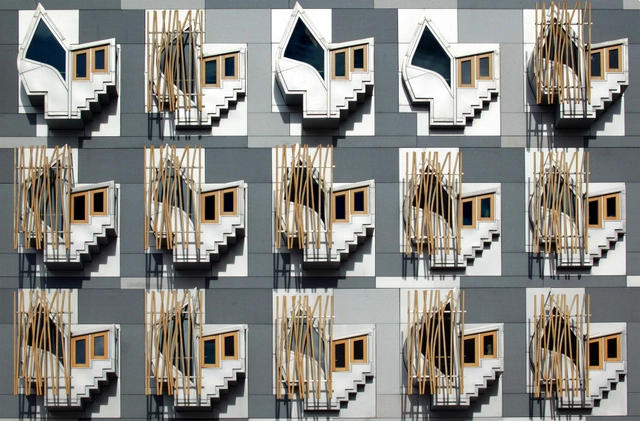
Arguably there are only two architects in history that have become almost completely synonymous with one particular city - Charles Rennie Mackintosh for Glasgow and Antoní Gaudi for Barcelona. Indeed, a Catalonian architect, Enric Miralles, designed the Scottish Parliament Building in Holyrood, Edinburgh. The fact that both of these cities are part of large enclaves who are seeking, or have sought, independence is perhaps just a coincidence. Architecture, often used as a symbol for the identity of nationhood, will certainly be part of a wider dialogue about the Union of the United Kingdom following yesterday's referendum.
Oliver Colvile, chairman of the UK's All Party Parliamentary Group (APPG) on Excellence in the Built Environment, has proposed that UK Members of Parliament should be invited to an architecture workshop to improve their understanding of the built environment. The workshop would be jointly run by the APPG and the Farrell Review, and could include activities such as designing a virtual town or an architectural sightseeing tour along the Thames. More on the proposal after the break.
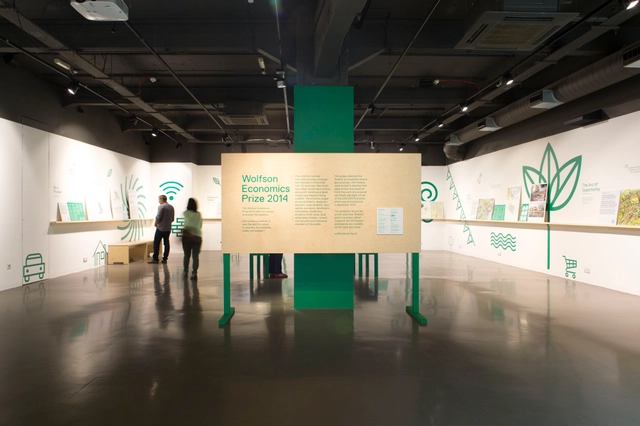
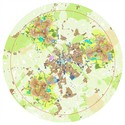
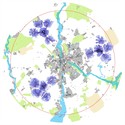
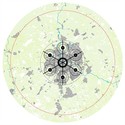
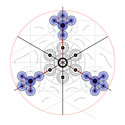
On September 3, 2014, urban design consultancy URBED was announced winner of the 2014 Wolfson Economics Prize. The competition has spurred unprecedented conversation and debate over the concept of Garden Cities in the UK, while the finalists call for the development of theoretical ideas and implementation of practical solutions. ArchDaily brought you the winning proposal earlier, and The Building Centre, an independent forum of the built environment, teamed up with the Wolfson Prize organizers to bring you an exhibit further exploring the broad range of design solutions from over 200 brilliant entries.
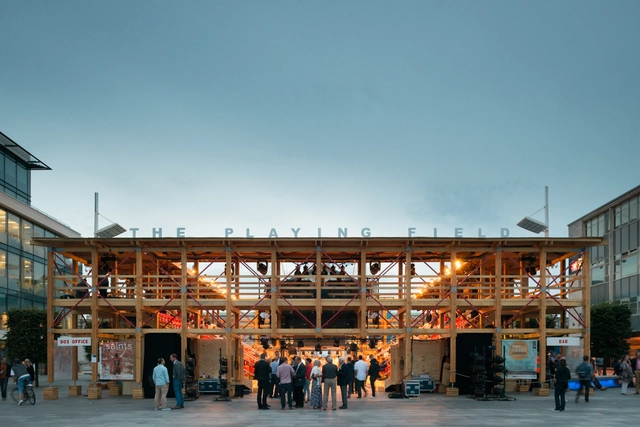
The Playing Field, a 450-seat "high tech Tudor theatre" in the heart of the British city of Southampton, represented a major collaboration between the city’s arts organisations and was realised through a collaborative effort between engineers Structure Workshop and Assemble Studio, the London based practice known for innovative interventions within the public realm. Their Cineroleum, coupled with a bold renovation of a yardhouse, are part of a small canon of cultural buildings designed to temporarily reimagine the urban landscape on a small scale.
Open House 2014, a concept developed in London twenty two years ago which has now spread to cities across the world, will throw open the doors to some of the UK capital's most inspiring spaces and interiors this month. "Revealing", the theme of this year's Open House, intends to "shed light on issues that are relevant to local communities." In this way, the scheme hopes to examine how the built environment is evolving. Exploring the role of architects, engineers and contemporary design in revitalising places and spaces, the festival hopes to show above all "how good design can make London a more livable, vibrant and enjoyable city."
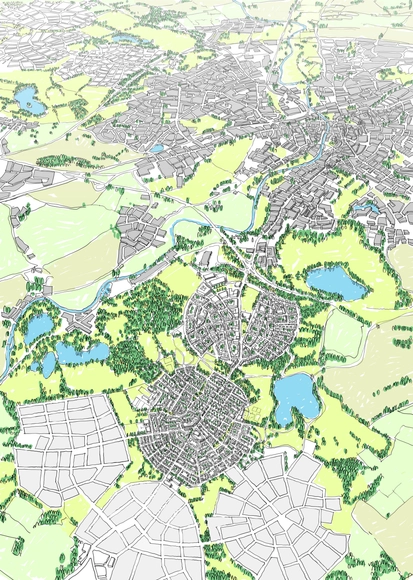
British urban design consultancy URBED (Urbanism, Environment, Design) have been announced as the winners of the 2014 Wolfson Economics Prize for their proposal to reenergise the Garden City (GC) movement, first conceived by Sir Ebenezer Howard in 1898. David Rudlin and Nicholas Falk's submission argues that forty cities in England, including Northampton, Norwich, Oxford, Rugby, Reading and Stafford, could benefit from 'GC status'. The award comes in the wake of polling conducted for the prize showing that 68% of the 6,166 Britons polled thought that garden cities would protect more countryside than the alternatives for delivering the housing we need.
Read about URBED's submission, and the fictional town of Uxcester, after the break.