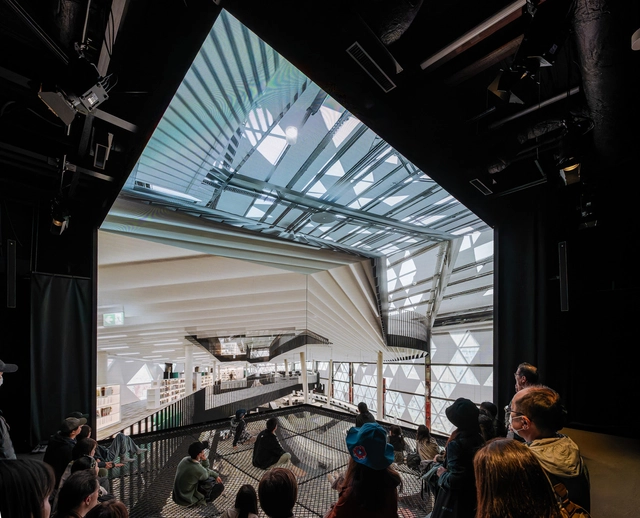
Rapid urbanization, driven by population growth, is among the powerful megatrends transforming how cities are built. The world is adding a city the size of Madrid every single week — and will do so for decades to come. To meet this demand sustainably, a collaborative, systems-thinking approach to construction is needed.
Architects and designers around the world are pushing the boundaries of modern design, and Corian® Solid Surface is being bent, curved, and twisted to help them realize their boldest visions.
In hospitality spaces, for example, every surface has the potential to shape a guest's experience from the first invitational moment. Visionary designers are using their talents to convey the story of a place, the emotion of an aesthetic, and the essence of a brand. With the right material, we can profoundly influence how a space feels and functions for guests, using everything from sleek, welcoming reception counters to soothing spa-like shower escapes to soaring backlit sculptural panels as our canvas.
Videos
First Prize Winner: Nest. Image Courtesy of Buildner
Buildner has announced the results of its Kinderspace Edition #2 Competition and launched the third annual Kinderspace Edition #3 with an upcoming registration deadline of 26 November 2025. Following its inaugural launch, this annual international competition once again invited architects, designers, and educators to explore new possibilities for early childhood learning environments.
Participants were tasked with envisioning spaces that inspire discovery, foster imagination, and support the emotional and cognitive development of young children. The aim was to move beyond standardized classroom design and propose innovative, flexible, and nature-connected spaces that reflect a deeper understanding of how children interact with their surroundings.
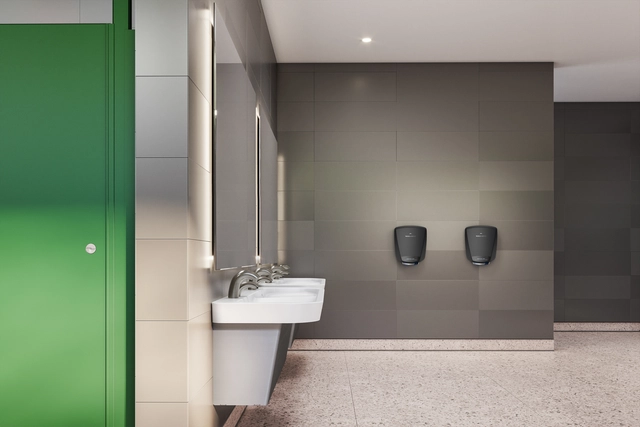
In the pursuit of cleaner, safer public restrooms, hand dryers have long faced a unique challenge: how to effectively kill germs in fast-moving air. Traditional germicidal technologies—like UV lights and ionizers— struggle to deliver meaningful impact because they only have milliseconds to interact with airborne microbes. Cold plasma technology is emerging as a new contender that could redefine hygiene standards.
In the Water Lilies rooms at the Musée de l'Orangerie in Paris, Claude Monet conceived a 360-degree gallery where visitors are enveloped by continuous landscapes, dissolving the boundaries between painting and environment. There, he sought not merely to represent nature through his distinctive style, but to construct an atmosphere, a perceptual state that the visitor literally inhabits. Architecture, traditionally associated with materiality and permanence, thus gains a new dimension of time, movement, and sensory experience.
Similarly, when contemporary architecture transforms its planes into active surfaces, it extends this pursuit of immersion and presence, now amplified by technology. At the entrance of SOPREMA's new Mammut Tower in Oberroßbach, Germany, architecture and digital narrative converge. Designed and executed by ASB GlassFloor, the newly completed lobby is an immersive environment combining glass, light, and sound into a complete spatial and sensorial experience, demonstrating how interactive technologies can become architectural materials in their own right.
In the world of interior architecture, where creativity and culture intersect, Tola Ojuolape stands as a designer whose work is a testament to personal narrative. From her early studies in art and construction to her degree in interior architecture, Tola's career has been shaped by a deep connection to her Nigerian heritage, discovered during her travels back to the African continent. This journey has profoundly influenced her design philosophy, creating a process tightly woven with history, culture, and a sense of place.
Terrazzo has long stood at the intersection of durability, artistry, and timeless appeal. Originating in Italy as a pragmatic way to reuse marble fragments in flooring, terrazzo has since become synonymous with elegance and strength in architecture. Traditionally crafted by hand using stone chips and lime and later, cement, it created continuous, seamless surfaces that celebrated both craftsmanship and endurance. Over time, as construction methods evolved and projects began to demand greater efficiency, adaptability, and modularity, terrazzo expanded beyond its traditional limits. From poured-in-place systems to modern epoxy-based formulations, it has evolved into a versatile material that enables thinner sections, faster installation, and a wider range of colors and aggregates. Today, precast terrazzo complements the traditional method, unlocking new applications without compromising performance or beauty, from stairs and wall cladding to furniture and custom design elements.
Peace of mind is essential when selecting tapware for a commercial project. As a global leader in premium architectural fixtures and fittings, ABI Interiors is committed to delivering sustainable, design-led solutions that meet architects' practical and creative needs across commercial, residential, and large-scale developments.
Videos
1st Prize Winner: Our Light. Image Courtesy of Buildner
Buildner has announced the results of its fourth annual Hospice - Home for the Terminally Ill international architecture ideas competition. This global call for ideas continues to explore how architecture can support end-of-life care with empathy, dignity, and contextual sensitivity. The competition invited architects and designers to move beyond clinical requirements and envision spaces that offer emotional warmth, social connection, and a profound sense of place.
While a book or piece of music can be easily set aside if it doesn't capture our interest, architecture is different. A building endures for decades, and it shapes the landscape and influences the lives of its occupants for years to come. This permanence brings with it a unique set of challenges: architects must design spaces that impact collective life, often under tight deadlines, limited budgets, and significant pressure. In addition to navigating complex regulations and coordinating construction, architects face the misconception that design is simple, or that anyone could do it. The constant balancing act between quality, cost, and speed often leads to sacrifices — whether in time, health, or the integrity of the project itself. This cycle not only wears down the profession but diminishes society's understanding of the true value of design.
The well-known "good, fast, and cheap" triangle is rarely resolved without the architect sacrificing their own time, health, or even the quality of the project. Repeated for decades, this equation fuels a cycle of wear that not only undermines the profession but also depreciates the value of design in society, even diminishing the role of such a beautiful and important discipline.
Buildner, in partnership with the Government of Dubai, has announced the results of the 2024/25 House of the Future competition. Following the success of its inaugural edition in 2023, this second edition invited architects and designers worldwide to develop an affordable, expandable, and forward-thinking prototype home tailored to the evolving needs of Emirati families.
Organized in collaboration with the Mohammed bin Rashid Centre for Government Innovation and the Sheikh Zayed Housing Programme, the competition offered a total prize fund of €250,000 (1 million AED). Winning entries are now being reviewed for potential inclusion in the UAE's national catalogue of housing designs, which provides citizens with a selection of pre-approved, innovative home models.
The shortlist for the prestigious BRICK AWARD 26 has been announced, revealing 50 exceptional brick buildings from across the globe. Organized by wienerberger, the biennial award celebrates architectural innovation and craftsmanship in brick and ceramic design, recognizing projects that push the boundaries of material, form and context. This year's selection spans five continents and 21 countries, highlighting the enduring relevance of brick in contemporary architecture; from intimate homes and cultural institutions to industrial facilities and public spaces. Winners will be announced in Vienna in June 2026, with all shortlisted entries featured in the BRICK 26 Book.
We Design Beirut returns for its second edition from October 22–26, 2025, reaffirming the city's role as a vital node in the global design conversation. Set against a backdrop of some of Lebanon's most historically significant sites the five-day design event weaves together architecture, craft, and culture to reflect on themes of legacy, revival, and continuity.
Anchored in empowerment, preservation, and sustainability, We Design Beirut fosters collaboration among designers, artisans, students, and architects — creating a vibrant platform for exchange, connection, and creative expression. It's a space for healing, innovation, and showcasing the region's growing design talent on an international stage.
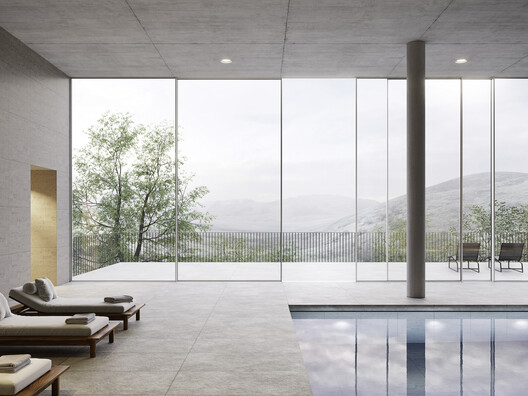
For centuries, architecture has been shaped by the aspiration to create a smooth transition between the indoors and the outdoors. Today, technologically sophisticated window and facade systems allow architects to design open, light-flooded room concepts without losing heat. The Solarlux cero maximum sliding window can eliminate the boundaries between spaces, demonstrated most impressively when large-format elements replace building corners. This is a technical achievement accomplished entirely without supports that disrupt the view. cero creates a direct, immediate connection to nature that goes far beyond what standard solutions can offer.
The famous actress Mae West once described a curve as "the loveliest distance between two points." While she may have been discussing the human form, this observation goes beyond physical appearance and gets to the heart of that which comforts and soothes the human psyche in the design of nature.
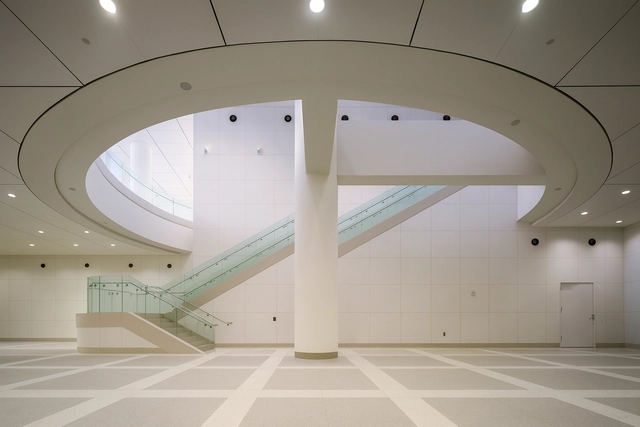
Rolling hills, the arc of an ocean wave, the fiery glow of dawn on the horizon—these natural forms evoke peace and serenity when observed. As work environments and common spaces are created, it is important that those in design remember that there are very few straight lines found in nature. When soft edges, arched ceilings and radius walls are applied to the interior of a building, the design of nature is brought indoors.
Since its inauguration this spring, Expo 2025 Osaka has captured global attention from multiple perspectives, demonstrating how architecture can function as a laboratory for exploring solutions to pressing challenges. After 55 years, Osaka is once again hosting the World Expo, with each installation organized around the sub-themes Saving Lives, Empowering Lives, and Connecting Lives. These pavilions take forms that express the identity and values of their region through distinctive architectural languages, forming the central axis of their design. Building on this foundation, some installations serve as laboratories for the future society, utilizing technology to enhance experiences both inside and outside the spaces, transforming the visit through light, sound, visuals, and movement as part of the technological innovation showcased at the event.
With “The Rock”, fittings manufacturer Dornbracht presents its first Atelier Edition. The clear lines of the classic MEM meet expressive rock–shaped handles made of solid metal, and finished in Brushed Dark Platinum. Image Courtesy of Dornbracht
In an era of digital precision, AI automation, and mass reproducibility, the value of the human craftmanship is being reimagined rather than lost. It's in this intersection between machine logic and material intuition that Dornbracht, the German manufacturer renowned for sculptural fittings, launches The Rock, the debut piece of its new Atelier Editions.
Inspired by the primal force of natural stone, The Rock is a faucet handle that is a tactile, expressive object that restores individuality and sensuality to the contemporary bathroom and kitchen landscape. Revisiting the iconic MEM series, the design introduces a bold, organically shaped handle, milled from solid metal with artisanal hand-finishing. Each piece becomes a singular creation, where industrial precision meets the intimacy of craft.
Sound, when emitted by a source — whether a person or a piece of equipment — propagates in all directions through space, being reflected, absorbed, transmitted, or diffracted as it encounters surfaces and objects. As a result, every environment has its own acoustic quality, often difficult to perceive without a trained ear or eyes. But sound shapes architecture in subtle yet profound ways, directly influencing how we concentrate in an office, how students engage in a classroom, how patients recover in a hospital, or how an audience connects in a performance hall. Despite its decisive role, acoustics often remain in the background of design discussions, overshadowed by visual and structural considerations.