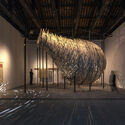
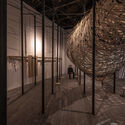
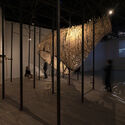
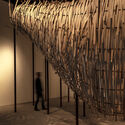
As architecture navigates a rapidly changing world shaped by ecological urgency, social transformation, and technological acceleration, the notion of intelligence is shifting. No longer confined to individual cognition or artificial computation, intelligence can emerge from cultural memory, collective practices, and adaptive systems. In this broader sense, architecture becomes a field of convergence, where natural, artificial, and social intelligences intersect to offer new ways of designing and building.
Vernacular traditions embed generations of environmental knowledge, often transmitted through materials, construction techniques, and spatial logics finely tuned to local conditions; participatory platforms expand decision-making to wider communities to take part in shaping their environments, redistributing agency in the design process; and computational processes simulate and respond to complex data in real time bringing the capacity to analyse, simulate, and respond to complex variables — whether environmental, social, or behavioural — offering new forms of adaptability.
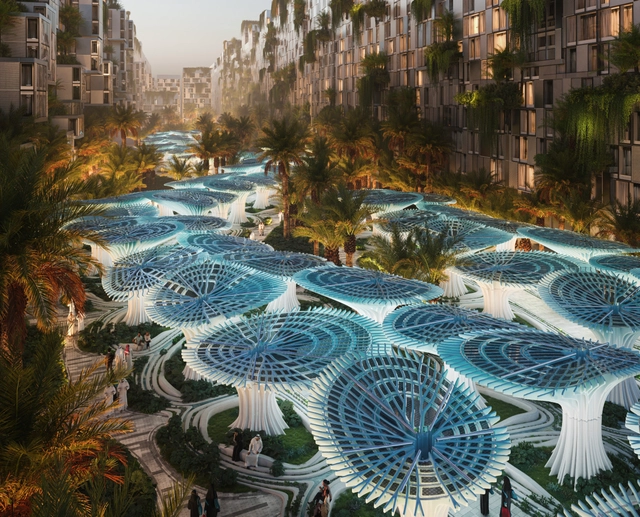
Named one of ArchDaily's Best New Practices in 2024, MEAN* (Middle East Architecture Network) is redefining the architectural landscape of the region by merging computational design, digital fabrication, and material research with local heritage. Founded in 2016, the studio takes a forward-thinking approach, developing site-specific architectural solutions that balance technological innovation with cultural continuity. Their work spans projects of various scales, from experimental furniture like the Mawj Chair to urban-scale interventions such as The Adaptive Majlis, a digitally fabricated reinterpretation of traditional cooling and social spaces. By integrating advanced tools like parametric design, AI, and 3D printing with local materials, MEAN* is crafting a new architectural language that reflects both the aspirations of the future and the depth of the past.
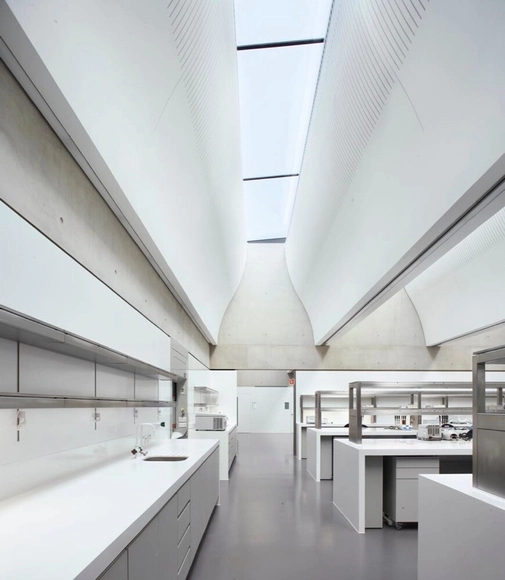
The synergetic relationship between architectural design and scientific discovery tends to be rarely addressed, yet a lucrative proposition. The built environment holds immense potential in supporting research breakthroughs and innovation and the scientific community. The influence extends beyond physical spaces to include both internal dynamics and external engagement through strategic design interventions that connect various caches of impact, from individual researchers to the broader community.
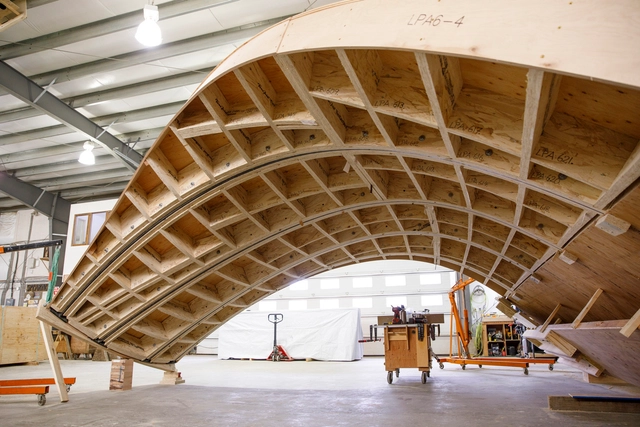
From new delivery methods for adaptive re-use and mass timber structures to digital fabrication, new research aims to provide guidance on emerging construction methods and technologies.. Image Courtesy of Perkins&Will
Innovation comes in many shapes and forms. 2025 is poised to witness continued advancements in the areas of artificial intelligence, sustainability, and biotechnology. These breakthroughs often arise from experimentation in industries like technology and healthcare, where companies have strong research and development teams and significant budgets. This enables them to produce new products and services that address society's evolving needs.
In a world confronting complex challenges, innovation in architecture plays a distinctive role. Unlike industries driven by rapid innovation cycles, architecture must balance creativity with practical solutions that are deeply rooted in human experience. What will it take for the architecture industry to fully harness its potential in shaping the future of our built environment?
Maria Lisogorskaya and Kaye Song of Assemble: Atelier LUMA 2023 Lot 8 Le Magasin Electrique Photo @ Joseph Halligan. Image Courtesy of Bauhaus Earth
Maria Lisogorskaya and Kaye Song from the London-based collective Assemble, along with Lviv-based architects Anna Pomazanna and Mykhailo Shevchenko, have been announced as the 2025 Experimental Fellows at Bauhaus Earth. Selected from 120 submissions, their projects are set to explore earth as a material in contemporary architecture. The annual Bauhaus Earth Fellowship program was established in 2022 by architect Prof. Regine Leibinger. It aims to support diverse projects that explore new modes of practice across various geographies, that can contribute to ecological and social resilience. Fellows receive financial support, mentorship, and access to a network encouraging collaboration among architects, manufacturers, and local stakeholders.
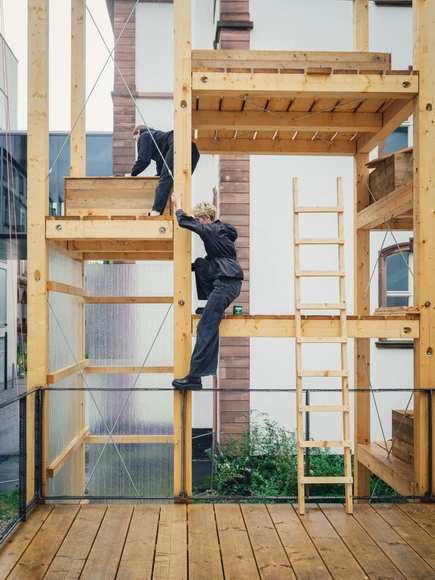
Prototyping is an essential element in sectors such as automotive design and technology, where iterative development enables testing, refining, and innovating. It involves creating initial models or early versions to validate concepts and fine-tune solutions before moving on to final production. This stage is crucial for identifying flaws, optimizing designs, and reducing risks, saving time and resources in the final implementation. In architecture, however, prototyping remains an underused tool. Despite the unique challenges inherent in architectural projects—whether programmatic, climatic, or related to site conditions—the benefits of prototyping can be profound. It offers architects the opportunity to experiment with new materials, validate construction methods, and test spatial configurations in a tangible, measurable way. As a result, it not only reduces uncertainties in the creative process but also drives bold and efficient solutions, fostering a more robust balance between aesthetics, functionality, and feasibility.
In the evolving landscape of architecture and urban design, bioclimatic and biogenic envelopes present a compelling vision for future cities. Dr. Arta Yazdanseta, a Doctor of Design focused on energy and environments, dives into the intersection of design, building performance, and plant biophysical ecology. With a focus on bioclimatic and biogenic envelopes, Dr. Yazdanseta examines how these typologies can enhance socio-natural systems by leveraging their self-organizing potential. Dr. Yazdanseta’s academic journey includes earning a Doctor of Design and a Master of Design in Energy and Environments from the Harvard Graduate School of Design.
Her contributions as a researcher at the Harvard Center for Green Buildings and Cities include developing environmental design strategies and performance analyses for the HouseZero carbon retrofit project. In this interview, Dr. Yazdanseta explores the concept of bioclimatic envelopes and their interaction with passive architectural design principles. With a potential to revolutionize urban environments, the interview reveals insights into her research, the benefits of plant-based materials, and the future of sustainable architecture, emphasizing the critical connection between human and environmental health.
The Graham Foundation has announced 56 new grants to individuals, selected from nearly 600 submissions. Centered on publications, research, exhibitions, films, site-specific installations, and digital initiatives, the funded projects "expand contemporary architecture ideas through innovative rigorous interdisciplinary work on the design and the built environment." The projects are led by 84 individuals, including established and emerging architects, artists, curators, designers, filmmakers, historians, and writers.
Videos
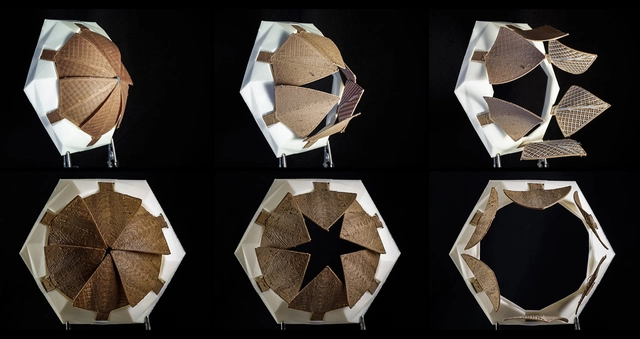
Fused filament fabrication for multi-kinematic-state climate responsive aperture. Image Cortesia de David Correa / Achim Menges
While we are still trying to understand the possibilities and limits of three-dimensional printing and additive manufacturing, a new term has emerged for our vocabulary. 4D printing is nothing more than a digital manufacturing technology -3D printing- which includes a new dimension: the temporal. This means that the printed material, once ready, will be able to modify, transform or move autonomously due to its intrinsic properties that respond to environmental stimuli.
The concept was popularized by researcher Skylar Tibbits, who coordinates the Massachusetts Institute of Technology (MIT) Self-Assembly Lab, in collaboration with Stratasys and Autodesk. The technology is still quite new, but it is expected to be used in many fields, from construction, infrastructure, automobile and aeronautics and even for healthcare, combined with bioprinting.
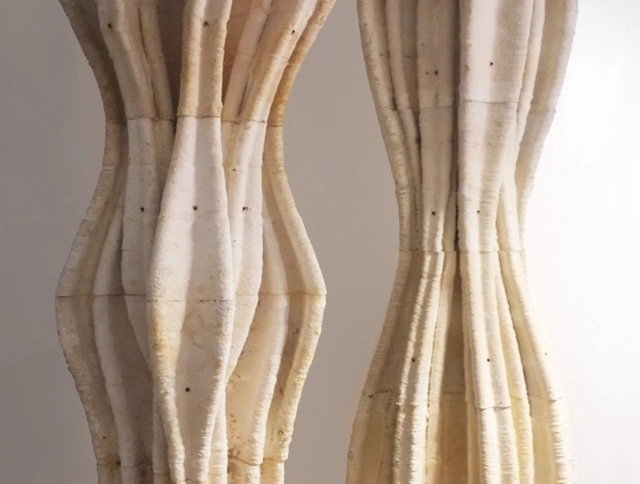
Opt Oog Column / Blast Studio. Image Courtesy of Blast Studio
In architectural design, our interactions with non-human organisms have predominantly involved creating barriers to exclude them from the human realm. What if we were to adopt a different approach? Interspecies design is a movement that puts non-human organisms—fungi, insects, and various animals—on an equal footing with humans. This design philosophy provides frameworks that foster non-hierarchical relationships with other species. By doing so, it cultivates empathy for other life forms and shifts our perspective on the world around us. It aims not only for a net-zero approach but also seeks collaboration with non-human organisms to develop environments beneficial to all. Below, explore some emerging material technologies designed to benefit both humans and other life forms.
The ArchDaily projects library is managed by our curators who constantly seek to populate our stream with the most interesting global works, showcasing evolving focuses and criteria. While we usually share our reader’s top 100 favorites, this year, we also decided to initiate our editor’s picks on the ArchDaily Instagram account, where our curators highlight some projects that include interesting themes and unique traits.
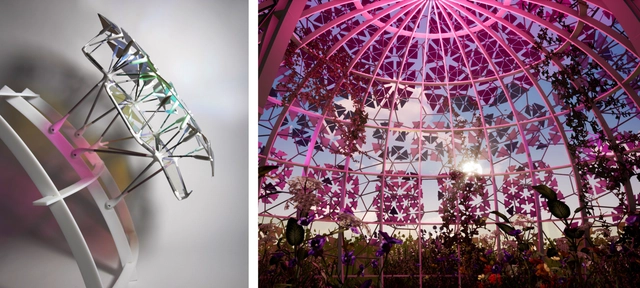
Agrivoltaic Pavilion prototype & designs in 'Sustainable Architecture & Aesthetics.' Transforming BIPVs with custom 3D-printed filters and panels for site-specific solar collection. Courtesy Sabin Design Lab at Cornell College of Architecture, Art, and Planning and the DEfECT Lab at Arizona State University. Image Courtesy of Jenny E. Sabin
Why research and innovate in architecture? In a conversation with architectural designer Jenny E. Sabin, we delve into the critical link between research and practice in architecture. Seeking the development of a new model, her team incorporates an interdisciplinary approach that introduces connections between these areas, fostering collaboration with both scientists and engineers.
Observing nature’s behavior, the proposed method integrates biological and mathematical discoveries into the design process. After undergoing a systematic testing process, these insights are applied in the project’s generative design phase to create adaptive and responsive material solutions. Analyzing her research and design strategies, we showcase how she translates research into architectural practice.
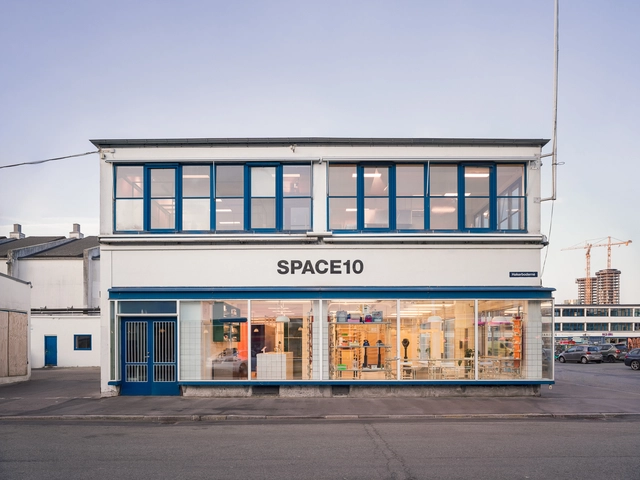
Sede de Copenhague – Fotografía de Hampus Berndtson . Image Cortesía de SPACE10
Ten years ago, SPACE10 was born as a pioneering platform ushering in a novel approach to corporate innovation, consolidating itself for its ability to be open, democratic, driven by a playful purpose, and community-oriented. Composed of a small core team of around 23 people based in Copenhagen, their efforts have focused on combining the power of creativity, science, and technology to find solutions that address the accelerated climate crisis and social injustices.
IKEA’s research and design lab SPACE10 has published The Healthy Home report, the second release in its Future Home report series. The report explores three main themes concerning domestic environments: how our homes protect us from harm, restore our bodies and minds, and enable us to grow through life’s stages. The research aims to evaluate the ways in which homes can positively contribute to and support the rhythms and flows of life. It was developed in collaboration with Morph to develop the visuals supporting the findings.
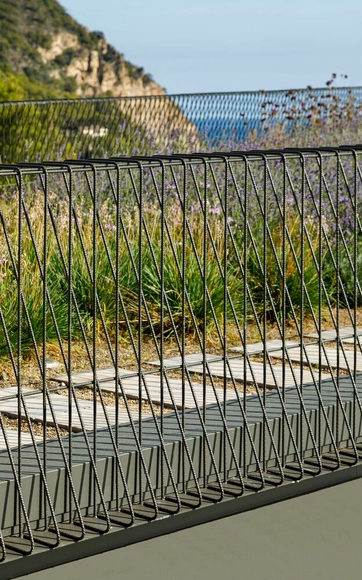
Concrete has enormous resistance to compressive stress, but it is a fragile material in terms of tension, which occurs when forces are applied in opposite directions of a structure, tending to separate the parts. This is why the incorporation of steel into concrete –which provides high levels of strength when stretched– has made so-called reinforced concrete the world's most widely used construction method. In other words, reinforced concrete combines the intrinsic advantages of its two components (concrete and steel reinforcement) to produce an extremely robust, versatile, and practical material. These steel reinforcements, in addition to reinforcing concrete, can also be used in art installations, facades, and even interiors.
Willow Technologies is a material research and building technology practice that has been selected as part of ArchDaily's 2023 Best New Practices. Founded by Ghanaian-Filipino designer and architectural scientist Mae-Ling Lokko, it operates in the gap between research, development, and diffusion of bio-based building materials. Working with agro-waste and bio-based materials usually incurs technical questions regarding scalability, industrial production, standardization, fireproofing, and mechanical strength. Exploring this data is where Willow Technologies situates itself, but peculiarly through the lens of developing regions in West Africa. Through comprehensive works with coconuts, moringa, rice, and other indigenous crops, Lokko’s practice has been able to investigate and catalog the material character of various crops, their possible by-products, local transformation techniques, and the prospect and challenges of scalability as building materials.
Jingru (Cyan) Cheng . Image Courtesy of Wheelwright Prize
Harvard University Graduate School of Design (GSD) has announced Jingru (Cyan) Cheng as the recipient of the 2023 Wheelwright Prize, a study grant created to support globally-minded research and investigative approaches to contemporary architecture. The winning research project, titled “Tracing Sand: Phantom Territories, Bodies Adrift,” delves into the multifaceted impacts of sand mining and reclamation, understood from cultural, economic, and ecological perspectives. The unassuming material has become an indispensable element for our built environment and human communities, serving as a vital component in the production of glass, concrete, asphalt roads, and artificial land. Yet the process of dredging underwater systems and sand mining leads to the disruption of habitats in a process that simultaneously shapes one habitat while devastating another.
The Croatian Pavilion at the Venice Architecture Biennale 2023 celebrates the harmonious coexistence of the wild and domesticated, natural and man-made, and inanimate and living elements. Modeled after the Lonja Wetlands in Croatia, where communities that have adapted to the continuously shifting landscape have coexisted harmoniously for generations to create a dynamic habitat, the Pavilion is a hub for ongoing research into potential futures through educational experimentation and practice. The exhibition was curated by Mia Roth and Tonči Čerina, in collaboration with their design team: Luka Fatović, Vedran Kasap, Ozana Ursić, Niko Mihaljević, and Ivica Mitrović .“Same As It Ever Was” places a focus on the connections among actors from various backgrounds around the world.