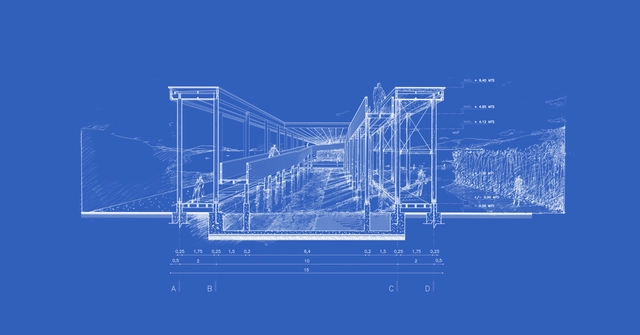
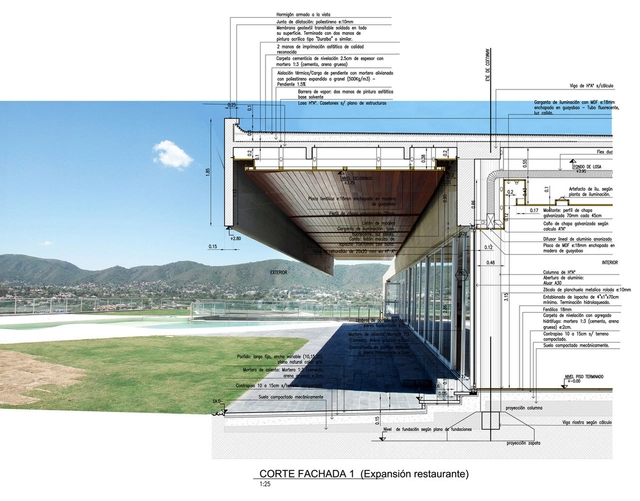
The visual presentation of a project, which architects are responsible for, must effectively communicate and analyze the organization of the project's material elements. This essential creative process allows those involved to effectively identify and even modify key aspects and components of the building during all phases of its conception.
Because of the inherent challenges of material selection and other practical issues, the development of what exactly will be built tends to be relegated to the end of the design process. But a true understanding of minor yet invaluable details is among the most interesting and important aspects of the best architectural projects.
In our search for the most outstanding recent examples of construction detail representations, we've collected a series of ten drawings that celebrate different styles and approaches.
*Editor's note: the following article was written by an editor of ArchDaily in Spanish. Some project descriptions mentioned have not yet been translated into English, but we are actively working to make this information available to our global readers.
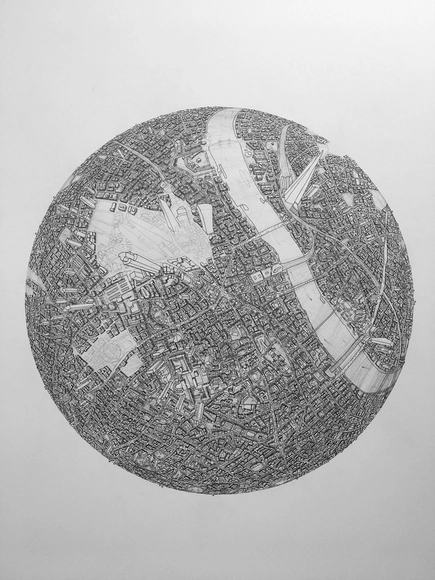
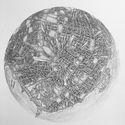
Amer Ismail, architect-turned-artist based in London, has developed a spectacular set of intricate “Globe Drawings” of cities around the world. Beginning in 2016, Ismail developed these 5-point-perspective drawings with heavy inspiration from artist Stephen Wiltshire. Having spent many years drawings architecture, including time at Foster+Partners, Ismail tasked himself with developing a series that encompassed his “interest for architecture, city planning, travel, drawings, and Star Wars.”
The functional distribution plays a fundamental role in the contemporary design of offices and places for work. The study of the architecture plan shows an interesting form of approach; not only allows for proper logistics and circulation but find efficient variations and innovations that will enable better workspaces that adapt to the current needs.
We have selected more than 50 plans of projects that will inspire you, recognizing the different ways in which architects have faced the challenge to design offices, in all different scale ranges.
Enquanto meio de representação da arquitetura, a fotografia apresenta qualidades indiscutíveis. Com ela, é possível apresentar a um público distante obras erguidas em qualquer lugar do mundo, de vistas gerais a espaços internos e pormenores construtivos - ampliando o alcance e, de certo modo, o acesso à arquitetura.
Entretanto, como qualquer outra forma de representação, não é infalível. Na medida que avanços tecnológicos permitem fazer imagens cada vez mais bem definidas e softwares de edição oferecem ferramentas para retocar e, por vezes, alterar aspectos substanciais do espaço construído, a fotografia, por sua própria natureza, carece de meios para transmitir aspectos sensoriais e táteis da arquitetura. Não é possível - ao menos não satisfatoriamente - experienciar as texturas, sons, temperatura e cheiros dos espaços através de imagens estáticas.
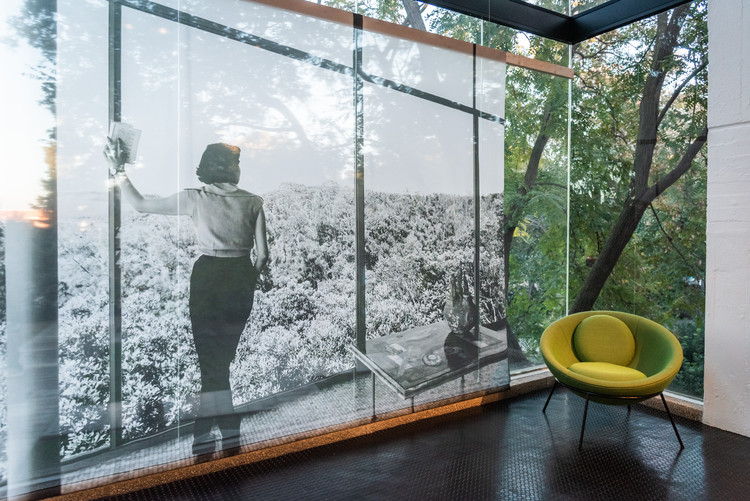
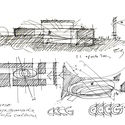
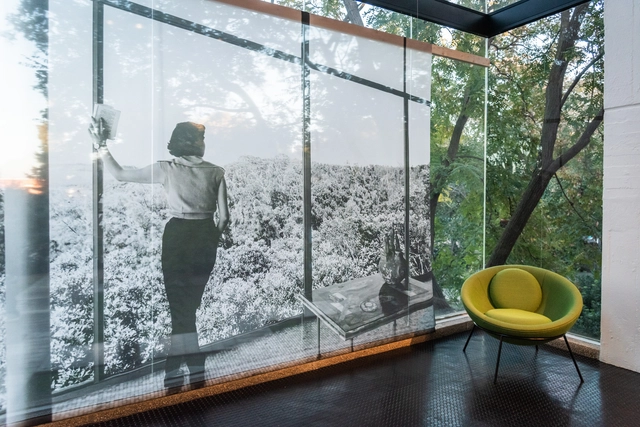
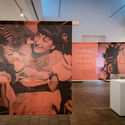
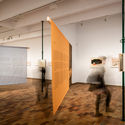
The Fundació Joan Miró presents Lina Bo Bardi Drawing, the first exhibition to focus specifically on the role of drawing in the life and work of the Italian-born Brazilian architect.
The exhibition features a carefully selected collection of a hundred drawings from the Instituto Lina Bo e P. M. Bardi, bearing witness to the importance of drawing in all the stages of Bo Bardi’s multifaceted career. The project has been curated by another architect, Zeuler Rocha Lima - also an artist, researcher, and international expert on Bo Bardi - with support from the Fundació Banco Sabadell.
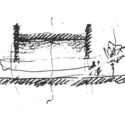
Some time ago, I embarked on an internet research journey for a project centered on representation in architecture. My quest led me to peruse the websites of various architecture firms. While many of them passed quickly without leaving a lasting impression, a few captured my full attention. I delved into and appreciated the unique sensibilities of their authors, particularly their penchant for drawings and freehand sketches, which I had not previously encountered.
Within the vast landscape of these mental explorations, I stumbled upon Alberto Campo Baeza's drawing library—a discovery I enjoyed so much that I felt compelled to share it.
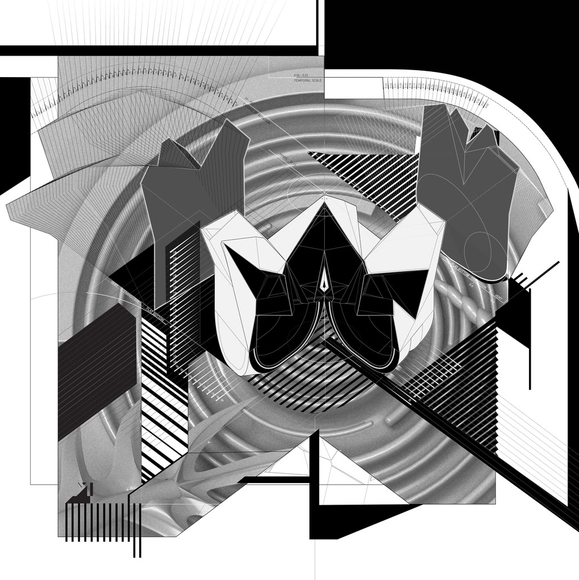
I was part of the last generation of architectural students who didn't use computers (we’re only talking the early 1990’s here; there was electricity, color TV’s, rockets, just no renderings.) In my final year at college I miscalculated how long it would take me to finish my thesis project. As the deadline approached, I realized it was too late for me to match my fellow students’ presentations. At the time Zaha Hadid, and her deconstructivist paintings, set the style for architectural illustration. That meant many student projects being rendered in oil paints on large canvases.
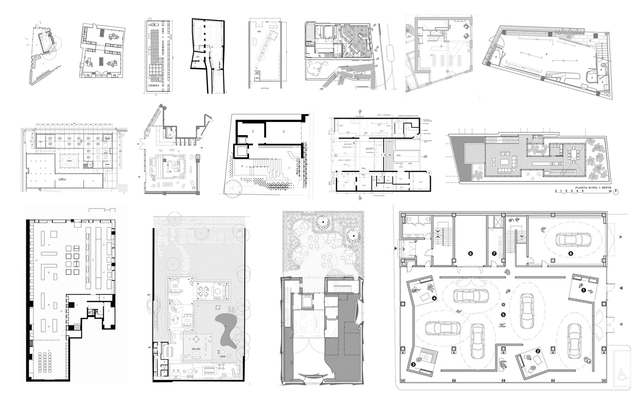
As mentioned in our previous article on retail stores under 100 square meters, the spatial distribution of commercial spaces is a determinant for its success. Not only does it address adequate logistics and the circulation of customers, but the variations and innovations that will enable a more efficient and original space.
Below, we've selected projects from our site, with their plan and section, that can help inspire your next project.
Designing commercial spaces has historically been a challenge. In these environments, spatial distribution plays a fundamental role, even more so if we have a few extra square meters. With this being said, the study of these spaces in plan and section can be a great starting point. It not only allows us to analyze the logistics and circulation of customers but also helps us find efficient variations and innovations that will enable your store to stand out from the others.
Below, we've selected a series of 25 examples in plan and section that can help you understand how different architects faced the challenge.
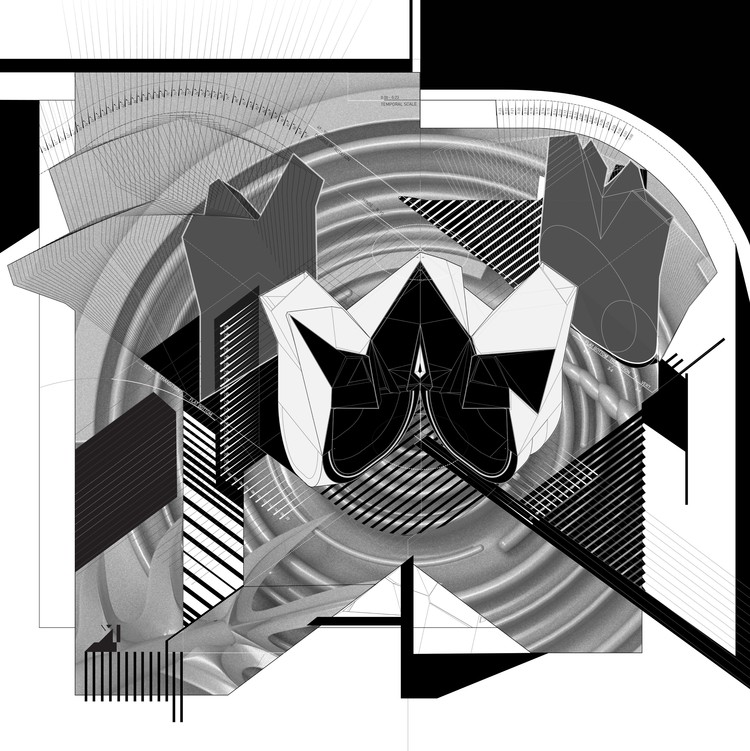
The Cooper Union is to host a new exhibition showcasing the impact of technology on architectural drawing. “Drawing Codes: Experimental Protocols of Architectural Representation: Volume II” will examine how “emerging design and production technologies impact the ways in which architects engage with traditional practices of architectural drawing and how rules inform the ways the built environment is documented, analyzed, represented, and designed."
The exhibition will feature 24 experimental drawings by firms such as Aranda\Lasch, Höweler + Yoon, and Outpost Office. The artists were challenged by the curators to consider at least one concept that expands on the notion of “code” in design and representation. A strict set of rules was enforced, including black and white media, and limiting the drawing to two dimensions.
Throughout history, markets have provided an important function in the exchange of foods, books, spices, everyday items, and even ideas. From Mexican Tianguis to North African Souks, they played an essential element in the configuration of urban spaces.
Different architects have approached this challenge, where spatial distribution plays a fundamental role in creating adequate logistics and circulation.
We've selected 20 markets and their plan and section to inspire your next project.
We all have that childhood memory of drawing a little house with a door and a window, a gabled roof, and a tree. But what sets architects apart from the rest of the population is that we continue to draw this after childhood, usually with a bit more technique. And just as our residential designs were becoming more complex and complete, the design of our trees needed to improve a bit as well (that broccoli-like shape would not please customers and teachers alike.) Although generally, trees are not the main focus of drawings, they play an important role in the composition of sketches, mainly to represent the scale, intended shading, or some intention of landscaping.
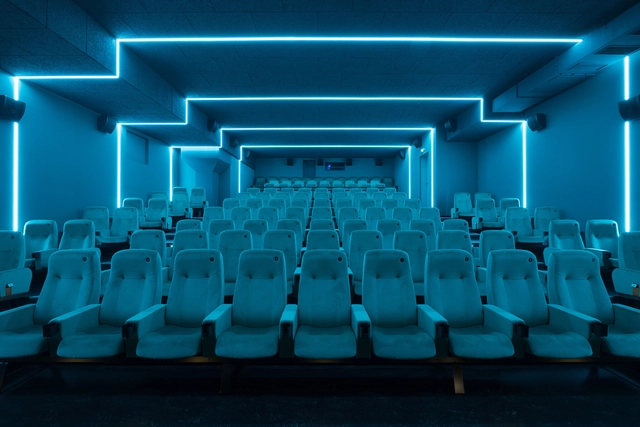
The link between architecture and cinema is unquestionable, as is the magic of seeing a film in a place structured specifically for this contemplative activity. The design requires architectural solutions that not only respond to the distribution of seats and visibility of movie-goers but also to acoustics and lighting.
Various projects published on our site highlight how architects have responded to this challenge in innovative ways. Below, stunning 10 movie theaters with their plans and drawings.
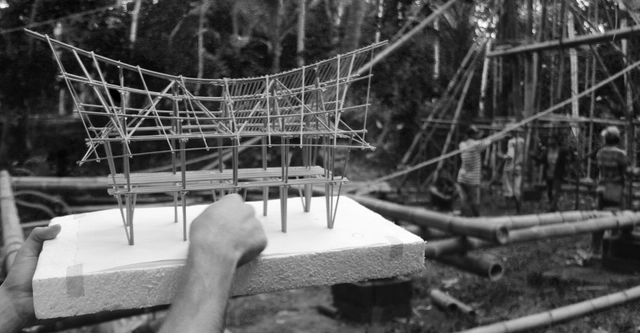
It's not easy to find theory in the implementation of architectural models: a practical model that allows you to analyze and showcase the organization of material elements according to a particular process. They also allow you to detect and modify the key elements of a project while also addressing the project's executive procedures.
Together with architectonic construction details, the development of the constructive facets is pushed to the background up until the ultimate steps of the design process, but this is also when we identify what is appropriate for a certain stage in the process in order to facilitate a seamless execution.
In the search to bring ourselves closer to the presentation and utility of architectural models, we invite you to take a look at a series of examples:
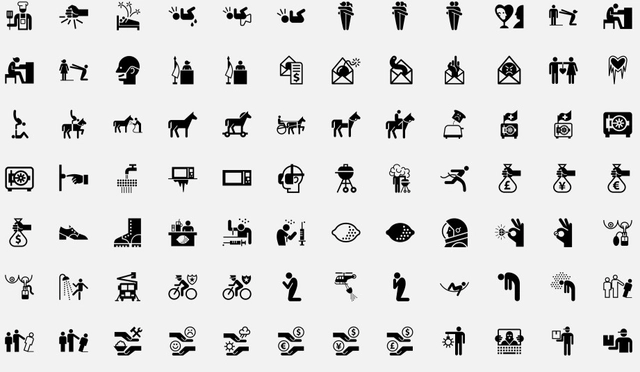
The title says it all: if you've spent hours browsing the web for simple design icons for diagrams and architectural representation - a relevant tool to optimize organization, analysis, and communication - then this universal online library from The Noun Project will be very useful.
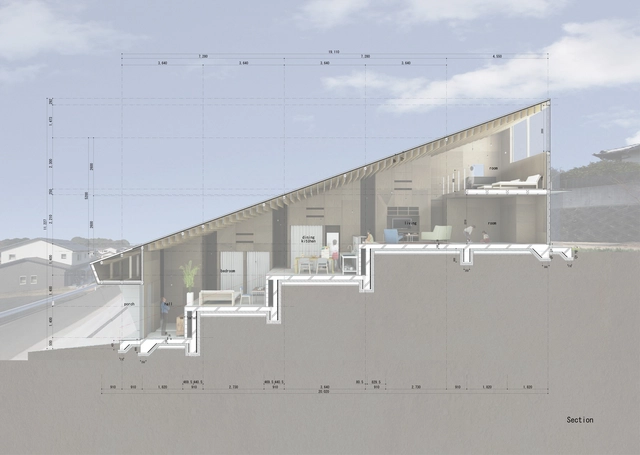
Faced with the challenge of designing homes on terrains with steep slopes - or in compact urban contexts that do not allow much variation in plan - several architects have experimented and proposed split-level homes to enhance the use of space, allowing, among other things, interesting visual perspectives.
These variations can be seen in numerous examples published on our site. Below, we have selected 50 examples that can help you in your next project.
Muelle de Mimbre / Domingo Arancibia. Image Cortesia de Domingo Arancibia
Architectural comprehension as a field deals with representation as a synthesis of varied efforts —constructive, compositional, spatial, and technical qualities— which are then articulated in the constructed building. For this purpose, it is essential to think about the graphic representation that presupposes all these efforts, since it is both a procedure and a product of architectural design.
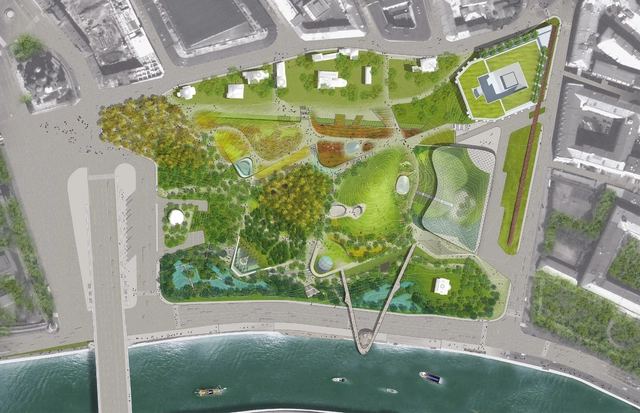
Parque Zaryadye Plan / Diller Scofidio + Renfro. Image via Diller Scofidio + Renfro
Frequently imperceptible to the inhabitant, the architectural plans of landscape designs are unquestionably the best tool for understanding certain relationships between elements and the strategic organization of the work. They are therefore an essential part of any good architecture project.
The distribution and type of vegetation, topography levels, the relationships between the preexisting urban or natural context, the possible routes and incorporated activities, and the materiality and the dimensional precision required for its construction are some of the considerations that are usually reiterated in this type of representation.
The result permits the communication of intentions in an organized way, while clearly exposing the concerns of the authors; for this reason, we invite you to review a series of different examples of architectural plans of public spaces that enables a comprehensive approach to the role of each project.






.jpg?1550503634 "© Instituto Lina Bo e P. M. Bardi. Image Courtesy of Fundació Joan Miró, Barcelona")
_jpeg_copy.jpg?1550503683 "© Instituto Lina Bo e P. M. Bardi. Image Courtesy of Fundació Joan Miró, Barcelona")