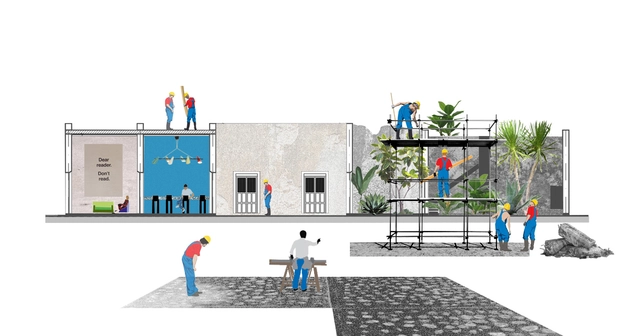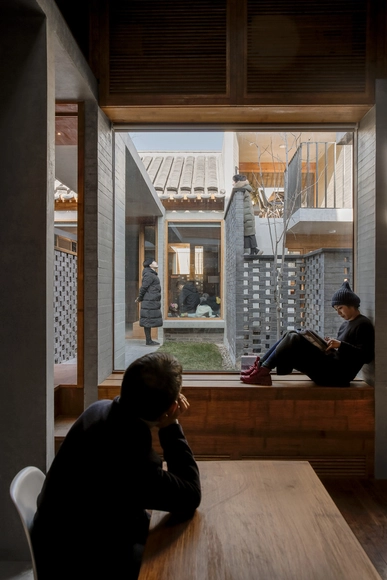
China seems to be at the peak of a refurbishment fever. Not only hutongs in historic downtowns, but abandoned industrial factories are becoming new tech or cultural hubs, and even buildings in the risk of collapse are refurbished to extend their lifespan. Why is this happening? Who is investing? How could this happen in a country where you cannot buy properties?
In this edition of Editor's Talk, our editors from ArchDaily China share their thoughts on how in a fast-paced development process, such as the one China is going through, there is a refurbishment fever in its biggest cities.
The polls are closed and the votes are in! With nearly 30,000 votes cast over the last three weeks, we are ready to unveil the winners of ArchDaily's Refurbishment in Architecture Awards. This crowdsourced architecture award, developed in partnership with MINI Clubman, showcases the best refurbishment projects published on ArchDaily throughout 2018, with our readers filtering a 700 shortlist down to 16 finalists, and ultimately, three winners.
Reflecting ArchDaily's global reach, the 16 finalists hailed from 4 continents, with the three winners located in the United States, China, and Italy. The award, therefore, demonstrates the global importance of architectural refurbishment as a sustainable design.
After 2 weeks of voting in our second edition of the Refurbishment in Architecture Awards, our readers have narrowed down over 700 projects to 16 finalists, representing the best architectural refurbishment projects published on ArchDaily. With finalists from four continents, this award developed in partnership with MINI Clubman clearly demonstrates the global importance of refurbishment architecture as a method of achieving sustainable development and flexible, living cities.
Now that the finalists have been selected, the second stage of the Award is now underway to narrow down these 16 projects to just three winners. Read on and use the links below to cast your vote for the overall winner, or visit the award website here.
In partnership with MINI Clubman, we have launched our second edition of ArchDaily's 2019 Refurbishment in Architecture Awards. This award highlights the best refurbishment projects from around the world.
Alongside MINI, we believe that the recovery and refurbishment of existing structures is one of the most sustainable ways to develop architecture. From reviving abandoned factories to urban renovations and even remodeling centuries-old homes, refurbishment projects demonstrate the flexibility of our existing cities and the many scales at which past buildings can be repurposed.
Similar to our Building of the Year Award, we entrust our readers with the responsibility of rewarding the best refurbishment projects in architecture—the designs that have had an impact on our profession. By voting, you are part of an impartial and distributed network of professionals who act as a jury to choose the most relevant works of the last eight years. Over the next 3 weeks, the collective intelligence of our audience will filter more than 600 projects to select 3 winners representing the best of architecture refurbishment published on ArchDaily.
The architectural history of Mexico bears with it a wealth of symbolism that gives insight into the different time periods that have played host to contemporary cultural movements throughout the country's history.
Today, it's common to hear well-known architects calling for, not the creation of new spaces, but for the restoration of already existing ones. This stance insists that it is one's duty as an architect to rescue a site's memory by bringing it into the here and now.
As philosopher Jean Paul-Sartre put it, "what is important is not what happens to us, but what we do with what happens to us." In keeping with Sartre's phrase, we have compiled a list of 6 restoration projects that aim to rescue sites and show the interconnectedness of different time periods in Mexican history.
In his book The Right to the City (1968), Henri Lefebvre talks about ending the creation of spaces managed by the logic of profit, to launch a plan of "self-managed territory" that does not leave aside the "historical heritage," nor allow the decomposition of space, but instead works for the restitution of urban centers as places of creation.
Globalization has produced cities without limits whose focus has been on the immediate benefit, directly attacking the preservation of cultural heritage, among other things.
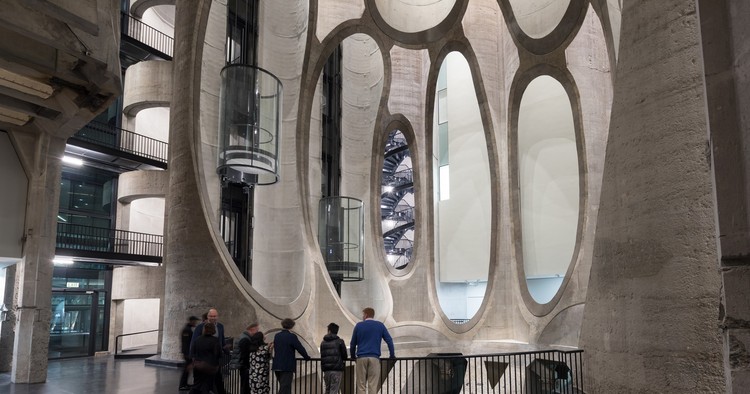
The Zeitz Museum of Contemporary Art Africa—or Zeitz MOCAA for short—recently received first place in ArchDaily's Refurbishment in Architecture awards, with its striking design transforming a formerly derelict industrial building into an iconic landmark in South Africa’s oldest working harbor. Developed by the V&A Waterfront in Cape Town and designed by Heatherwick Studio, the mixed-use project is now “the world’s largest museum dedicated to contemporary art from Africa and its diaspora.” To celebrate the award, we sat down with group leader Matthew Cash to discuss the challenges faced during the project, its cultural importance to Africa, and the practice’s interest in refurbishment as a whole.
The polls are closed and the votes are in! With nearly 15,000 votes cast over the last three weeks, we are ready to unveil the winners of ArchDaily's inaugural Refurbishment in Architecture Awards. This crowdsourced architecture award, developed in partnership with MINI Clubman, showcases the best refurbishment projects published on ArchDaily throughout 2017, with our readers filtering a 450-strong shortlist down to 15 finalists, and ultimately, three winners.
Reflecting ArchDaily's global reach, the 15 finalists hailed from five continents, with the three winners located in South Africa, Mexico, and the United States. The award therefore demonstrates the global importance of architectural refurbishment as a means of enhancing sustainable urban environments at different scales.
After 2 weeks of voting in our first ever Refurbishment in Architecture Awards, our readers have narrowed down over 450 projects to 15 finalists, representing the best architectural refurbishment projects ever published on ArchDaily. With finalists from five continents, this award developed in partnership with MINI Clubman clearly demonstrates the global importance of refurbishment architecture as a method of achieving sustainable development and flexible, living cities.
Now that the finalists have been selected, the second stage of the Award is now underway to narrow down these 15 projects to just three winners. Read on and use the links below to cast your vote for the overall winner, or visit the award website here.
This year, in partnership with MINI Clubman, we are launching a special award that highlights the best refurbishments of buildings and spaces from around the world.
Alongside MINI, we have decided to promote this category in the belief that one of the most sustainable ways to develop architecture now is through the recovery of existing structures. From urban renovations to new uses for former factories, or even simply giving new life to an old house, refurbishment projects demonstrate the flexibility of our existing cities and the many scales at which old buildings can be repurposed.
As in our Building of the Year Award, we entrust our readers with the responsibility of rewarding the best refurbishment projects in architecture—the designs that have had an impact on our profession. By voting, you are part of an impartial and distributed network of professionals who act as a jury to choose the most relevant works of the last eight years. Over the next 3 weeks, the collective intelligence of our audience will filter more than 450 projects to select 3 winners representing the best of architecture refurbishment published on ArchDaily.
The Brasil Arquitetura office, formed in 1979, is an architect’s association led by Francisco Fanucci and Marcelo Ferraz, having executed emblematic projects such as the Yellow Quarter in Berlin, Germany, the Rodin Museum in Salvador, Bahia and the Praça das Artes in São Paulo, among many others. Both were very close to Lina Bo Bardi at important moments in her professional life, including the construction of Sesc Pompéia. In several projects, they faced the challenge of rehabilitating old buildings, such as the Museu do Pão, Praça das Artes, Rodin Museum and Sesc Pompéia itself. We spoke with the office to know more about this type of intervention.
https://www.archdaily.com/890928/brasil-arquitetura-reveals-how-building-recovery-is-about-meeting-the-real-demands-of-societyPedro Vada
In this interview with ArchDaily, the founders of O-office speak about their philosophies regarding refurbishments and the current state of architecture in China.
"The Greenest Building is the one that is already built." (Carl Elefante, FAIA)
The world’s urban population will double by 2050, and cities need to come up with sustainable ways to accommodate this mass movement. We often see projects being built as quickly as possible to support growth, but these buildings end up lacking character, and they make the city look altogether generic. A smarter and more sustainable solution is to increase the density of existing centers, as well as to recover existing structures through refurbishment and repurposing.
To turn what is old into something new is a challenging process. It requires a bold vision and a rigorous commitment to design.
The gas station does not usually catch one’s fancy. It is a ubiquitous building, one built primarily for function instead of for pleasure or community. We see them all the time but barely give them a second glance unless the need arises – and then, we get our fuel, and we are out of the station in minutes.
With the smell of gasoline and the usual convenience store spread, these service stations do not exude any particular sense of wellness. Neither have their flat, perennial structures captured the imagination of architects – until now.
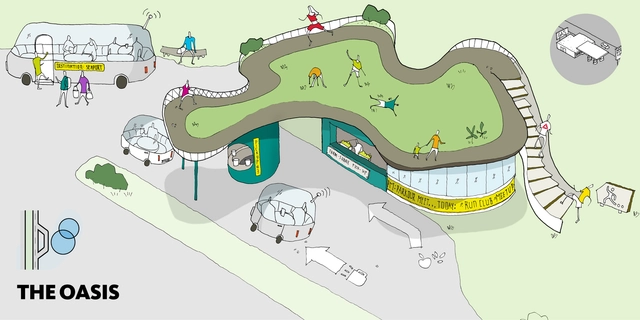
Reebok and Gensler are the first to catch on to the enormous potential of the common gas station. These buildings sit on prime real-estate all over the country, from highways to local streets. In their new collaborative project, “Get Pumped,” the global architecture firm and the fitness brand are coming up with a plan to re-do the gas station as we know it.
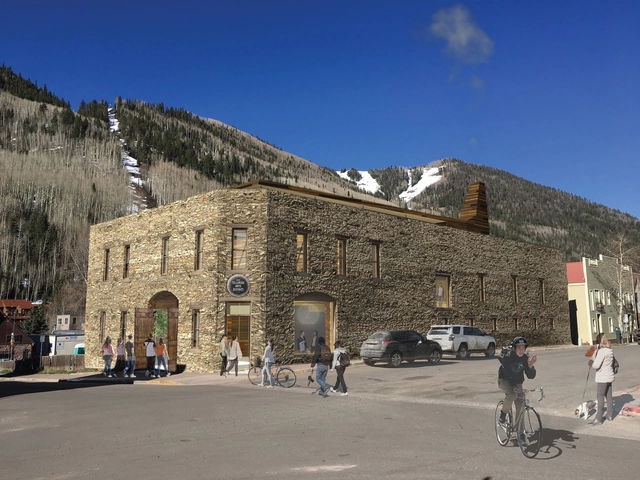
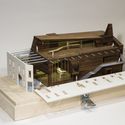
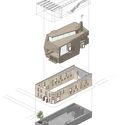
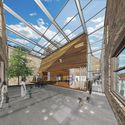
LTL Architects (Lewis.Tsurumaki.Lewis) has been selected as the winner of the Telluride Transfer Warehouse competition, beating out finalist entries from NADAAA and Gluckman Tang. The competition sought schemes for the adaptive reuse and transformation of the National Historic Landmark-listed warehouse in Telluride, Colorado into “an architectural and cultural landmark that provides contemporary, public art space that deepens and expands the cultural life of Telluride.”
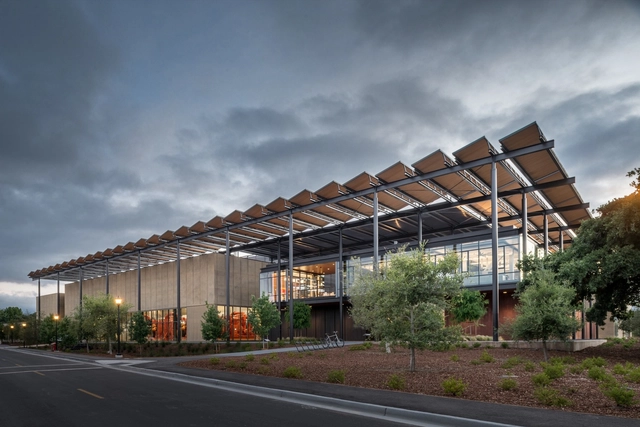
Now in its 21st year, the COTE Top Ten Awards program was established to honor projects that protect and enhance the environment through an integrated approach to architecture, natural systems, and technology.
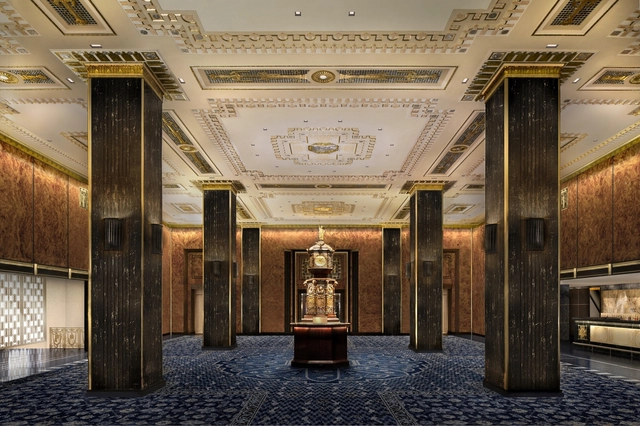
The Waldorf Astoria New York has released plans for a top to bottom restoration and revitalization of the building’s historically landmarked exterior and interior space, to be carried out by architects Skidmore, Owings & Merrill (SOM) and interior designer Pierre-Yves Rochon (PYR). If approved by the New York City Landmarks Preservation Commission, the restoration will be among the most complex and intensive landmark preservation efforts in New York City history.
After built structures become disused or abandoned, adaptive reuse can be the perfect way to breathe new life into an old building, while conserving resources and historic value. Whether due to environmental reasons, land availability or the desire to conserve a historic landmark, countless architectural firms worldwide are turning to adaptive reuse as a solution to some of the modern problems of the built environment.
With this in mind, we have compiled a list of 20 creative adaptive reuse projects, each of which utilizes an old structure to create a revitalized form in its own distinct way.
See how a former chapel, water tower and 19th century slaughterhouse were transformed and given new life, after the break.