How many changes have you done to your interior space during this past year? Whether it was a change of furniture layout, repainting the walls, adding more light fixtures or perhaps even removing them, after spending so much time in one place, the space you were once used to didn’t make sense anymore. We could blame the overall situation for how we’ve been feeling lately, but as a matter of fact, the interior environment plays a huge role in how we feel or behave as well. However, if you were wondering why some neighbors seem much more undisturbed and serene even in the midst of a pandemic, it could be because the interior is greener on the other side.
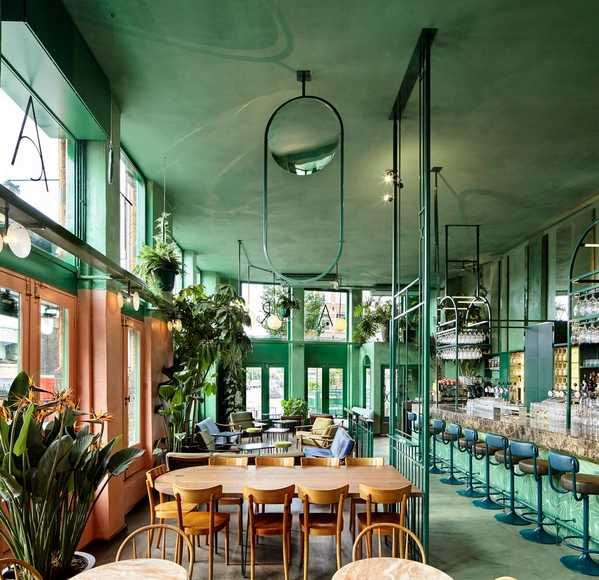
We know that colors can influence our sensations and cause different perceptions of a space, which confirms the benefits of designing a consistent color palette and its importance in architectural projects. The impact of color on a space and on the people who use it becomes even more perceptible when the whole environment is covered with just one color. In these cases, the selected shade can be applied to countless architectural elements. Floors, ceilings, walls, furniture, or even pipes and electrical conduits can have a specific hue to match the monochromatic environment.
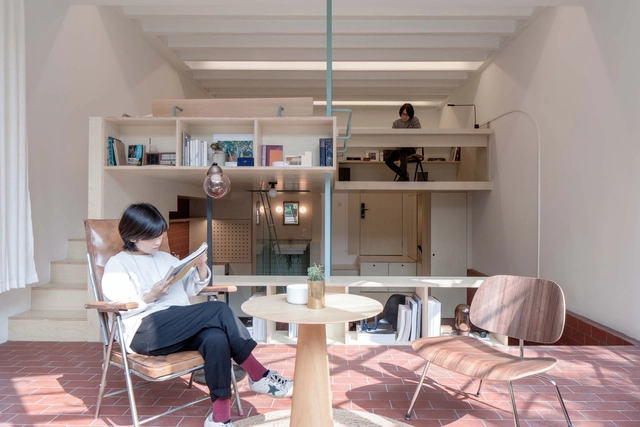
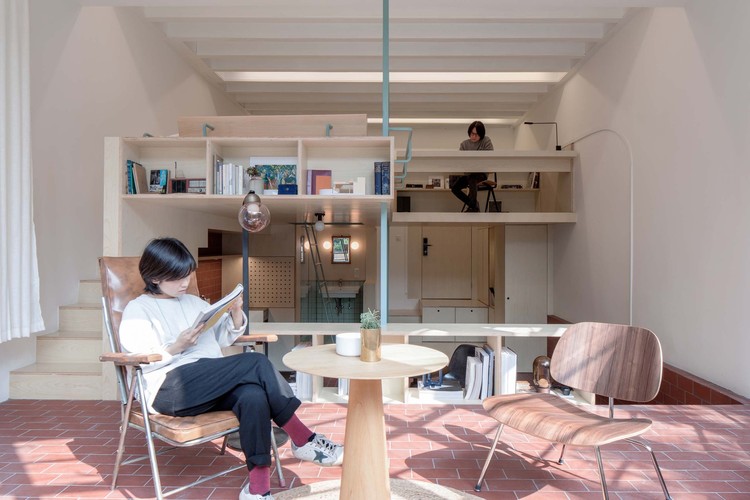
An emerging design trend is filling the gap between furniture and architecture by shaping space through objects at the intersection of the two, creating a dynamic and highly adaptable environment. Either a consequence of the increased demand for flexibility in small spaces or the architectural expression of a device-oriented society, elements in between architecture and furniture open the door towards an increased versatility of space. Neither architecture nor furniture (or perhaps both), these objects operate at the convergence of the two scales of human interaction, carving a new design approach for interior living spaces.
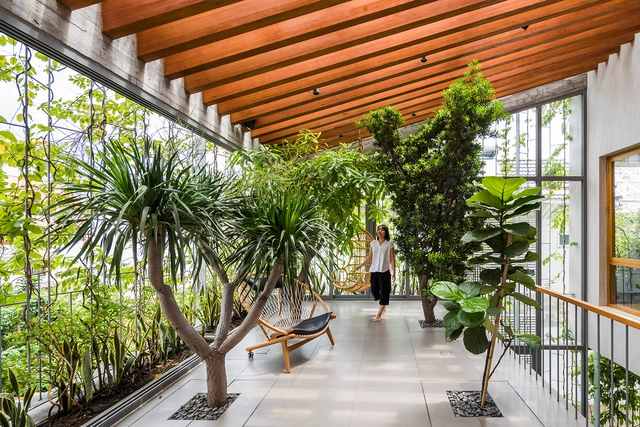
Interior design begins with human experience. Considering the physical, mental, and emotional needs of people, interior designers use human-centered approaches to address how we live today. Creating novel approaches to promoting health, safety, and welfare, contemporary interiors are increasingly inspired by biophilia as a holistic approach to design.
As levels of pollutant emissions have increased over the years, awareness has also grown regarding actions that can be taken to minimize the damage caused to the planet. As a way to promote waste reduction or prevention, the 3 R's rule is created: reduce, reuse and recycle. These actions, together with sustainable consumption standards, have been promoted as a means to protect natural resources and minimize waste.
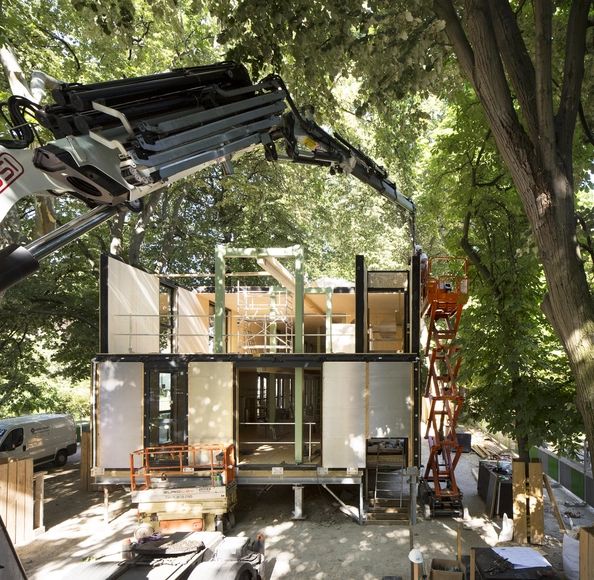
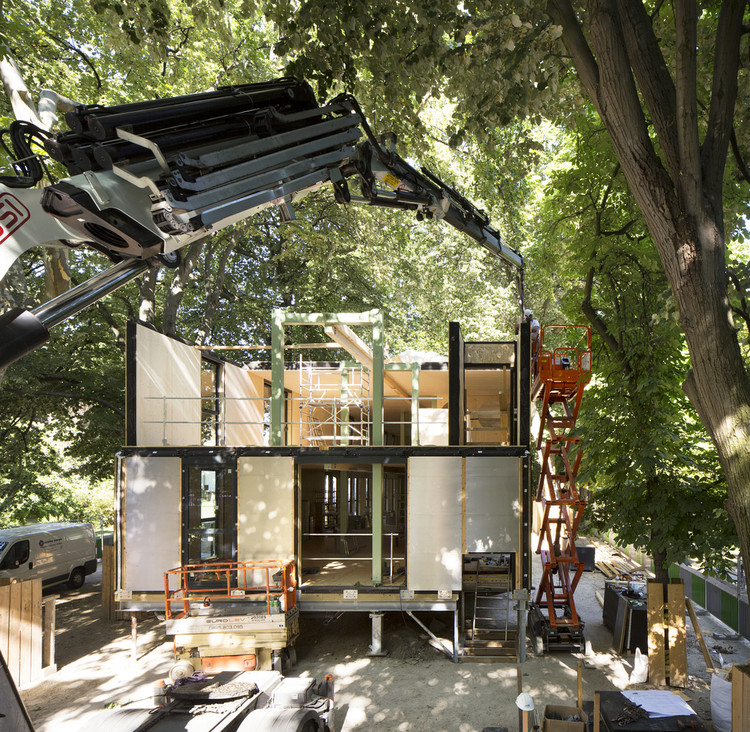
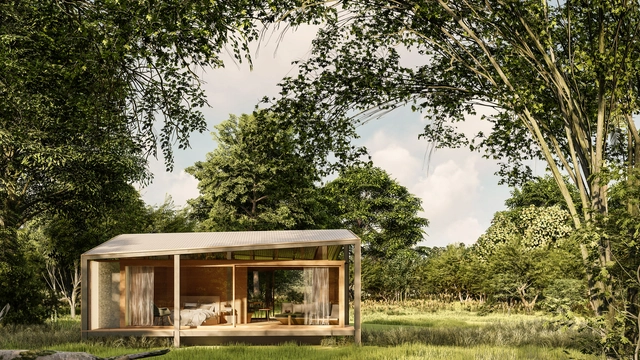
Bali-based Stilt Studios has begun construction on a new prefabricated tiny house made out of recycled Tetra Pak cartons. The team has also launched a Kickstarter campaign to create awareness for the use of recycled materials. Designed to promote local, circular economies, the first prototype is now being built and sales of the tiny house will commence in October this year.
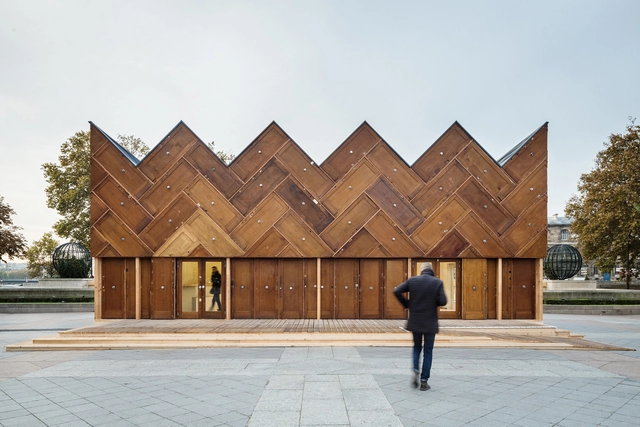
With the aim of supporting architects to become active agents of sustainable design, this week we present a selection of facades that incorporate different recycled materials. Beyond the typical uses of plastic and glass, in this article, you will find innovative materials such as mattress springs, ice cream containers, plastic chairs, and recycled waste from agricultural and industrial products. A look at 21 remarkable projects using recycled materials to create an attractive facade.
While not all plastics are being recycled, even the ones that display the recycling sign, the global plastic waste problem is nowhere close to being resolved. Recycling, generally determined by factors like demand, legislations, and economy, takes on arguably around 20% of the annual production of plastics, leaving a large quantity unattended, doomed to last forever in our environment. In addition, competing with newly-produced materials, recycled plastics need to meet standards of quality and price, and undergo a sustainable, efficient, and economically viable transformation.
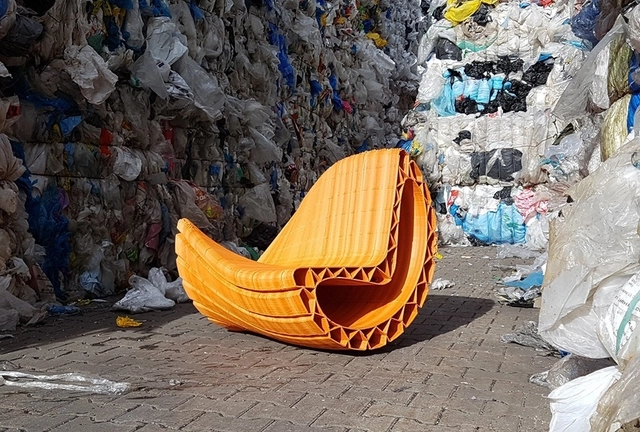
ROGP or Rejects of Glass & Plastics Technology is an innovative approach that repurposes plastics, once labeled as non-recyclable materials due to technical complexity or economy-related issues.
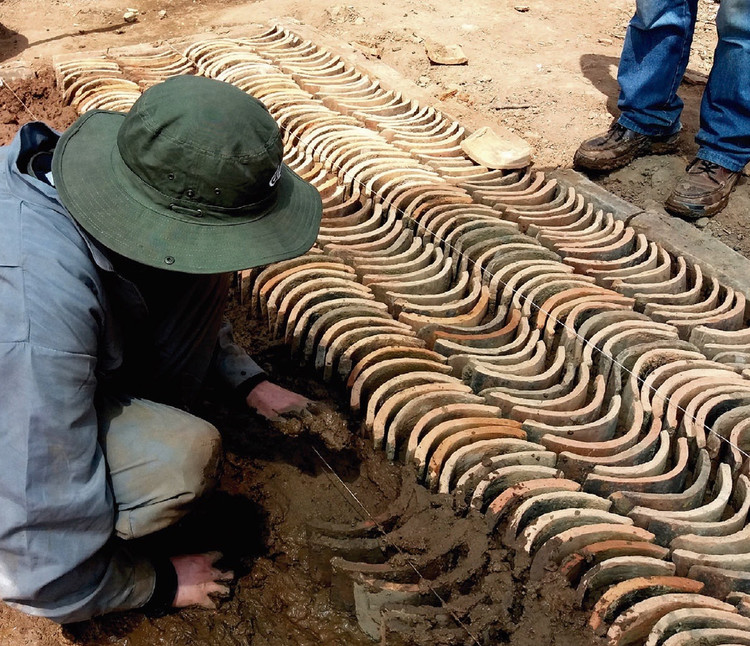
Constrained by a lack of transportation and resources, vernacular architecture has started adapting the distinct strategy of utilizing local materials. By analyzing projects which have successfully incorporated these features into their design, this article gives an overview of how traditional materials, such as tiles, metal, rocks, bamboo, wooden sticks, timber, rammed earth and bricks are being transformed through vernacular architecture in China.
Making material recycling commonplace within the architectural field would require a top-down approach in adapting the industry’s processes and standards to create a suitable framework for the task. However, individual endeavours are bringing about change within the profession, pushing for a reconsideration of architecture’s relationship to waste. This article looks at some of the initiatives that are spearheading the transition towards a common practice of material recycling.
Whether you're looking for an upgrade or to replace broken pieces for floors or walls, tiles are always an effective and readily available option for any project that you have in mind. With their relatively low production cost, tiles are rarely reused or recycled and, if they are, it's usually for their original function.
Recycling has long been an entry point into sustainable design. It's personal, achieved at a micro scale where individuals can reduce waste and preserve energy. But between resource shortages, environmental habitat loss and the global climate crisis, there has been a shift in daily practices towards more circular thinking. Increasingly, the need to sustain life is part of a continuous process of production, resorption, and recycling where waste becomes the input for production.
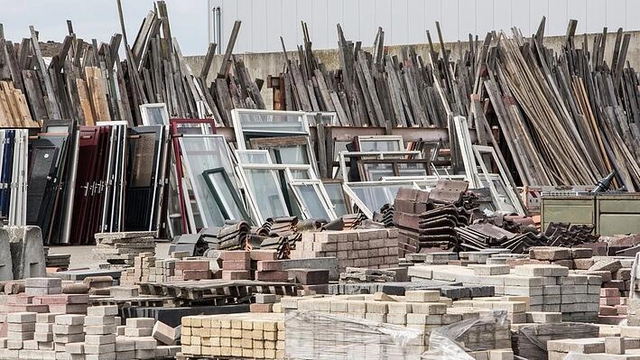
Stockyard of recycled building materials waiting for reuse . Image Courtesy of NY Engineers
“Out with the old and in with the new,”....or so they say. In the United States, a cloud of dust and debris paired with a wrecking ball and bulldozer tends to represent signs of forward progress, innovation, economic activity, and the hope for a better future through architectural design.
Recycled and reused materials continue to grow as a more attractive alternative in the construction field. They are at most times a coveted sustainable substitute to conventional building materials, offering a financially resourceful solution when appropriately sourced and implemented. Aside from saving up on raw material costs, establishing recycling facilities or factories might present a good opportunity to generate jobs within a local setting (collecting, handling). The recycling process might also be used as a gateway to lower energy consumption, with some plants eventually generating their own power through specific material transformation techniques (Heat generated power).
Recycling and upcycling of materials and structures have become more and more popular in architecture as alternatives to the production of components in construction, typically associated with increased energy consumption and high levels of pollutants released into the atmosphere. The main difference between these two methods is that, while the former uses a certain amount of energy to process the material before it is reused, the latter does not require this process, but rather reuses it just as it was discarded.
The concept of Design for Disassembly (DfD for short) gained increasing traction in recent years, as it addresses the growing concern around the high consumption of resources and low recycling rate within the construction industry. The following article details on the method and features guidelines for a design process that facilitates the dismantlement of future buildings, with the scope of providing a better understanding of this principle within the broader framework of the current practice and circular economy.
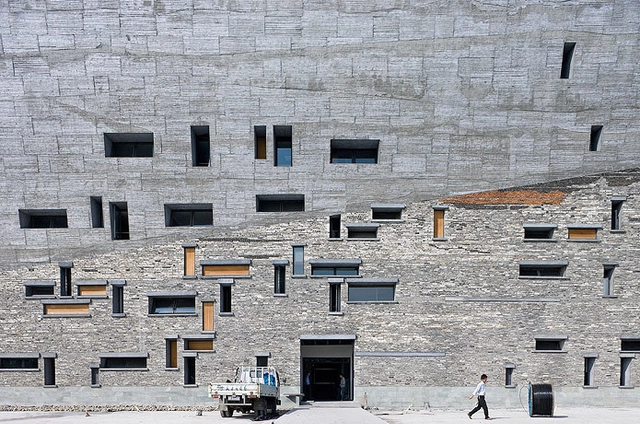
Amateur Architecture Studio, Ningbo History Museum, 2008. . Image Courtesy of Louisiana
Over the past two centuries, cities in China have multiplied and expanded on a large scale, under accelerated urbanization. Mass demolition of the old city fabric, occurring everywhere, is leaving industrial debris and fragmented cultural artifacts buried forever, under shiny new skyscrapers. As old Chinese cities are collapsing and new urban centers are outspreading, a part of the city was lost, the old demolished landscape. Wang Shu and Lu Wenyu, the first Chinese citizens to win the Pritzker Architecture Prize, responded to this past-present relation by working with recycled materials and traditional know-how. In the following, we explore some of this couple's renowned works such as Ningbo History Museum, Ningbo (2008), Xiangshan Campus of China Academy of Art, Hangzhou (2004), and Ningbo Contemporary Art Museum (2005), to examine his humanistic approach to the city.







.jpg?1612184961&format=webp&width=640&height=580)




.jpg?1612184961)






















.jpg?1596025638 "© Charbel Tannous, courtesy of Development Inc.")




















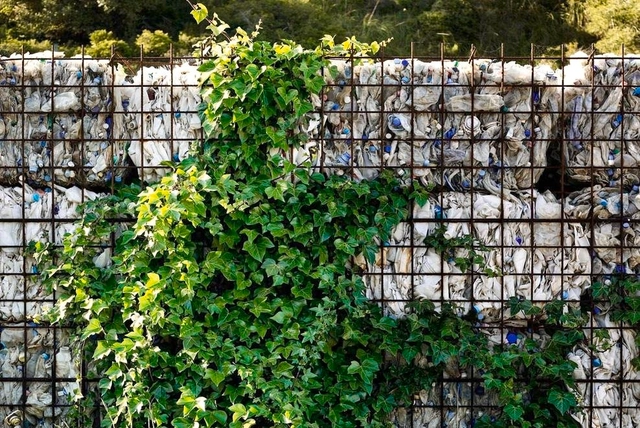


.jpg?1594127477 "Pavilion built with recycled material transforms public space in South Africa. Image: © Ella Petousis")