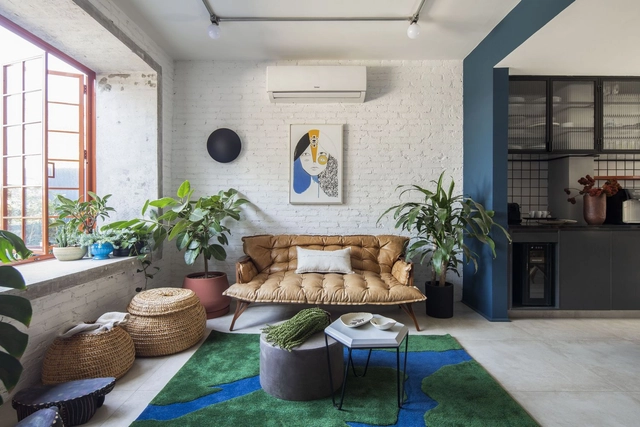
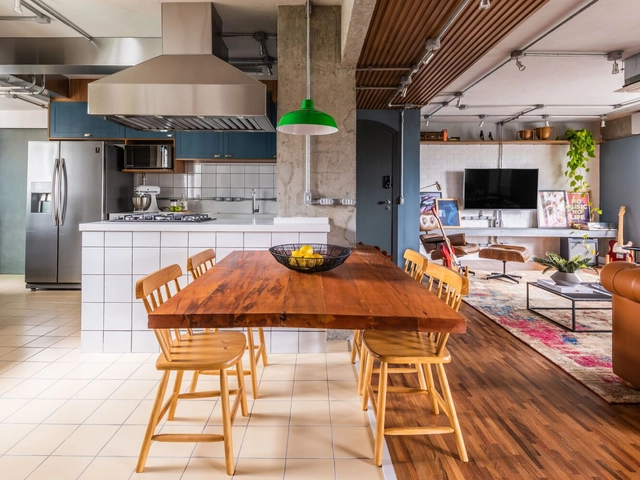
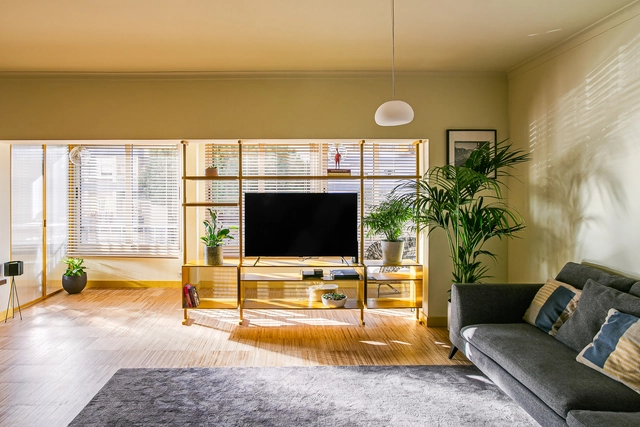
In apartments and small houses, the rest and entertainment spaces tend to share the same environment, making the living room fully oriented towards the television. But what to do when television is removed from space? Here are ideas on how to organize the living room without having the television as the main object of the room.
The floor is one of the largest areas of coverage of an environment, and therefore, its choice goes through several criteria related to both aesthetic and visual identity issues, as well as technical issues of resistance and maintenance. It is common to use different floors for areas with different uses and often this transition is not marked by walls or doors. Next, we will bring you tips on how to make this transition harmoniously when there is no physical boundary between the floors.
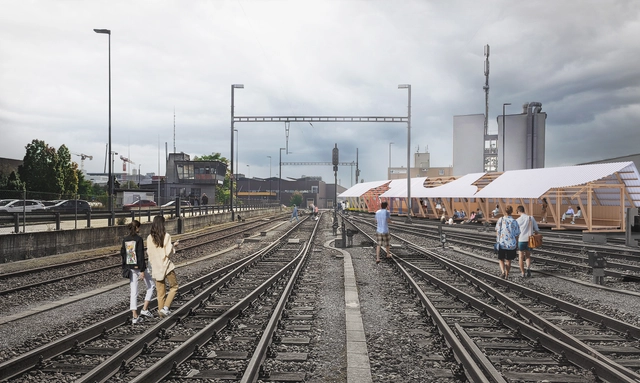
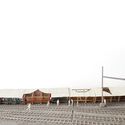
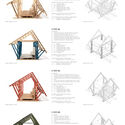
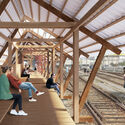
The new biennial event Architekturwoche Basel (AWB) will debut this May as a platform for discussing architecture and urban development through the lens of sustainable construction and the circular economy. The inaugural edition also marks the launch of the first Basel Pavilion, a temporary structure meant to showcase new possibilities for environmentally-friendly building practices. The winning design, “Loggia Basileana”, created by architecture practice isla, is made of reused building components and features a series of modules that form a continuous pedestrian passageway along the train tracks on the Dreispitz site.
The TV is one of the main elements that make up the living room, especially in most Brazilian homes, where the living room is the place both for receiving visitors and for enjoying rest and leisure. However, it is not always easy to position this equipment, which varies so much in size and especially to combine it with the rest of the space.
It's not uncommon to see housing complexes integrate commercial spaces at the ground level, but the challenge of mediating between the private and public realm on a smaller scale, especially with the rise of the home office, has forced architects to explore all aspects of the structure, from the topography it sits on, to the direction of light and wind, to the design and organization the domestic space. This interior focus explores different design solutions that show how architects and interior designers transformed their projects from a living space into a mixed-use typology, taking into account privacy, flexibility, functionality, and predefined spatial requirements.
Much has been said about circularity in the construction industry. Inspired by nature, the circular economy works in a continuous process of production, resorption and recycling, self-managing and naturally regulating itself, where waste can turn into supplies for the production of new products. It is a very interesting concept, but it faces some practical difficulties in everyday life, whether in the demolition / disassembly process, or in the correct disposal of materials and waste; but mostly due to the lack of technologies available to recycle or give new use to construction materials. About 40% of all waste generated on Planet Earth comes from civil construction, and a good part of it could be recycled. Concrete is an especially important material because of its large carbon footprint in production, its ubiquity and massive use, and also because of the difficulty of recycling or reusing it.
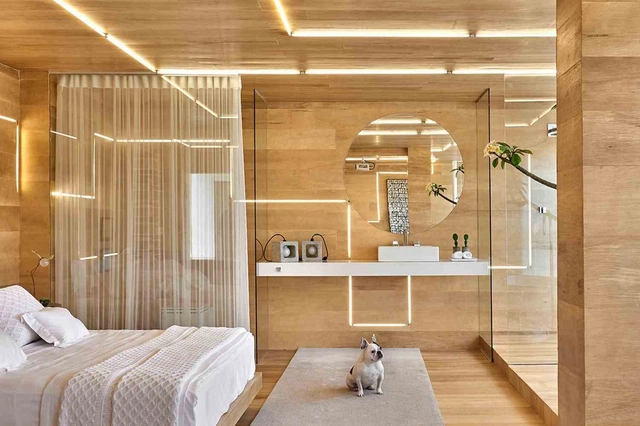
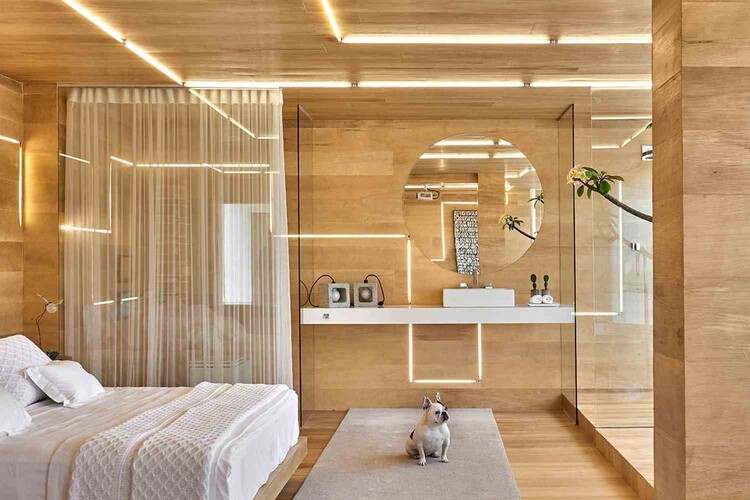
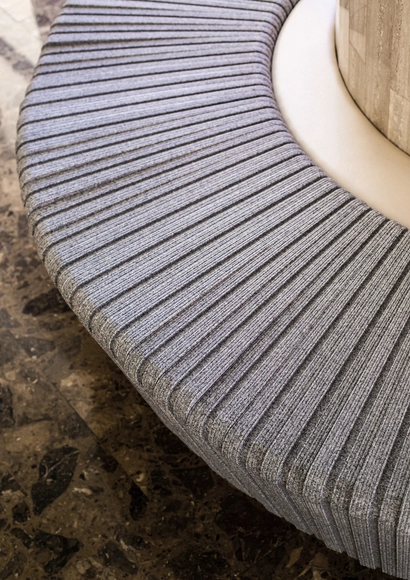
Textures play a leading role in an interior project. Metals bring integrity and sophistication. Stones and their variations in colors and designs can become focal points in spaces. Different wood types, with their fiber and knot designs, and their characteristic coloring, bring warmth and comfort. If we think about the combination of these, together with different types of surfaces and lighting, we have a universe of possibilities to try to bring pleasant sensations to the occupants of the spaces.
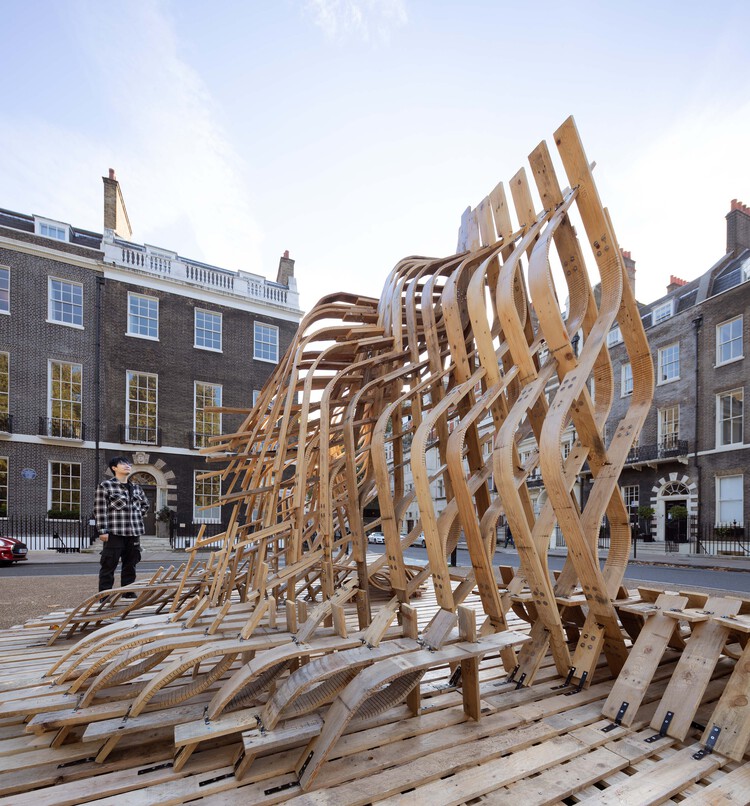
In collaboration with architecture practice Hassell, Architectural Association's Association's Emergent Technologies and Design (EmTech) programme created a reclaimed wood pavilion, exploring the convergence of computational design, new construction technologies, and material reuse. Titled Re-Emerge, the project addresses the issue of limited material resources, exploring the architectural potential of material recycling in the context of generative design.
The climate crisis has become a staple of the architecture discourse, with the field slowly acknowledging its contribution to environmental issues and seeking to reframe its values and approaches. However, there is an evident lack of commitment and consistency in addressing the matter and an absence of systemic change. Emerging practices, organizations and startups are carving a new architecture practice, slowly unfolding a paradigm shift beyond "green" add-ons and technical equipment. Addressing environmental issues on multiple levels, from policy and design strategies to materials and construction processes, the following are some of the actors reframing the profession's relationship with sustainability.
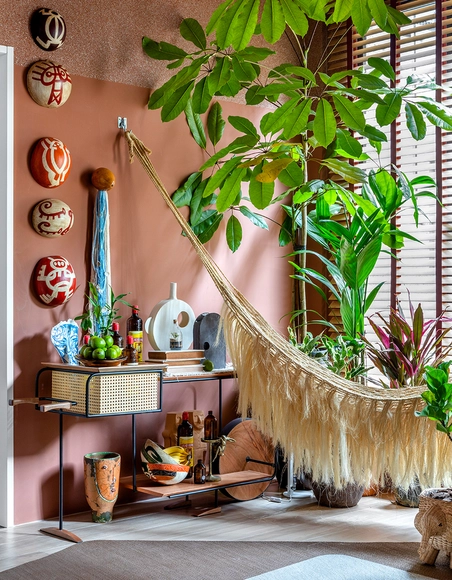
Hammocks are an undeniable passion and an iconic design element in Brazil and are key pieces of furniture in many Brazilian homes. In small houses or apartments, however, hammocks can often be difficult to place in the room. This article shows examples of how to include hammocks in architectural projects and ideas to inspire you to hang one in your apartment.
Choosing a home's cabinetry and furniture is not only about function and storage space but also about visual appeal. Walk-in closets, which are normally located in the master bedroom, are a good example of this. These spaces were usually used only for storing clothes, but modern closets now incorporate more unique features, transforming them into more personal and functional amenities.
https://www.archdaily.com/968291/more-than-just-a-wardrobe-15-examples-of-walk-in-closetsEquipe ArchDaily Brasil
Natural or artificial, lighting is one of the most important elements in architecture, directly affecting our perception of spaces. It is capable of defining volumes, enhancing colors, textures, and therefore, contributing to the overall relationship between dimension, proportion, and contrasts. One of the many challenges of architecture is to shape spaces based on light and shade, and sometimes natural light is not enough, requiring additional light sources to be installed and controlled.
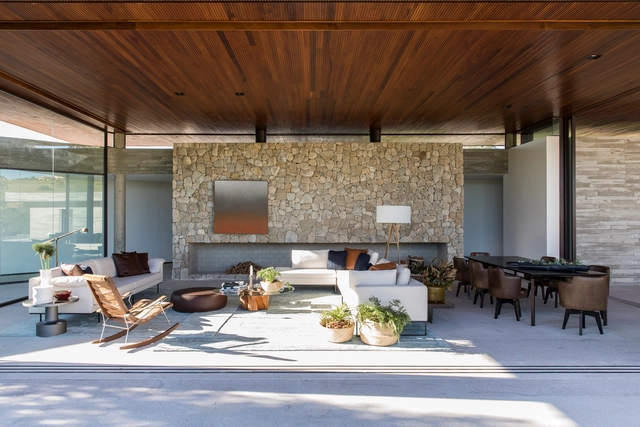
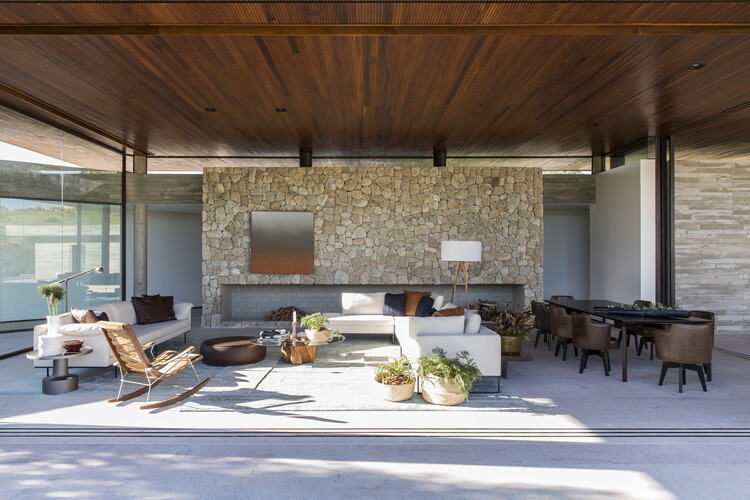
Ancient builders had deep knowledge about environmental conditions and the physical needs of humans in their search for shelter. Regardless of technological advances and the evolution of our perception of the world around us, this kind of knowledge and relationship with our surroundings can still be applied today and adapted to our current context. Natural stone, when used in architecture shows just that, as we explore its many different styles and applications.
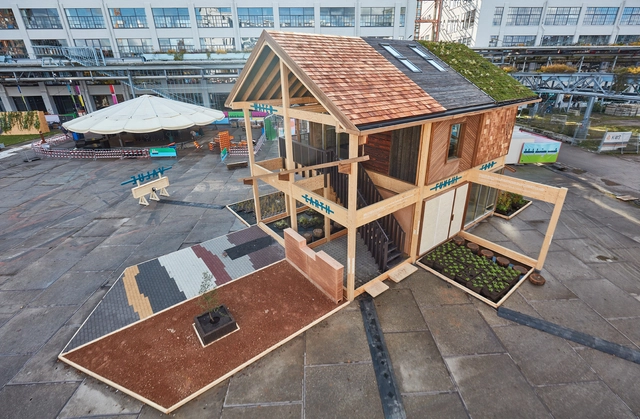
For this year's edition of the Venice Biennale, the Japan Pavilion invites visitors to reflect on the movement of goods fuelling mass consumption and rethink sustainability and reuse in architecture. Titled Co-ownership of Action: Trajectories of Elements, the project curated by Kadowaki Kozo involves dismantling an old wooden Japanese house and transporting it to Venice to be reconstructed in a new configuration with the addition of modern materials. The exhibition exemplifies how old materials could be given an entirely new existence by putting the current movement of goods in the service of reuse rather than consumption.
The Shing Mun River in Sha Tin, a residential town in Hong Kong, has struggled with plastic waste pollution for years. Household waste that is not properly recycled will either end up in landfills or floating in the river. In 2018 almost 17 million plastic items, or 40,000 items daily, were found to be drained into the ocean via the Shing Mun River, mostly being food packaging, cutleries, and household plastic bottles. This quantity of plastic pollution in the river and surrounding environment could eventually jeopardize the natural ecosystem irreversibly.
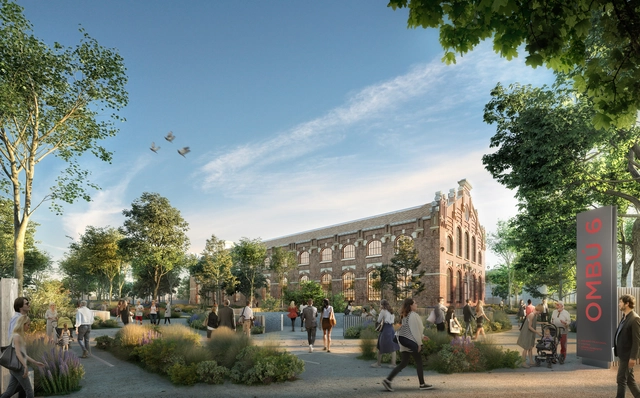
General view of the revitalised industrial building sitting in a landscaped garden. Image Courtesy of Foster + Partners
Foster + Partners is leading massive refurbishment works on a historic building in Madrid. The renovation project that will put in place an office building for Acciona, seeks to revitalize an abandoned old industrial building built in 1905, generating over 10,000 square-meters of new spaces.