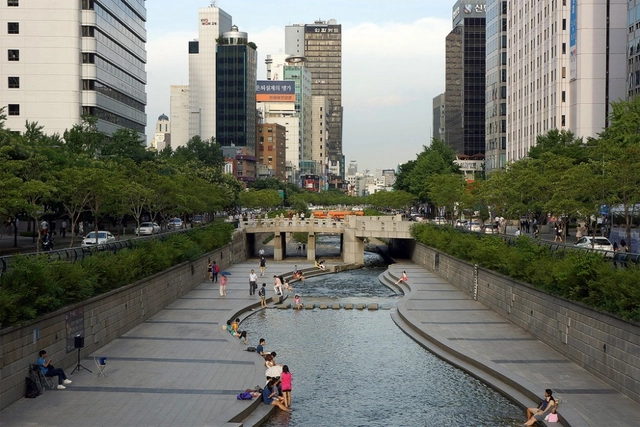
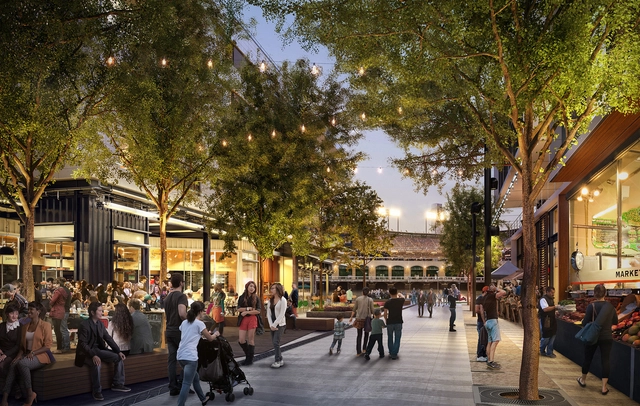
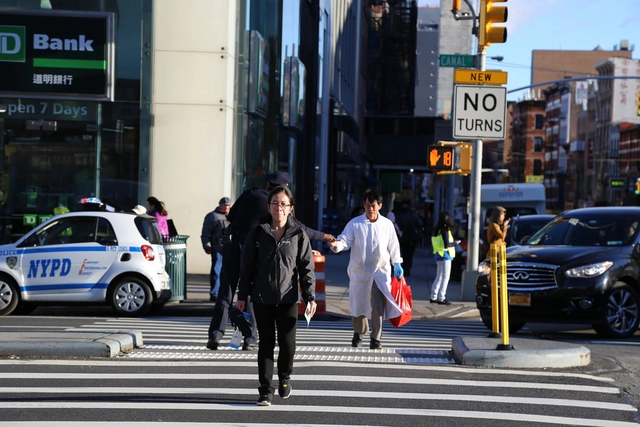
THE BENCH is an idea based design competition open to all ages and backgrounds. The challenge of the competition is to design and install a temporary structure on a street to transform the street environment to a form of public space. The challenge of THE BENCH 2017 is to design a seasonal seating- space along the street edge(s) defined by the competition. The competition will unfold in two phases: selection by jury and installation for seasonal use. Multiple entries will be chosen as winning entries and will be constructed for public use during the 2017 WINNIPEG DESIGN FESTIVAL.
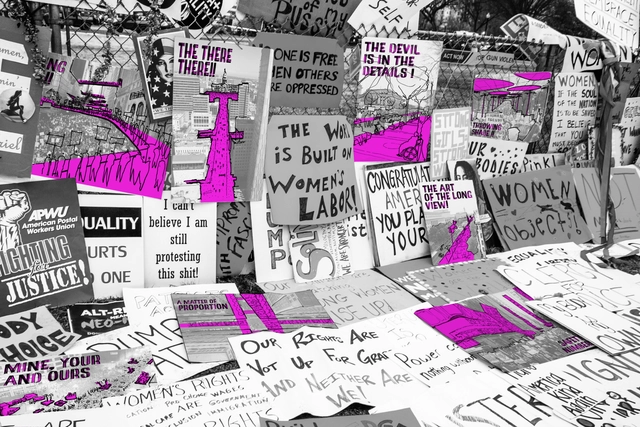
Once largely viewed as a fringe activity belonging to passionate extremists, protest is now—in the wake of a controversial new administration’s ascension to power in the US and a heightened interest in politics globally—a commonplace occurrence, with a much broader participant base in need of places to gather and move en masse. This revitalized interest in protest was perhaps most visible on one particularly historic occasion: on January 21st, 2017, a record-breaking 4.2 million people took to the streets across the US to exercise their first-amendment rights.
Women’s marches took place on the frozen tundra (we have photographic evidence from a scientist in the Arctic Circle) and even in a Los Angeles cancer ward. But for the most part, these protests happened in the streets. In the first few months of 2017, the streets of our cities suddenly took center stage on screens across the world. From Washington to Seattle, Sydney to San Antonio, Paris to Fairbanks, broad boulevards and small town main streets were transformed from spaces for movement to places of resistance. From the Women’s March on Washington to April’s People’s Climate March, protestors are looking for space to convene and advocate for the issues that matter most to them.
https://www.archdaily.com/873608/8-ways-we-can-improve-the-design-of-our-streets-for-protestGina Ford and Martin Zogran
The Curry Stone Design Prize has selected 11 honorees as part of June’s Social Design Circle, whose work responds to the question: Can Design Reclaim Public Space? From NGOs to design collectives across the globe, each winner addresses notions of usage, organization, and amenities within the realm of public space, and is featured on the prize’s website. In addition to a new circle of monthly winners, the prize hosts a weekly podcast, Social Design Insights, complimenting the featured work and expanding on the monthly themes with leading practitioners in social design.
Here are the 11 members of June’s Social Design Circle:
https://www.archdaily.com/872871/curry-stone-design-prize-celebrates-11-practitioners-for-valuable-approaches-to-public-spaceOsman Bari
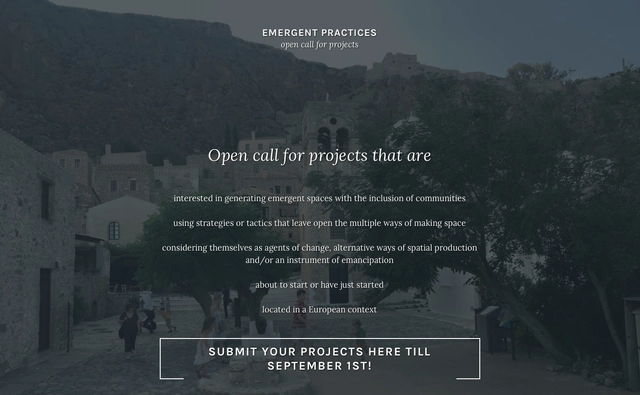
Emergent Practices - a joint project joint between XXI Architecture and Design Magazine and Faculty of Architecture, campus Sint-Lucas Brussels/Ghent, KU Leuven- launches an open call in search of everyday life impact of spatial practices. The open call is the first step of the research that aims to collect and generate critical content on the emergent practices of social architecture.
A selection of submitted projects will be used as case studies, observed and intervened during their implementation processes to generate a grounded discourse on social architecture and its impacts. A wider selection among submitted projects will be published accompanying the research entitled "Understanding the Emergent Practices of Social Architecture".
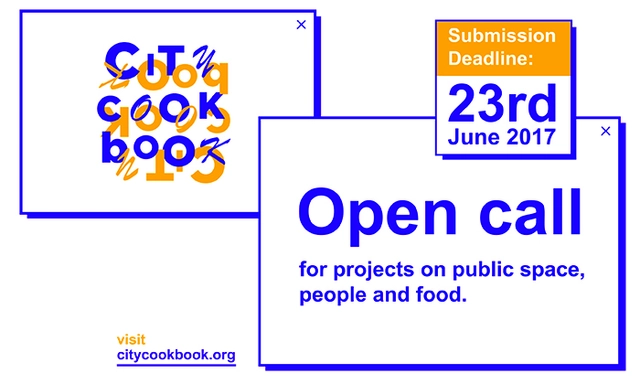
City Cook Book invites projects and initiatives worldwide that work with food dynamics and culture to enhance public space and foster social interaction to be part of its platform.
If you have developed or are actively engaged in any such initiatives we would like you to share your experience in our open repository. The projects will be presented both in a digital platform and a publication.
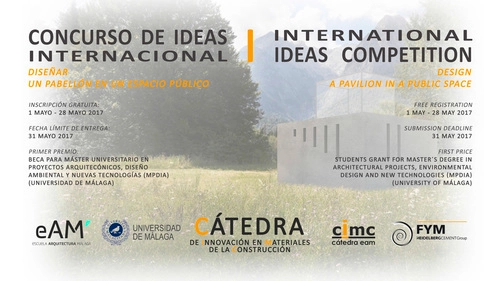
The Chair of Innovative ConstructionMaterials (CIMC) with the Higher School of Architecture of Málaga and Financiera y Minera S.A. announce the II International Ideas Competition for architects and students of architecture in their graduation project.
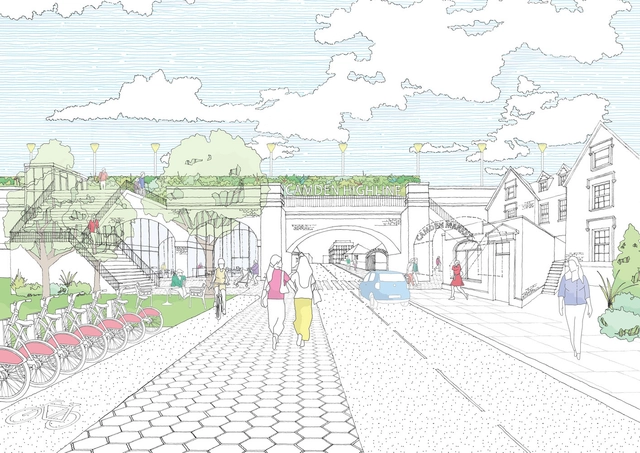
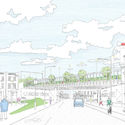
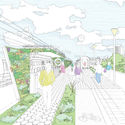
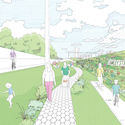
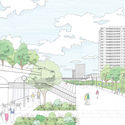
The New York High Line is set to receive a new British sibling, in the form the CamdenHigh Line – a conversion of the defunct railway line connecting Camden Town and King’s Cross, into an elevated public space and commuting route. The invited competition for the project was won by London-based practices Studio Weave and Architecture 00, whose proposal is one of three international designs that have followed the success of the High Line in New York, with the other two situated in Bangkok and Mexico City.
“We think the re-use of this railway line for the Camden High Line outweighs the benefits and costs of leaving it vacant,” said Simon Pitkeathley, Chief Executive at Camden Town Unlimited. “This new transport link can reduce overcrowding and journey times on the existing, cycling and pedestrian routes nearby like Regent’s Canal.”
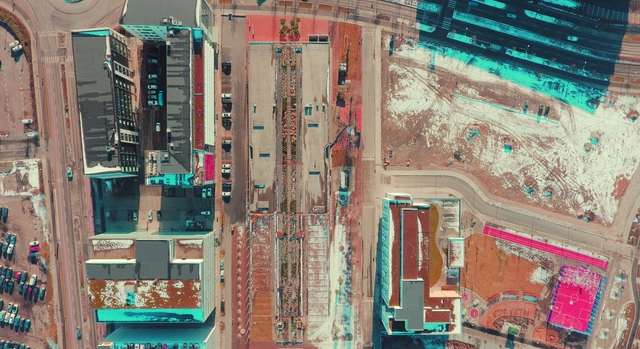
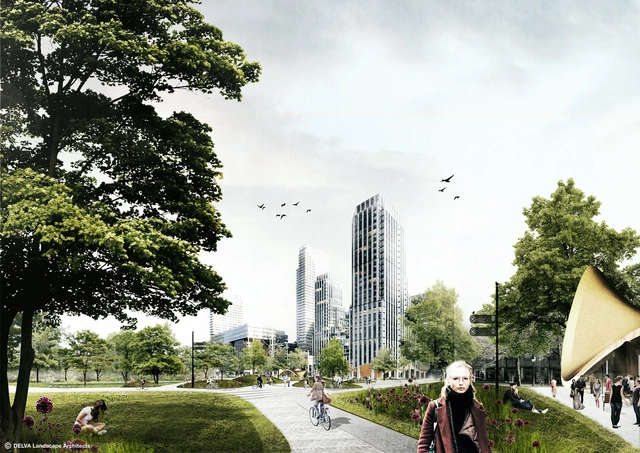
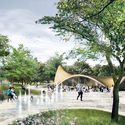
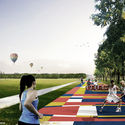
Serving as a new gateway to the city through the connection of various green spaces and public programs, The Green Entrance is DELVA Landscape Architects’masterplan for a historic district of The Hague. Given The Hague’s future inner-city densification, which involves the creation of 50,000 new houses, the Dutch firm’s aim is to aid these developments through sustainable and green urban strategies, manifested “through an integral approach between landscape design, cultural heritage, mobility, programming and technology.”
Commenting on the project’s primary function, the architects state: “’The Green Entrance’ connects areas that have been isolated over the years. It starts in the spacious and open ‘City Hall' that connects to the train station and continues to the ‘Koningin Julianaplein’. No narrow doors or gates, but a wide view over the green and lively surrounding public space.”
With decaying infrastructure and a lack of viable public amenities, Hong Kong’s popular yet problematic waterfront is the focus of the latest undertaking by James Corner Field Operations, aiming to transform the site into an attractive tourist and local destination. Home to Hong Kong’s Avenue of Stars (the equivalent of Hollywood’s Walk of Fame), the Tsim Sha Tsui (TST) waterfront is in need of severe revitalization, with areas requiring demolition if not reinforced within the decade.
Part of a larger project known as Victoria Dockside, the landscape architecture firm’s vision incorporates new seating, shading and green space to reinvigorate the promenade while offering panoramic views of the city’s skyline as it guides visitors towards the harbor, allowing visitors to get closer to the harbor than ever before. Trellises will provide 800 times more shade than what is currently offered, while seating will increase 325-fold to encourage public engagement and interaction with each other and the space.
https://www.archdaily.com/870640/james-corner-field-operations-to-lead-much-needed-revitalisation-of-hong-kongs-waterfrontOsman Bari
In 1855 the German machinery manufacturer Carl Schlickeysen issued the patent he had recently created, the "Universal Patent Brickmaking machine", the first machine created to manufacture bricks by extrusión as an industrial process.
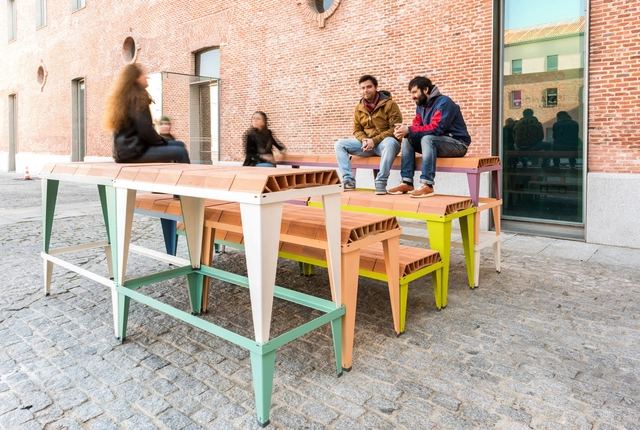
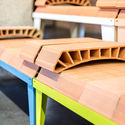
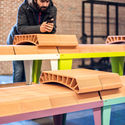
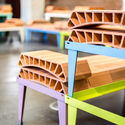
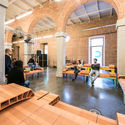
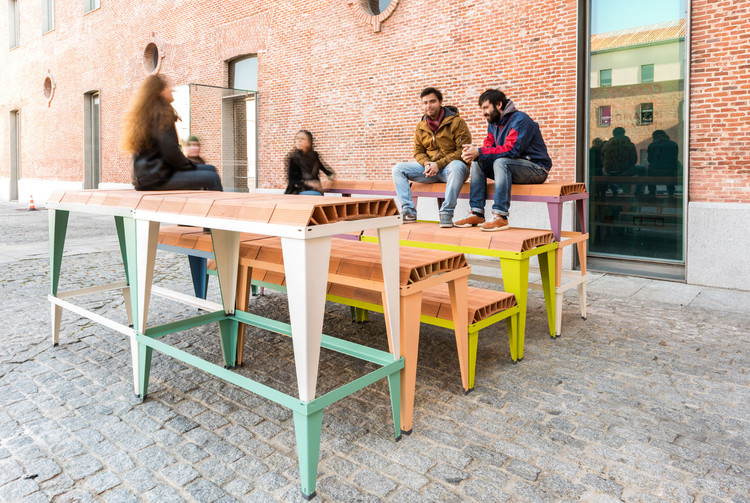
SCHLICKEYSEN is a modular furniture system based on two types of modular metal supports and standard-sized ceramic curved vaults. All kinds of settings can be configured from the combination of these three elements; picnic tables, continuous benches, grandstands, topographies, and many more typologies can be achieved by just stacking the metal supports and using the ceramic vaults as a horizontal supporting surface.
Construction has officially begun on Vessel, the 15-story tall staircase sculpture designed by Heatherwick Studio that will serve as the centerpiece of New York’s massive new Hudson Yards development. To build the structure, 75 individual units are being prefabricated by Cimolai S.p.A. in their Monfalcone, Italy facility, then shipped to New York where they will be assembled on site. These first 10 of these pieces have now completed their 15-day overseas journey, with the remaining pieces scheduled to arrive on-site and put into place over the coming year.
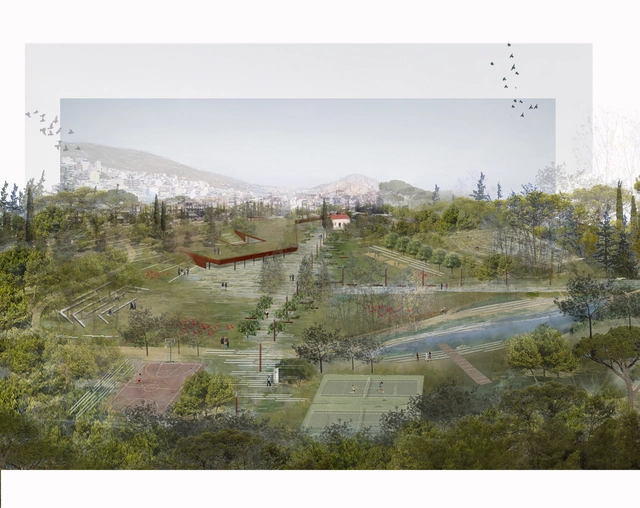
A competition for the transformation of a former cemetery in Nikea, just west of central Athens, has been won by Greek firm Topio7, with a proposal that creates a revitalized public park as a result of “a mutual osmosis between the park and the city”. A number of green buffer zones – “the elastic limit” – are utilized to frame a procession-like journey from the bustle of the city to the calm of the park’slandscape.
Highlighting the importance of the site’s previous use, the architects explain that the “main objective of the project is the creation of an open, accessible public space, a contemporary urban park with ecological-bioclimatic character, with special emphasis on the social dimension and the site’s memory.”
The way we spend time and the things we spend time doing are constantly changing. New technologies enable us to interact in different ways. They also tend to replace older forms of social interaction for better or worse. How can future public spaces facilitate new forms of social interactions?
The importance of public spaces in urban life is an issue that has been apparent since ancient Greece and is still with us today. Opportunities to meet and exchange ideas in these spaces are able to influence how the inhabitants participate in the development of their city, and occur in greater instances when public spaces are accessible to everyone.
However, in modern societies, the strategic role of these spaces has been limited. According to The City Fix, a blog on sustainable urban planning, one of the main reasons for this is the overabundance of automobiles. In fact, according to one study by the Brazilian Institute for Energy and the Environment, 70% of public spaces in urban centers are taken up by roadways and other spaces for cars, while car owners make up only around 20 to 40 percent of the city’s population.
How can public spaces be recovered to promote urban life? We discuss three important factors below.
Go to any medieval European city and you will see what streets looked like before the advent of the car: lovely, small narrow lanes, intimate, and undisputedly human-scale. We have very few cities in the US where you can find streets like this. For the most part what you see is streets that have been designed with the car in mind—at a large scale for a fast speed. In my native San Francisco, we are making the streets safer for walking and biking by widening sidewalks, turning car lanes into bike lanes, and slowing down the cars. We are working with the streets we have; a typical San Francisco street is anywhere from 60 to 80 feet (18 to 24 meters) wide, as compared with a medieval, pre-car street which is more like 10 to 20 feet (3 to 6 meters) wide.
As an urban designer, I work on lots of projects where we take large parcels of land and subdivide them into blocks by introducing new streets. These new streets are a rare opportunity to take a fresh look at the kinds of car-oriented roads that we are used to, and instead try to design streets that prioritize the safety and comfort of pedestrians. These projects give us a chance to design streets that are just for people. Imagine that we made these people-only streets into narrow, medieval-style lanes that are intimate and human-scaled. But even as we try to design streets that might not ever see a single car, we find that the modern street design has become so much more than just places for walking or driving. There are therefore a number of things for socially-minded designers to consider, beyond the commonly talked about pedestrian-car dichotomy.
https://www.archdaily.com/867390/4-important-things-to-consider-when-designing-streets-for-people-not-just-carsKristen Hall
Vision Zero is an initiative that started in Sweden in 1997 when the country began implementing a series of road safety measures to reach their goal of zero deaths from traffic accidents. As a result, the country managed to reduce the number of deaths to 3 people per 100 thousand inhabitants.
Since then the plan has been adopted by different cities and has inspired the creation of various organizations that are looking to make our streets a safer places. One of them being the Vision Zero Network that brings together traffic engineers, health professionals, local leaders, and policy makers.
“Public space is the new backyard,” says Hamish Dounan, Associate Director of CONTEXT Landscape architects. “Great landscape architecture projects can actually get people out of their apartments and going for walks. It can get them engaging in a social way,” adds Shahana Mackenzie, CEO of the Australian Institute of Landscape Architects (AILA). Trends to activate public spaces are increasing in popularity around the world; urban parks and gardens, vibrant street places, wider pedestrian walkways, cafes with outdoor seating. So during the 2016 International Festival of Landscape Architecture held in Canberra during October 2016, Street Furniture Australia launched a pop-up park in the underused urban space of Garema Place, in collaboration with AILA, the ACT Government and In The City Canberra. The aim of the pop-up park was to create a small social experiment, “to test the theory that the fastest and most cost-effective way to attract people is to provide more places to sit.” In addition to moveable furniture, the design by CONTEXT Landscape architects included bright colors, additional lighting, a lawn, free Wi-Fi and bookshelves as techniques to make Garema Place more inviting.
The process and results of the pop-up park were documented in a report by Street Furniture Australia, with some impressive results: before the #BackyardExperiment, 97% of people were observed to just pass through Garema Place without stopping, and 98% of the people who did stop in the space were adults. During the 8 days of the experiment, the number of passersby increased by 190% as people chose to walk through Garema Place instead of taking other routes. In addition to this, 247% more people stayed at the place to sit and enjoy the pop-up park and surrounding area. There was an incredible 631% increase in children at the park, double the number of groups of friends, close to a 400% increase in the number of couples and almost 5 times the amount of families. With the numbers as evidence for the success of the #BackyardExperiment, here is a summary of the elements used to evoke such a positive response. Simple, cost-effective and relatively easy to implement, these interventions are an attractive “cocktail” for any underused urban space.
“Who would’ve thought a parking garage could be so interesting?”
In this video aired by the Louisiana Channel, Kathrin Susanna Gimmel and Jan Yoshiyuki Tanaka, both co-founders of Copenhagen-based firm JAJA Architects, explain the ideology behind the “Park ‘n’ Play” parking garage. Bright red, atop the 24-meter high car park, sits a playground which, in combination with a rooftop garden, provides a unique public setting offering sought after views of the Copenhagen harbor. Watch the video for more insight into JAJA’s design methodology and how the playground helps redefine roles of public space and usage while integrating into a historical urban identity.
https://www.archdaily.com/804825/watch-how-jaja-co-founders-of-park-n-play-are-redefining-public-spaceOsman Bari








.jpg?1493944015&format=webp&width=640&height=580)