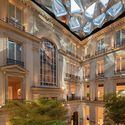
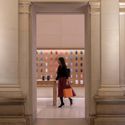
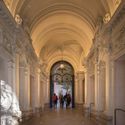
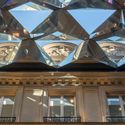
The latest Apple Store designed by Foster + Partners has opened on the Champs-Élysées in Paris, occupying the grounds and courtyard of a historic Parisian apartment. The ornate Beaux-Art building has been appropriated by “carefully interweaving several layers of history with contemporary, light-filled and inviting spaces.”
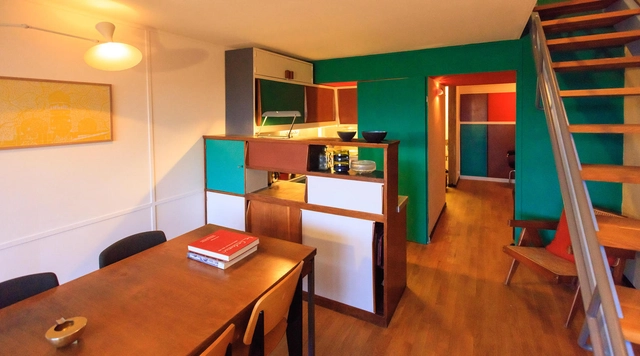
The Fondation Le Corbusier has celebrated its 50th anniversary with the unveiling of a restored apartment originally designed by the famous architect. The studio apartment on Nungesser-et-Coli in Paris was designed by Le Corbusier in 1931 for his own habitation and was completed in 1934.
The apartment underwent two years of restoration following its listing as a classified world heritage site in 2016 and is now open to the public.
https://www.archdaily.com/904426/le-corbusiers-restored-parisian-apartment-opened-to-the-publicNiall Patrick Walsh
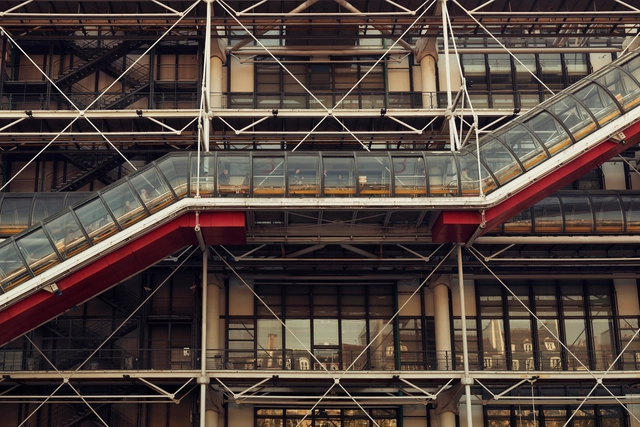
Andres Gallardo, the self-taught Spanish photographer, recently traveled to Paris to capture the city’s urban architecture, documenting the spirit of the buildings, the city’s rich architectural history, and international design influence.
Gallardo describes the city as “magical,” which he chooses to document in both monochrome and color photographs, incorporating overall perspectives and small structural details that often obscure the structures’ overall identity.
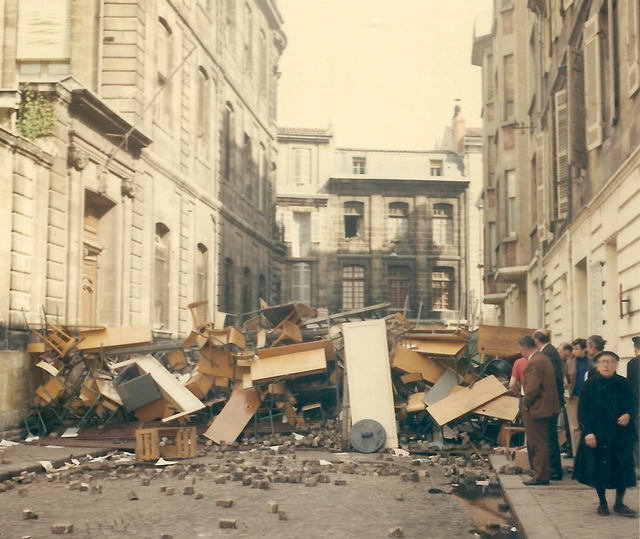
Barricades in the streets of Bordeaux during the May 1968 protests in France. ImageCourtesy of Wikimedia
This article was originally published as "What Marchers Today Can Learn from the May 1968Protests in Paris" on CommonEdge in May 2018. In the 50 years since the historic and worldwide protests of 1968, much has changed. But today's political climate seems equally volatile, with seismic changes threatening social and political establishments across the globe. Lessons from the past are, to borrow the phrase of the moment, more relevant than ever.
American friends recently sent an email: “What’s going on with the French political system? Why all the strikes? What about the endless protest marches? We’d like to visit you in Paris, but we’re a little wary.”
The Center for Globalization and Strategy from Barcelona’s IESE Business School has unveiled its annual list of the world’s smartest cities. In its fifth year, the IESE Cities in Motion Index has calculated the performance scores for 165 cities across 80 countries based on an exhaustive rubric of economic and social indicators. Familiar global power centers have maintained their position at the top of the heap, while expanded categories of assessment have helped a few small cities advance their position drastically.
What does it mean to be a true architecture lover today? It's probably not too far off to conclude that taking pristine, Instagram-optimized photos ranks high in the assessment. With this in mind, the Fondation Louis Vuitton launched a photo contest to highlight the best photos of the building that were taken by inspired visitors and shared on social media.
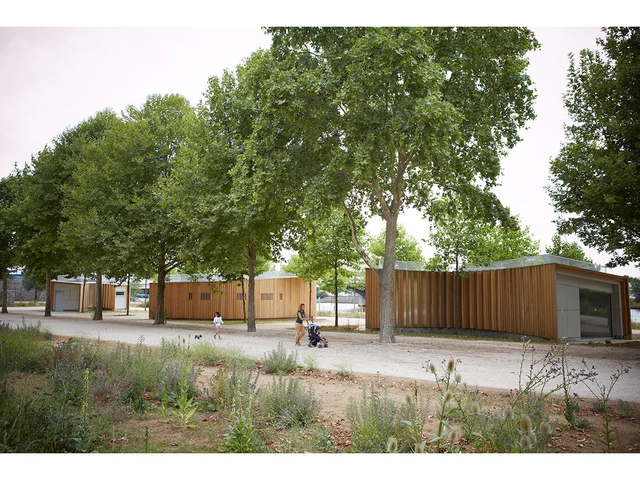
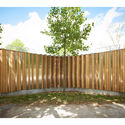
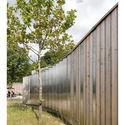
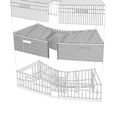
Paris-based h2o architectes revealed their designs for three pavilions to be constructed along the Seine River, near the western entrance of the Lagravère Park in Colombes.
The pavilions are woven into the existing landscape, creating a dialogue between the architecture and surrounding nature. The three small structures were designed according to function and are spread out along the promenade.
The Fab City Global Initiative in collaboration with the City Hall of Paris and the Fab City Grand Paris Association are organizing this year’s Fab City Global Initiative in Paris, France from July 11-13. The three-day program will take place at the Parc de la Villette, and bring together 18 Fab City Members and international city leaders to discuss and imagine ways to define the future of productive cities. This global collaboration project combines innovation ecosystems, governments, and industries that enable cities to become more sustainable through 2054.
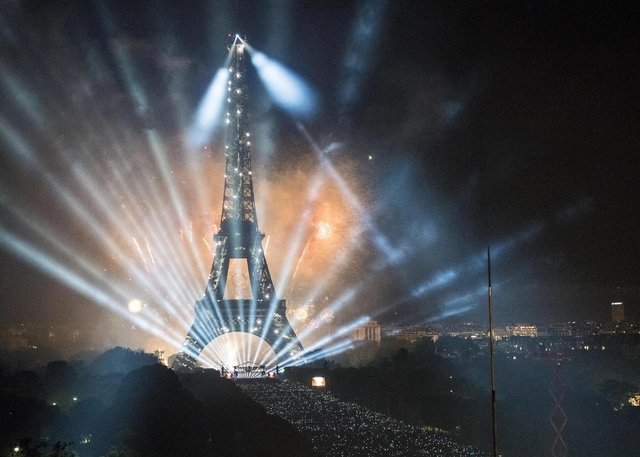
Thanks to their loud, brash, and nocturnal nature, rock concerts are often held in dark bars and nightclubs designed to withstand the abuse of rowdy fans and guitar-smashing rockers. But as musicians earn a following, they eventually graduate from beer-soaked basements to prestigious theaters, outdoor amphitheaters, arenas, and stadiums. For performers and music fans alike, playing or attending a show in a space like Carnegie Hall, the Royal Albert Hall, Madison Square Garden or Colorado’s Red Rocks Amphitheater can be a momentous, once-in-a-lifetime opportunity that ties together the sublime power that great music and architecture can both evoke. As rare as these opportunities are, an exclusive group of iconic musicians have managed to reach an even higher level of prestige by organizing one-off performances amid humanity’s most treasured historical sites—from the Acropolis and ancient Mayan cities to the Colosseum and the Eiffel Tower.
While these special concerts have given fans the chance to experience music history firsthand, many have also been mired in scandal as local officials and residents have raised concerns about potential damage to the sites or inappropriate commercial misuse of treasured cultural landmarks. Despite these legitimate and often justified concerns, these nine iconic sites have hosted some of the most ambitious concerts in the history of popular music:
Mohr purchased the apartment in 2016 and embarked on a journey of demolition, measurement, and extensive renovation including lowering ceilings and moving walls in order to recreate the interior likely envisioned by Le Corbusier.
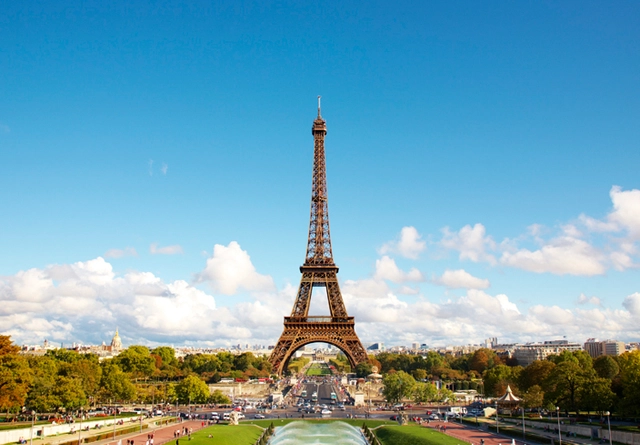
Amanda Levete is among one of four teams to be shortlisted for a competition to reimagine the visitor experience for the famous Eiffel Tower in Paris. The four teams, chosen from 42 entries, will be tasked with rethinking the ways in which people discover and interact with the tower, working in collaboration with the City of Paris government.
Titled “Discover, Approach, Visit,” the competition site covers 54 hectares of land on both sides of the River Seine, with the Eiffel Tower site located at the center. In preparation for Paris’ hosting of the 2024 Olympic Games, the competition asks teams to spend 10 months exploring how to enhance the visitor experience at the base of the tower, strengthen existing connections across the site, reconfigure public transport routes.
https://www.archdaily.com/893829/shortlist-announced-for-competition-to-redesign-the-eiffel-tower-visitor-experienceNiall Patrick Walsh


.jpg?1542719332&format=webp&width=640&height=580)
.jpg?1542719332)







.jpg?1540209301&format=webp&width=640&height=580)
.jpg?1540209293 "© FLC/ADAGP/Mercusot")
.jpg?1540209287 "© FLC/ADAGP/Mercusot")

FLC_Beaux_Arts_Paris_4juin2018_FLC.jpg?1540209273 "© FLC/ADAGP")
.jpg?1540209301)









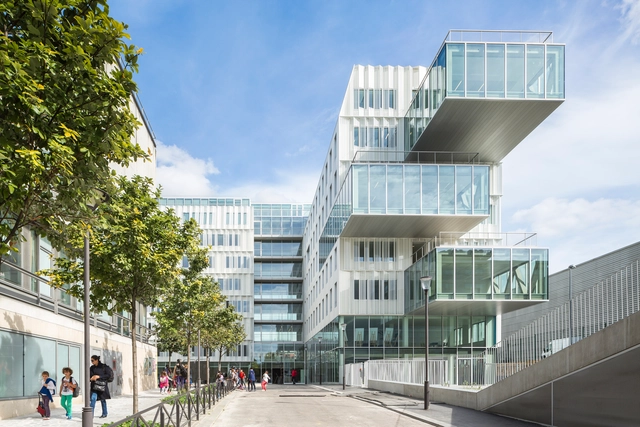
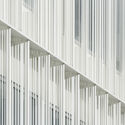
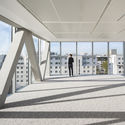
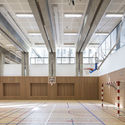








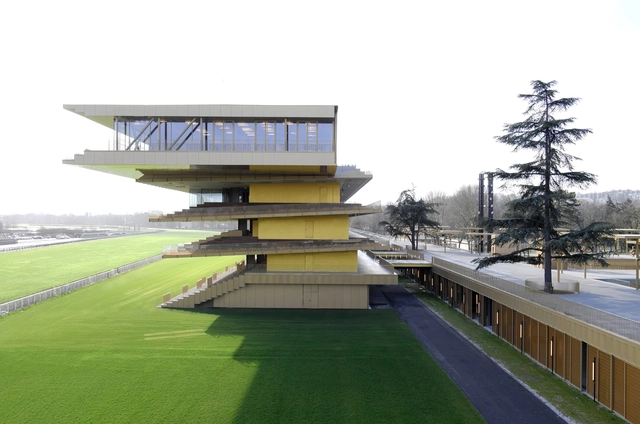
.jpg?1525060540 "© Vincent Fillon")
.jpg?1525061390 "© Vincent Fillon")
.jpg?1525060920 "© Vincent Fillon")
.jpg?1525060633 "© Vincent Fillon")
