
-
Architects: Atelier Craft
- Area: 49 m²
- Year: 2021
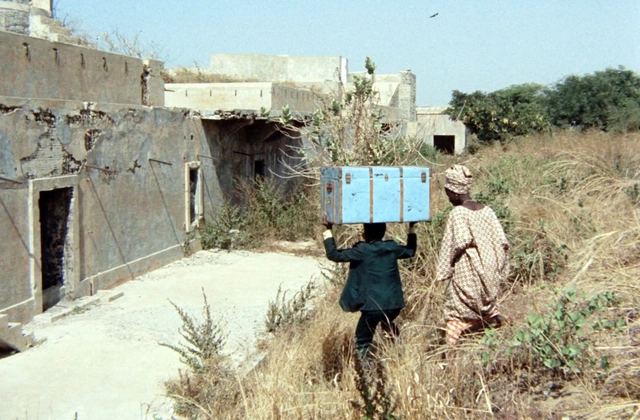
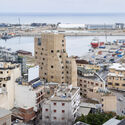
Simultaneously gripping, disconcerting, and chaotic, Djibril Diop Mambéty’s Touki Bouki is an exhilarating cinematic ride. The 1973 drama — the first full-length film by the Senegalese director — is the fantastical narration of a young couple in Dakar, eager to escape the Senegalese capital for the allure of Paris. It’s a character-driven film in many ways, primarily centered on the couple’s adventures, but it is also a subtle visual examination of the urbanism of post-independence Dakar, where the city and its architecture are essential fixtures in a surreal storyline.
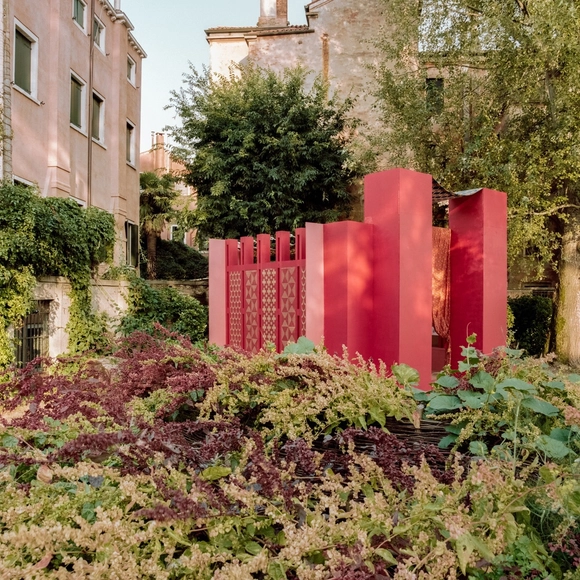
From the Tbilisi Architecture Biennial to the Sharjah Architecture Triennial, architecture exhibitions are ever-increasing fixtures on cultural calendars around the contemporary world. New editions of architecture exhibitions rest on a foundation propagated by exhibitions of the past – and these historical expositions, to a great degree, have shaped the architectural discourse we have today. But as these exhibitions were born out of a western framework, African historical representations on the biennial and triennial architectural stage have often been reductive, with an assortment of cultures flattened into one, and distinct architectural styles meshed in an incoherent manner.
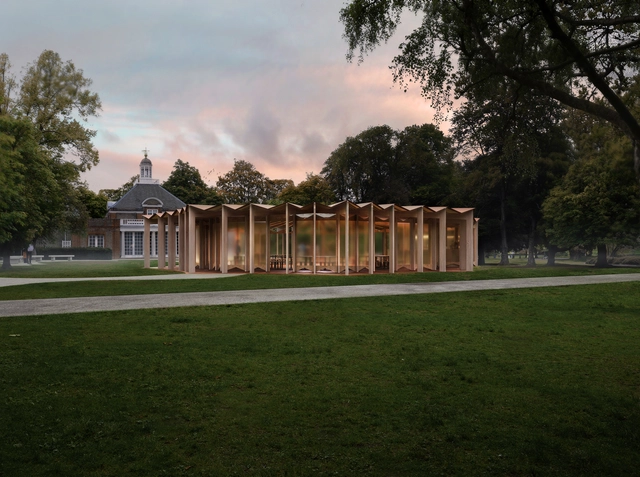
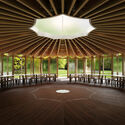
Beirut-born, Paris-based architect Lina Ghotmeh has been announced as the designer of the 22nd annual Serpentine Gallery Pavilion. Titled “À Table,” the French expression for sitting together to eat, her proposal introduces a slender wooden structure with nine pleated petals supported by radial ribs. Inside the pavilion, a ring of tables and benches invites visitors to enter, sit down and relax, eat or work together. According to the architect, the modest space and low-slung canopy is meant to make people feel close to the earth. The Serpentine Pavilion will be open from June to October 2023.



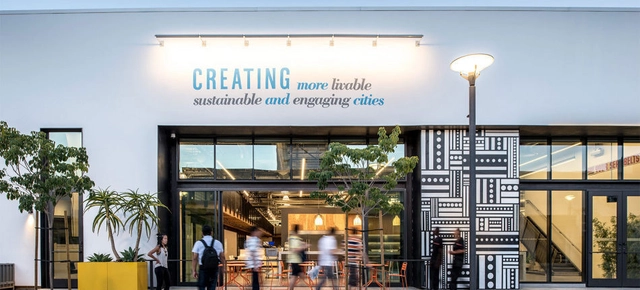
This article was originally published on Common Edge.
My first encounter with saving a building landed me in handcuffs and a trip to the Long Beach Police Department. A friend and I were frustrated that our hometown was demolishing good buildings—because they did not conform with the current style of architecture—only to replace them with parking lots! All in the name of “progress.” In 1988, when we learned that the Jergins Trust Building, a Beaux-Arts beauty, was slated to be torn down with no plans for the site, we jumped into action and chained ourselves to the building to stop the wrecking crew. Our efforts kept it up for another four hours. And then it was gone forever.