-
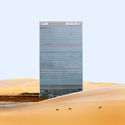
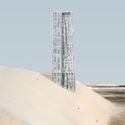
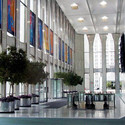
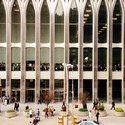
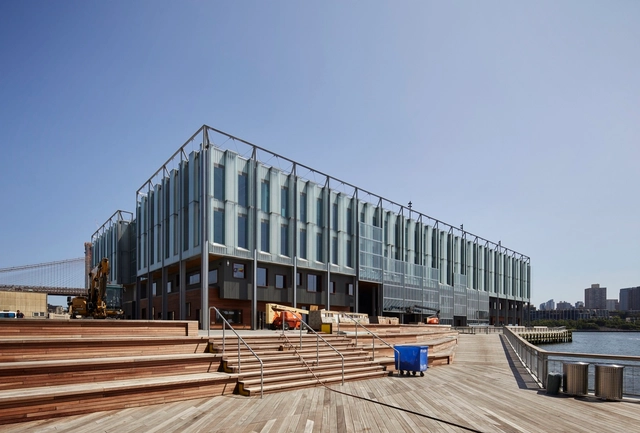
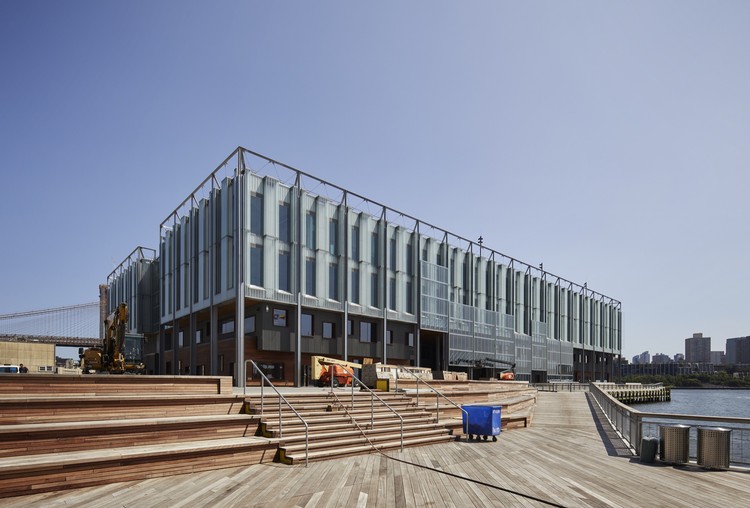
Architects: Dattner Architects
- Area: 431300 ft²
- Year: 2015


Getting around a city of millions is a miracle of design, engineering and cooperation. In conversation, on foot, by bus, train, bike and ferry, Van Alen’s weeklong Spring Festival this June invites participants to experience and consider the present and future of urban mobility.

When we think of public housing architecture in the United States, we often think of boxes: big, brick buildings without much aesthetic character. But the implications of standardized, florescent-lit high-rises can be far more than aesthetic for the people who live there. Geographer Rashad Shabazz, for one, recalls in his book Spatializing Blackness how the housing project in Chicago where he grew up—replete with chain link fencing, video surveillance, and metal detectors—felt more like a prison than a home. Accounts of isolation, confinement, and poor maintenance are echoed by public housing residents nationwide.
But American public housing doesn’t have to be desolate. A new set of design standards from the New York City Public Design Commission (PDC)—in collaboration with The Fine Arts Federation of New York and the American Institute of Architects New York Chapter—hopes to turn over a new leaf in affordable housing architecture.


Have you ever dreamed of crossing from Midtown Manhattan to Brooklyn in just a few leisurely steps? These lofty ambitions are made possible on the New York City Carpet from South African studio Shift Perspective. Not literally though, unfortunately.


The New York City Public Design Commission and Mayor Bill de Blasio have announced the 11 projects selected as winners of their 2018 Awards for Excellence in Design. Established in 1983, the award has been bestowed annually to projects from the city’s five boroughs that “exemplify how innovative and thoughtful design can provide New Yorkers with the best possible public spaces and services and engender a sense of civic pride.”
The 2018 awards recognized projects which responded to the de Blasio Administration’s commitment to providing an “equitable, resilient, and diverse city for all New Yorkers.” All five New York boroughs feature in the awards, with schemes encompassing education, culture, art, and recreation.


Construction has resumed on the Thomas Heatherwick-designed Pier 55 on the Hudson River in New York. Almost eight months since the scheme was officially abandoned by primary backer Barry Diller due to soaring costs, work has resumed on the site following negotiations between New York Governor Andrew Cuomo, Diller and the civic organization City Club in October 2017. The Architect’s Newspaper has reported that the scheme’s walkways are currently under construction, with concrete piles being laid into the river.

Studio Gang has released details of their proposed condominium tower in Downtown Brooklyn, New York City. “11 Hoyt” has been designed with an emphasis on nature and community-building, responding to a lack of comfortable outdoor space in Brooklyn through the creation of an “outdoor-indoor environment."

The Studio Gang scheme, designed in collaboration with Hill West Architects, reclaims a former parking garage site in a rapidly-densifying area, where the population has increased by 40% in twenty years. 11 Hoyt is set to transform the site into an elevated green podium anchored by a 770,000-square-foot (71,000-square-meter) residential tower featuring a “scalloped” façade.


New images have been released of Rogers Stirk Harbour + Partners’ 3 World Trade Center in Manhattan, in advance of its June 2018 opening. The 1,080-foot-high (330-meter-high) building will be the fifth-tallest in New York City, and will feature the tallest private outdoor terrace in Lower Manhattan.
The scheme forms part of a larger development of the World Trade Center site, including SOM’s One World Trade Center, BIG’s 2 World Trade Center, and a Transportation Hub by Santiago Calatrava.