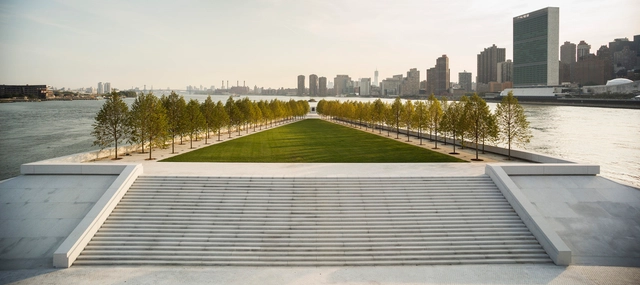
The park was designed from 1972 to 1974—before the advent of the American With Disabilities Act of 1990—by architect Louis Kahn, who died in Pennsylvania Station carrying the plans for the finished memorial. At its southernmost end the park features a 12-by-60-foot sunken terrace that, ironically, President Roosevelt himself would not have been able to use with his wheelchair.
In his recent article, Nick Axel puts forward a compelling argument for the (re)distribution of city-space according to use value: kickball trophies and absentee owners out, efficient use of space in. Distributing urban space according to use certainly makes sense. Along with unoccupied luxury condos that are nothing more than assets to the 1% and mostly empty vacation apartments, expelling (rarely accessed) back-closets to the suburbs frees more of the limited space in cities for people to actually live in.
Arch Out Loud has announced the winners of their New York CityAquarium and Public Waterfront Competition, which invited students and professionals alike to design "an intertwined public aquarium and park" on an underutilized riverfront property located on the East River in Queens. Participants were asked to “redefine the aquarium typology, examining its relationship to the urban context and the public domain.”
The call for submissions was answered by 556 participants and 178 proposals from forty counties, and included ideas that pushed the physical boundaries of the site and responded to the idea of redefining the typical aquarium typology.
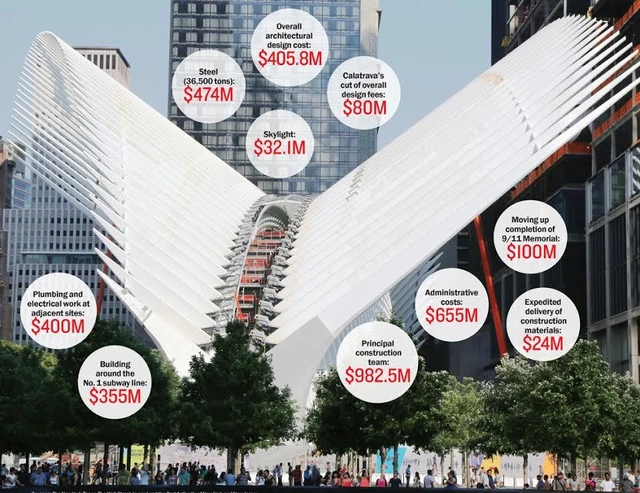
Twelve years after Santiago Calatrava revealed his design for the World Trade Center Oculus, the PATH station finally opened to the public in March. Although not officially confirmed by the Port Authority, the total cost of the Oculus is estimated to be nearly four billion dollars - almost double the original budget. The Real Deal has broken down the big-ticket costs that went into the making of the Oculus.
Since it opened to the public two months ago, Santiago Calatrava's World Trade Center Transportation Hub has been the subject of intense debate. Critics and the public alike have tried to answer whether the building, while undeniably unique and striking, was worth the $4 billion price tag that made it the world's most expensive train station. Key to this question's answer will be the way that the building settles into its role as a piece of the city's fabric.
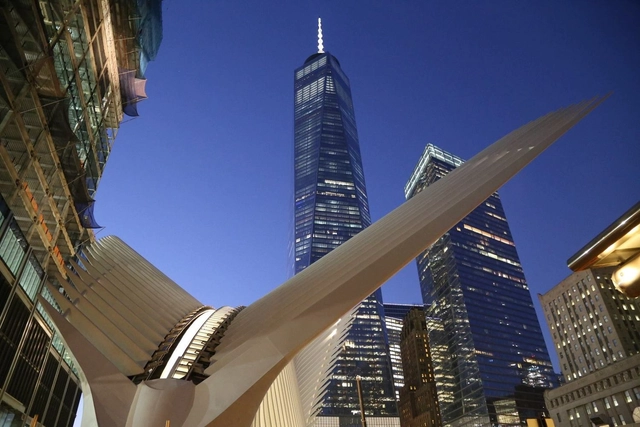
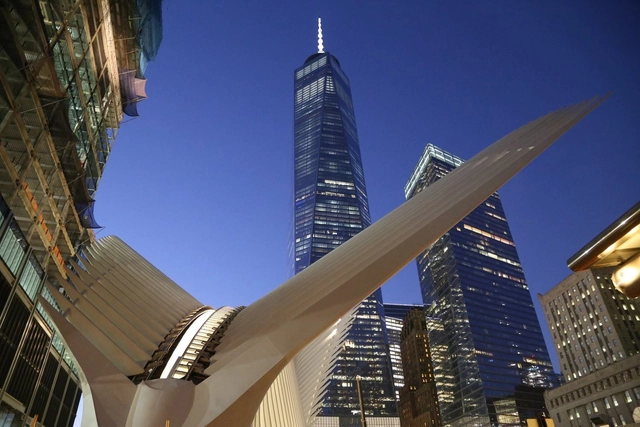
With construction work still surrounding the building - both on the site itself and at the nearby skyscrapers - photographer Laurian Ghinitoiu turned his camera lens onto the station to see how it has been absorbed into the life of the city, capturing the way the structure is revealed from unexpected vantage points and showing how its users react to the sublime internal space of the "oculus."
How To Architecture! is a design competition which invites students to reflect on contemporary culture and to do it with architecture. Leafing through headlines, lists, captions, zooming in and out of feeds, bold fonts, and articles made of images: we participate in the age of the listicle. Culture flashes before us—an extension of ourselves: the superabundant reel. As the cycle of consumption whirs on, architecture still stands. What does architecture say; how does it feed you? Tell us what you think! Tell us
In an interview with the Council on Tall Buildings and Urban Habitat (CTBUH), Bjarke Ingels reflects on the design of skyscrapers, noting how "sculpture is fine, but if its arbitrary it's not as interesting." Architects, Ingels argues, have the problem of "skilled incompetence:" the notion that they "already know the answer before [they've] even heard the question." This prevents them "from questioning the question, or having the question rephrased, or elaborating on the question, or even listening for the question – because [they] already know the answer."
Photographer Laurian Ghinitoiu has captured the latest photos of BIG's courtscraper, VIA 57WEST. Exploring the urban context of this unconventional high-rise, the images illustrate how the building's swooping facade and peak appear from different sight lines.
Tonight, the "Pritzker Laureates' Conversation"—titled Challenges Ahead for the Built Environment—will be broadcast live at 6.30pm ET. It will provide a rare opportunity to hear 2016 Pritzker Laureate Alejandro Aravena in conversation with previous Pritzker Prize Laureates, including Richard Meier, Glenn Murcutt, Jean Nouvel, Renzo Piano, Christian de Portzamparc, Richard Rogers, and Wang Shu. The conversation will be moderated by Cathleen McGuigan.
https://www.archdaily.com/784973/watch-the-pritzker-laureates-conversation-live-today-6-30pm-etAD Editorial Team
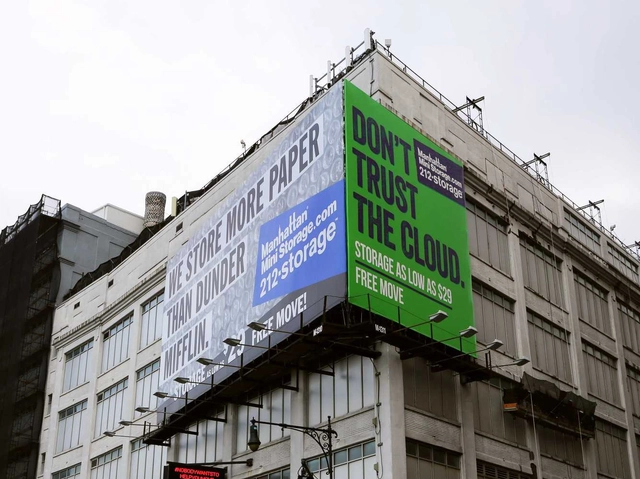
A billboard advertisement for Manhattan Mini-Storage. The green background and mention of “the cloud” is a direct reference to MakeSpace. Image via Business Insider, MakeSpace
Volume Magazine in advance of their 47th issue, The System*.
Two recent trends have recently emerged from the United States’ real estate market that pick up on societal transformations in the way architecture and the city is inhabited. If synchronized, they stand to alter the principles under-riding contemporary logics of urban development. They do so by embodying an alternative system of values, framing its spatial articulation as a critical design project. The purpose of this short text is to present the two trends next to one another, evaluate the prospects of their synchronization, and speculate toward the future they potentiate in unison.
https://www.archdaily.com/784163/cloud-urbanism-towards-a-redistribution-of-spatial-valueNick Axel
Santiago Calatrava's long-awaited World Trade Center Oculus has officially opened. Thanks to EarthCam and the project's contractor Skanska USA, you can watch the $4 billion transportation hub take shape over the course of 42 months in just 65 seconds, from June 2011 to December 2014. For more, see what the critics have to say about the newly opened building here.
After 12 long years and a series of construction headaches, Santiago Calatrava’s $4 billion World Trade CenterTransportation Hub has finally opened to the public. Once widely regarded as a symbol of hope for post-9/11 New York, the project’s ballooning budget and security-related revisions gradually soured the opinions of the public and top design minds including Michael Graves and Peter Eisenman, and provoked a multitude of mocking nicknames ranging from “Calatrasaurus” to “squat hedgehog” to “kitsch dinosaur.” All the while, Calatrava urged critics to reserve their opinion until the project’s opening. Now that day has arrived - did Calatrava receive the vindication he was insistent would come? Read on for the critics’ takes.
With the growth of new development and renovation in our two boroughs in the past five years, our professional associations are excited to collaborate on this event to celebrate the contributions of the design professions to the urban environment we all share.
In its inaugural year, the Brooklyn + Queens Design Awards (BQDA) program has been established to encourage excellence in architectural design, to raise public awareness of the built environment and to honor the architects, owners and builders of significant projects within the two boroughs. It is the goal and collaboration of the AIA Brooklyn and AIA Queens Chapters to promote chapter members and affiliates through the display of their design and service accomplishments.
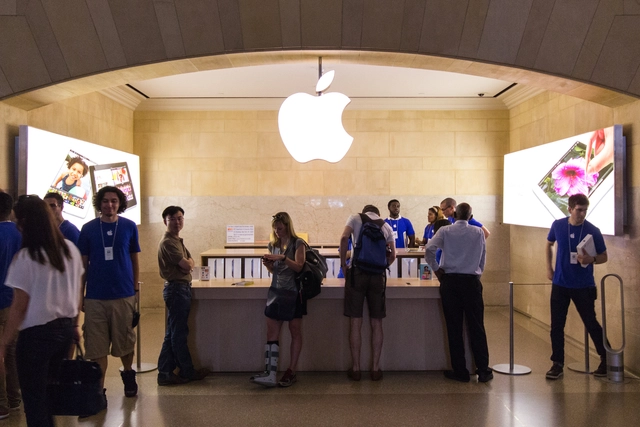
The New York Landmarks Conservancy has announced Apple, Inc. as the recipient of its 2016 Chairman’s Award “for their contribution to preserving, restoring, and repurposing notable historic structures in New York City.”



.jpg?1462114184&format=webp&width=640&height=580)
.jpg?1462114296 "© Laurian Ghinitoiu")
.jpg?1462114241 "© Laurian Ghinitoiu")
.jpg?1462114195 "© Laurian Ghinitoiu")
.jpg?1462114422 "© Laurian Ghinitoiu")
.jpg?1462114184)

.jpg?1459794350)