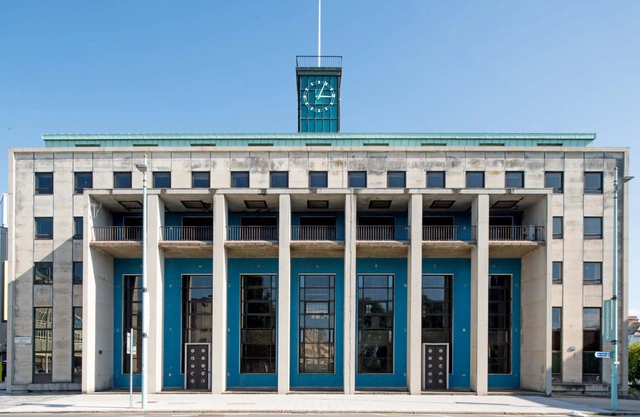
The National Provincial Bank in Plymouth, Southwest England, completed in 1959 and designed by the bank’s architecture department with BC Sherren serving as chief architect. . Image Courtesy of Elain Harwood
The term “mid-century modern” conjures up images of a sharp-suited Don Draper, slender teak cabinets, and suave chairs from Scandinavia. That is, at least, one perspective of the design movement and a view more of 1950s-era Manhattan offices than anything else. But in Britain, mid-century modernism manifested as something slightly different, coming in the form of schools, cathedrals, housing, and an era-defining festival, all eloquently described and illustrated by the prolific architectural historian Elain Harwood in Mid-Century Britain: Modern Architecture 1938-1963.
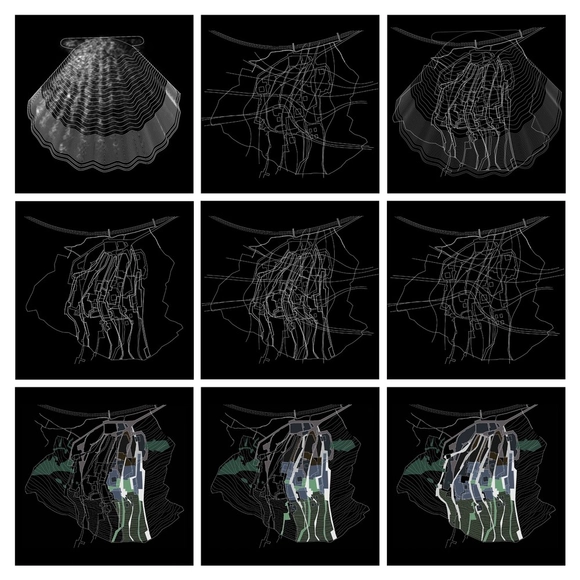
Design diagram for the City of Culture of Galicia, Spain. Image Courtesy of Eisenman Architects
If we define deconstructivism, it literally translates to the breaking down, or demolishing of a constructed structure, whether it being for structural reasons or just an act of rebellion. It is perhaps for this reason that many misunderstand the Deconstructivist movement.
Deconstructivism is, in fact, not a new architecture style, nor is it an avant-garde movement against architecture or society. It does not follow “rules” or acquire specific aesthetics, nor is it a rebellion against a social dilemma. It is the unleashing of infinite possibilities of playing around with forms and volumes.
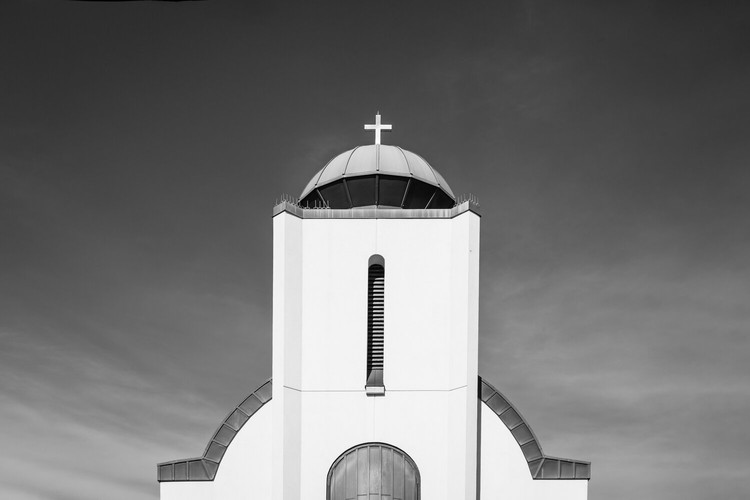
Between the late 1940s to the 1980s, Toronto, Canada, experienced a high rate of growth and development, resulting in a wealth of modernist-style buildings. Due to an increasing population, parishes were also outgrowing their spaces and found themselves in need of new facilities. Consequently, many well-designed modernist churches began to pop up throughout Toronto. This black and white photography series, titled Fifty/50 by Amanda Large, is an ode to these churches, and a celebration of their enduring importance to the city more than fifty years after their construction.
Father of Iraqi architecture Rifat Chadirji has passed away at 93, on April 10 in London, after contracting the novel coronavirus. Born in 1926 in Baghdad, he is responsible for more than 100 buildings across Iraq.
Some of his most iconic works include the Tahrir Square's Freedom Monument, the Tobacco Monopoly Headquarters in 1965, the Central Post Office in Baghdad in 1975 and the Unknown Soldier Monument, one of his most culturally significant intervention designed in 1959, demolished in 1982 and then replaced by a statue of Saddam Hussein in 2003.
Modernism could be described as one of the most optimistic styles in architectural history, drawing from notions of utopia, innovation, and the reimagination of how humans would live, work, and interact. As we reflected in our AD Essentials Guide to Modernism, the philosophy of Modernism still dominates much of architectural discourse today, even if the world that gave rise to Modernism has changed utterly.
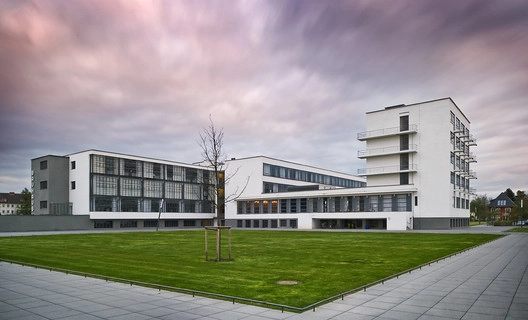
As we say goodbye to 2019, a year that saw the centenary of the Bauhaus, we have collated a list of key architectural styles that defined Modernism in architecture. This tool for understanding the development of 20th-century design is complete with examples of each style, showcasing the practice of Modernism that lay behind the theory.
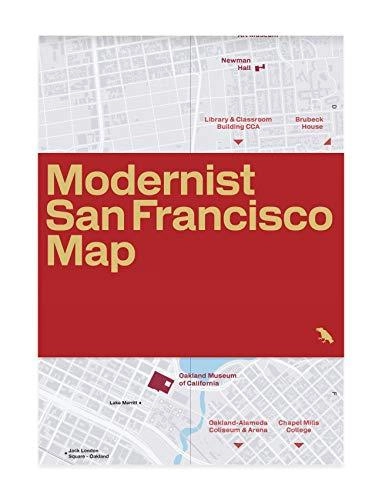
Guide map to Modernist architecture across San Francisco and the Bay Area. This two-sided folded map with original photography by Jason Woods is edited by Mitchell Schwarzer, Professor at California College of the Arts, and author of numerous books about architecture. The guide features over fifty influential examples of Modernist and Brutalist architecture from Berkeley and Oakland to Palo Alto and San Mateo. Details for individual buildings are supported by an introduction to Modernism in the Bay Area by Schwarzer. Architects featured include Vernon de Mars, Beverley Thorne, Skidmore, Owings & Merrill, Frank Lloyd Wright, Richard Neutra, Pier Luigi Nervi,
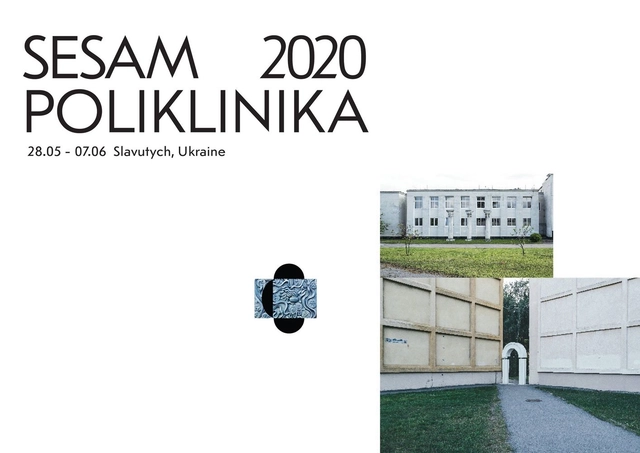
Call for workshop tutors for SESAM 2020 Poliklinika is now officially open! The event will take place between 28th May and 7th June 2020 in Slavutych, Ukraine.
Anyone studying or working in the field of architecture, or any other area of expertise closely related to spatial practices, anywhere in the World, can apply by submitting a single pdf file in English to easaukraine@gmail.com by Feb 17, 23:59 Slavutych TIME (EET, GMT +2).
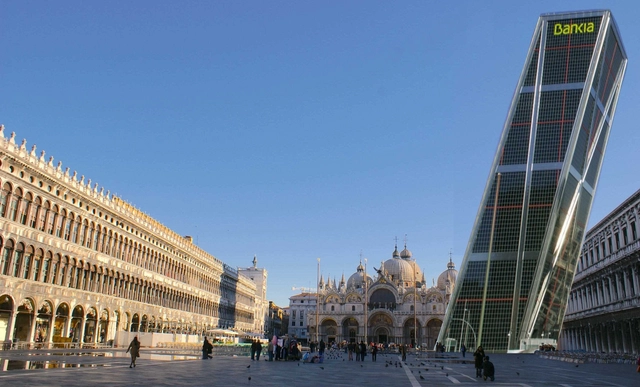
Imagine the following scenario. It is 1902, and to the great shock and distress of the citizens of Venice, the beautiful campanile tower in its Piazza San Marco has just collapsed. That very evening, the city’s communal council votes to approve 500,000 Lire for the prompt rebuilding, “com’era, dov’era” — “as it was, where it was”. Future residents and visitors alike may now continue to enjoy this beautiful structure, which had also been restored and added to many times previously.
But then an authority from far away steps up to speak. “Our regulations do not allow this! Our funding policies require that ‘a project shall use contemporary design’ — which means that you may use only current styles of which we approve, and you may not use the local traditional styles of Venice. That would be a ‘falsification of history’, a ‘mingling of the false with the genuine’, and we decree that this would have harmful consequences!” The project does not go forward, and something entirely “contemporary” is built instead.
For the 1957 International Builders Fair, Oscar Niemeyer developed the Interbau Apartment House, a modernist eight-storey building that sits on V-shaped pillars in the city of Berlin. While the building's facade consists of uniform windows and loggias clad with primary-colored mosaics, it is interrupted by enclosed pathways that connect the structure to the external elevator.
Architectural photographer Bahaa Ghoussainy explored the building and highlighted the complementary relationship between its uniform modernity and dynamic suspensions.
Architecture theorist, historian, and curator Beatriz Colomina talks about our discipline and its difficulty to accept the work as the result of a collaborative effort. When asked about sexism and gender issues within architecture, Colomina broadens the discussion and tackles the historical myth of architecture as the product of one single, brilliant - and always masculine - mind. A fiction that has obscured the role of a number of women, and whole teams, committed to the design process.
In recent years, people started to regain interest in a movement that dates back to the last century; a movement, first introduced during the 1940s and 1950s, through the works of Le Corbusier and Alison and Peter Smithson. With monolithic structures, modular shapes, and impressive massing, Brutalism highlights architectural integrity. This movement is highly characterized by rough, raw, and pure surfaces that underline the essence of the substances in question. Spread across the globe, architects have adopted and developed their own vision of this modern movement, creating contextual variations.
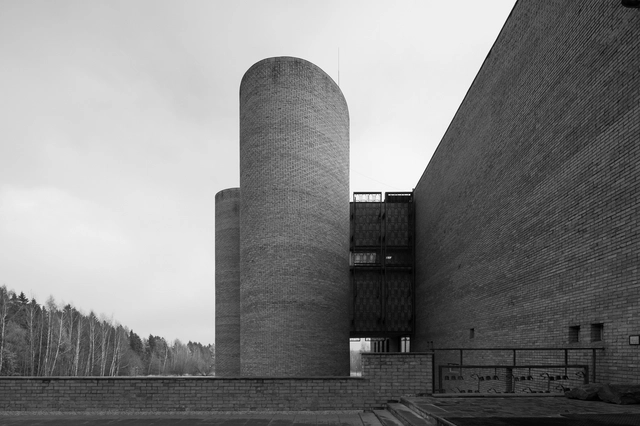
In the midst of all the chaos currently taking place in the city of Beirut, we look back on the Lebanese capital’s hidden Brutalist gems. To shed the light on a movement that's often neglected and forgotten, Architect Hadi Mroue created a series of images that highlight the Lebanese Brutalism movement as well as its evolution as an important part of the Lebanese modern heritage.
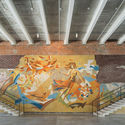
After the success of the original guide-book on underrated Soviet architecture, Garage Museum of Contemporary Art is publishing an English version of the bestselling guide: Moscow: A Guide to Soviet Modernist Architecture 1955–1991in a new digitalized format with six new chapters.
Modern architecture, visible in contemporary production, is usually related to the use of guidelines established by Le Corbusier's five points of architecture. Despite being widely known and debated for years, these points continue to be revisited and rethought in projects from various places and contribute to the creation of interesting buildings in various programs.
Amey Kandalgaonkar has unveiled a project which reimagines the traditional Chinese pagoda in a modernist style. The Shanghai-based designer created the fictional reinterpretation as a homage to a building form largely untouched by Modernism, featuring raw brut concrete, minimal ornamentation, and bold geometric moves.
https://www.archdaily.com/916524/amey-kandalgaonkar-reimagines-traditional-chinese-pagodas-for-a-modernist-eraNiall Patrick Walsh
John Marx, AIA, Co-Founding Principal and Chief Artistic Officer of Form4 Architecture, has debuted The Absurdity of Beauty: Rebalancing the Modernist Narrative, which challenges the philosophies of Modernism and posits how these discussions can inspire a new era of urbanism and abundance.
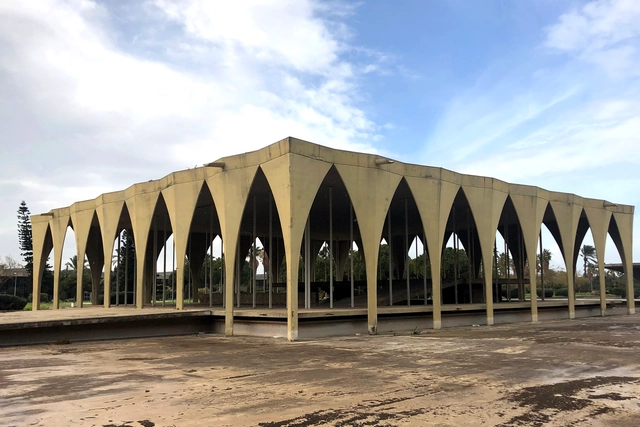
Lebanon is home to several outstanding structures, influenced by centuries of architectural styles. However, one of the most intriguing projects in the Middle Eastern country lies in the northern city of Tripoli, a culturally-rich historical city with structures once inhabited by Romans, Crusaders, Phoenicians, and Ottomans. The Rachid Karami International Exhibition Center, designed by Oscar Niemeyer, reflects the slow deterioration from Lebanon’s pre-war golden age to post-war depression. The country's iconic modernist site has suffered after years of neglect and reportedly will require upwards of 15 million dollars to restore.
How does our built environment affect us? This major exhibition spanning two galleries examines the positive and negative influence buildings have on our health and wellbeing. From Dickensian London to the bold experiments of postwar urban planners, and from healing spaces for cancer patients to the role architecture can play in global healthcare provision, we look anew at the buildings that surround and shape us.



.jpg?1597099445 "Parc de la Villette / Bernard Tschumi Architects. Image © Peeradontax | Shutterstock")







.jpg?1577789705 "Villa Savoye / Le Corbusier")
.jpg?1577789737 "Vitra Design Museum / Gehry Partners. Image © Liao Yusheng")

.jpg?1575455535&format=webp&width=640&height=580)
.jpg?1575455403 "© Bahaa Ghoussainy")
.jpg?1575455498 "© Bahaa Ghoussainy")
.jpg?1575455479 "© Bahaa Ghoussainy")
.jpg?1575455317 "© Bahaa Ghoussainy")
.jpg?1575455535)
.jpg?1573123210&format=webp&width=640&height=580)