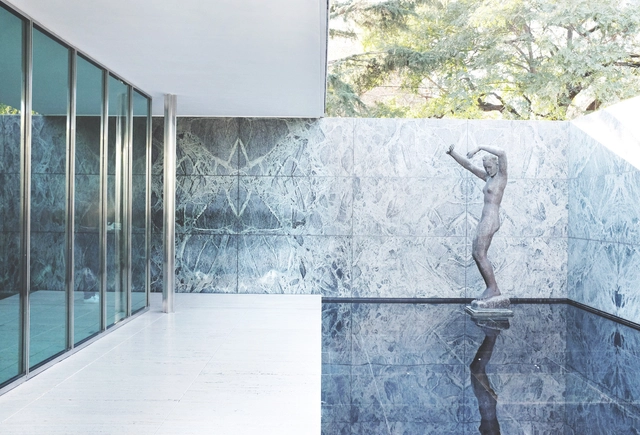
The early 20th century saw the birth of Modernist architecture. It brought with it a central architectural movement that in turn birthed off-shoots of its own. A figure often seen as the defining face of this movement is Le Corbusier, whose 1923 treatise Toward an Architecturewas influential to his Modernist contemporaries – a manifesto including the phrase “a house is a machine for living in” where good architecture would have to be intrinsically linked to function and the demands of industry.
Capturing an image has become spontaneous and immediate. While mobile photography maintains quality, it loses the ritual of taking a picture, i.e. thinking about an image while walking through a new city or the framing possibilities for a building from your point of view. In short, each image is the result of focus, aperture, exposure and the characteristics of the space. Travelling with a 35mm camera sets your limits, some say it is the closest lens to the human eye, others say it is too narrow to capture a building from the outside, but no doubt it all depends on your judgement and the capabilities of the equipment at your disposal.
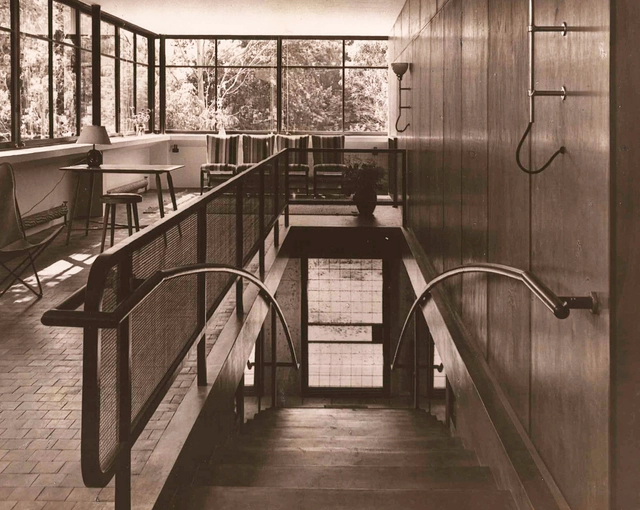
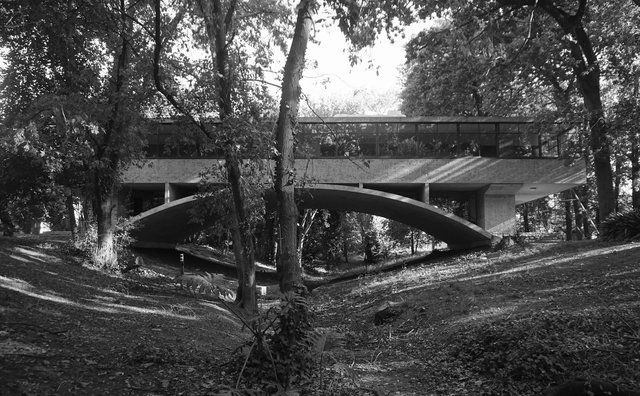
It was designed and built between 1943 and 1946 by Amancio Williams and Delfina Galvez Bunge over the Las Chacras Stream in the city of Mar del Plata. It eventually became known as "The House on the River" or "The Bridge House". However, it ceased to have a stream, and thus to be a bridge, in 1957 when the watercourse on which it rested was interrupted for sanitation reasons. It was used as a radio station between 1970 and 1977, but the last military dictatorship in Argentina ended up shutting it down. It remained closed, maintained by its owner until their death in 1991. Studied by all, but cared for by none. It suffered two major fires, in 2004 and 2008. Abandoned during the whole succession process, it was recovered by the Municipality of General Pueyrredón in 2012.
Located in a particularly natural setting in the city of Mar del Plata, the "Casa sobre el Arroyo" (House on the River) - known as the "Casa del Puente" (The Bridge House) - is considered a paradigmatic component of 20th-century architecture and an obligatory reference of the Modern Movement in Argentina and Latin America.
The house designed by the Argentinean architect Amancio Williams, commissioned by his father, the musician Alberto Williams, is constructed evidence of the capacity to establish a link between the modern rationality of human beings with nature and its topography.
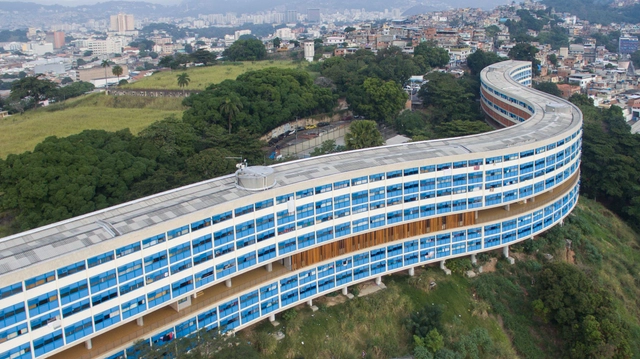
In the early 1920s, a time when women could not even work without their husband's authorization, Carmen Portinho started an engineering course at the Polytechnic School of the University of Brazil. At the vanguard of the profession, as one of the first three women to graduate as engineers in Brazil, she was opening up a field in a space dominated entirely by men.
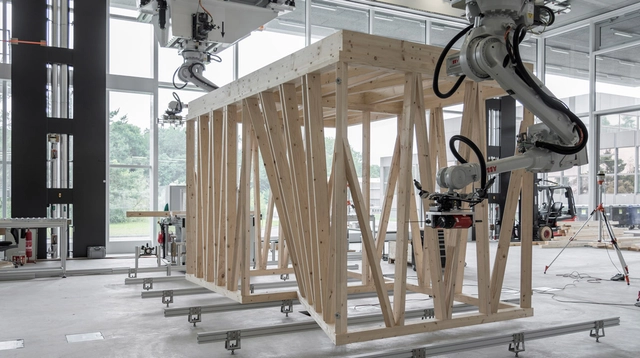
Robotic Collaboration. Image Courtesy of ETH Zurich
Digital spaces and fabrication technology have become as prominent as ever within the current state of our post-pandemic society, becoming increasingly more accessible and enabling quick and spontaneous acts of iteration and evolution. These technologies have resulted in the ability to mass-produce non-standard, highly differentiated building components within the same facility as their standardized counterpart, transforming how buildings and their respective components are conceived, designed, and represented, and how they are manufactured, assembled, and produced.
The beauty of digital fabrication is its ability to blend aspects of mass and artisanal production to the point where costs nearly disappear. Technology’s capacity to fabricate so simply and almost seamlessly raise the issues for its potential to significantly alter our current perception of architecture, thus producing the question: has the influence of mass production in architecture resulted in a loss of intentional design?
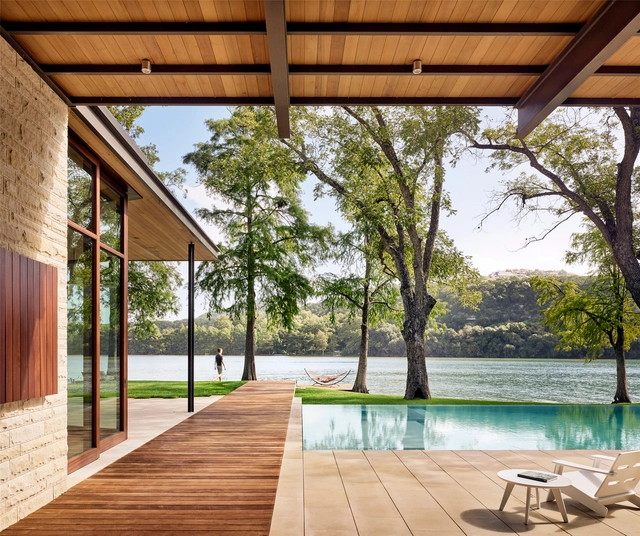
Few cities have a growing design culture like Austin, Texas. Ranked as one of the best places to live in the United States, the city is experiencing a building boom in recent years. With a wide variety of residential styles, architects are continuing a legacy of modernist design. With an emphasis on craft and detailing, these new homes use simple geometry and forms as they open up to hills, lakes and the urban fabric.
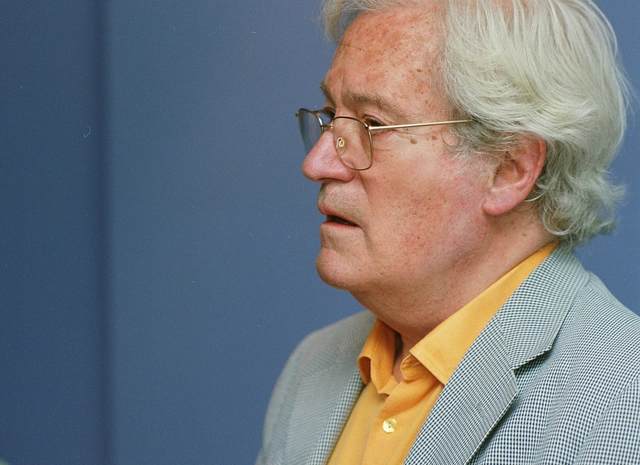
Oriol Bohigas en el Museu d'Història de Catalunya, 2001. Image via Wikipedia: Museu d'Història de Catalunya (fotógrafo: Pep Parer). Licencia bajo CC BY 3.0
On the 30th of November, we received news of the death of Oriol Bohigas Guardiola (Barcelona, 1925), architect, urbanist, and one of the main drivers of Catalan's modern transformation.
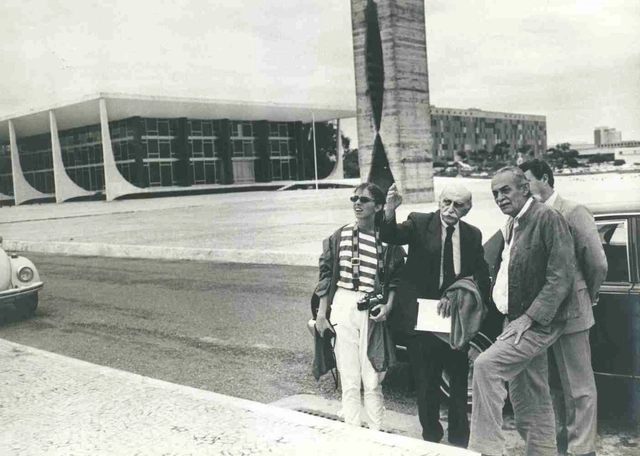
After receiving Paulo Mendes da Rocha's complete collection in 2020, Casa da Arquitectura - Portuguese Center for Architecture, based in the city of Matosinhos, has just received Lucio Costa's estate. The donation was made by the family of the Brazilian architect and urban planner and includes about eleven thousand documents produced between 1910 and 1998.
https://www.archdaily.com/970708/collection-of-lucio-costa-donated-to-casa-da-arquitectura-in-portugalEquipe ArchDaily Brasil
Following the Second World War, United States veterans and citizens were seeking a fresh start, a rightful place to live out their modern American dream. With a significant housing shortage looming around and fast-growing families, solutions had to be found to provide equitable living means for all. The development of new construction techniques and propagation of easy building materials promised an age of prosperity.
https://www.archdaily.com/969231/the-evolution-of-the-house-plan-in-the-united-states-post-war-eraAgustina Coulleri, Hana Abdel & Clara Ott
Le Corbusier was a pioneer of the Modernist Movement in architecture. Throughout his career, he undertook an array of projects all around the world. See below for 17 of his works that have been named World Heritage Sites by UNESCO, as well as many more of his other popular pieces. Hopefully, someday you get to go and see them yourself!
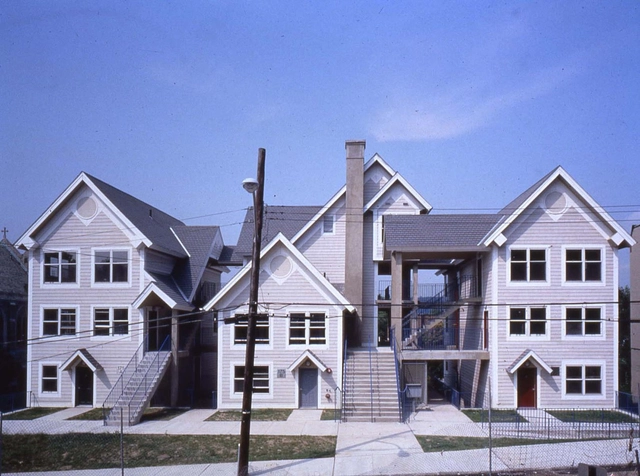
Courtesy of Duo Dickinson Cephas Housing, Yonkers, New York
In the 14th century, Geoffrey Chaucer wrote “Familiarity breeds contempt”. By definition “local” is “familiar”. Why are humans so thrilled to go beyond the familiar, the local, and reach for what is new, universal, and salvational? The word “local” has the weight of true value, like “density” or “sustainable” But the lure of connection between all humans is powerfully seductive, and that desire to connect almost always falls short of our hopes.
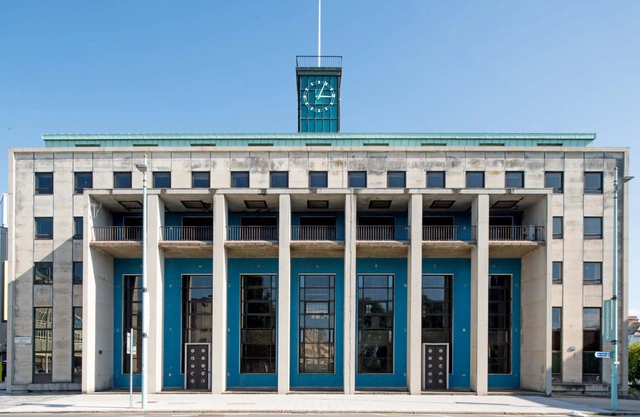
The National Provincial Bank in Plymouth, Southwest England, completed in 1959 and designed by the bank’s architecture department with BC Sherren serving as chief architect. . Image Courtesy of Elain Harwood
The term “mid-century modern” conjures up images of a sharp-suited Don Draper, slender teak cabinets, and suave chairs from Scandinavia. That is, at least, one perspective of the design movement and a view more of 1950s-era Manhattan offices than anything else. But in Britain, mid-century modernism manifested as something slightly different, coming in the form of schools, cathedrals, housing, and an era-defining festival, all eloquently described and illustrated by the prolific architectural historian Elain Harwood in Mid-Century Britain: Modern Architecture 1938-1963.
The Neue Nationalgalerie, designed by Mies van der Rohe, reopened to the public after an extensive renovation project carried out by the practice of David Chipperfield. In this video created by Mies van der Rohe House, Chipperfield shares his thoughts on the design language of Mies van der Rohe while also discussing the qualities of Neue Nationalgalerie and the future role of architectural monuments. The interview is part of the film and exhibition project Mies Goes Future, which invites artists, architects, and historians to explore the work of the renowned Modernist architect as a source of inspiration for contemporary practice.
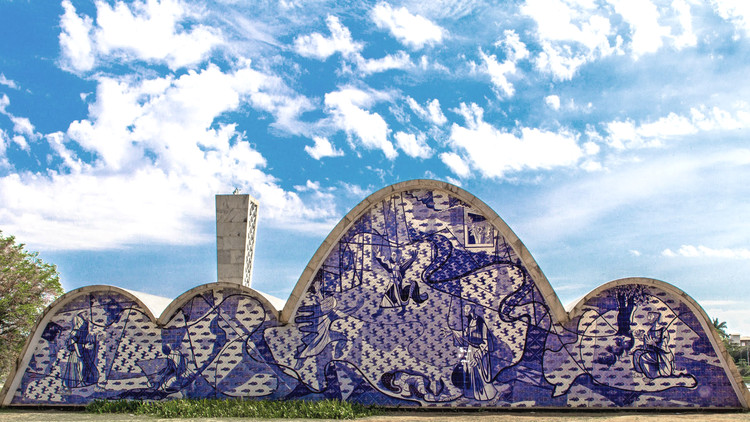
"I felt like I was Nino Rota and Oscar Niemeyer was Fellini, it was like I was creating an important piece of music in that work of art." Renowned visual artist Athos Bulcão uses this comparison between the Italian composer and the film director to refer to the relationship between his work with ceramic tiles and architecture. This fusion between art and architecture marked an important period in the history of Brazil, shedding light on issues such as national identity, the massification of art, and architectural techniques aimed at the tropical climate.
Charles (June 17, 1907 – August 21, 1978) and Ray Eames (December 15, 1912 – August 21, 1988) are best known for their personal and artistic collaboration and their innovative designs that shaped the course of modernism. Their firm worked on a diverse array of projects, with designs for exhibitions, furniture, houses, monuments, and toys. Together they developed manufacturing processes to take advantage of new materials and technology, aiming to produce high-quality everyday objects at a reasonable cost. Many of their furniture designs are considered contemporary classics, particularly the Eames Lounge & Shell Chairs, while the Eames House is a seminal work of architectural modernism.
https://www.archdaily.com/642966/spotlight-charles-and-ray-eamesArchDaily Team
Ludwig Mies van der Rohe (27 March 1886 – 17 August 1969) is one of the most influential architects of the 20th century, known for his role in the development of the most enduring architectural style of the era: modernism. Born in Aachen, Germany, Mies' career began in the influential studio of Peter Behrens, where Mies worked alongside two other titans of modernism, Walter Gropius and Le Corbusier. For almost a century, Mies' minimalist style has proved very popular; his famous aphorism "less is more" is still widely used, even by those who are unaware of its origins.
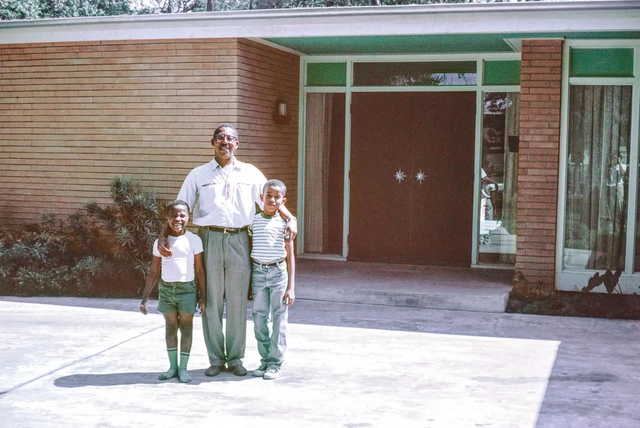
Architect John S. Chase with his sons Anthony (left) and John, Jr. (right). The trio stand in front of the Chase Residence, built in 1959. Image Courtesy of John and Drucie Chase Collection, African American Library at the Gregory School, Houston Public Library
The following text is excerpted fromJohn S. Chase — The Chase Residence(Tower Books, 2020) by architect and University of Texas professor David Heymann and historian and Rice University lecturer Stephen Fox. Richly illustrated with archival materials and new drawings, the book is the first devoted to Chase, who was the first Black licensed architect in Texas. The study is divided into two parts, with Heymann examining the personal, social, and architectural significance of Chase’s own Houston house and Fox describing Chase’s architectural career.
This excerpt draws on Heymann’s analysis and highlights the first incarnation of the Chase Residence (Chase substantially altered its architecture in 1968). It places great emphasis on the house’s remarkable courtyard, a modernist innovation, and a singular statement about domestic living at the time. New section, elevation, and perspective drawings prepared for the book help illustrate the ingenuity of the house’s configuration. Finally, the excerpt was selected in part to honor Drucie (Rucker) Chase, who passed away in January of 2021.


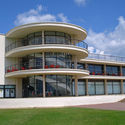
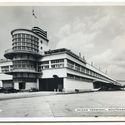
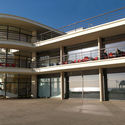

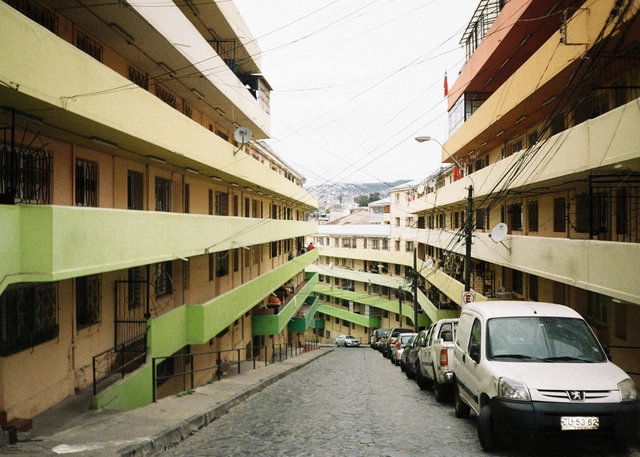
.jpg?1643423986 "Villa Savoye, Le Corbusier, 1929. Image © Flickr User: End User")
.jpg?1643425181 "Villa Savoye, Le Corbusier, 1929. Image © Flickr User: End User")
_V%C3%ADctor_Pati%C3%B1o_George.jpg?1643424298 "Villa Stein, Le Corbusier, 1927. Image © Víctor Patiño George")





.jpg?1630490207 "© Henry-Fussell Hitchcock, Jr and Philip Johnson")
.jpg?1630490219 "Courtesy of Weißenhofsiedlung Stuttgart")
.jpg?1630490299 "Courtesy of Bauhaus, Dessau, Germany")






.jpg?1592346164&format=webp&width=640&height=580)