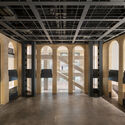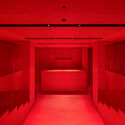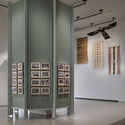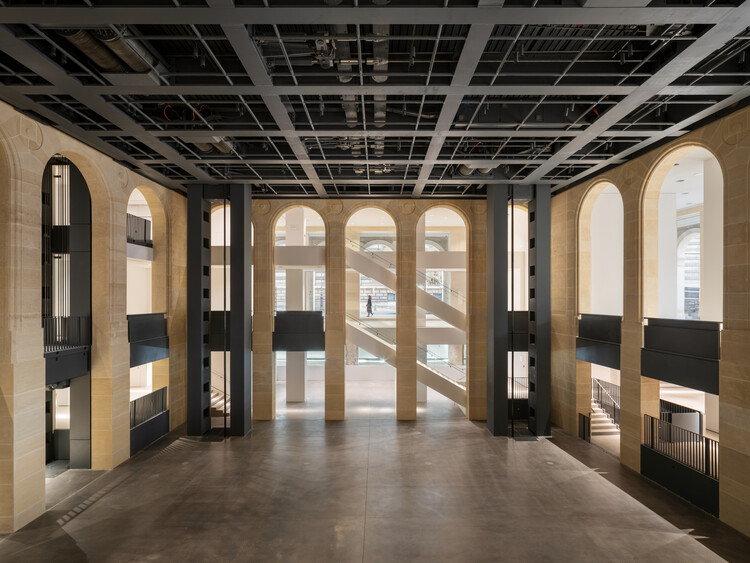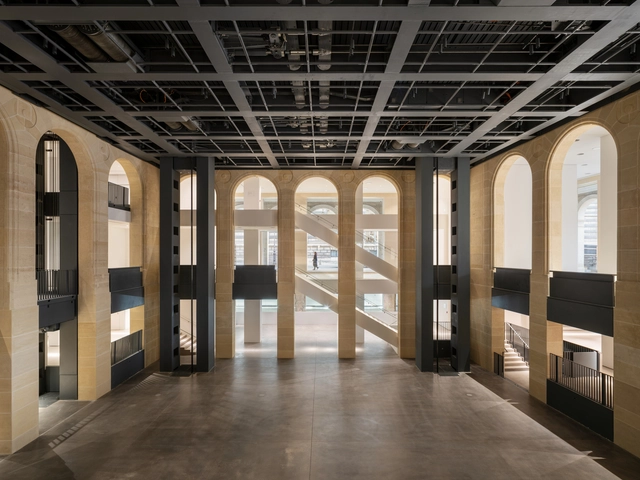
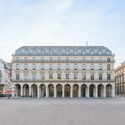
On October 25, 2025, the Fondation Cartier Pour l'Art Contemporain will open its new premises to the public with an inaugural exhibition drawn from its own Collection, entitled Exposition Générale. Located in the heart of Paris, the new space occupies a Haussmannian building that once housed the Grands Magasins du Louvre, recently reimagined by Jean Nouvel. Conceived as a dynamic architecture with five mobile platforms, the building was designed to expand the possibilities of a traditional exhibition venue. These mechanisms aim to accommodate all forms of visual expression, including photography, cinema, the performing arts, science, and craft, within a space that resonates with the urban life of Paris and engages with questions of urban planning and ecology. Within these parameters, the inaugural exhibition brings together more than 600 works by over 100 artists in a contemporary scenography designed by Formafantasma.
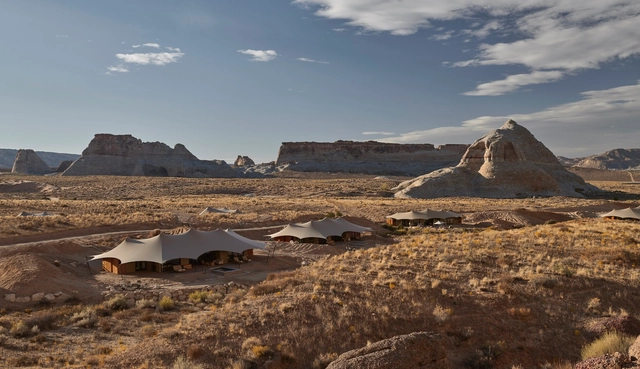
In early Mongolia, herders dismantle their yurt - a portable round tent made of felt or animal skin - in pursuit of new lands where they can raise their livestock. Not much further away is a digital nomad in Bali, preparing their next move into a co-living space in Ho Chi Minh City. Though separated by vast distances and cultural divides, these individuals are united by a timeless human desire - a quest mobility and adaptable living spaces. In light of geopolitical changes and emerging lifestyles, the demand for flexible residential architecture intensifies. In this era of increased mobility, is it enough for people alone to move, or will the buildings of tomorrow need to follow suit?
Much before humans constructed their first permanent shelters, they discovered the protective power of animal hides as a barrier against harsh environmental conditions. This fundamental principle of building with flexible materials finds influence in the architecture of today, despite the lack of strong precedents that have been lost to time. Textiles served as humanity's first architectural elements, predating ancient construction methods like stone masonry. The relationship between textiles and shelter would go on to shape the entire history of architecture, from prehistoric settlements to modern skyscrapers. What lessons might these ancient origins of architecture hold for future advancements in building design?
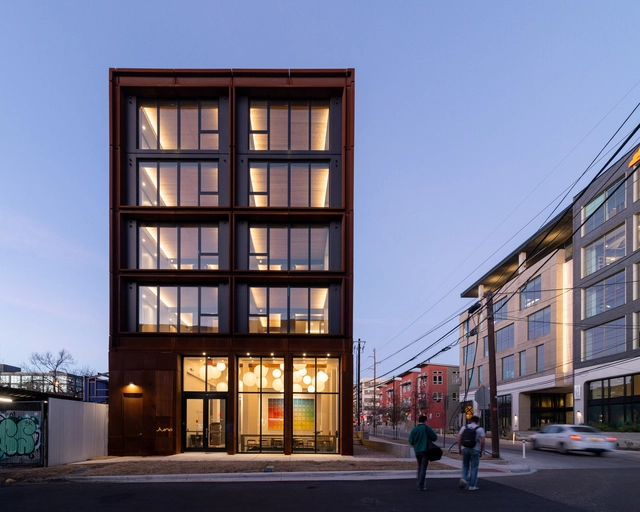
Architecture praxis has traditionally focused on customized, project-based services – a well-established model continually favored by industry professionals. While this approach yields remarkable built environments, it struggles to achieve scalability and longevity. The architectural industry has shown little interest in exploring alternative practices, processes and business models, considering that the traditional mode is equally vulnerable to market cycles as other industries are. Bespoke design solutions, the cornerstone of conventional practice, make standardizing processes and scaling services challenging. This focus also leads to fragmented workflows among firms and stakeholders. The stability and establishment of traditional practices can breed a risk-averse culture, hampering disruptive innovations within the industry.
Minimaforms Presents The Order of Time at the Architectural Association School of Architecture Gallery. It is an immersive installation aimed to connect the preoccupations of physics, art, and architecture by revealing the ordering of spaces and constructed relationships through direct experience.
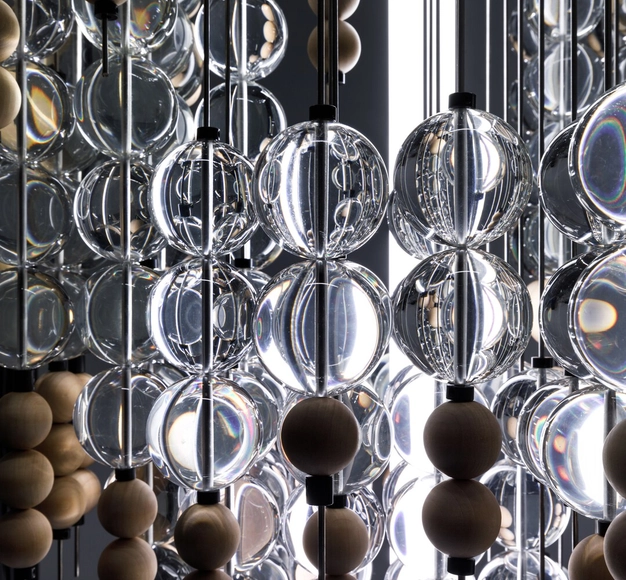
Three Sculptural installations are the highlight of the exhibition. Spherical organizations deployed through mathematical logic and designed to extend space within reflective light boxes, gifting its viewer a new immersive moment at every turn. ArchDaily had the chance to engage in a conversation with Theodore Spyropoulos; Artist & Architect at Minimaforms and Director of the Architectural Association’s Design Research Lab, on issues that tackled the interdisciplinary nature of architecture, the creative process of the installation, and how it influences the creation of spaces, buildings & cities.
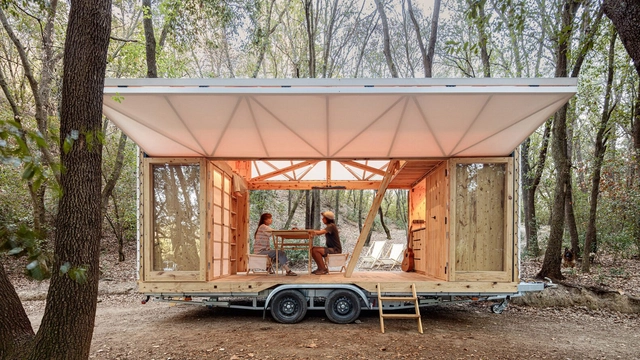
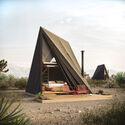
The romantic notion of wanderlust, and having the ability to freely move away from the familiar with minimal possessions is a desire that almost everyone has experienced at some point in their lives. The nomadic lifestyle is so appealing because it represents the possibility of rebelling against symbols of stability and permanence in favor of exploring the natural environment and having the ability to adapt to a variety of living conditions with ease. This desire has given rise to movable structures for the urban vagabond that can transform into a temporary office, home, or even an entire community.
Best known for his theory of mobile architecture and his spatial city project, Yona Friedman has passed away at 96, as was announced in his Instagram account this morning. The Hungarian born French architect and theorist was one of the most influential figures of the profession in the late 1950s and early 1960s.
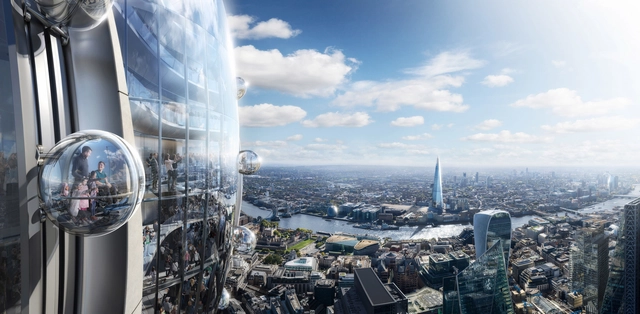
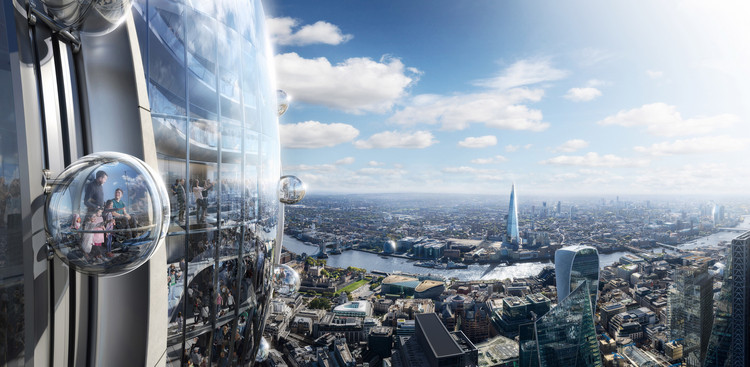
Blossoming alongside the iconic Gherkin building, Foster + Partners' Tulip Tower has been planning to join London's skyline since they released their proposal earlier in November. However, construction of the1,000-foot tower has been halted until officials can determine its impact on aircraft radar systems at London City airport, six miles away. Featuring mobile gondolas in the form of three-meter wide glass spheres intended for visitor rides on an elliptical journey around the tower, the proposed viewing platform is potentially highly problematic.
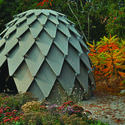
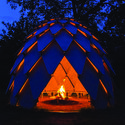
Designed by Czech designers Atelier SAD and distributed by mmcité1, this mobile, nature-inspired gazebo is a playground must-have for children and adults alike. 109 waterproof, plywood scales are treated with resistant glaze and connected by galvanized joints to create a self-supporting, sustainable structure.
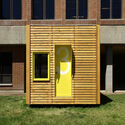
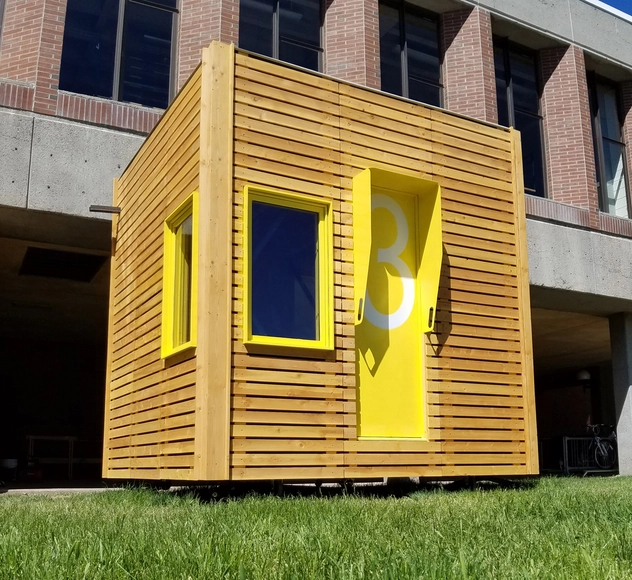
Three M. Arch. candidates at Montana State University, Jonathan Chavez, Kimball Kaiser and Adam Shilling, won an Undergraduate Scholars Programresearch grant which they used to fund their design-build project: B.O.B., the Backyard Office Box. B.O.B. is a kit of parts which, when put together, create a 150-square-foot dwelling space. The design team, also known as Tr3s, wanted their project to be adaptable to a variety of sites and users. B.O.B. can function as an additional space to already existing projects or standalone as a temporary shelter.
Improvisational Theatre / Žilvinas Stasiulevičius. Image Courtesy of OISTAT
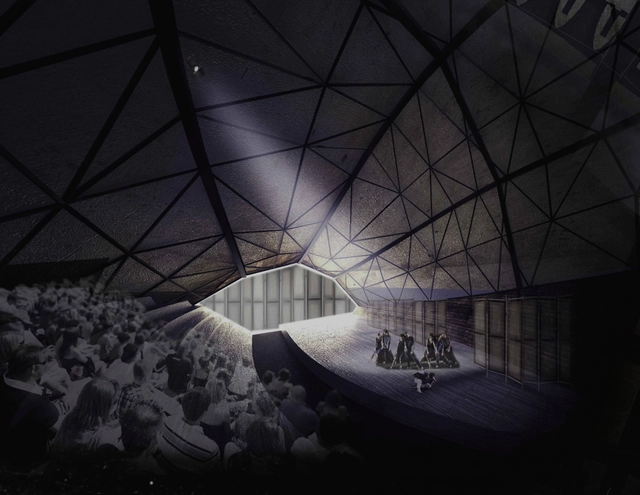
Out of 197 entries from 38 countries, six proposals have been chosen as the winners of the 2015 OISTAT Theatre Architecture Competition, which sought proposals for a floating theatre that could be moved to different locations along the Spree River in Germany. The ideas competition was organized by OISTAT (International Organization of Scenographers, Technicians, and Theatre Architects), and the winning proposals will be showcased at the exhibition Stage│Set│Scenery in Berlin in June.
Per the competition requirements, the floating theatre proposals accommodate audiences of up to 300 people with a backstage area for 20 or fewer performers. The performance space remains moored on the river, while the foyer, restrooms, and refreshments are housed in a temporary structure on land that can be moved when necessary.
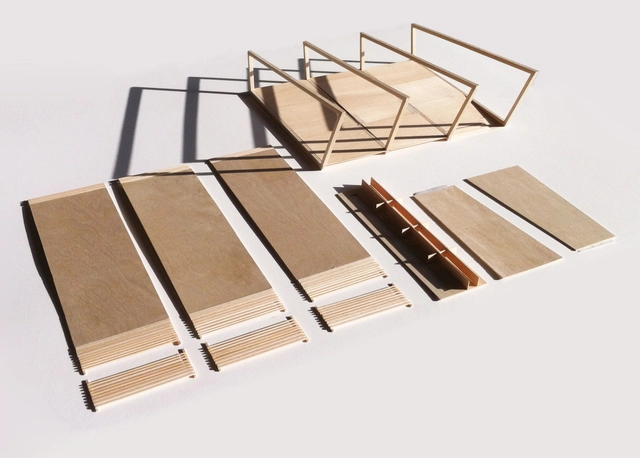
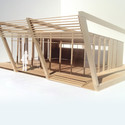
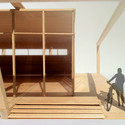
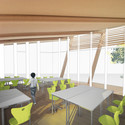
"A Kit of Parts" addresses what Studio Jantzen identifies as the four main shortcomings of mobile classrooms currently on the market: flexibility, sustainability, cost effectiveness, and creative construction. Read more about the project and view selected images after the break.