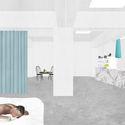
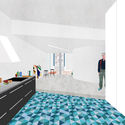
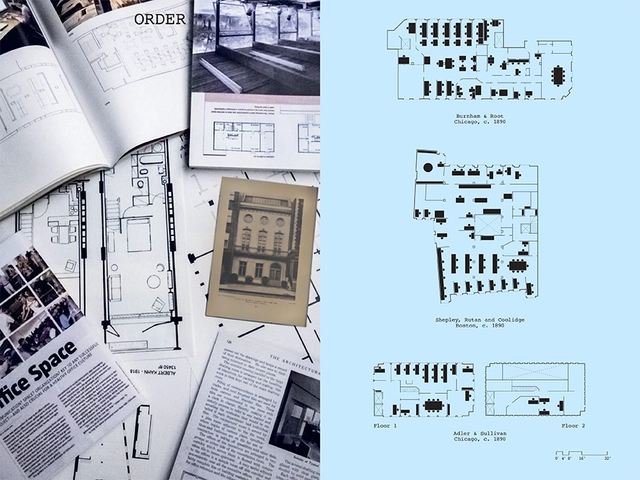
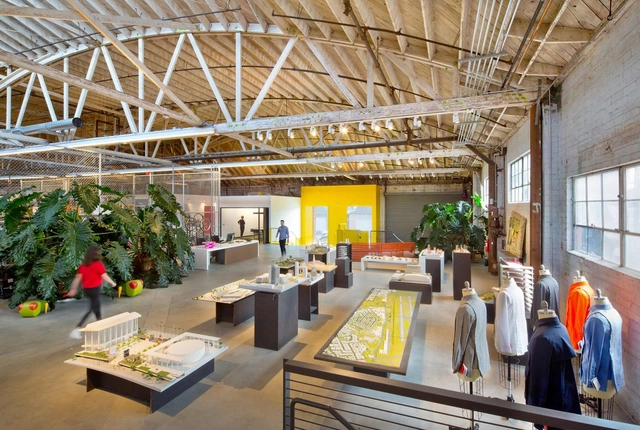
The Los Angeles-based firm, Rios Clementi Hale Studios, a transdisciplinary practice engaging in design from urban planning to product design, opened their new offices in the city's Crenshaw neighborhood. A recent article by Metropolis Magazine outlines the firm's design process in creating their new office layout to emphasize their aspirations as an established practice.
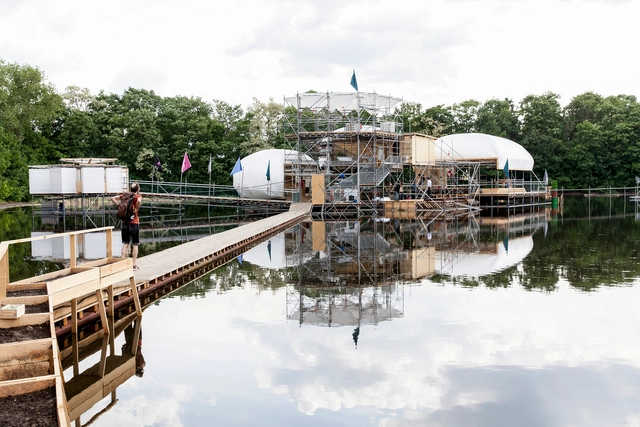
On the north side of Tempelhofer Feld, an airport-turned-park in southern Berlin, lays a large ditch. Surrounded by lots and bungalows and noticeable only to those in the know, this 19th century basin holds rainwater drained from the airport’s defunct runways before it is fed into Berlin’s canal network.
The tale began with a simple idea - a toy that every child, regardless of age and ability, can play, dream, and learn with. But things turned out less than simple. Fights, lawsuits, and even a death all mark the road it took to make a now-ubiquitous toy a reality. The object in question? Lego.
It’s tales such as this one that Alexandra Lange explores in her new book, The Design of Childhood: How the Material World Shapes Independent Kids. Some may scoff at the seemingly trivial subject matter. Surely children, with their boundless imaginations and appetite for play, can discover ways to find fun in anything.
Uruguay's architecture scene has long taken the backseat to those of its more popular neighbours. Brazil, to the north, has a modernist history that rivals (if not shades) that of its European peers; Chile, to the west, boasts an innovative climate for architecture unparalleled in the world today.
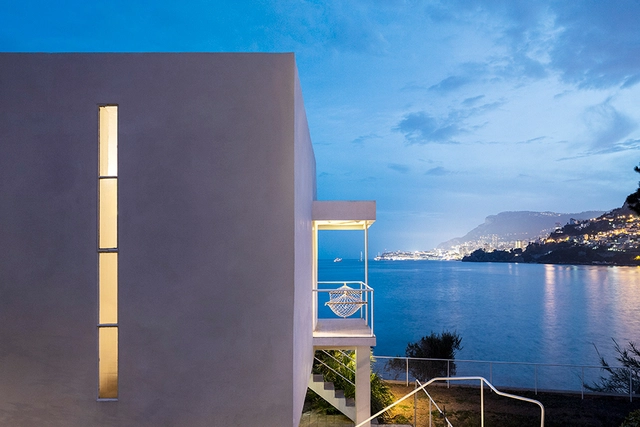
It’s fair to say Eileen Gray’s E-1027 French villa hasn’t lived a charmed life: It has survived desecration by Le Corbusier, target practice by the Nazis, a stint as drug den and orgy destination, and near dereliction. However, of late, the infamous house’s future is looking more optimistic: Cap Moderne, a non-profit dedicated to rehabbing and opening the building as a cultural destination, recently launched a crowdfunding campaign to continue the building’s restoration. Over the last few years, the conservationists’ work had focused on the recreation of the building’s Eileen Gray–designed furniture. The latest efforts focus on a particular dining alcove. How that alcove—and the entire house—lost its furniture and fell into disrepair is a long story, with many twists and turns.
One of the few incontrovertible truths to emerge from the 16th International Architecture Exhibition, which opened in Venice on May 26 and runs through November 25, is that sensitivity and skill in making architecture do not necessarily transfer to the work of organizing an architecture exhibition.
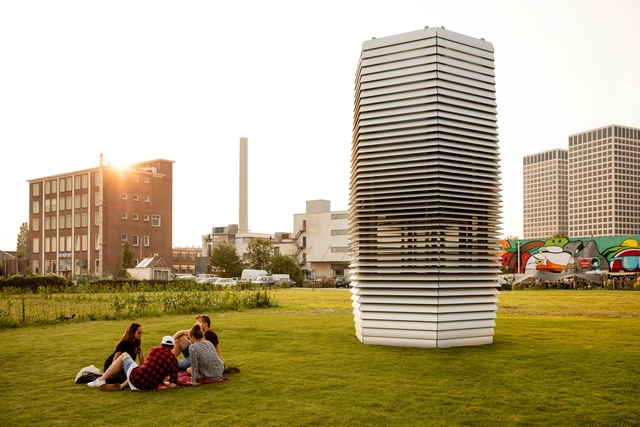
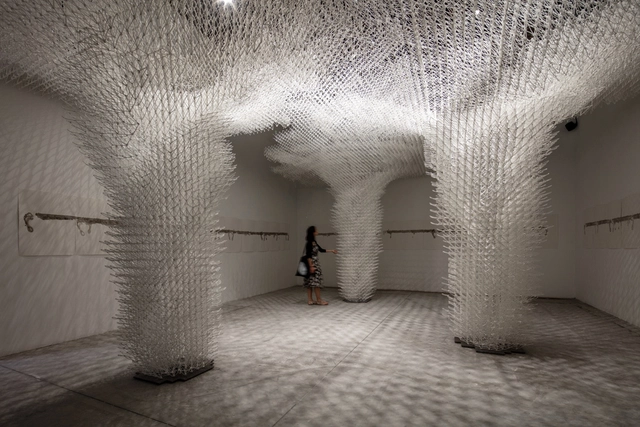
Courtesy of Studio Roosegaarde. ImageStudio Roosegaarde's Smog Free Tower
In Metropolis Magazine's latest - and last - installment in their annual design cities review, the focus is not on output or culture but on cities themselves as the point of inspiration. For the designers surveyed, these were the cities that made their hearts beat a little faster; the ones that remained in their minds and wormed their way into their work.
https://www.archdaily.com/901153/the-top-10-inspirational-design-cities-of-2018-as-revealed-by-metropolis-magazineKatherine Allen
As August draws to a close and our holidays - be they from work or school - already start to feel like distant memories, perhaps it's a good moment to reflect on our faith in what we do. Sometimes design affords us the ability to oversee massive and exciting change. Sometimes projects don't work out, despite our best efforts. And sometimes, design isn't as capable of making change as we believe it to be. This week's stories touched on our faith in design in a range of ways, from the literal (such as the bright churches of Kerala) to the more abstract (how much good taste in fast food design actually equates to good tastes.) Read on for this week's review.
In a follow-up to their 10 Powerhouse Design Cities, Metropolis Magazine also reveals their choices for the "buzziest" design cities of 2018. Unlike the big-hitters of the Powerhouse category, these are a bit smaller - even scrappier - but punch far above their expected weight.
https://www.archdaily.com/900450/the-10-buzzing-design-cities-of-2018-as-selected-by-metropolis-magazineKatherine Allen
For this year's annual city listings, Metropolis Magazine took an unusual approach: they took the analysis to the streets, surveying nearly 100 design professionals across the globe to get their opinions. The result? A list that boasts not just the cities you'd expect (Milan, London, Berlin) but the under the radar powerhouses you might not have anticipated.
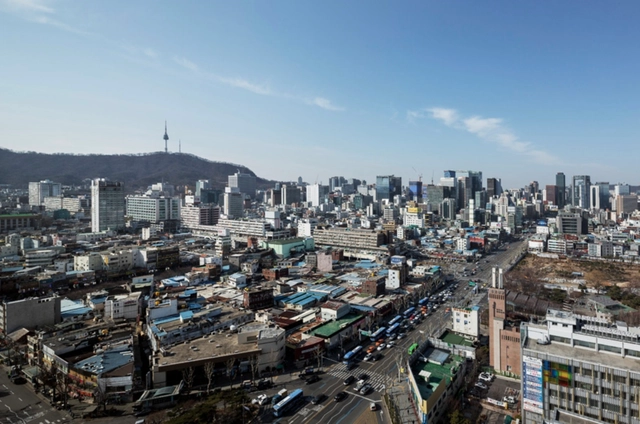
Upon its completion in 1966, Sewoon Sangga, designed by prominent South Korean architect Kim Swoo-geun, was a groundbreaking residential and commercial megastructure consisting of eight multistory buildings covering a full kilometer in the heart of Seoul. Like other futuristic projects of the decade, it was conceived as a self-contained city, complete with amenities that included a park, an atrium, and a pedestrian deck. But construction realities crippled Kim’s utopian vision, compromising those features. By the late 1970s, Sewoon Sangga had shed residents and anchor retail outlets to newer, shinier developments in the wealthy Gangnam district across the river. Between Sewoon’s central location and plunging rents, the building became a hub for light industry—as well as illicit activity.
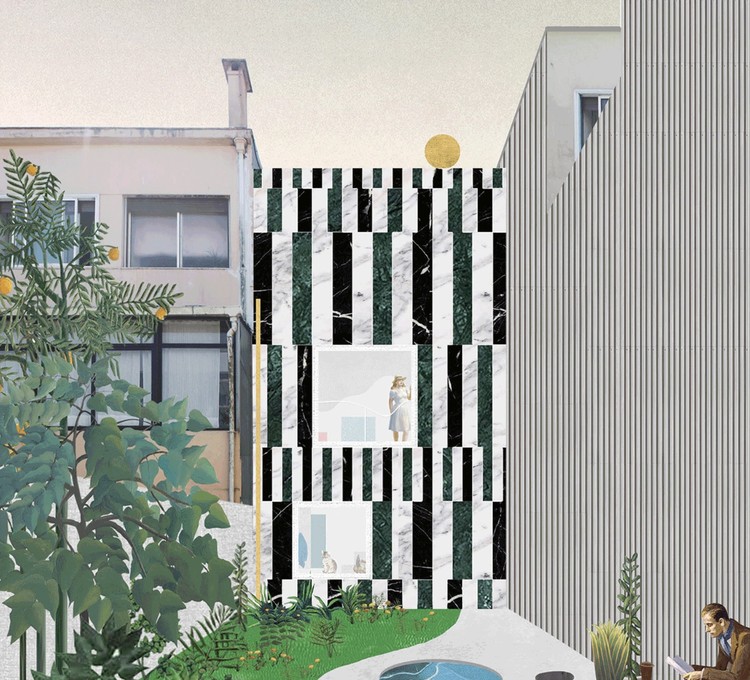
In architectural circles, the appellation “post-digital” has come to mean many things to many people. Some have used it as a shorthand descriptor for the trendy style of rendering that has become popular among students and, increasingly, architectural offices. Others have used it to describe a more profound shift in architectural production that is at once inoculated against the novelty of digital technique and attuned to the sheer ubiquity of “the digital” in contemporary life.
Architecture has always been multidisciplinary, demanding new expertise for each project and challenging designers to remain nimble. This seems more true now (and more embraced) than ever, with architects turning their eye towards technology, agriculture, data science - even to Mars.
https://www.archdaily.com/899590/todays-rising-stars-in-design-metropolis-magazine-reveals-their-picksKatherine Allen
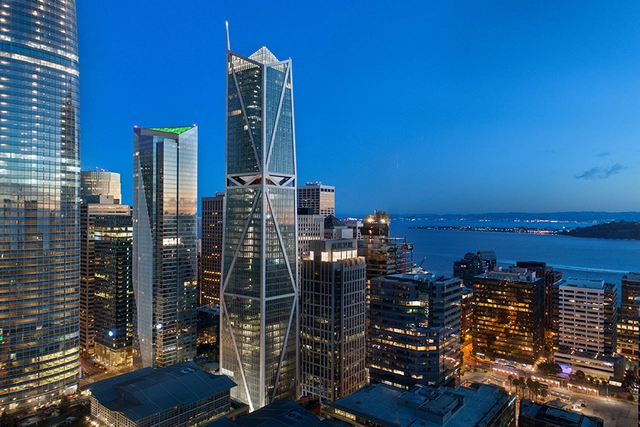
For 181 Fremont, Arup’s radical move was to do away with plans for a tuned mass damper or a sloshing damper on the skyscraper’s roof—common features in tall towers in the U.S. for reducing the natural sway of buildings. Neither damper style goes very far in protecting a building against seismic force, says Ibbi Almufti of Arup. Image Courtesy of Kevin Chu/KCJP
The most remarkable thing about 181 Fremont—San Francisco’s third-tallest tower, designed by Heller Manus Architects—is not the penthouse’s asking price ($42 million). Rather, it’s an innovative yet unglamorous structural detail: a viscous damper system that far exceeds California Code earthquake-performance objectives for buildings of 181 Fremont’s class, allowing immediate reoccupation after a seismic event.
The topic of diversity in architecture has remained a mainstream issue in recent years—however, a recent article from Metropolis Magazine offers an account that is nevertheless surprising: a celebration of the unique contributions of women architects in the former socialist state of Yugoslavia. According to the essay, the highlighted women made their mark on the history of Yugoslavia "in spite of, not through the dismantling of, both the region’s and the profession’s male-dominated cultures."
Book presentations, or book launches, are holdovers from ages long past. One could argue that the same applies to books in print themselves; but we still read and write books, never mind in which shape and form, while I do not see many reasons to keep presenting them in brick-and-mortar bookshops, or similar venues. Friends in the publishing industry tell me that a single tweet, or a successful hashtag on Instagram, can sell more copies than a book launch—and at a lesser cost, for sure. Besides, one of the most baffling aspects of book launches is that, traditionally—and I remember this was already the case when I was a student—a significant fraction of the public in attendance tends to be viscerally and vocally hostile to the topic of the book being presented. Why would readers who dislike a book as a plain matter of principle take the time to read it in full then vent their anger at its author, I cannot tell; but this is to say that having published a book last fall titled The Second Digital Turn: Design Beyond Intelligence, I had plenty of opportunities, in the course of the last few months, to glean a vast repertoire of technophobic commonplaces. Chiefly noted among them, due to its sheer outlandishness, was the objection that digital innovation would by now have fully run its course: having adapted to, and adopted, some new tools and technologies, architects would have moved on, free at last to get back to things that really matter to them (whatever they might be).
The guiding principles and priorities that drive the professional practice of architecture are the subject of abundant philosophical ideas and entrenched opinions—but how can we understand the current state of the profession without sweeping generalizations? Towards that goal, OfficeUS (the experimental institution born from the US Pavilion at the 2014 Venice Biennale) has published a book examining the realities of today’s architectural workplace culture based, like countless works of cultural studies across many academic disciplines, on the documents produced by that culture. Specifically, the OfficeUS publication compiles information from office manuals and workplace handbooks spanning the last century of architectural practice to offer a practical but insightful portrait of how architects organize, run, and view their own profession.
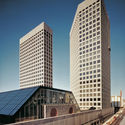
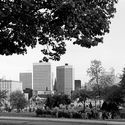
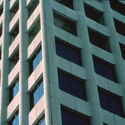
After completing Town Square, a mixed-use, double-tower complex in the heart of St. Paul, Minnesota in 1980, the late architect Donald Smith of SOM told Architectural Record magazine, “We must reorient our attention to the center [of] cities to save them.”
Smith’s words were prophetic, it turns out, but not in the way he may have expected.
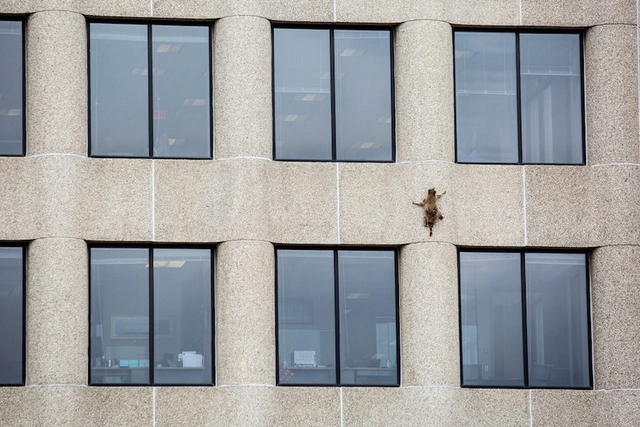
Last month, Town Square—now known as UBS Plaza—captured the attention of the globe as a scraggly, wayward raccoon climbed up its southern tower’s 25 stories.





Seiffert.jpg?1539004277 "© Daniel Seiffert")


_preview.jpeg.jpg?1535984024&format=webp&width=640&height=580)