The latest chapter in the saga of London's Garden Bridge, which has seen counter proposals and reactionary follies alike, has revealed major concerns relating to its funding mechanisms. As reported by the Architects' Journal, new findings from the United Kingdom's National Audit Office (NAO), which has studied the decision taken by the Department for Transport's decision to grant £30 million ($37 million) of funding to the Garden Bridge Trust, has discovered that the "sum [£30 million] was provided following a commitment from [the] then Chancellor George Osborne, and despite the DfT’s conclusion that there was ‘a significant risk that the Bridge could represent poor value for money’."
https://www.archdaily.com/797111/uk-nao-presents-report-thomas-heatherwicks-garden-bridge-londonAD Editorial Team
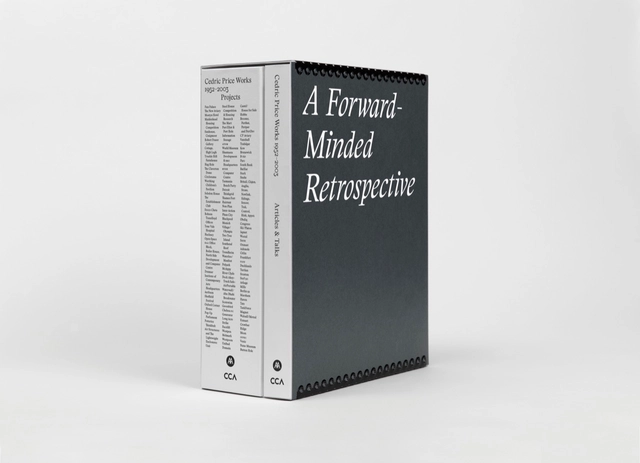
Cedric Price Works 1952-2003: A Forward-Minded Retrospective, written and edited by Samantha Hardingham, is a two-volume anthology bringing together for the first time all of the projects, articles and talks by British architect Cedric Price. Co-published by the Architectural Association (AA) and the Canadian Centre for Architecture (CCA), the publication will be launched on 14th October 2016, celebrating Price's illustrious career as an influential thinker, philosopher, teacher and architect.
In this edition of Section D, Monocle 24's weekly review of design, architecture and craft, the show explores how wood is being used creatively at every scale by designers and architects today. From the "timber terrazzo" of London-based designer Conor Taylor, to the four protected (yet threatened) wooden escalators at Sydney's Wynyard Railway Station, the episode questions how innovative designers are, or need to be, with this age-old tried and tested material. Finally, the show visits Folkhem in Sweden – a construction company who believe wood "to be superior to conventional alternatives in almost every respect, from construction time to acoustic properties."
https://www.archdaily.com/797040/monocle-24-explores-creative-uses-of-wood-in-contemporary-architecture-and-designAD Editorial Team
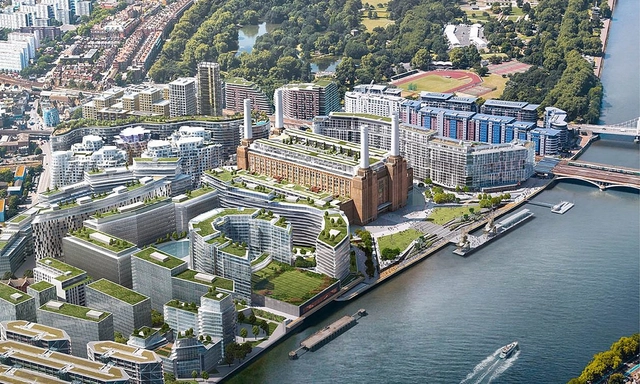
Visualization of the Battersea development, with the Grade II* Listed former power station at its heart. Image Courtesy of Battersea Power Station Development
US tech-giant Apple Inc. have revealed that they will consolidate their UK operations to "a new Apple campus" in London's Battersea, at the heart of a site formerly occupied by the derelict Grade II* Listed Battersea Power Station. The 42-acre complex, which is currently undergoing major redevelopment (and is soon to have a public square designed by BIG connecting to the Electric Boulevard development designed by Norman Foster and Frank Gehry), will provide a mix of commercial space and residential zones. According to the London Evening Standard, Apple will be relocating around 1,400 staff from eight sites around the British capital to the former power station, occupying all six floors of the restored building's extensive new office space. They will be the site's single largest single tenant.
https://www.archdaily.com/796308/apple-to-create-new-london-campus-at-battersea-power-stationAD Editorial Team
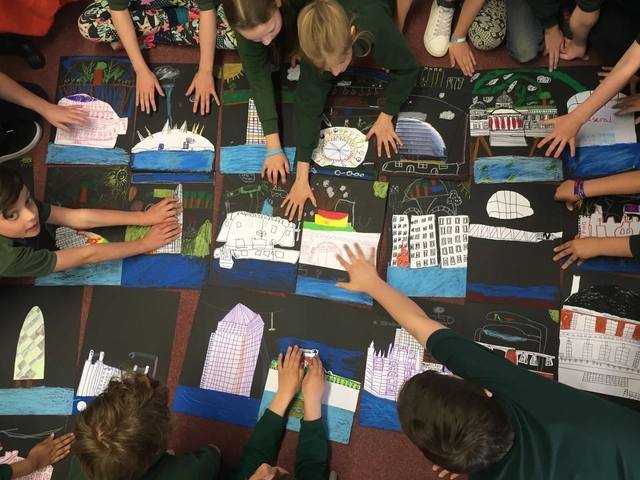
Little Architect is a program at the Architectural Association School of Architecture in London. Created in 2013, the program is focused on teaching architecture to primary school-age children, obtaining amazing results with more than 2,400 children from different backgrounds receiving architectural lessons. They are especially focused on running their program in low-income areas and state schools in London.
"Our responsibility as architects is not just to design but also to bring architecture to society and to create an awareness about urban issues and contemporary architecture within the people who inhabit it," says Dolores Victoria Ruiz Garrido, author and director of the program.
In this video from CNN Style, London designers Edward Barber and Jay Osgerby discuss Forecast, a wind-powered installation they created in collaboration with V&A Museum for the first London Design Biennale. With the intent to help city residents find their way “at a time of turbulence,” the installation responds to the Biennale's theme "Utopia by Design."
Sam Jacob Studio has created a replica of Adolf Loos’ unrealized 1921 mausoleum in Highgate Cemetary, London, which is home to the graves of Karl Marx and Malcolm McLaren, amongst other notable figures.
The UK Government and Malcolm Reading Consultants have announced today an international competition for the design of a new National Memorial to commemorate the events of the Holocaust.
To be located next to Parliament in Victoria Tower Gardens in London, the new national landmark will "demonstrate the UK’s commitment to honouring the victims and survivors of the Holocaust, providing a place for quiet reflection as well as large-scale national commemorations." The competition brief also calls for the design of a potential below-ground learning center to accompany the memorial, which would provide visitors with the opportunity to learn more about the history of the Holocaust and the context of the memorial itself.
Manufacturers: Dornbracht, Flexform, B&B Italia, Adrian Sassoon, Agape, +8Boffi, Carpenters Workshop Gallery, David Gill Galleries, Gallery Libby Sellers, Minotti, Mint Shop, Suite Master, Tai Ping-8
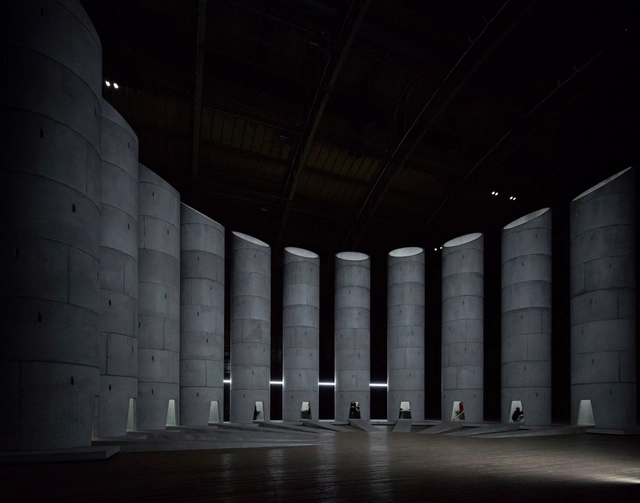
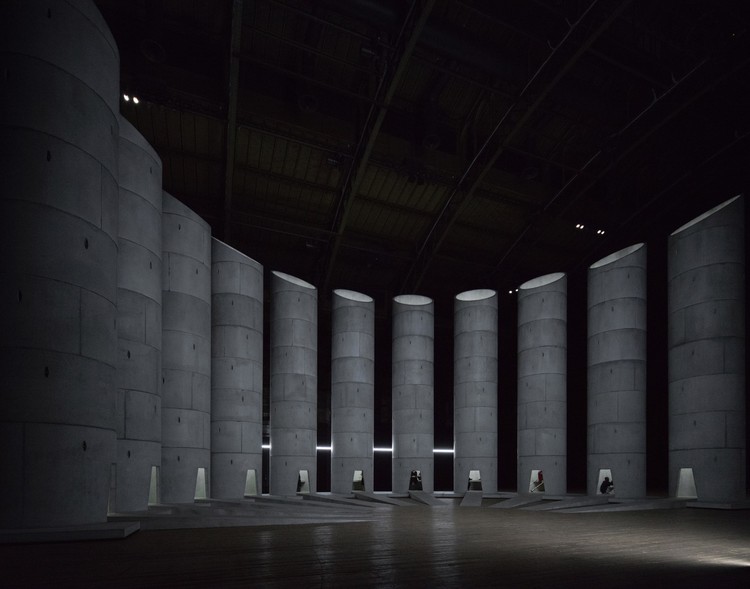
Artist Taryn Simon in collaboration with OMA/Shohei Shigematsu has designed An Occupation of Loss, a major new performance work choreographed around an OMA-designed monumental sculptural setting consisting of 11 concrete wells. Located at Park Avenue Armory’s Wade Thompson Drill Hall, and co-commissioned by the Armory and Artangel, London, the performance piece focuses on “the anatomy of grief and the intricate systems that we devise to contend with the irrationality of the universe.”









.jpg?1475752597&format=webp&width=640&height=580)
.jpg?1475752535 "© Daniel Shearing")
.jpg?1475752499 "© Daniel Shearing")
.jpg?1475752558 "© Daniel Shearing")
.jpg?1475752545 "© Daniel Shearing")
.jpg?1475752597)













.jpg?1473164209&format=webp&width=640&height=580)
.jpg?1473164386 "© Fernando Guerra | FG+SG")
.jpg?1473164901 "© Fernando Guerra | FG+SG")
.jpg?1473164155 "© Fernando Guerra | FG+SG")
.jpg?1473164544 "© Fernando Guerra | FG+SG")
.jpg?1473164209)