

-
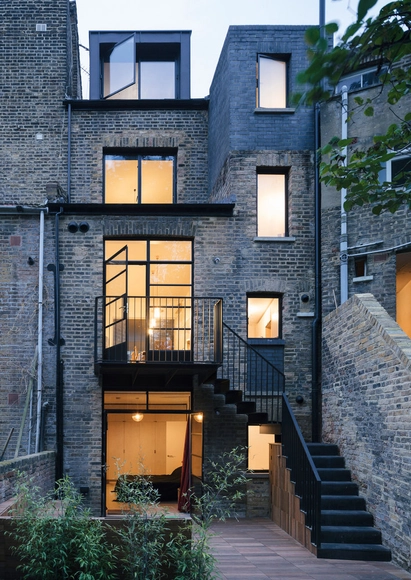
Architects: Tsuruta Architects
- Area: 214 m²
- Year: 2016


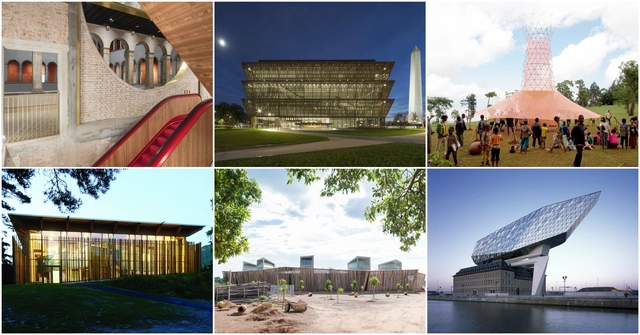
The Design Museum in London has announced the shortlist projects in the running for the 2017 edition of their prestigious Beazley Design of the Year award. Now in its tenth year, the award was established to “celebrate design that promotes or delivers change, enables access, extends design practice or captures the spirit of the year.”
This year, a total of 62 projects have been nominated across six categories: Architecture, Digital, Fashion, Graphics, Product and Transport – including 13 projects from the Architecture category. A winner from each category and the overall winner will be announced on January 25, 2018. Previous winners of the architecture category include: IKEA’s Better Shelter last year (also the overall winner), Alejandro Aravena's UC Innovation Center in 2015, and Zaha Hadid Architects’ Heydar Aliyev Center (overall winner in 2014).
See all of the architecture nominees below.

The saga of London’s controversial Thames Garden Bridge project has finally come to end, as the Garden Bridge Trust has announced the official “closure of the project” after losing the support of the public and London Mayor Sadiq Khan.
"It is with great regret that Trustees have concluded that without Mayoral support the project cannot be delivered,” said Lord Mervyn Davies, Chairman of the Garden Bridge Trust in a statement released today.
“We are incredibly sad that we have not been able to make the dream of the Garden Bridge a reality and that the Mayor does not feel able to continue with the support he initially gave us.”
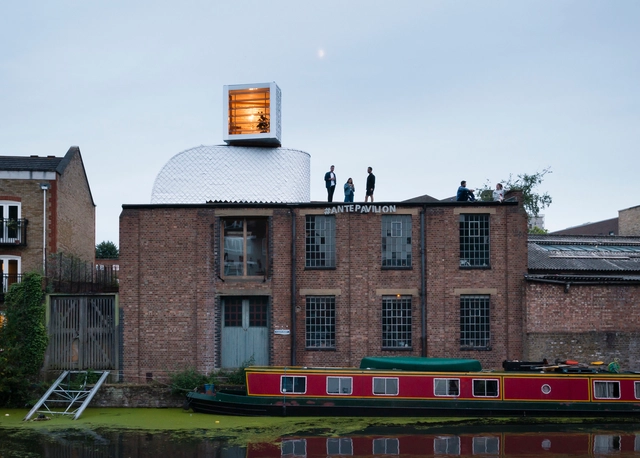
London’s first Antepavillion officially opened to the public last weekend, kicking off an annual series of experimental structures set to explore alternative ways of living in the city. Designed and built by emerging studio PUP Architects, the proposal beat out 128 other entries as the winner of a competition held by the Architecture Foundation. Calling for proposals that engaged with issues of sustainability and recycling, PUP's design, dubbed H-VAC is built using prefab elements made in-house by a team of volunteers. The pavilion's tongue-in-cheek appearance resembling an air duct is a playful subversion of planning legislation, exploiting loopholes for mechanical rooftop equipment to be built without planning permission.

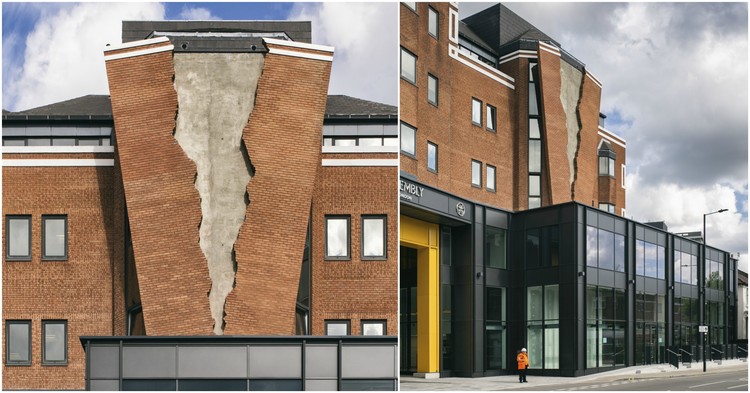
The work of artist Alex Chinneck is grounded in architecture. From melting buildings to a slumping facade to a structure ripped in half and hovering, Chinneck’s work plays with the expectation of materials and tectonics, resulting in captivating mind-bending illusions. His latest work (and first permanent sculpture), Six Pins and Half a Dozen Needles, continues this exploration, taking the form of a large brick wall ripped down the center.
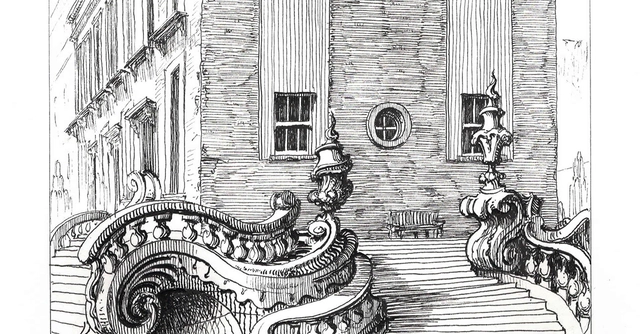
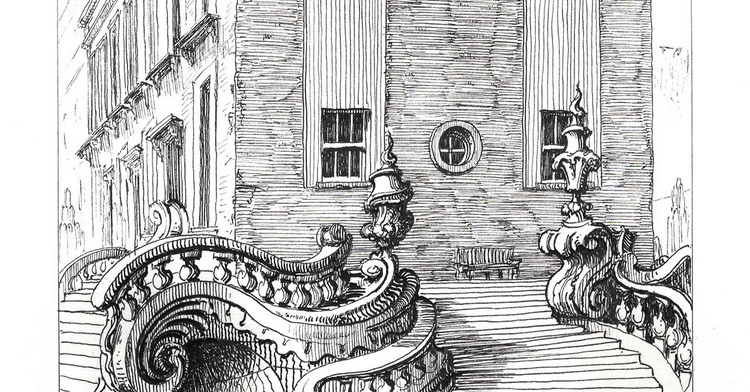
A new exhibition of commissioned work by artist Pablo Bronstein at London's Royal Institute of British Architects (RIBA) will explore "ubiquitous" neo-Georgian developments as exemplar of a British vernacular. The show—Pablo Bronstein: Conservatism, or The Long Reign of Pseudo-Georgian Architecture—will feature fifty new drawings of buildings constructed during the second half of the 20th Century in "an ostensibly neo-Georgian style." These will be presented alongside historical Georgian and neo-Georgian material chosen by Bronstein from the RIBA’s collections.
.jpg?1500971896&format=webp&width=640&height=580)
.jpg?1500544085&format=webp&width=640&height=580)
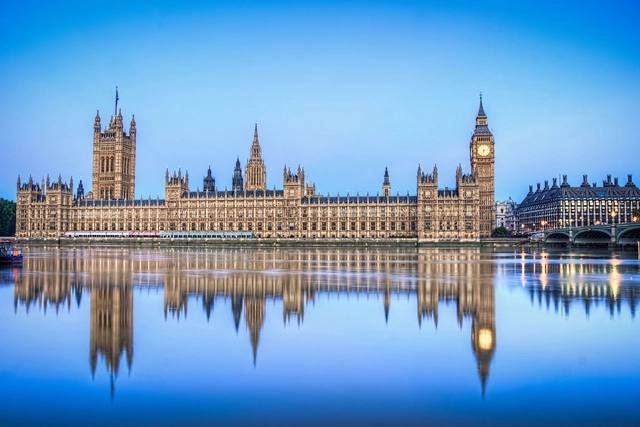
Following a two year-long bidding process, British-based international practice BDP (Building Design Partnership) have been chosen to restore and safeguard the future of the Palace of Westminster, the seat of the United Kingdom's parliament. Outbidding Foster + Partners, Allies and Morrison, and HOK the project is expected to run into billions of pounds and could see the two chambers—the House of Commons and the House of Lords, plus all ancillary support staff—move out of the iconic building for to a decade.
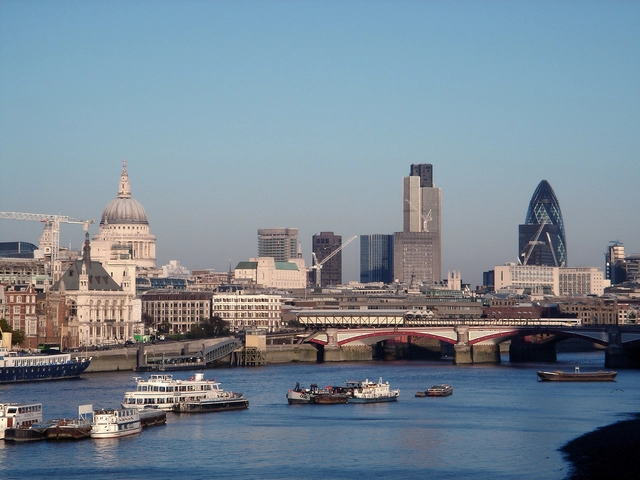
The Mayor of London, Sadiq Khan, has appointed fifty "Design Advocates" to support his efforts in ensuring that development across the British capital is "high-quality, inclusive, and sustainable." Well-known names—such as Sir David Adjaye, Peter Murray and Alison Brooks—have been nominated alongside a broad range of architects, activists and thinkers, including Russell Curtis, Daisy Froud, Dan Hill, Richard Lavington, Tom Holbrook, Rory Hyde, Adam Khan, and Maria Smith.
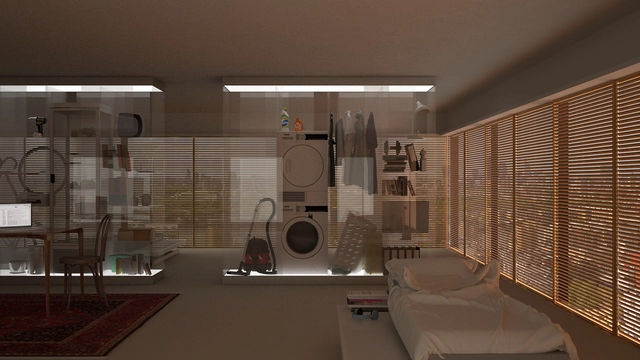
The Chicago Architecture Biennial is the largest platform for contemporary architecture in North America, and the blog invites designers and other contributors to express their perspectives in a range of formats. The 2017 exhibition, entitled Make New History, will be free and open to the public between September 16, 2017 and January 6, 2018.

Chicago Architecture Biennial (CAB): We want to start by noting that REAL foundation, which stands for "Real Estate Architecture Laboratory," is not a typical design practice. You design spaces, but you also make books, exhibitions, a magazine, and tools for advocacy. Why?
Jack Self (JS): The REAL foundation is an unusual model for an architectural firm. We're a normal architectural practice, but we are governed by a very strict set of conditions that allow us to pursue certain political and economic ideologies. We see the social role of the architect, as well as the structure of the architectural firm, as a subject for design as much as buildings.
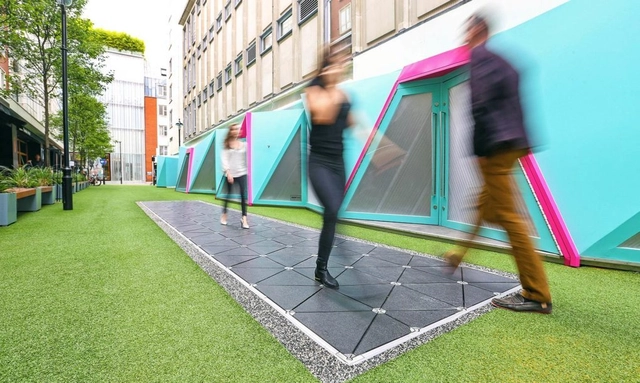
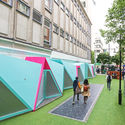
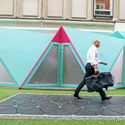
Technology company Pavegen has unveiled the world’s first “Smart Street” in London’s West End that utilizes the company’s unique kinetic paving slabs to generate energy from pedestrians’ footsteps. But unlike earlier Pavegen installations deployed in cities like Washington DC and Rio de Janeiro (which uses the panels as the foundation for a soccer field), the London Smart Street comes with its very own app – giving visitors precise information about the power they are generating, and encouraging use by offering up store vouchers in return for steps.



.jpg?1499302315&format=webp&width=640&height=580)
The Royal Institute of British Architects (RIBA) has released an official statement on design for fire safety following the tragic Grenfell Tower fire on June 14. The causes and aftermath of the catastrophic fire, which ravaged 27 storeys of the council estate in the London borough of North Kensington are currently under investigation, with a team of 250+ working on operations including recovering and identifying victims (the death toll has risen to 80+) according to recent reports from the BBC and the Met Police. The aluminium-composite cladding Reynobond PE - identified as one of the main reasons for the fire’s spread up the building’s façade has sparked outrage over failed safety regulations and debate over the lack of responsibility behind the building’s (and many others) construction overall. Further fire safety tests revealed the cladding to be present in up to 60 similar council estates with more being urged to submit samples for testing.
For a quick summary, we’ve covered some key points from each of the 3 sections addressed RIBA's statement below:
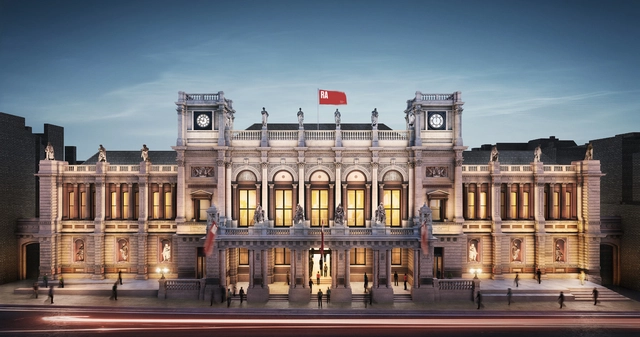
London’s Royal Academy of Arts has announced plans for a new permanent architecture-specific gallery and the creation of two new international architecture awards as part of the RA’s mission to “garner a wider appreciation and understanding of architecture, bringing to the fore its vital relationship to culture and society.”
The new architecture space, along with a cafe, will be housed within the Dorfman Senate Rooms in Burlington Gardens, allowing the academy to show architectural exhibition year-round. The architecture rooms join wider renovation plans led by David Chipperfield Architects that will also include a new naturally-lit theater.

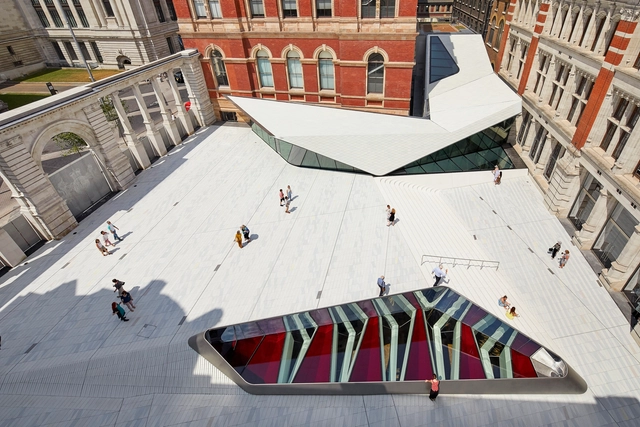









.jpg?1500972002 "© Simone Bossi")
.jpg?1500969878 "© Simone Bossi")
.jpg?1500971865 "© Simone Bossi")
.jpg?1500971952 "© Simone Bossi")
.jpg?1500971896)
.jpg?1500543595 "© Gabriel de la Chapelle")
.jpg?1500543840 "© Philip Vile")
.jpg?1500543628 "© Philip Vile")
.jpg?1500543809 "© Philip Vile")
.jpg?1500544085)