This contest aims to present 24-hour architectural responses to the problems affecting cities today and consecutively the world, with a very strong focus on sustainable and environmentally friendly measures.


This contest aims to present 24-hour architectural responses to the problems affecting cities today and consecutively the world, with a very strong focus on sustainable and environmentally friendly measures.

Of the varying aspects of architectural and interior design, lighting is one element that can visually enhance or destroy a space. This influence stems from the wide range of artificial lighting designed for the most widely differing tasks, environments, and purposes, including internal and even external spaces such as facades and landscape projects. Think of two environments with the same dimensions and layout. Suppose that in the first, only one point of light was applied - a general, unspecified point of light in this case - while in the second a light project was performed considering the use of space and valuing certain aspects of the architectural design. Undoubtedly, the second option is a more pleasant space. In the same way, poor lighting design can ruin an environment. But how is it possible to achieve these different results?
In a previous article, we already showed how to calculate the correct light intensity required for each environment. Here, we compile a list of some of the key types of lighting systems.
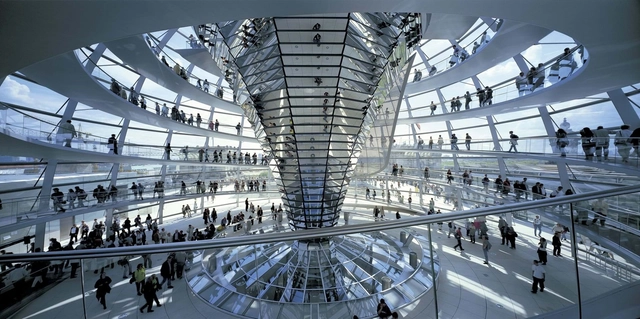
While many architects consider windows for brightening interior spaces, Norman Foster is intrigued by natural light from above. The British star architect has long held Louis Kahn and Alvar Aalto in high esteem for how they handled daylight - especially with regard to the roof. In particular large public buildings benefit from this strategy creating enjoyable spaces. Therefore, Foster regards daylight from above as indispensable when he develops megastructures for airports on the ground or tall skyscrapers for work. But daylight from above is much more than an aesthetic dimension, remarks Foster: "Quite apart from the humanistic and poetic qualities of natural light there are also energy implications."
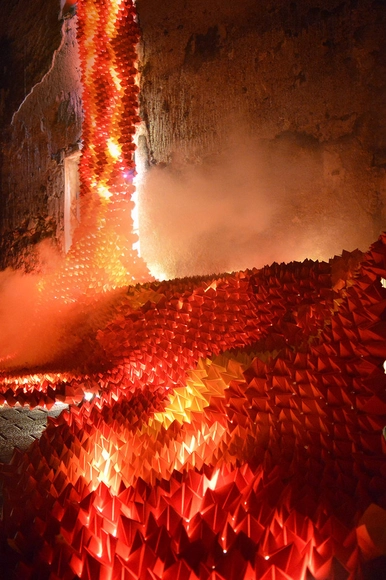
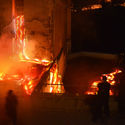
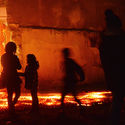
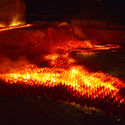
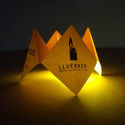
In the wistful irony of creating liquid fire through sheets of paper, David Oliva of Barcelona-based firm SP25 Arquitectura and Anna Juncà of Atelier 4 collaborated to fabricate an installation piece for the LLUÈRNIA festival of fire and light in Catalonia. Titled, "Origami Lava", the field of flame cloaks the 100 m2 surface of an abandoned building using over 10,000 pieces of origami.

Walk into a room bathed in cozy, inviting light and you’ll feel instantly at ease. Walk into the same room buzzing with harsh fluorescents, and your teeth may start to grind.
Why?
In 2014, a Journal of Consumer Psychology study found that the more intense the lighting, the more affected and intense the participants’ emotions were — both positive and negative.
The study included six experiments that examined the link between emotion and ambient brightness. Feelings of warmth increased when participants were exposed to bright light with hints of reddish hues. A sensation of angst increased when bluer light dominated.
And the brighter the light, the more intense the participants’ emotions became. Both the intensity and the color of the light affected people’s moods.

The European Culture Center’s Time Space Exhibition during the Venice Biennale 2018 features a new short film depicting the spatial qualities of light in architectural design, both as a material and metaphor.
This collaboration between architect and professor Jorge L. Hernández and photographer Carlos Domenech explores their endeavors in providing a lighting-based design solution for the Williamsburg, Virginia courthouse. Battling the issues of security and privacy of the court with the need for natural daylight, Hernández recreated the cupola, a vernacular roof turret intended for ventilation for illumination instead. Light, entering the courtroom from above, transforms the previously dull space and becomes, “an allegory for justice.”
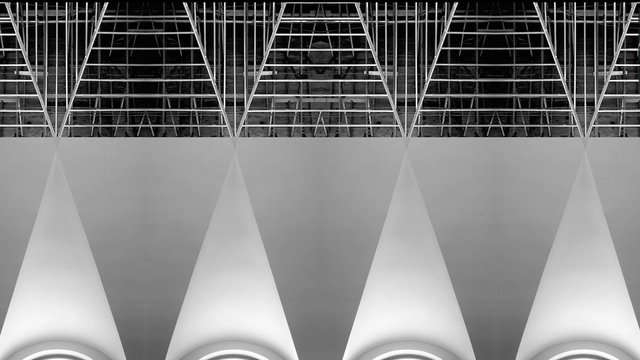
The European Culture Center’s Time Space Exhibition during the Venice Biennale 2018 features a new short film depicting the spatial qualities of light in architectural design, both as a material and metaphor.
This collaboration between architect and professor Jorge L. Hernández and photographer Carlos Domenech explores their endeavors in providing a lighting-based design solution for the Williamsburg, Virginia courthouse. Battling the issues of security and privacy of the court with the need for natural daylight, Hernández recreated the cupola, a vernacular roof turret intended for ventilation for illumination instead. Light, entering the courtroom from above, transforms the previously dull space and becomes, “an allegory for justice”.
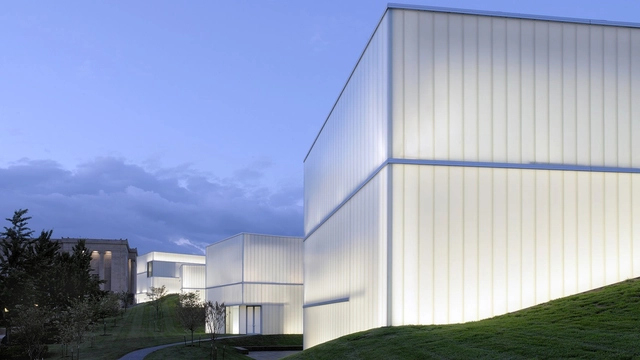
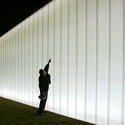
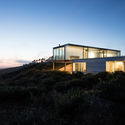
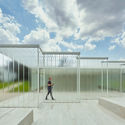
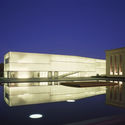
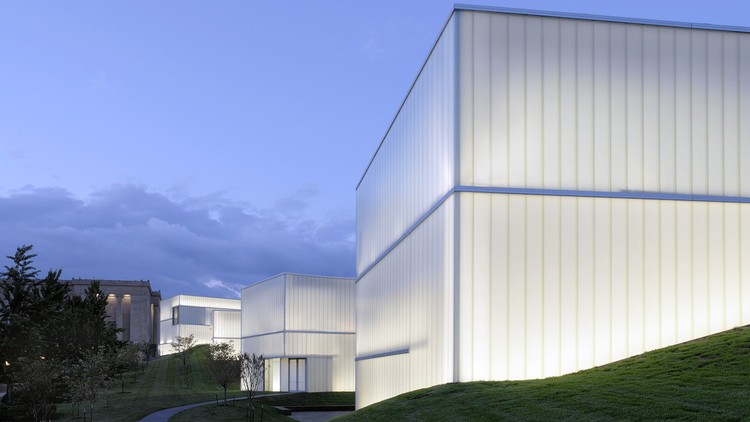
Recurrently we see how architects opt for translucent facades to create the envelopes of their buildings, promoting the entry of a large amount of natural light, while simultaneously controlling it during the day. Illuminated during the night, many of these projects can be seen in the dark, appearing as lanterns or lighthouses for their neighbors and community. Being exposed to changing conditions – day or night – to choose the right material, it's necessary to study in detail the orientation and location of the building, the pre-existing context, and the configuration of the interior spaces.
We present a system of glass panels that allow buildings with this type of façade –spanning from floor to ceiling without interruptions – with minimal frames and different colors, textures, thermal and acoustic performances.
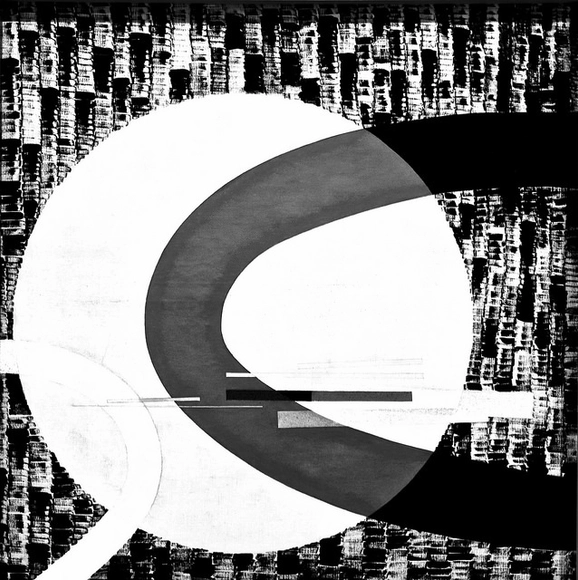
The Hungarian artist László Moholy-Nagy was one of the most influential thinkers, designers and art educators of the first half of the twentieth century. His experimentation with light, space and form generated international attention. Among those impressed by Moholy-Nagy's work was Walter Gropius, German architect and founder of the Bauhaus School, who made Moholy-Nagy one of the youngest instructors in the history of the Bauhaus. In his time at the Bauhaus, Moholy-Nagy utilized multi-disciplinary art practices to revolutionize abstract artistic media.
But who was the man?

Light is an important, if complex, tool in architecture. Not only does it lend atmosphere, texture, and vibrancy, but it is increasingly essential in an age where technology alienates us from nature. In this excerpt from Mary Guzowski's new book, The Art of Architectural Daylighting, she introduces the science and art of daylighting - and details six ways the masters approach the challenge.
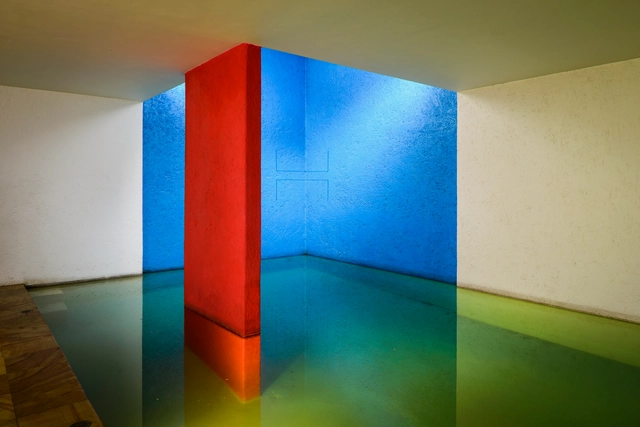
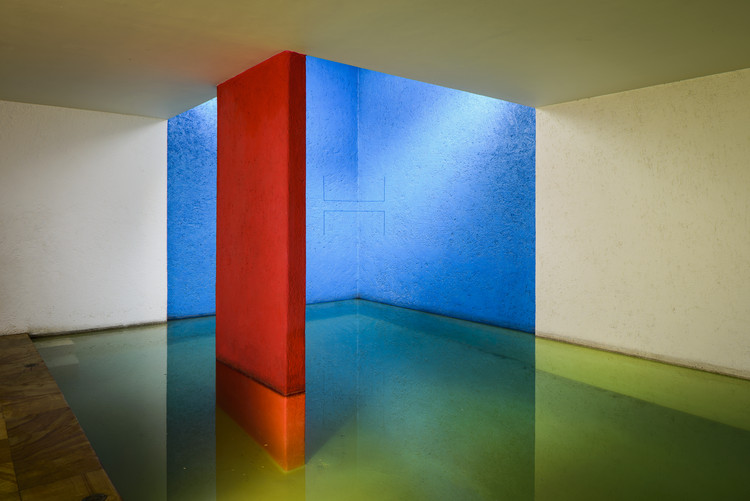
In Luis Barragán’s poetic imagination color plays as significant a role as dimension or space. Rough textures and water reflections heighten the impact of bright sunlight in his colorful buildings. But where does such vibrancy come from and how is it heightened by the architecture itself?
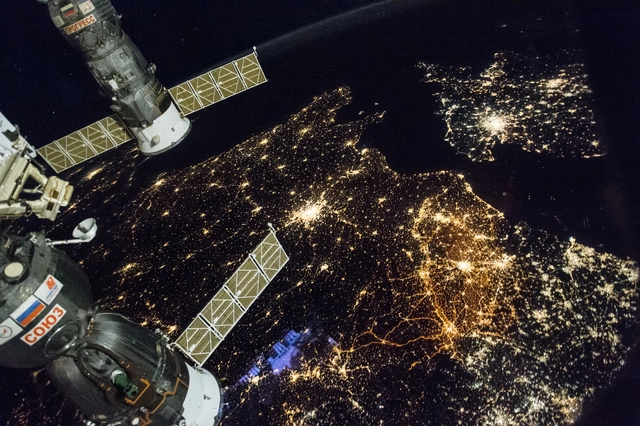
Satellite images of Earth at night make for fascinating, beautiful pictures. But they also confront us with a growing form of pollution. Why do we waste so much energy to light outer space when we only need light on the ground? High-resolution satellite data can now deliver detailed insights into how humans have shaped the night, and these earth observation systems are about to reform our urban planning. They can become an integral part of project development and control, as many strange ecological, political and social phenomena become apparent with a closer look at the night-time imagery of our planet.
UK-based design studio NEWSUBSTANCE has debuted at the Coachella Valley Music & Art Festival with a seven-floor pavilion taking visitors on an “ever-changing journey of light, color and perspective.” The 75-foot-high (23-meter-high) pavilion named “Spectra” consists of a spiral form featuring an observation deck at its peak, projecting a rainbow band of color.
The dazzling color scheme is produced by the separation of light waves by their varying degrees of refraction, embodying the lively spirit of the Coachella festival. Through this manipulation of the physical properties of light, Spectra is capable of producing over 16 million colors.

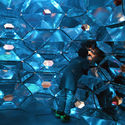
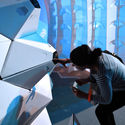
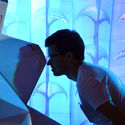
Quirky, innovative and visceral, Get High without Drugs was awarded first place in the fabrication category at this year’s International FAB FEST* in London.
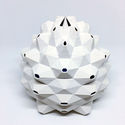
Mollusk-like and mysterious from the outside, the form of the pavilion emerges from the combination of a zonohedron and a dome. Seventy-two hexagonal surfaces were formulated into fold-able nets that could then be digitally fabricated from flat-sheets and assembled into load-bearing modules. A puzzle-like routine drove the assembly of the modules into the pavilion’s dome-like form.
Working out of a UNESCO world heritage site in Cartagena, Colombia, Smart Everyday Nighttime Design is a research project that aims to use light as a means to build better communities. The project, spearheaded by Arup’s Lighting team with urban-lighting leader Leni Schwendinger, seeks to address nighttime activation of Getsemaní’s streets and public spaces in a bid to improve safety, stimulate the night time economy and engage with the local communities and events.
This documentary, produced by PLANE—SITE, presents the project’s findings and explains the research process and the resulting prototype. The team had two main ambitions:
Techniques, technologies, construction, controls: master it all during LIGHT IN ACTION, a fast-paced, one-day lighting education.
Amsterdam Light Festival is an annual light art festival in the Netherlands that presents the rapidly developing concept of light art in all its forms. After five successful editions, the festival will return to Amsterdam’s city center for the 2017-2018 edition. From artists to designers, engineers to architects, and professionals to students, the festival invites creators from around the world to submit their creative interpretations of the theme EXISTENTIAL. The deadline for submissions round 1 (curatorial selection) is 31 January 2017, 11:00 CET.





.jpg?1506417220)