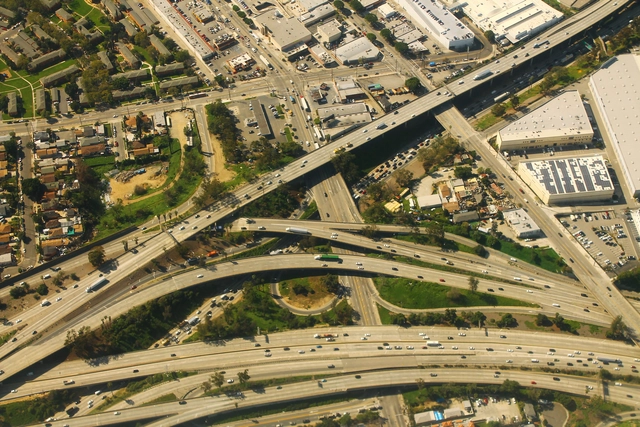
East Los Angeles Interchange. Image Courtesy of The Dirt
Highways, in their inanimate state, cannot be racist. However, the forces that located them and the consequences of their placement are inextricably connected to race. Deborah Archer, a law professor and civil rights lawyer, captures the central concept: “Highways were built through and around Black communities to entrench racial inequality and protect white spaces and privilege.”
In the new book, Justice and the Interstates: The Racist Truth About Urban Highways, editors Ryan Reft, Amanda Phillips du Lucas, and Rebecca Retzlaff explore racial injustice and the interstate highway system. They collect essays that address the dislocation caused by interstates. The book came out of a series of articles in Metropole, a publication of the Urban History Association.
https://www.archdaily.com/1009056/confronting-the-racist-legacy-of-urban-highwaysDiane Jones Allen
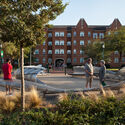
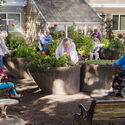
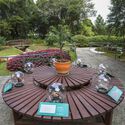
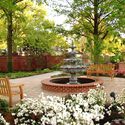
The convergence of neuroscience, architecture, and landscaping has ignited a creative revolution in the design of our built environments. Neuroarchitecture, an emerging discipline that blends principles of neuroscience with architectural design, sheds light on the significant impact of physical spaces on our emotions, behaviors, and overall well-being. Amidst this, sensory gardens emerge as intriguing therapeutic spaces, investigating the distinct interplay between the human brain and nature.
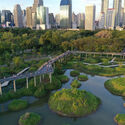
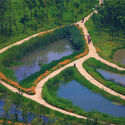
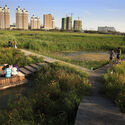
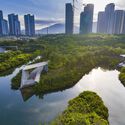
Beijing-based landscape architect Kongjian Yu has been announced by the Cultural Landscape Foundation as the recipient of the 2023 Cornelia Hahn Oberlander International Landscape ArchitecturePrize (“Oberlander Prize”). Kongjian Yu has gained international recognition for his concept of “sponge cities,” a measure to address and prevent urban flooding in the context of accelerated climate change. The concept was adopted as a national policy in China in 2013, prioritizing large-scale nature-based infrastructures such as wetlands, greenways, parks, canopy tree and woodland protection, rain gardens, green roofs, permeable pavements, and bioswales. Yu has been selected by the international jury of the Oberlander Prize, recognizing him as “a force for progressive change in landscape architecture around the world.” Organized biannually, the prize aims to recognize and give visibility to landscape architecture and the ways in which it can address issues of climate change and sustainability.
Sanders highlighted the results of a five-year assessment of the LAF fellowship program and its efforts to grow the next generation of diverse landscape architecture leaders. The assessment shows that past fellows are shaping the future of the built environment in key public, non-profit, and private sector roles.
Ever since the birth of our cities, we’ve made sure to protect the green spaces within them. Civilizations as far back as the Romans built expansive parks in the heart of the city with ‘Rus in Urbe’ – translating as ‘Country in the City’ – still referenced today. In order to control the urbanization boom of the mid-20th century, meanwhile, greenbelt policies across many European cities literally ring-fenced the natural environments surrounding them, making air quality and easier access to nature a part of city life.
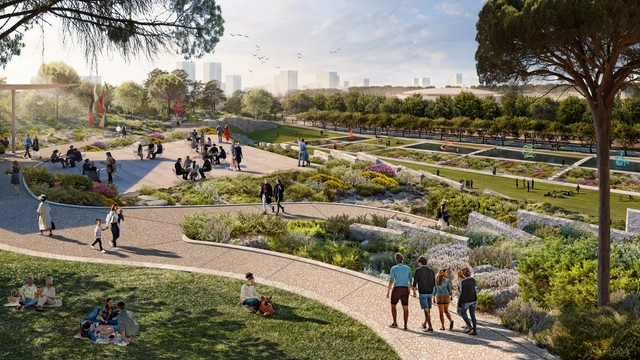
The post-pandemic city, however, is a new breed of conurbation, and these city parks and greenbelts are no longer enough. As we migrate away in search of greener, healthier climes, the cities we’re leaving are evolving, proving they can be green too by exchanging lesser-used black surfaces of roads and structures for natural grass- and parkland. These four projects from across Europe transform unused city spaces back into the natural and regenerative green environments they once were.
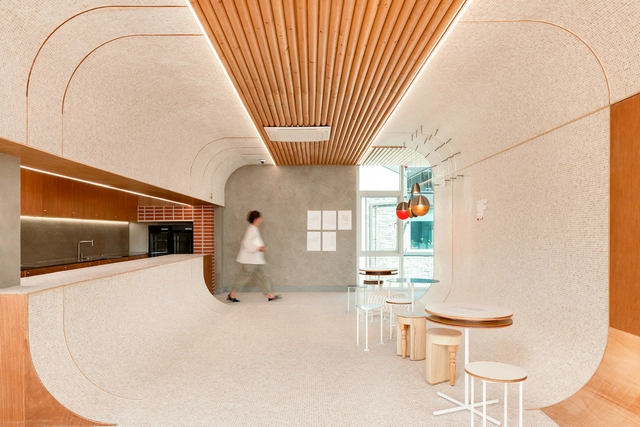
After years of dominance, orthogonal lines and right angles are giving way to organic designs and rounded shapes within interior design projects. This profound shift in formal language has led to the infiltration of gentle curves and amorphous volumes into design pieces, furniture, and decorative elements, a transformation that's becoming increasingly evident. Some argue that this change may be indirectly linked to the growing interest in sustainability and the pursuit of strategies that reconnect people with nature, as seen in the consistent presence of biophilia across projects of various scales. The period of social isolation during the COVID-19 pandemic further heightened this inclination, prompting individuals to devise ways to incorporate nature into their living spaces, thereby enhancing well-being in day-to-day life.
It is well known that exposure to more green spaces and cleaner air has profound impacts on human health and psychology. This kind of exposure has been linked to reduced stress, improved cognitive function, and enhanced creativity. These sanctuaries offer relief, allowing the human to reconnect with the natural world. These residential homes are often a refuge from busy city life, ranging from vacation homes to retirement homes. Moreover, as the global call for sustainable practices becomes more pressing, the role of natural elements in architecture becomes imperative.
Far beyond its decorative features, landscaping brings with it biological and cultural issues that need to be addressed in projects. However, what can be seen in most public, residential, condominium, commercial and business gardens is a series of approaches that distance landscaping from all its attributes, reducing it to a decorative layer in the construction. Next, we have put together strategies to avoid the main problems of landscape design, joining aesthetics with its environmental and cultural possibilities.
Landscape architecture is having a moment. The latest proof: last week, the US Department of Homeland Security decided to accredit the field with its prestigious STEM designation. As part of the science, technology, engineering, and mathematics (STEM) educational disciplines that fall under this category, landscape architecture students can now spend an additional 24 months seeking employment and training post-graduation in the United States after an initial period of a year granted to all graduates. The title also promises more prestige, higher entry salaries, and additional career flexibility. Torey Carter-Conneen, CEO of the American Society of Landscape Architects (ASLA), calls the development a significant advancement for 'landscape architecture education and practice, and that is great for America and the global community.'
The news corresponds to a growing emphasis on landscape architecture as a pivotal practice around the globe in recent years – one that is closely connected to notions of public health, environmental design, biophilia, sustainability, and re-wilding. It also underlines the intimate relationship between technology and the discipline. Landscape proposals increasingly rely on advanced science and technology to predict how ecological interventions might alter an existing terrain and determine what measures will yield the highest benefit for both humans and nature. The contemporary ideal of wild meadows and biodiverse forests may exist free from external influence, but the path to get there requires assistance.
Biophilia, or love for life and nature, inspires architects around the world to create spaces that deeply connect with natural elements. These architectural projects seek to reintroduce nature into built environments, resulting in spaces that promote well-being, health, inspiration, and even productivity. In Brazil, the possibilities are even broader, given the country's exuberant climate and the vegetation found in various biomes. In this article, we will explore seven projects from different programs that embrace this concept and allow for a symbiosis between architecture, humans, and nature.
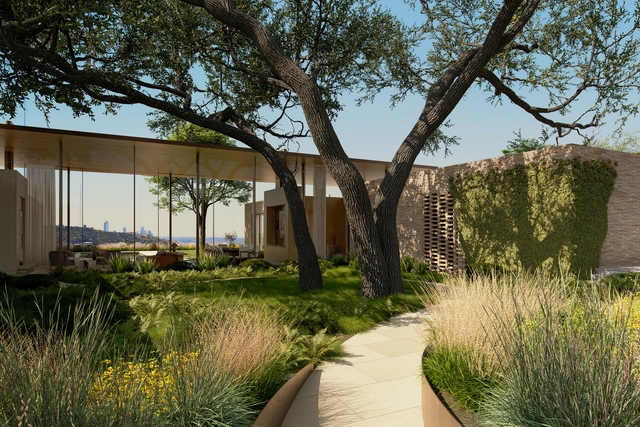
A healthy environment that is also visually appealing in our homes has become increasingly sought when it comes to designing houses and residential spaces, especially during the world’s current context. One of the most successful ways of achieving this is through a thoughtful design of the landscape that complements the built project. The art of landscaping is the arrangement of nature’s raw material elements, like vegetation and planting, combined with nonliving elements, such as exterior structures, paving, and decking, in order to create site-specific solutions that enhance the exterior spaces of a project.
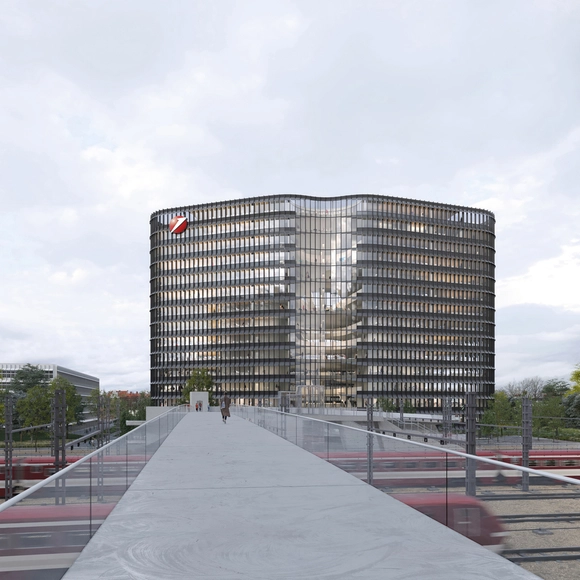
Sauerbruch Hutton has won the competition for Headquarters 2 (HQ2) for the Haidenauplatz Quarter in Munich. This high-rise building will be the focal point of the newly developing Haidenauplatz district in Eastern Munich. Serving as HypoVereinsbank's second central location, it will stand alongside the iconic Hypo high-rise from the 1970s in the neighboring Bogenhausen district. The design by Sauerbruch Hutton and landscape architect MDP Michel Desvigne Paysagiste was chosen from a pool of nine other international participants.
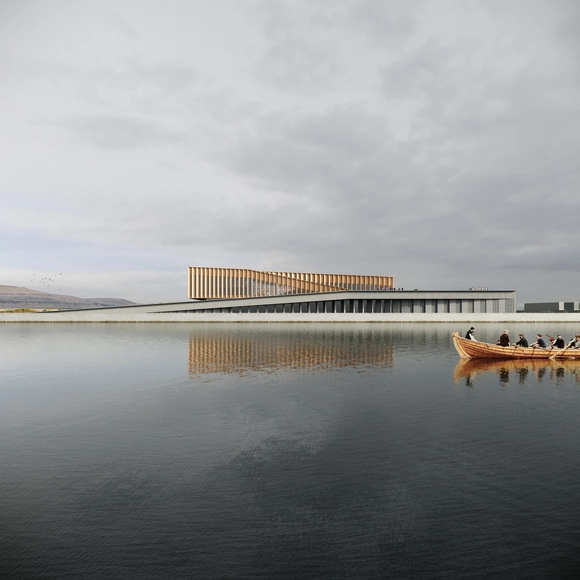
Henning Larsen has just revealed the design for Smyril Line's new headquarters and ferry terminal in Torshavn, the capital of the Faroe Islands. The building pays homage to traditional Faroese fishing boats and the historic Eastern harbor while embracing the picturesque backdrop of abundant landscapes and open seas. The new headquarters serves three functions: a ferry terminal, an office building, and a logistics center.
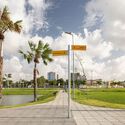
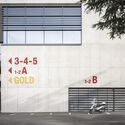
It’s easy to feel lost and anxious in a new environment. Even with the satellite-accurate quality of modern map apps in our back pockets, modern humans still get stressed when their internal map of the immediate area draws a blank.
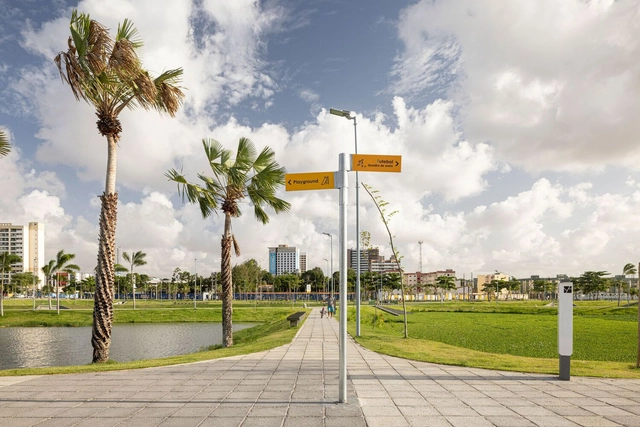
While digital maps help us to find the fastest route through streets, when our need for direction is most urgent – such as finding the right department in a vast hospital campus, the relief of a toilet in a foreign airport, or the right platform 30 seconds before a train departs – even with innovative IPS technology, digital interfaces still come a distant second to well-placed signs or other, more intuitive, solutions.
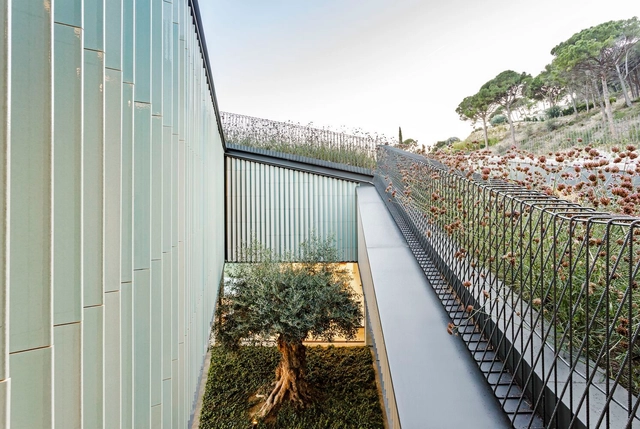
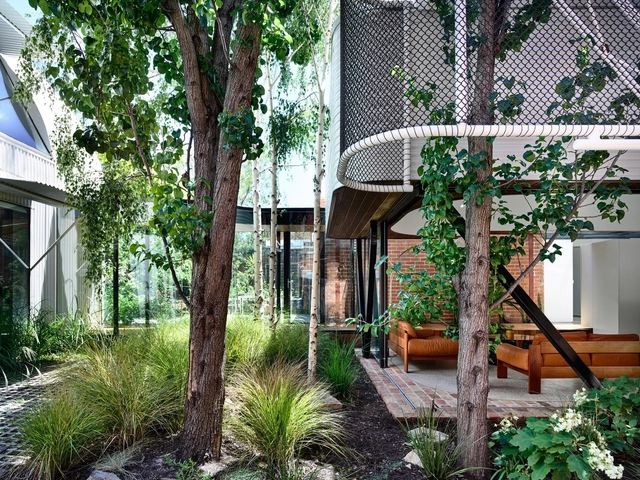
The origin of interior courtyards dates back several years, serving as a means of shelter, security, and protection, while also aiming to achieve comfort and well-being through exterior elements. In contemporary housing, a wide range of possibilities is deployed, capable of accommodating various uses and activities that foster the relationship between the interior and exterior environment. Furthermore, notions of energy efficiency, thermal regulation, ventilation, and natural lighting are incorporated, among others.






















_Frans_Parthesius__-_02_Villa_Fifty-Fifty_Design_Studioninedots_Photography_Frans_Parthesius.jpg?1620679031 "© Frans Parthesius")
_Jeremias_Thomas_MeMo_House_IMG_2037_01.jpg?1620678960 "© Jeremias Thomas")

_Peter_Eckert_01_-_04_Hood_River_Residence.jpg?1620679227 "© Peter Eckert")