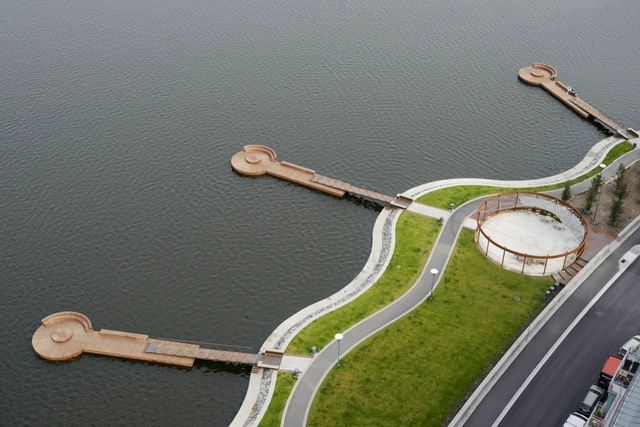
After months of debate, the United States Congress has passed a bill that will allocate $51 billion to Hurricane Sandy relief helping the thousands who lost their homes and businesses to the devastating storm last October. New York Governor Andrew Cuomo announced that $400 million of the aid will be used to fund New York's buyout program, an initiative to help address the damaged homes and coastline. The program is two-fold; in part it will help reimburse the property damage caused by the storm, but the initiative has a larger goal, which is to address the nature of coastal flooding and create a barrier that would mitigate the damage created to the coast by storm surges in the future. Since the storm, there have been many suggestions as to how to prepare for the type of damage brought on by Hurricane Sandy of 2012 and Hurricane Irene of 2011. These suggestions range from flood gates to barrier reefs. Cuomo's buyout program, as reported by the Architect's Newspaper Blog, hopes to encourage residents along vulnerable flood zones to sell their land to the city for the development of a natural coast that would absorb the impact of strong winds and storm surges.
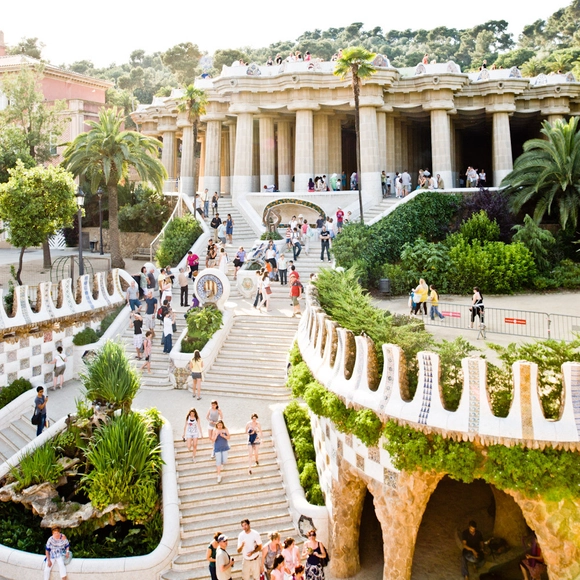
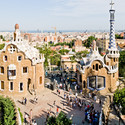
Parc Güell is a park designed by Antoni Gaudí upon the request of Count Eusebi Güell, who wanted to build a stylish park for the aristocrats of Barcelona. The Count had planned to build a housing development that would take advantage of the area's views and fresh air; however, only two show houses were completed. Gaudí himself inhabited one of them, designed by architect Francesc Berenguer in 1904. The house is now a museum showcasing some of Gaudí's work. The park is a common tourist attraction in Barcelona, and is known for its famous terrace and iconic entrance, flanked by two Gaudí buildings.
New York-based SCAPE/Landscape Architecture has beat out 4 national/international firms, including JDS Architects, to design a Masterplan for the Town Branch Commons, a two-mile linear stretch of green space that will connect the eastern and western sections of downtown Lexington, Kentucky. The Competition has garnered attention for its interesting challenge: to bring the Town Branch Creek, a river which has been underground for over 100 years, to the surface.
Jeff Fugate, President and COO of the Lexington Downtown Development Authority, which sponsored the competition, noted that “The [five-person] jury had five excellent choices, but SCAPE clearly was above the competition.” Aaron Betsky, the director of the Cincinnati Art Museum and the jury chairman also explained the choice: “As a jury, we felt inspired and excited by the breath of the designers’ vision, while we felt confident that they would be able to implement their plan."
Kate Orff, founder of SCAPE, notes that the firm is looking forward to working with the community to make the vision a reality: “SCAPE is so thrilled to be a part of this exciting initiative to revive Town Branch, make new connections downtown, and improve the quality of life in Lexington. We’ve been inspired by the realities and conditions on the ground and by the potential of water to inform the design of new urban landscapes.”
Find out more about the Masterplan, after the break...
For the past several years the Chicago Park District and the City of Chicago have been working on appropriate uses for Northerly Island, a 91-acre man-made peninsula in Chicago, Illinois. The lakefront site branches off from Museum Campus, a section along Lake Michigan that is home to the Field Museum, Shedd Aquarium, and Adler Planetarium. Serving as an expansion to these cultural programs, Studio Gang Architects have created an innovate design that integrates educational, cultural, social, and recreational activities into Northerly Island.
Read more about Northerly Island's future after the break!
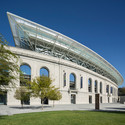
In 2005, OLIN - a landscape architecture, urban design and planning studio - developed a master plan for University of California Berkley's southeastern campus in an effort to unify its distinct elements and strengthen the social spaces of the campus. HNTB Architects led the renovation of the California Memorial Stadium and worked with STUDIOS Architecture and OLIN to design the Simpson Center for Student-Athlete High Performance. These are unified by OLIN's design of the grounds which are just part of the transformation planned for the campus, which also includes the renovations and landscape design for the Haas School of Business, UC Berkley School of Law and the Piedmont Avenue.
The “’Open Exchang’ proposal, for the Green Square Library and Plaza competition, creates a space of public engagement by challenging the role of the library in the contemporary city of Sydney. Designed by MODU, in collaboration with Future Green Studio landscape architects, their project becomes a social and public space made possible by new technology, with the potential to transcend the traditional definition of learning spaces. More images and architects’ description after the break.
When plans for the High Line were first revealed it made quite an impression on the design community. The converted elevated rail line, long abandoned by New York City, was threatened by demolition until a group of activists fought for its revival and helped transform it into one of the most renowned public spaces in Manhattan. Now Queens, a borough with its own abandoned infrastructure is on its way to redeveloping the land for its own version of the High Line, to be known as the Queensway Cultural Gateway.
In late December, the Trust for Public Land announced that New York Governor Andrew Cuomo has awarded a $467,000 grant to the organization to begin a feasibility study on the 3.5 mile Long Island rail line. Early proposals reveal a new pedestrian and bike path, public green space and a cultural gateway that will celebrate Queens’ diversity in art, sculpture and food, serving the 250,000 residents that live in the neighborhoods along the route, which include Rego Park, Forest Hills, Richmond Hill, Ozone Park and Forest Park.
The future of design requires thinking innovatively about the way current construction techniques function so we may expand upon their capabilities. Sustainability has evolved far beyond being a trend and has become an indelible part of this design process. Sustainable solutions have always pushed against the status quo of design and now the Structural Technology Group of UniversitatPolitècnicadeCatalunya – BarcelonaTech (UPC) has developed a concrete that sustains and encourages the growth of a multitude of biological organisms on its surface.
We have seen renditions of the vertical garden and vegetated facades, but what sets the biological concrete apart from these other systems is that it is an integral part of the structure. According to an article in Science Daily, the system is composed of three layers on top of the structural elements that together provide ecological, thermal and aesthetic advantages for the building.
The main objective for the Detroit River Front proposal is to create a new image of the city, an exclusive and unique landmark that glances to a future Detroit involved in its nature that it forgot for a long time. Designed by Architetto Matteo Ascani (AMA), the project for the redevelopment of Hart Plaza is divided in major guide lines: water, nature, history. They provide a new landscape system, where water enters inside the plaza by canals that redesign the cost line, as the river comes closer to the downtown. More images and architects’ description after the break.
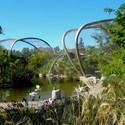
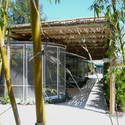
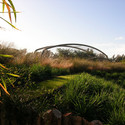
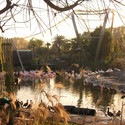
Architects: Hampton+Rivoira+Arquitectos Location: Escobar, Provincia of Buenos Aires, Argentina Architects In Charge: Jorge Hampton, Emilio Rivoira Associated Architect: Cristian Carnicer Design Team: Roberto Lombardi, María Eugenia García Castera, María Eugenia Viña Raznovich, Juan Reartes, Ignacio Ruiz Orrico, Diego Tablada, Emilia Alvarado, Anahi Fedrizzi Project Year: 2009 Photographs: Jorge Hampton, Emilio Rivoira, Fernando Mayán, Fundación Temaikén
Michael Van Valkenburg Associates (MVVA) and Thomas Phifer & Partners have been announced as winners of an international competition set to transform 15 blocks of the neglected Waller Creek in downtown Austin, Texas, into a vibrant local attraction. Co-sponsored by the nonprofit Waller Creek Conservancy and the City of Austin, the ambitious project intends to spearhead redevelopment within the city’s central business district with the 1.5 mile urban scheme that represents approximately 11 percent of Austin’s downtown.
“Today, we glimpse a transformation of Austin through a new community gathering place. This design team selection illustrates our City’s desire for great civic space, unique culture and opportunity for interaction with nature,” Austin Mayor Pro Tem Sheryl Cole said during the City Hall announcement. “We look forward to each new milestone of this development.”
A small group of diverse students participating in the inaugural AA Visiting School Eugene were given the responsibility to design and build something that would enhance and reflect the forest, within a ten-day timeframe.