Our cities, vulnerable by nature and design, have generated the biggest challenge that humankind has to face. With the vast majority of the population expected to settle in urban agglomerations, rapid urbanization is going to raise the issue of adaptability with future social, environmental, technological and economic transformations.
In fact, the main problematic of the decade questions how our cities will cope with fast-changing factors. It also looks into the main aspects to consider in order to ensure long-term growth. In this article, we highlight major points that help future-proof our cities and create a livable, inclusive and competitive fabric that adapts to any unexpected future transformation.
While not all plastics are being recycled, even the ones that display the recycling sign, the global plastic waste problem is nowhere close to being resolved. Recycling, generally determined by factors like demand, legislations, and economy, takes on arguably around 20% of the annual production of plastics, leaving a large quantity unattended, doomed to last forever in our environment. In addition, competing with newly-produced materials, recycled plastics need to meet standards of quality and price, and undergo a sustainable, efficient, and economically viable transformation.
ROGP or Rejects of Glass & Plastics Technology is an innovative approach that repurposes plastics, once labeled as non-recyclable materials due to technical complexity or economy-related issues.
Videos
Courtesy of the Lisbon Architecture Triennale
The Lisbon Architecture Triennale published on Vimeo the series of debates Talk, Talk, Talk held during its 5th edition, which was curated by Éric Lapierre. Divided into five major exhibitions, the Triennale addressed in one of them the issue of economy of means, discussed in the debates below.
https://www.archdaily.com/944638/economy-of-means-discussed-by-sharon-johnston-kersten-geers-and-robin-collyer-at-the-lisbon-triennaleEquipe ArchDaily Brasil
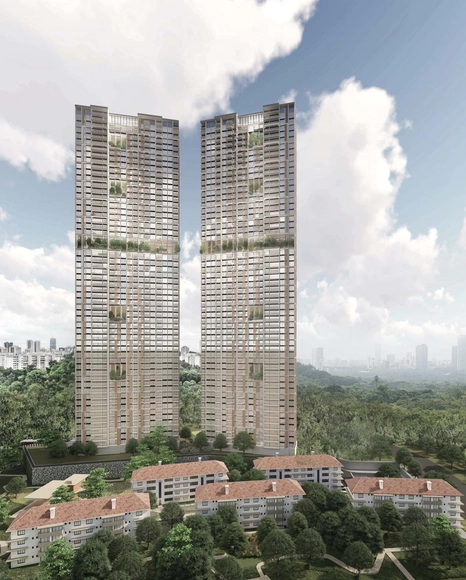
ADDP Architects has unveiled its Avenue South Residences project in Singapore, the world's tallest prefabricated, prefinished residential construction. Scheduled for completion in 2026, the two 56-story towers “sits amidst five historically preserved buildings on one of Singapore’s most verdant avenues”.
What would you do with an old and empty building? Would you tear it down, leave it abandoned, or could you transform it into something new? Cities all around the world are wrestling with this very challenge. The question then becomes, what can architecture do about it?
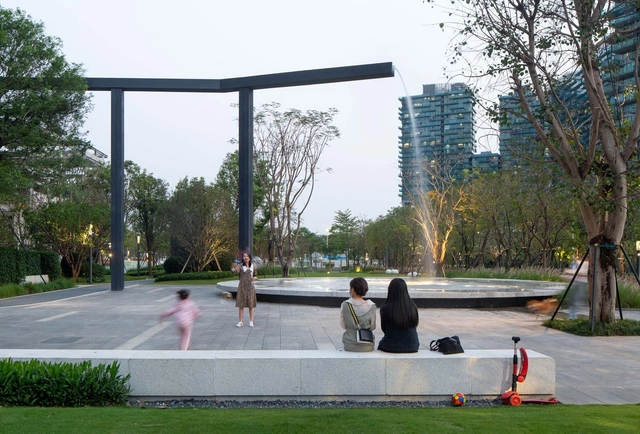
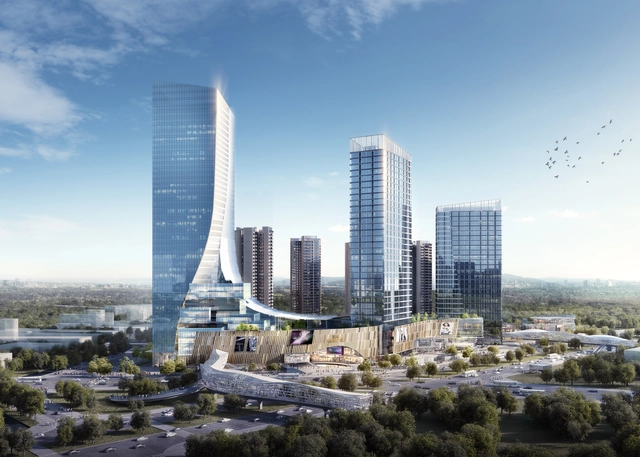
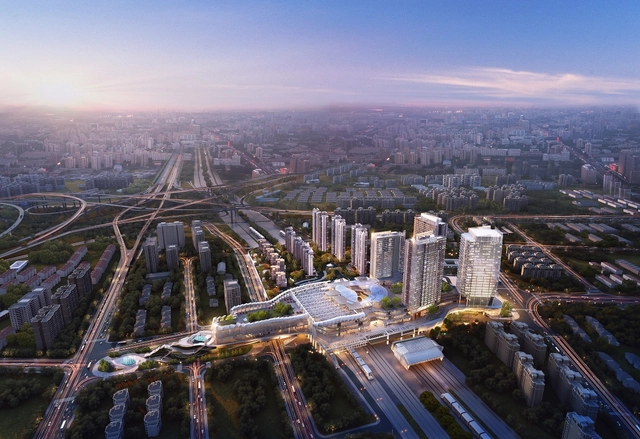
Ronald Lu & Partners, the leading TOD expert with over 60 TOD projects across China, is currently developing flagship Shunde ICC Country Garden Sanlonghui. Showcasing an upgraded TOD4.0 design concept, the mixed-use project generates “a harmonious relationship between people and the environment”.
When reflecting on recycling, sustainability, measures to take, and innovative technological solutions, one cannot help but think that there are also familiar approaches that should be taken into consideration. In fact, when examining the impact of the built environment on the climate, one notes that in many countries, 80% of the buildings that will exist in 2050 have already been built. The most effective form of sustainability may, therefore, be saving energy by eliminating or minimizing new constructions, and by avoiding the demolition of existing structures.
That is what adaptive reuse stands for: instilling a new purpose on an existing “leftover building.” Nowadays, the refashioning process is becoming essential because of numerous issues related to the climate emergency, plot and construction costs, a saturation of land, and a change in living trends.
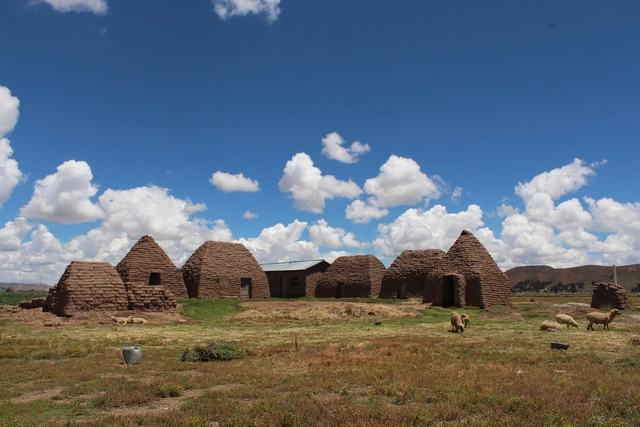
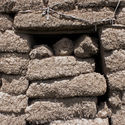
As a part of the XV Taller Social Latinoamericano architectural conference that took place in Puno, Peru, we visited the Iruito Tupi zone in Huancané province alongside Francisco Mariscal, Director of the Puno Cultural Center. For the conference, Mariscal gave a presentation on the history of putucos, pre-Columbian houses made with a mixture of earth and grass.
History has the habit of repeating itself; using the same script, just with different names, figures, and places. Some 10,000 years ago, the Altiplano and the Titicaca lake basin, wedged between modern day Peru and Bolivia, became home to hunters and gatherers who subsisted on the herds of llamas and vicuñas as well as the bounty of birds and fish.
Ronald Lu & Partners has announced the completion of phase one of Tianhui TODTOWN: China’s first transit-oriented development, after 13 years of collective effort. The project promoting sustainability, mass transit, and community in Shanghai, takes the concept of public transit-oriented development (TOD) important in the development of China’s urban areas to the next level.
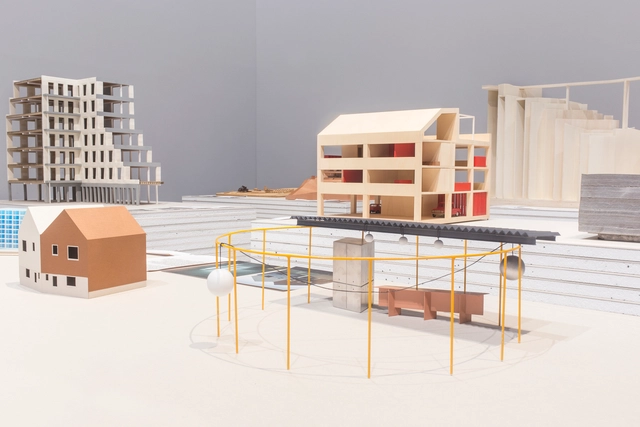
The PHVision Masterplan for Heidelberg in Germany has been approved by the City Council. Located on the site of the Patrick-Henry-Village (PHV) in Heidelberg, the 100-hectare development, designed by KCAP can now move forward, transforming the former military area into a new quarter, establishing the knowledge city of the future.
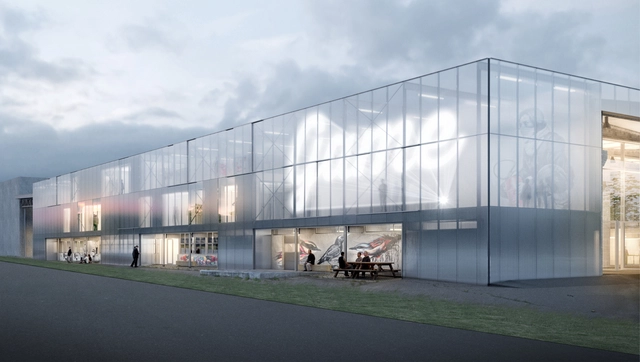
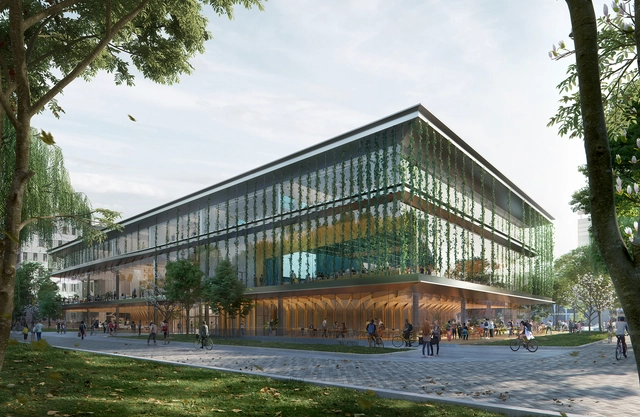
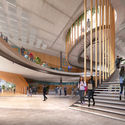
Part of Delft University of Technology (TU Delft), in the Netherlands, Echo is a new multifunctional and flexible inter-faculty building, now under construction and due for completion in Dec 2021. Designed by UNStudio, in collaboration with Arup and BBN, the future-proof facility meets the needs of the ever-increasing numbers of students.
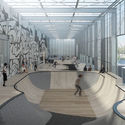
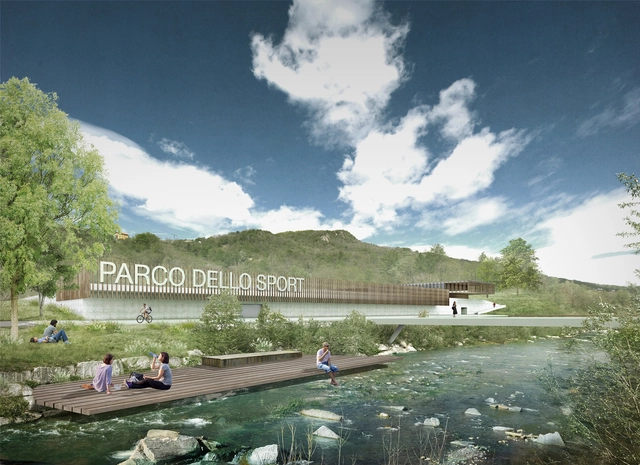
Focusing on the future of public space, and centering their approach on wellbeing and sport as drivers of sustainability, economic and social development, the Lugano Municipal Council in Switzerlandhas given the go-ahead for the planning of the new Pole of Sports and Events (PSE). Designed by LAND, the project dictates the direction for public spaces in the post-pandemic era.
While first developed as a practical power source during the 1950s, solar systems were too expensive for mainstream use until the 1970s. Starting from their early use to power Cold War era military satellites, silicon photovoltaic solar cells achieved their first commercial success in places where electricity was not available, such as lighthouses and off-shore oil rigs.
The total amount of water on our planet has, theoretically, stayed the same since earth's formation. It's possible that the glass of water you drank earlier contains particles that once ran down the Ganges River, passed through the digestive system of a dinosaur, or even cooled a nuclear reactor. Of course, before it quenched your thirst, this water evaporated and fell as rain millions of times. Water can be polluted or misused, but never created or destroyed. According to a UNESCO study, it is estimated that the Earth contains about 1386 million cubic kilometers of water. However, 97.5% of this amount is saline water and only 2.5% is fresh water. Of this fresh water, most (68.7%) takes the form of permanent ice and snow in Antarctica, the Arctic, and in mountainous regions. Another 29.9% exists as groundwater. Ultimately, only 0.26% of the total amount of fresh water on Earth is available in lakes, reservoirs, and watersheds, where it is easily accessible for the world's economic and vital needs. With the population steadily increasing, especially in urban areas, several countries have already had severe problems with providing the necessary amount of drinking water to their populations.
The construction industry is responsible for 75% of the consumption of earth's natural resources. Stone, sand, iron, and many other finite resources are extracted in huge quantities to supply the markets. Additionally, construction sites themselves generate enormous quantities of waste, whether through construction, demolition, or remodeling. In Brazil, for example, construction waste can represent between 50% and 70% of the total mass of municipal solid waste [1]. This waste often ends up in landfills and dumps rather than being properly disposed of, overwhelming municipal sanitation systems and creating informal disposal sites.
We visited Clément Blanchet in his Paris studio, located in Villa Seurat, a small Parisian street flanked by modernist buildings. Inside a beautiful loft by Maillard et Ducamp, the team of Clément Blanchet Architecture was working hard on a master plan in China.
After going through diverse education programs, that included the AA in London, the Chulalongkorn Mahawitthayalai Architectural School in Bangkok, and the University of Illinois in Chicago, Clément started his career at OMA, “a long therapy [...] to discover who I was”. During his career at OMA, he became the director of OMA France, participating in projects such as the Caen Library, the Parc des Expositions in Toulouse, the Lab City CentraleSupélec, among others.
The practice is structured as a laboratory, researching, informing and generating architecture and urbanism in all its forms and sizes. From a series of carefully designed interiors for restaurants, playing with a diverse palette of materials, to large scale multifunctional buildings and master plans, adapting to the fast-changing needs of society.
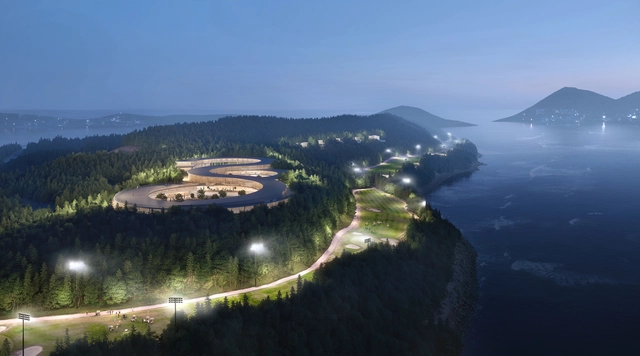
UNStudio has recently designed the masterplan for Gyeongdo Island, a new sustainable leisure destination in South Korea. Driven by nature, the 470,000 m2 buildings and public spaces are centered on the qualities of a green environment.






.jpg?1596025638 "© Charbel Tannous, courtesy of Development Inc.")











_KCAP_PHV_Zentrum.jpg?1592834532&format=webp&width=640&height=580)

.jpg?1591036359&format=webp&width=640&height=580)