1. ArchDaily
  2. Interviews

Interviews: The Latest Architecture and News

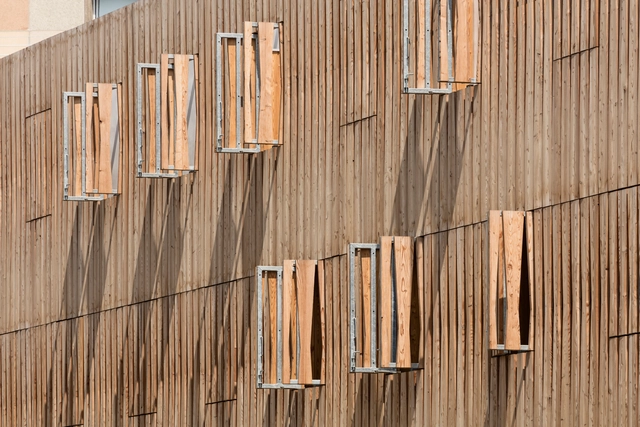
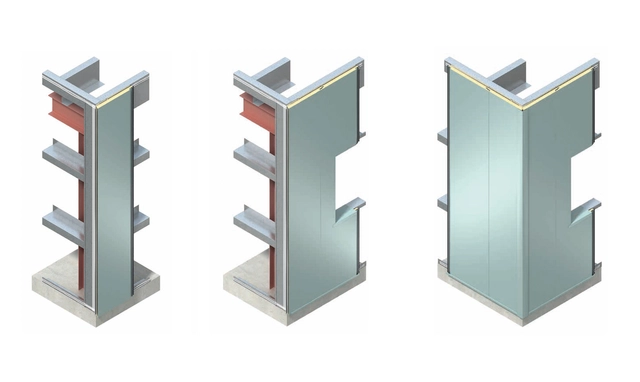
Balancing Energy-Efficiency and Aesthetics: Large-Scale Thermal Fenestration Systems

 | Sponsored Content

The total energy demand from buildings has risen dramatically in recent years. Driven by improved access in developing countries, greater ownership of energy-consuming devices and increasing urban densities, today it accounts for over one-third of global energy consumption and nearly 15% of direct CO2 emissions. As the climate crisis aggravates and its consequences are more visible than ever, the architecture and construction industry must respond accordingly. It must take responsibility for its environmental impact and give priority to reducing energy consumption, whether through design decisions, construction techniques or innovative products. The key lies, however, in not sacrificing aesthetics and comfort in the process.

6 Urban Design Projects With Nature-Based Solutions

Subscriber Access | 

Extreme natural events are becoming increasingly frequent all over the world. Numerous studies indicate that floods, storms, and sea-level rise could affect more than 800 million people worldwide, ultimately costing cities $1 trillion per year by the middle of the century. This suggests that urban survival depends on addressing urban vulnerability as a matter of urgency to protect the city and the population.

6 Urban Design Projects With Nature-Based Solutions - Sustainability6 Urban Design Projects With Nature-Based Solutions - Sustainability6 Urban Design Projects With Nature-Based Solutions - Sustainability6 Urban Design Projects With Nature-Based Solutions - Sustainability6 Urban Design Projects With Nature-Based Solutions - More Images+ 10

How Architecture is Contributing to the Increase of the Temperature of the World

Subscriber Access | 
How Architecture is Contributing to the Increase of the Temperature of the World - Featured Image
Photo of ETA+, via Unsplash

Over the past 60 years, architects and engineers have surrendered to industrial construction solutions, with buildings designed to be built faster and faster and at very low cost.

Over the past 60 years, architects and engineers have surrendered to industrial construction solutions, with buildings designed to be built faster and faster and at very low cost. As a more standardized and cheaper international approach to building emerged throughout the 20th century, many professionals abandoned the vernacular traditions of their ancestral cultures, which were developed over thousands of years, to fight the climatic extremes of different regions.

Global Design Agenda: Sustainability Design Week

There's nothing like a climate crisis to sharpen the mind. But how strong is our resolve when it comes to a consistent and meaningful approach to sustainability in architecture and design? We attempt to put the world to rights with renowned offices BIG, Gensler, AHMM and Atelier Luma, taking the temperature on a very hot topic.

The Envelope's Role in Net-Zero or Positive Buildings

 | Sponsored Content
The Envelope's Role in Net-Zero or Positive Buildings - Featured Image
Powerhouse Brattørkaia / Snøhetta. Image © Ivar Kvaal

In the face of increasingly alarming predictions regarding the climate crisis, just increasing the efficiency of buildings is no longer enough. Zero energy buildings - or, better yet, energy positive buildings - make it possible to mitigate the negative impacts of the construction industry, which is responsible for 40% of all greenhouse gas emissions. These are buildings capable of producing more energy than they consume through the use of renewable sources. To reach this ambitious goal, it is necessary to follow three main steps:

  1. Install a renewable power system to provide clean energy;

  2. Include high efficiency systems, such as climatization equipment and low energy lighting.

  3. Improve the construction envelope to conserve energy and reduce loads.

Which Building Construction Materials Are Ecological?

Subscriber Access | 
Which Building Construction Materials Are Ecological? - Featured Image
Timber Bridge in Gulou Waterfront / LUO studio. Photo: © Weiqi Jin

In the current scenario of a climate crisis, thinking about an architectural project without defining ecological guidelines has become practically unacceptable. One of the main emitters of carbon dioxide and other pollutants, the construction sector is increasingly looking for new ways and means that can make works more sustainable and, in some way, mitigate damage to the environment. Thinking about ecological materials can be one of the fundamental steps, but, which materials are these?

Which Building Construction Materials Are Ecological? - Image 1 of 4Which Building Construction Materials Are Ecological? - Image 2 of 4Which Building Construction Materials Are Ecological? - Image 3 of 4Which Building Construction Materials Are Ecological? - Image 4 of 4Which Building Construction Materials Are Ecological? - More Images+ 5

Ursula von der Leyen and Francis Kéré Open the Bauhaus Earth Conference

The “Reconstructing the Future for People and PlanetConference, hosted by Bauhaus Earth and the Pontifical Academy of Sciences (PAS), has begun at the Casina Pio IV in the Vatican Gardens. The conference opened with a speech from Ursula von der Leyen, president of the European Commission. The extensive program brings together renowned scientists, architects, spatial planners, and policymakers to discuss the transformation of the built environment from a driver of climatic and societal crises into a force for regeneration.

Ursula von der Leyen and Francis Kéré Open the Bauhaus Earth Conference - Image 1 of 4Ursula von der Leyen and Francis Kéré Open the Bauhaus Earth Conference - Image 2 of 4Ursula von der Leyen and Francis Kéré Open the Bauhaus Earth Conference - Image 3 of 4Ursula von der Leyen and Francis Kéré Open the Bauhaus Earth Conference - Image 4 of 4Ursula von der Leyen and Francis Kéré Open the Bauhaus Earth Conference - More Images+ 1

Eyal Weizman on Forensic Architecture: ''Mapping is Power''

“Since I remember myself, I have wanted to be an architect… I could see the way that neighborhoods were organized. I could see the separation. I could see the frontier areas between the Palestinian community and the Jewish majority,” expresses Eyal Weizman in conversation with Louisiana Channel, in regards to understanding the ‘political significance’ of architecture and the potential of the occupation as a critical tool for understanding the world.

Eyal Weizman was interviewed by Marc-Christoph Wagner at Forensic Architecture’s studio in London, in April 2022. As the head of Forensic Architecture, he is renowned for his part within the multidisciplinary research group, using a combination of architectural technologies and techniques to investigate instances of state violence and violations of human rights across the globe. Growing up in Haifa, Israel he developed an understanding of the political connotations within architecture from an early stage.

Eyal Weizman on Forensic Architecture: ''Mapping is Power'' - Image 1 of 4Eyal Weizman on Forensic Architecture: ''Mapping is Power'' - Image 2 of 4Eyal Weizman on Forensic Architecture: ''Mapping is Power'' - Image 3 of 4Eyal Weizman on Forensic Architecture: ''Mapping is Power'' - Image 4 of 4Eyal Weizman on Forensic Architecture: ''Mapping is Power'' - More Images

Sustainability: The New Aesthetic Order

In the history of architecture the concept of beauty has always been linked to different factors that represent, mainly, the values of society in a given period. The zeitgeist is certainly crucial to these definitions, so something that was once considered beautiful in the past is likely to be given another connotation nowadays. In this sense, aesthetic preferences in architecture seem to be linked to symbolic references implicit in the construction itself and in its relation with the world. They are preferences that express convictions, ideologies and positions, as well as moral, religious, political feelings and, of course, class status symbols.

Sustainability: The New Aesthetic Order - Image 1 of 4Sustainability: The New Aesthetic Order - Image 2 of 4Sustainability: The New Aesthetic Order - Image 3 of 4Sustainability: The New Aesthetic Order - Image 4 of 4Sustainability: The New Aesthetic Order - More Images+ 26

Replacing Cement with Waste: Embracing the Circular Economy with Polymer Technology

When approaching the process of recycling building materials, there are a number of obstacles to achieving a comprehensive and effective result. First, careless demolition can make the process very complex, as products with different recycling products are often mixed. In addition, not all materials can be efficiently recycled or processed, as many still need expensive or overly complex processes. But the construction industry, being a huge contributor to waste production and greenhouse gas emissions, has also developed multiple new technologies to improve its practices. This is the case of the WOOL2LOOP project, which seeks to solve one of the biggest challenges in applying a circular approach to construction and demolition waste.

Foster + Partners Reveals Design of an All-Timber Department Store in Tokyo

Foster + Partners has unveiled its latest commercial project on the world-famous Shibuya Crossing, in Tokyo, Japan. Dubbed the Shibuya Marui Department Store, the nine-storey retail development is set to become a new space for sustainable lifestyle brands, adopting the highest standards of sustainability and core principles of environmental responsibility and wellbeing. The timber structure's design and material selection will significantly reduce the embodied carbon of the building, while simultaneously creating a warm and open experience for visitors.

Foster + Partners Reveals Design of an All-Timber Department Store in Tokyo - Image 1 of 4Foster + Partners Reveals Design of an All-Timber Department Store in Tokyo - Image 2 of 4Foster + Partners Reveals Design of an All-Timber Department Store in Tokyo - Image 3 of 4Foster + Partners Reveals Design of an All-Timber Department Store in Tokyo - Featured ImageFoster + Partners Reveals Design of an All-Timber Department Store in Tokyo - More Images

MVRDV Reveals Design of Residential Towers in Puerto Santa Ana, Ecuador

MVRDV has revealed the design for its first project in South America. The Hills is a residential project located on the Guayas riverfront in Guayaquil, Ecuador, comprised of six residential towers displayed atop a mixed-use plinth, creating the image of a valley. The towers range in height from 92 to 143 meters, raising taller the further away they are from the riverfront. The whole composition is inspired by the local landscape that merges the natural and the urban environment.

MVRDV Reveals Design of Residential Towers in Puerto Santa Ana, Ecuador - Image 1 of 4MVRDV Reveals Design of Residential Towers in Puerto Santa Ana, Ecuador - Image 2 of 4MVRDV Reveals Design of Residential Towers in Puerto Santa Ana, Ecuador - Image 3 of 4MVRDV Reveals Design of Residential Towers in Puerto Santa Ana, Ecuador - Image 4 of 4MVRDV Reveals Design of Residential Towers in Puerto Santa Ana, Ecuador - More Images+ 8

Explore the DAAily Bar's Space at the 2022 Milan Design Week

As the design world prepares for one of the most anticipated events of the year, Designboom, Architonic, and ArchDaily which make up DAAily platforms have put together for the visitors of Milan Design Week 2022, a unique, storytelling-programmed space, designed by architects and designers for architects and designers. This year, DAAily platforms are taking the opportunity to take to the stage together from 7 to 10 June at the Swiss Corner at Piazza Cavour / Via Palestro 2, hosting curated talk series and gathering spots, along with immersive art installations.

Explore the DAAily Bar's Space at the 2022 Milan Design Week  - Image 1 of 4Explore the DAAily Bar's Space at the 2022 Milan Design Week  - Image 2 of 4Explore the DAAily Bar's Space at the 2022 Milan Design Week  - Image 3 of 4Explore the DAAily Bar's Space at the 2022 Milan Design Week  - Image 4 of 4Explore the DAAily Bar's Space at the 2022 Milan Design Week  - More Images+ 12