-
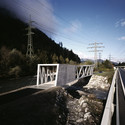
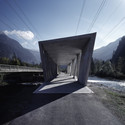
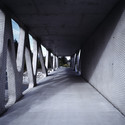
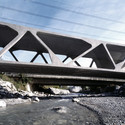
Architects: De Bever Architecten, KCAP
- Year: 2013
.jpg?1373426547)
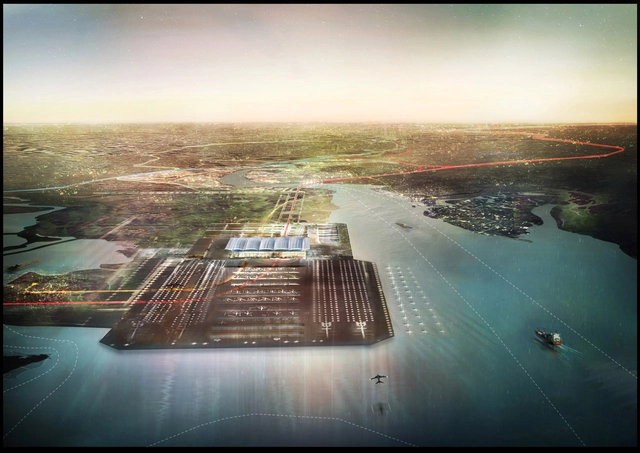
Identifying connectivity as the key to prosperity within the 21st century, London Mayor Boris Johnson acknowledged the wider economic and regeneration potential of a new hub airport at a City Hall meeting today.
In his speech, Johnson recommended three optimal locations for the new airport: the Isle of Grain in north Kent; Stansted; or on an artificial island in the middle of the Thames estuary. These three suggestions come as a result of a year-long, independently peer-reviewed investigation by the Transport for London, which confirmed the inability of London’s current major airport, Heathrow, to meet demands by expanding.
More on London’s future hub airport after the break...

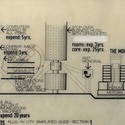
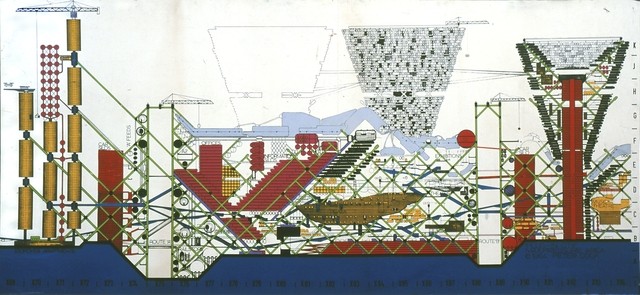
AD Classics presents you with great buildings of the past, providing inspiration and motivation for architects to design for the future. But why must inspiration only come from poured concrete and erected walls? For this edition of AD Classics, we share a work, the Plug-In City, by the avant-garde group Archigram. Though never built, their projects and ideas provoked debates, combining architecture, technology and society; when Plug-In City was proposed in 1964, it offered a fascinating new approach to urbanism, reversing traditional perceptions of infrastructure’s role in the city.
More on this radical project after the break...

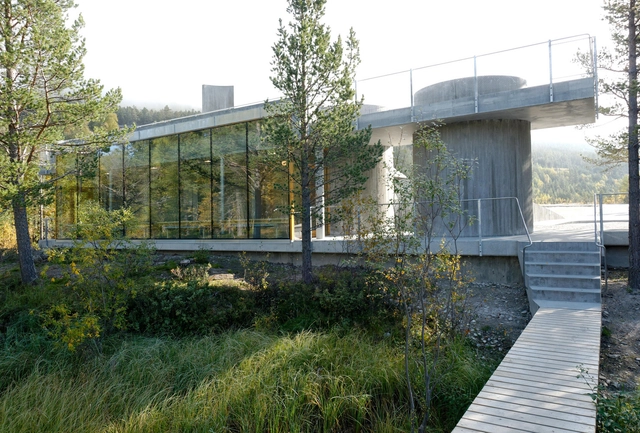

The Brooklyn Queens Expressway (BQE) cuts through myriad neighborhoods on its route between Queens and Brooklyn. Sometimes it takes the form of an elevated six-lane highway with nothing but dark parking lots below; sometimes as a deep trench that segregates neighborhood pockets. The Cross Bronx Expressway in the South Bronx similarly creates boundaries, isolating neighborhoods from each other.
Projects such as these, built under the heavy handed politics of Robert Moses in the mid-20th century, show little regard for community development. The effects of these projects can be seen today; the spaces below the highway overpasses of New York City tend to be dark, dingy places that we avoid or rush past. They’re perceived as "lost space" within the city, yet they have an innate potential to be much more.
The Design Trust for Public Space, a non-profit dedicated to promoting public space, sees that potential. With their new project, Under the Elevated: Reclaiming Space, Connecting Communities, they hope to take these “lost” spaces and turn them into safe and exciting venues that will, at long last, reconnect long-separated communities.
More on this exciting program, after the break.
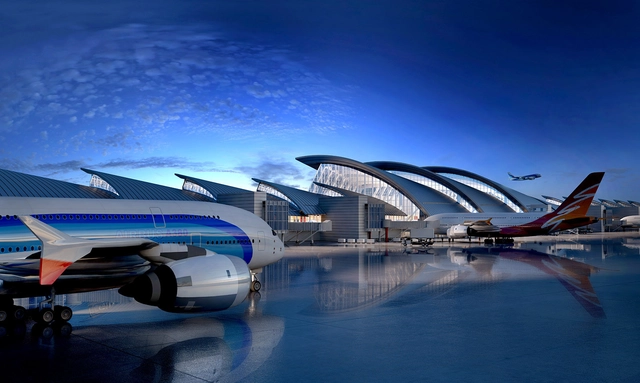
Phase 1 of the new Tom Bradley International Terminal at LAX, the largest public works project in the history of Los Angeles, has been completed. The new airport, designed by Fentress Architects to be a LEED-certified landmark for the city, will feature a flowing, ocean-inspired roofline, a three-story,150,000-square-foot Great Hall, and one of the most advanced multimedia Integrated Environmental Media Systems (IEMS) in the world. The $1.5 billion project has been funded solely from LAX’s operating revenues, without public funds.
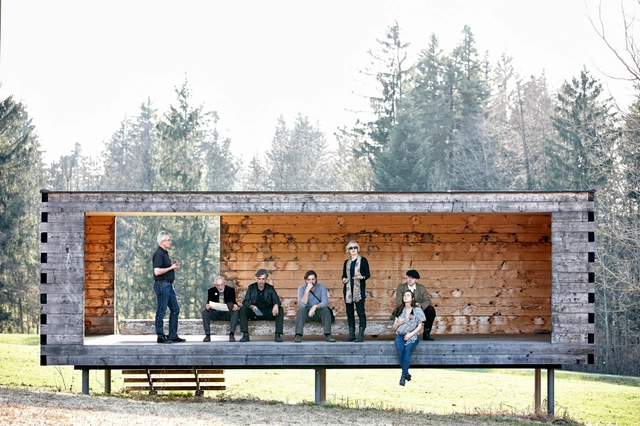
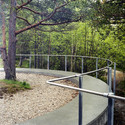
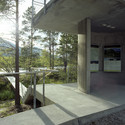
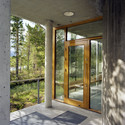
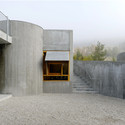
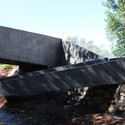
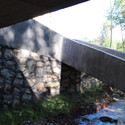
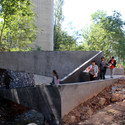
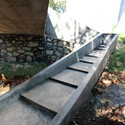
BUS:STOP Krumbach is a recently initiated project in the Bregenzerwald region of Austria that will bring together seven well-known architecture offices from around the world, pair them up with seven local architects and allow the pairs to work together on the design of seven new bus shelters in the town of Krumbach. A true collaboration between tradition and innovation, national and international, BUS:STOP hopes to create a series of small and functional buildings with their own unique characters that tell not only the story of these architects, but also of this special region.
For the list of participating offices and to learn more about BUS:STOP, read on.
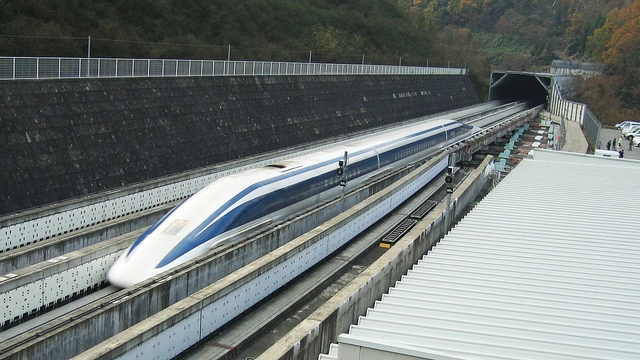
Japan, inventor of the world's first bullet train, recently unveiled plans for an even faster and more radical train model: a floating train, powered by magnets, that will travel 100 mph faster than current bullet trains (about 300 mph). The maglev train, standing for "magnetic levitation," will run between Tokyo and Osaka, an estimated distance of 315 miles, cost $64 billion, and be completed by 2045.
High-speed rail has already revolutionized national and international transportation in many parts of the world - for example, China has a maglev that already goes 270mph - and now high-speed is transitioning into hyper-speed. Last year, we reported that Elon Musk, CEO of SpaceX and co-founder of both PayPal and Tesla Motors, shared with the public his desire to patent a new mode of transportation - the “Hyperloop” that would get passengers from San Francisco to LA in only 30 minutes.
So what might the future hold for train travel? And, more importantly, how will it affect our cities and the people who live in them?
For more on the maglev train and the future of rail, read on.
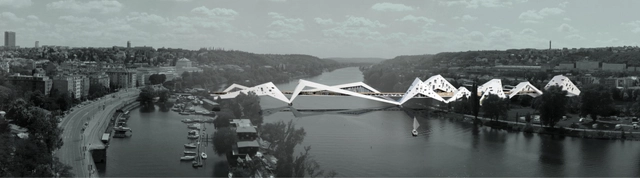
The intention of architect Juráš Lasovský for the ‘Prague: Bridge-Building over the Vltava River’ competition was to disrupt the serenity of the Prague basin landscape by proposing a residential bridge connecting the quarters of Podolí, Císařská louka and Smíchov. While classical bridges tend to create a connection between two places, this residential bridge is regarded as an opportunity to create an attractive space above the river. It becomes a space with residential premises as well as a sort of esplanade from which people get the chance to observe the city life around them. More images and architects’ description after the break.
Make.jpg?1369433093&format=webp&width=640&height=580)
As part of the on-going debate surrounding the UK’s future aviation strategy, Make Architects just unveiled further studies to support its proposals for an expansion of Stansted Airport as a viable option. Building on existing infrastructure, the architects strongly believe that Stansted can connect with central London within 25 minutes, thereby making it one of the most deliverable and affordable solutions currently on the table, costing £18billion to deliver and providing up to £100billion in investment for the east of the country. More images and architects' description after the break.

.jpg?1368821646&format=webp&width=640&height=580)

In order to serve its rapidly expanding population of more than five million, the ArRiyadh Development Authority has commissioned Zaha Hadid Architects to construct the new King Abdullah Financial District (KAFD) Metro Station in its capital city of Riyadh, Saudi Arabia.
With six platforms over four public floors and two levels of underground car parking, the KAFD Metro Station will be integrated within the urban context of the financial district, while responding to the functional requirements for a multimodal transport centre and the district’s future vision. The project extends beyond the simple station typology to emphasize the building’s importance as a dynamic, multi-functional public space; not only an intermediate place perceived through quick transitions, but also a dramatic public space for the city.
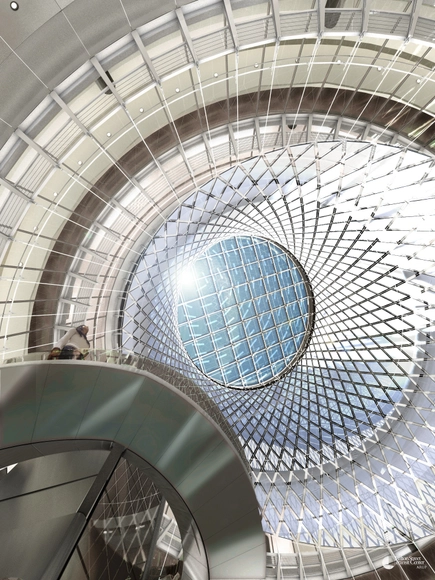
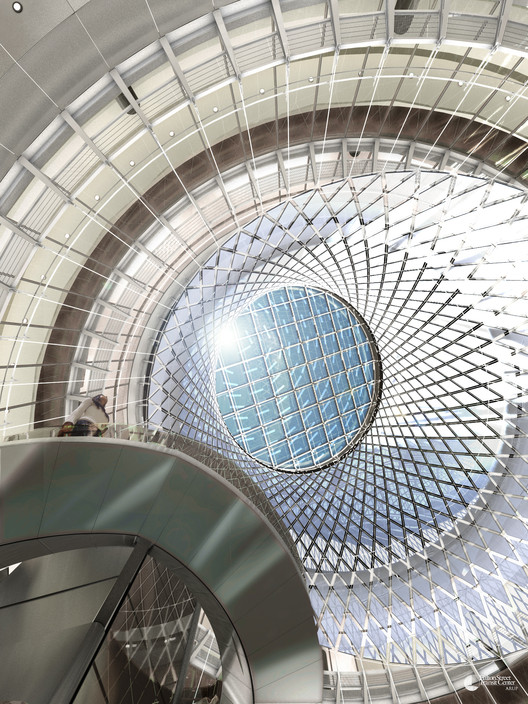
In the early years of the New York City subway system, natural light played a dominant role in the illumination of subterranean spaces. The architecture emphasized a connection to the sky, often through skylights planted in the median of city avenues above — lenses in the concrete sidewalks.
However, it proved extremely difficult to keep the skylights clean, and light eventually stopped passing through. Subway authorities moved toward an almost exclusive reliance on electric lighting. While this allowed for greater flexibility in station design, permitting construction at any location and depth, it also created a sense of disorientation and alienation for some passengers.
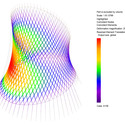
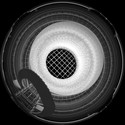
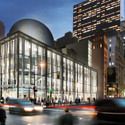
For the design of Lower Manhattan's Fulton Center, Arup, in conjunction with design architect Grimshaw sought to reconnect the century-old subway system with the world above.
Read more about this "enlightening" subway station, after the break...

.jpg?1373426456 "© Günter Richard Wett")
.jpg?1373426463 "© Günter Richard Wett")
.jpg?1373426480 "© Günter Richard Wett")
.jpg?1373426573 "© Günter Richard Wett")
.jpg?1373426547)








.jpg?1368821632 "© Jasmin Schuller")

.jpg?1368821646)