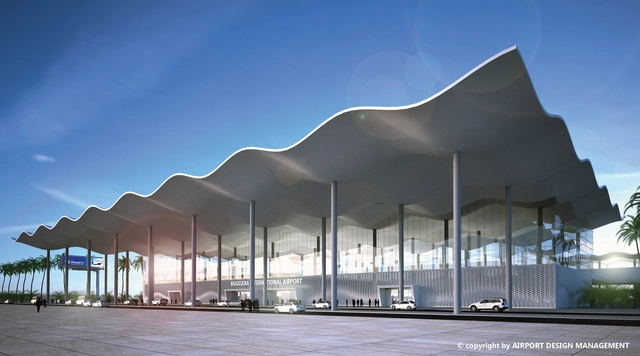
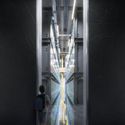
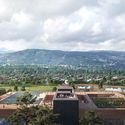
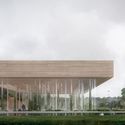
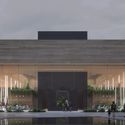
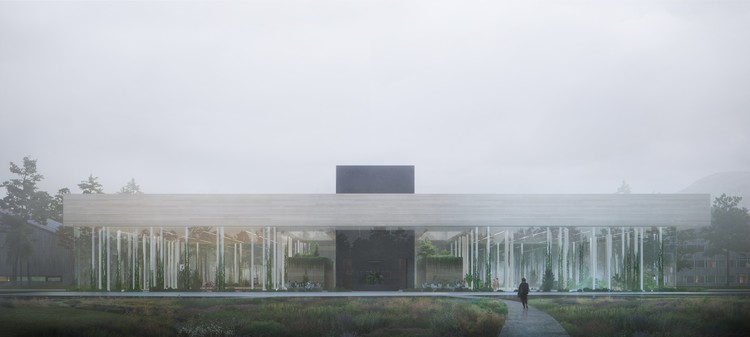
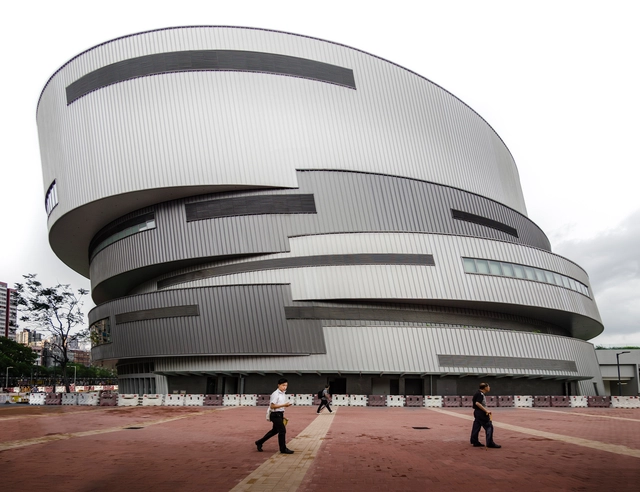
Rwanda’s largest publicly funded project, Bugesera International Airport is on track to be the first certified green building in the region. A few pieces of this net zero emission complex include: a 30,000 square metre passenger terminal, 22 check-in counters, ten gates, and six passenger boarding bridges. Funded by Public Private Partnership, the project is cost estimated at $414 million USD. The international hub was only one of several initiatives discussed by the AfricaGreen Growth Forum (AGGF) in Kigali at the end of last year.
Videos
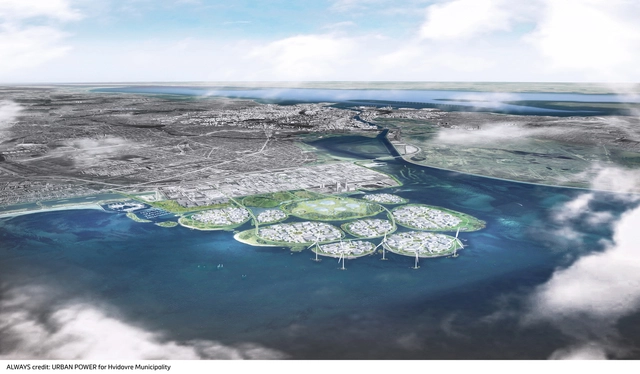
Courtesy of URBAN POWER for Hvidovre municipality
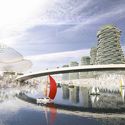
As the world population grows, designers look to develop the seas. Architecture and planning firm, URBAN POWER strategically designed nine man-made islands off the southern coast of Copenhagen to combat many of the city’s impending challenges. The islets, called Holmene, address demands for tech space, fossil-free energy production, flood barriers, and even public recreation space.
Snøhetta has released images of its proposed sustainable data center concept, named “The Spark.” The project seeks to address the typical high-energy-consuming typology of the data center, transforming it into an “energy-producing resource for communities to generate their own power.”
The proposal is adaptable for a wide range of contexts and can be scaled for any location around the world, fueling connected cities with energy from the center’s excess heat.
https://www.archdaily.com/896905/snohetta-designs-sustainable-data-center-as-the-body-and-brain-of-future-citiesNiall Patrick Walsh
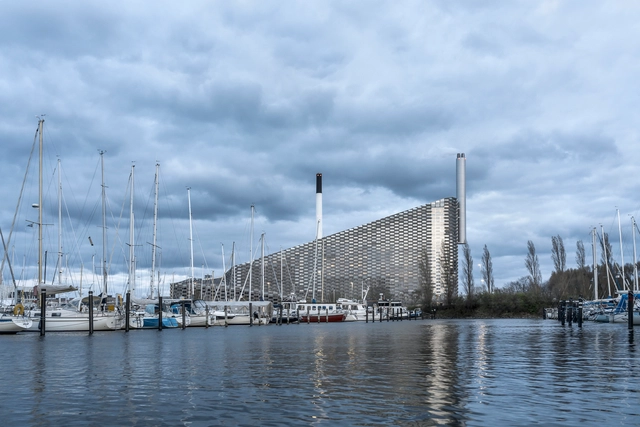
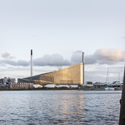
Initially master planned by BIG, the unique design seeks to reclaim a typically unused element of a building for the public through the introduction of the nature-filled program. During summer months, the SLA-designed rooftop activity park will provide visitors with hiking trails, playgrounds, fitness structures, trail running, climbing walls, and of course, incredible views. In the winter, the park will be joined by over 1,640 feet (500 meters) of ski slopes designed by BIG.
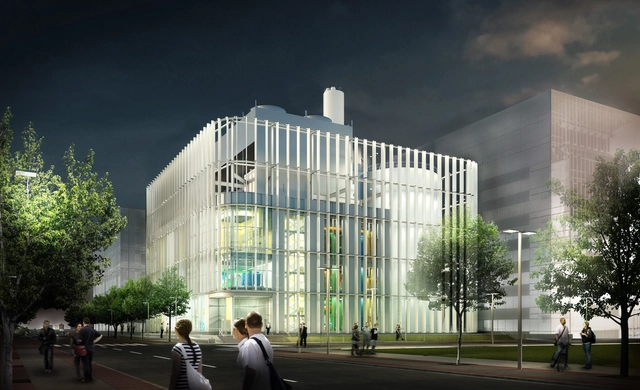
Night view. Image Courtesy of Leers Weinzapfel Associates
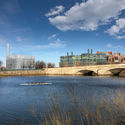
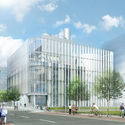
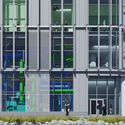
On a prominent, highly visible site within Harvard University’s Allston Campus, a celebration of the beauty of infrastructure is beginning to take shape. Designed by Boston-based Leers Weinzapfel Associates, the 58,000 square foot Allston Campus District Energy Facility (DEF) represents a new, highly efficient infrastructure typology, delivering electricity and water for the campus, whilst simultaneously showcasing the intricate complexity of engineering and design.
https://www.archdaily.com/890489/power-on-campus-harvard-energy-facility-showcases-the-beauty-of-infrastructureNiall Patrick Walsh
Videos
Bird's eye view of the regenerated city centre. Image Courtesy of Attu Studio
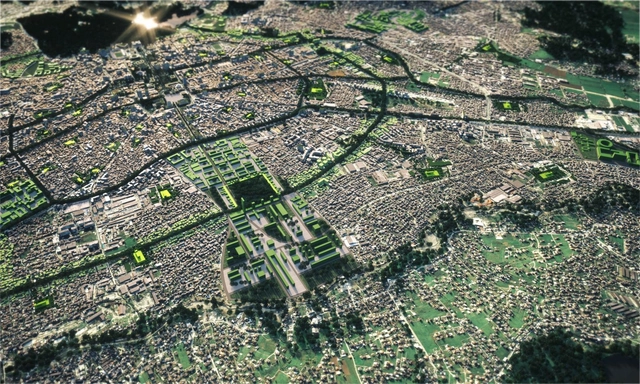
In 1925, Italian designer Armando Brasini created a sweeping masterplan to transform the Albanian capital city of Tirana. Almost one hundred years later, the Tirana 2030 (TR030) Local Plan by Italian firm Stefano Boeri Architetti has been approved by Tirana City Council. Collaborating with UNLAB and IND, Boeri seeks to define a new era in the country’s capital, incorporating controlled development, advanced infrastructure, green corridors, and an enhancement of the city’s architectural heritage.
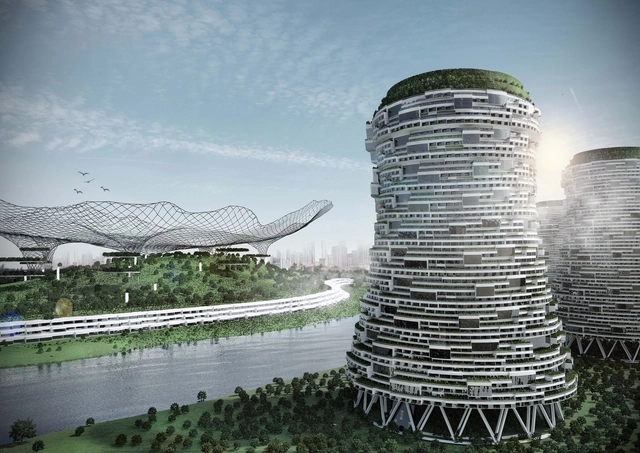
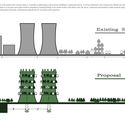
What if a power plant could also be a home, an office, or even a park? That is the question behind Cypher CO2ling Plant, a conceptual design developed by Kawan Golmohamadi, Shilan Golmohamadi, and Soad Moarefi. Power plants are a ubiquitous and inevitable byproduct of modern lifestyles, but they are typically located in remote areas, far from where the power is actually needed, due to their unsightly appearance and the emissions associated with combustion-fueled energy generation. Cypher CO2ling Plant proposes an alternative scenario that utilizes the infrastructure of the power plant’s cooling towers to support mixed-use development, while also mitigating the less desirable aspects of energy generation.
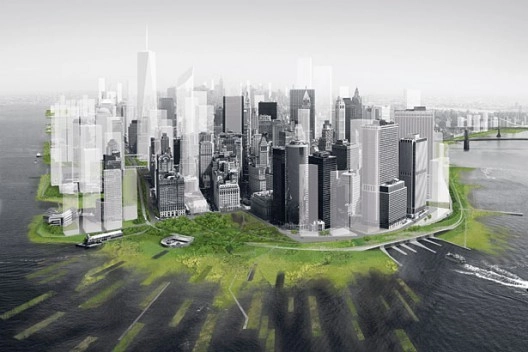
Architecture Research Office and dlandstudio have proposed Wetlands in Lower Manhattan to deal with the next Hurricane Sandy. Image Courtesy of Architecture Research Office and dlandstudio
In this article on Fast Company, seven leading architects in the field of designing for disaster - including Peter Gluck, Michael Manfredi, and principals of James Corner Field Operations and Snøhetta - give their take on what lessons Hurricane Sandy, one year on, has taught us. Their responses raise a number of issues, but above all share one common theme: urgency.
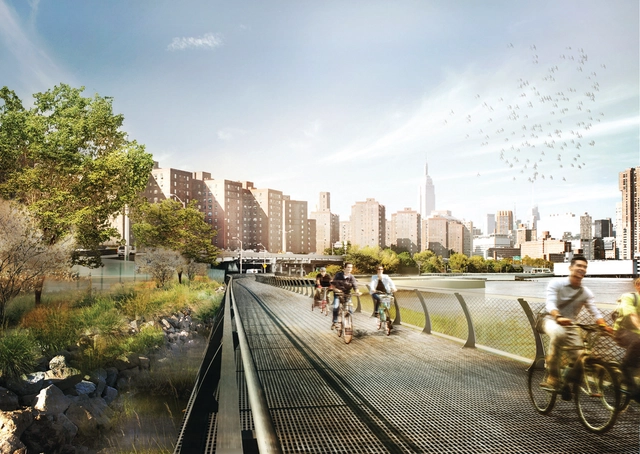
WXY Studio's East River Blueway Plan. Image Courtesy of WXY Studio
Since Hurricane Sandy struck New York, much has been made of "green infrastructure" and its potential to defend cities against waves and floods. Now though, two articles, from the New York Times and Grist, claim that green infrastructure would actually protects us very little. But, since engineered "gray" solutions, such as storm-walls, also have their limitations (namely just moving the surge elsewhere), it seems the solution is a combination of both "gray" and "green" (moving the surge to where it can safely release its energy). Read the original articles here and here.
As Larry Levine and Ben Chou discuss in their NRDC blog post ”New York and Pennsylvania: Among the Best at Planning for the Inconvenient Truths of Climate Change”, we have already seen what the progress of climate change has done to the most recent weather patterns and the harm it has caused to our infrastructure. Rising temperature throws off climate balances making some areas wetter and others drier, complicating water supplies, farmland and infrastructure. In the post, they point out the specific affects on densely populated urban areas and outdated infrastructure that cannot support heavy rains and increased runoff, which inevitably ends up in our waterways: New York City, Albany, Buffalo, Philadelphia and Pittsburgh. While many parts of the country lack a comprehensive strategy to respond to these mounting threats, nine states have created detailed reactionary and preventative measures to deal with climate change (see the NRDC report).
However, public policies, regulations and reports are not always in sync with what people choose to construct or what actually gets built. New York’s 2012 Green Infrastructure Grant Program is promising in that respect; it is a step towards bridging that gap that exists between building purely for utility versus building to keep cities livable, functional and safe. The program focuses on storm water management, giving private enterprises the incentive to make responsible decisions that will alleviate the burden on the NYC sewer system. The grant has set aside $4 million for green infrastructure projects, which include green roofs, blue roofs, combined roofs, bioswales, permeable pavers and perforated piping. This money is open only for use on private properties and businesses, or along streets that abut privately owned properties and are located on sites that drain into a combined sewer. The full report is outlined here.