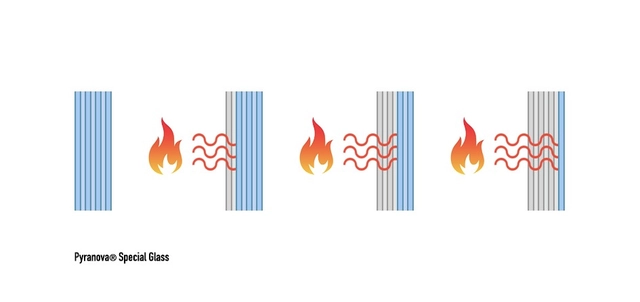
Insufficiently regulated in much of the world, the fire resistance of glass is an important issue that is often poorly resolved, endangering people's lives. What characteristics must a glass have to resist a fire? What options are there to choose from? We talked with the experts of Cristales Dialum to investigate these essential questions.
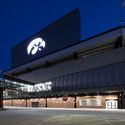
In an effort to avoid disruptions to the coming football season (and by extension, any frustration among the passionate University of Iowa Hawkeyes’ fans), the challenge facing Iowa City architecture firm Neumann Monson was to rapidly deliver and install Kinnick Stadium’s new custom glass facade, all during the team’s off-season. Ranked top among Big 10 stadiums, Kinnick opened the 2019 football season with an expanded North End Zone after careful coordination by the design, manufacturing, and construction teams throughout the project.
The Union of architects of Russia invites you to participate in the 7th Russian competition with international participation «GLASS IN ARCHITECTURE»
The Union of architects of Russia invites you to participate in the 7th Russian competition with international participation «GLASS IN ARCHITECTURE», which will be held as a part of the 3d international Forum of architectural glass industry «Archlass 2020» from 19 to 21 May 2020 in the Technopark Skolkovo simultaneously with the 2nd international forum AlumForum 2020.
This is the only competition in Russia that demonstrates the capabilities of glass in realized projects and the prospects for its use in architecture and construction.
For last 6 years, the competition was attended by well-known architectural companies - BERNASKONI (www.bernaskoni.com), Reserve
Last April, Mayor Bill de Blasio of New York announced plans to introduce a bill that would ban the construction of new all-glass buildings. Part of a larger effort to reduce citywide greenhouse emissions by 30 percent, other initiatives included using clean energy to power city operations, mandatory organics recycling, and reducing single-use plastic and processed meat purchases. The announcement came on the heels of the city council passing the Climate Mobilization Act, a sweeping response to the Paris Climate Agreement that included required green roofs on new constructions and emissions reductions on existing buildings.
https://www.archdaily.com/931309/de-blasios-glass-skyscraper-ban-could-mass-timber-and-transparent-concrete-take-its-placeLilly Cao
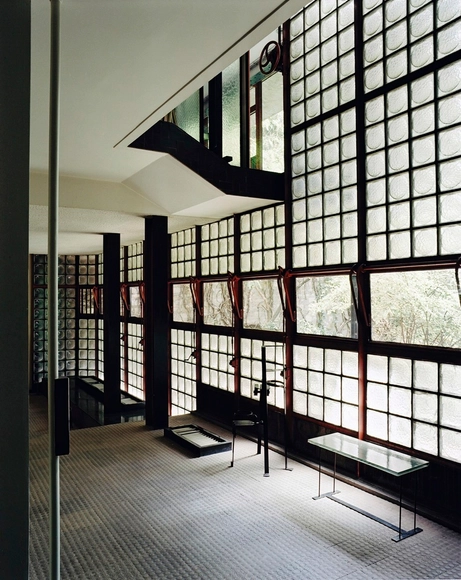
Completed in 1932, Maison de Verre—or “House of Glass”—has become a prime example of modern architecture, despite the fact that not many people have actually seen the hidden treasure, located on Paris’ Left Bank.
Although his work is currently viewed in high regard, Chareau had a tumultuous career, with large variances between his successes and his failures.
Drawing from a Cultured Magazine spotlight article on the designer, we have compiled a list of facts about Chareau’s life and career that showcase the rollercoaster of his success.
Continue reading for the 10 things you didn’t know about Pierre Chareau.
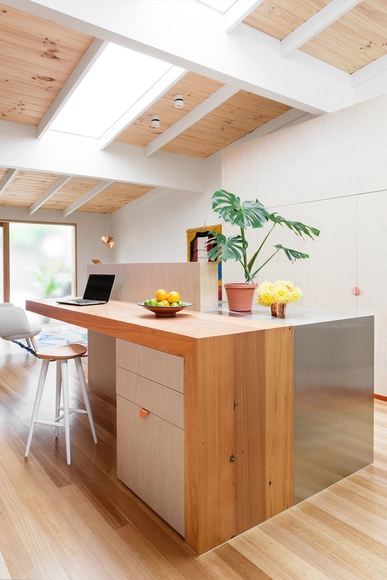
One of the most practical and functional spaces of any residential project is the kitchen. Its artificial surfaces – be it countertops, kitchen benches, or coverings – contain most of the space's equipment. Thus, it’s essential to build kitchens with the most resistant and hygienic materials. Aside from these requirements, it's also important to pay attention to aesthetics and profitability, while adapting the space to the dynamics of each family.
Today, improvements in glass processing technology have made it possible to render specific and effective solutions for a wide range of architectural projects. In fact, there are so many options available that it's almost necessary to research different products and their properties, and how this will impact, for example, the windows and doors that you are designing.
What variables should be considered – and prioritized – when choosing the glass used in a project? How can aesthetics coincide with function and efficiency? We sat down with the experts at Cristales Dialum to delve into the complex world of glass and to better understand the hows and whys of choosing the best type of glass for your projects and ensuring the best results for your clients.
Glass is so present in our lives that it’s very difficult to think about the amount of work, experimentation and technologies behind each panel or glass object. It’s also impossible to separate innovations from modern architectural projects –from architects such as Mies Van der Rohe and Le Corbusier– from the advances of the glass industry.
We’re following the history of glass, from Mesopotamian artifacts to technological glasses, and we invite you to travel with us.
Barkow Leibinger has unveiled details of their competition-winning proposal for the Waterfront Hotel and Boarding House in Molenkopf, Frankfurt am Main, Germany. Located at a prominent site on the city’s Molenspitze, the west-facing triangular point of land sits at the end of an industrial peninsula used for warehouses and container shipping at Frankfurt’s East Bay.
The Barkow Leibinger scheme manifests as a triangular pinwheel with offset corners defined by the depths of hotel rooms. The mass of the 60-meter-tall building is further broken down by a “folded accordion façade” to maximize the panoramic views of the European Central Bank, and Frankfurt skyline attainable from the site.
Pier 17 South Street Seaport. Image Courtesy of Bendheim
Nowadays, new technologies for the treatment of glass provide new ways to use this material in architecture. Applied indoors, specifically in retail stores, glass in its different textures, colors, finishes and levels of transparency can allow the unobstructed view of certain products, hide more private areas without blocking the passage of light, and attract the attention of customers as focal points, among many other uses.
Review below a selection of applications in commercial projects.