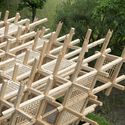
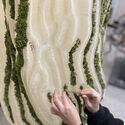
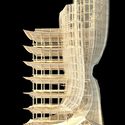
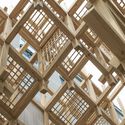
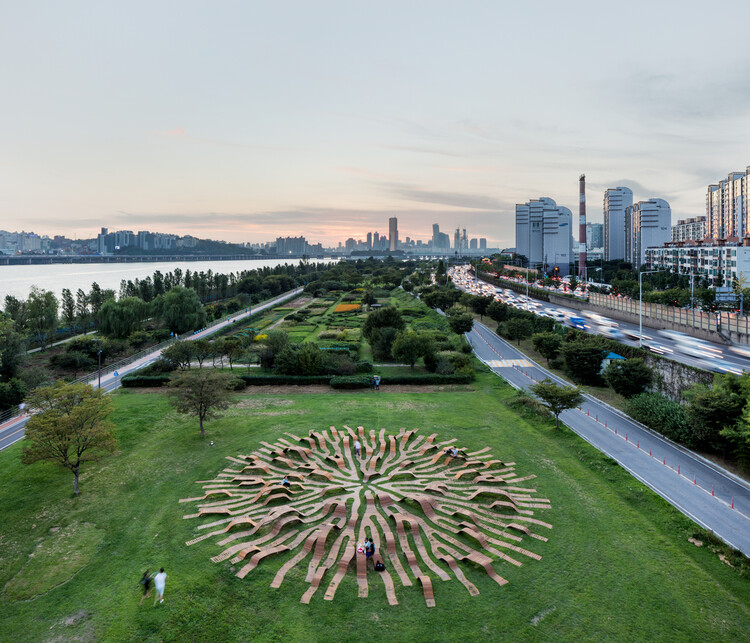
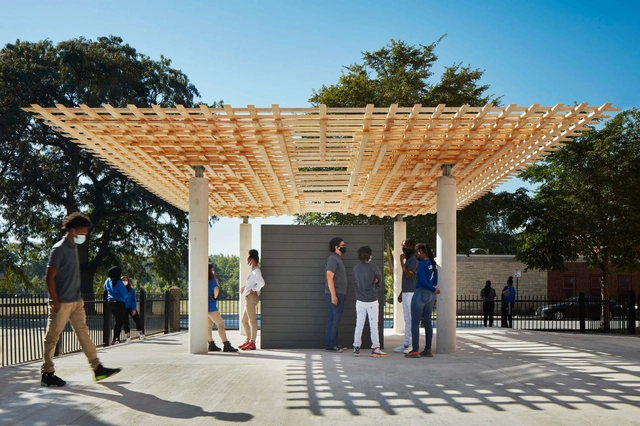
Tsz Yan Ng is a Michigan-based firm principal, professor, researcher, and artist whose interdisciplinary and collaborative work seeks to challenge and improve upon modern fabrication and manufacturing practices. “We haven’t changed the way we build in so long,” Ng said. “We need to think of it more productively—not just economically—but as a collection of different voices. Architecture is a global ecosystem of people, where the sum is greater than the parts.”
Videos
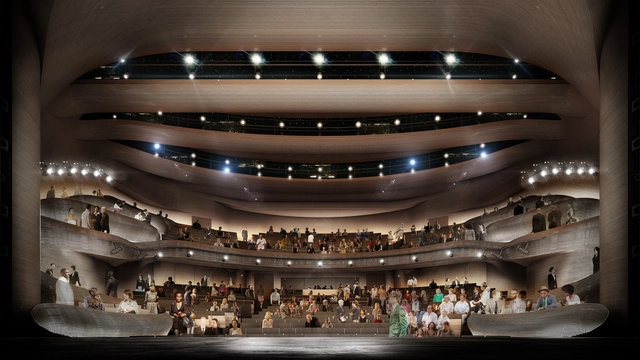
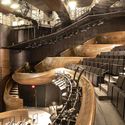
Alliance Theatre. Image Courtesy of Trahan Architects
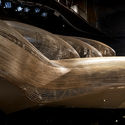
New Orleans-based Trahan Architects have wrapped the interior of Atlanta’s Alliance Theatre in steam-bent oak. Working with FARO and fabricators CW Keller, the team was inspired by the style of furniture and design artist Matthias Pliessnig. Led by founder Victor F. “Trey” Trahan and partner Leigh Breslau, the renovation has created a signature piece of cultural architecture for Atlanta.
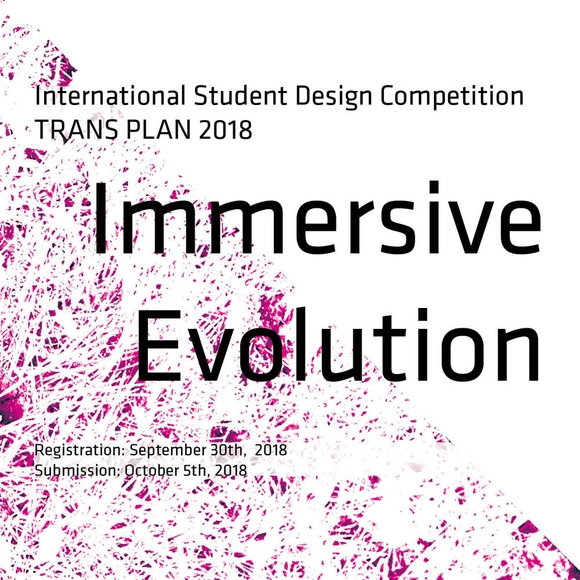
TRANS PLAN is an international student design competition organized by A2G (Architecture Gallery at the Faculty of Architecture University of Manitoba). The competition is open to all students registered in a spatial design (architecture, interior, landscape, urban, and so on) and or an exhibition design programs.
The challenge of TRANS PLAN 2018 is to design an immersive installation that evolves throughout the duration of the exhibition. The winning entry, selected by the jury, will be installed at A2G for public viewing for 50+/- days in the fall of 2018.
[Design Brief]
Can space evolve through its contextual and environmental
Complex designs often require bulky structural systems to support imaginative forms. But 3D printing technology has begun to provide unlimited architectural potential without compromising design or structural durability. Researchers at ETH Zurich, under the leadership of Benjamin Dillenburger, have now developed an innovative 3D sand printing technique that allows for quick molding and material reuse.
They have used this technique to create a formwork to fabricate an 80 square meter lightweight concrete slab at the DFAB House, the first and largest construction of its kind. The “Smart Slab,” which carries a two-story timber unit above it, merges the structural durability and strength of concrete with the design liberation of 3D printing.
ARCHITECT magazine is now accepting entries for its 12th Annual R+D Awards! We would be grateful if you could share the competition details below with your network. The winners will published in ARCHITECT’s July 2018 issue and on our website. As with previous years, full-time students and faculty are eligible for a reduced registration fee!
Cardiff City Council has just approved the third and latest phase of Cardiff University's £300 million Innovation Campus. Hawkins\Brown and HOK each designed one building for the project, which will bring together researchers, students, investors, and businesses to work on technological innovations and new enterprises that aim to drive economic growth. The project is the latest development in Cardiff University's vision of embedding innovation within the university's fabric and generating a self-sustaining cycle of economic growth for the community as a whole.
Simply put, metamaterials are materials that behave according to their structure, rather than their base material composition. By manipulating their internal microstructures, metamaterials can exhibit properties that would not otherwise be found in a naturally occurring material.
To date, the term has mostly been used to refer to materials which can manipulate electromagnetic waves with an unnatural refractive index. But recently, a different way of looking at metamaterials has been studied by a team at the Hasso Plattner Institute (HPI), who suggest that “so far, metamaterials were understood as materials – we want to think of them as machines.” A series of objects created by HPI that perform mechanical functions through their metamaterial configuration demonstrate this concept of “metamaterial mechanisms.”
A team of engineers at Autodesk have been pushing the limitations of conventional 3D printing -- not by redesigning the machines themselves, but by creating a network to harness their collective power. Autodesk's "Project Escher" is a new printing system that utilizes the power of several 3D printers at once to fabricate complex parts in unison, reports FastCoDesign. The new system can increase production speed by up to 90%.
The Facade Tectonics Institute announces its 2016 Annual Conference and inaugural World Congress. The summit will include speaking and poster presentations, panel discussions, exhibitors and workshops addressing themes related to Design Processes, Historical Evolution, Facade Futures, and much more.
Parallelism in Architecture, Environment And Computing Techniques, (PACT)
The theme of Parallelism in Architecture, Environment and Computing Techniques (PACT) 2016 explores the relations between computational design in architecture, organizational and global, ever-changing and pervasive contexts. PACT 2016 aims to gather practitioners and researchers interested in investigating and improving the state of practice of computational design software in the architectural discourse, where practicing design computing experts can explain the challenges they face in their day-to-day practices, and collectively induce an impact on the future of the field.
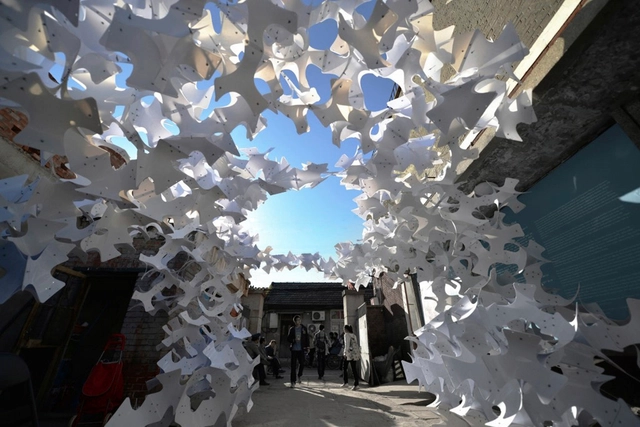
"As Autumn Leaves" (AAL) is a spatial installation designed and built by students of the Laboratory for Computational Design (LCD) for Beijing's 2013 Design Week. Located in a historic hutong district in Beijing, AAL highlights the existing entrance to Dashilar Factory where emerging creatives exhibit their design. The concept is based on ephermerality of nature. As temperatures change, autumn turns to winter, and trees shed their leaves, AAL recalls the passage of time through changing seasons.
https://www.archdaily.com/451572/lcd-exhibits-as-autumn-leaves-at-beijing-s-2013-design-weekJose Luis Gabriel Cruz
While most of us are grappling with the idea of 3D printing, Skylar Tibbits - computational architect and lecturer at MIT - is spearheading projects towards a fourth dimension. Transformation, Tibbit claims, is an uncharted capability that enables objects - straight off the printing bed - to assemble themselves, changing from one form to another. "Think: robots with no wires or motors." Tibbits exhibits how a single strand - embedded with predetermined properties - can fold from a line to a three dimensional structure. "I invite you to join us in reinventing how things come together."
https://www.archdaily.com/437587/3d-printing-moves-into-the-fourth-dimensionJose Luis Gabriel Cruz
SCI-Arc‘s introduction of the Robot House (spring 2011) – a multifunctional robotics lab that enables the exploration of advanced fabrication techniques, manipulation of high tech materials, and numerous methods for simulation – has brought about a new and intriguing component to the school. Designed by faculty members Peter Testa and Devyn Weiser, its primary goal is the advancement of next generation platforms for the experimentation and future speculation of architecture.