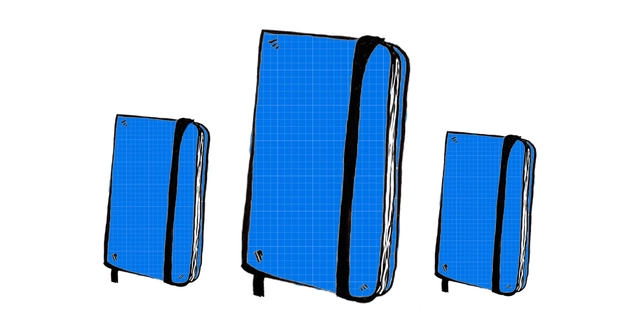
The sketchbook: it is probably the first thing you buy in architecture school, and, the thing you hold on to most dearly. It is one of the most important tools to help document, problem-solve, and archive your journey as an architect. The sketchbook is the physical extension of one’s architectural mind, and the way one organizes it says a lot about the holder. What does your sketchbook say about you? Read on to find out:
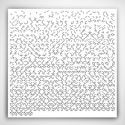
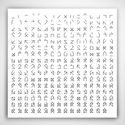
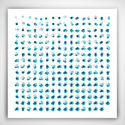
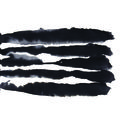
DailyDose—one of ArchDaily'sfive favorite daily newsletters of 2017—have published a collection of drawings submitted as part of an open competition to sketch a composition of just five lines. To celebrate the milestone of their 1000th newsletter which has, over the course of the last five years, delivered 34,297 collected images to inboxes around the globe, one work (by Roberto de Oliveira Castro) will be made available as a limited edition framed artwork by Desplans.
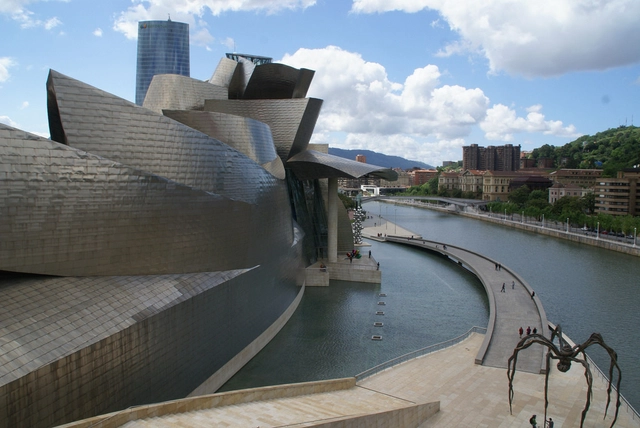
On October 15th four languages, three countries, and three astounding architectural projects will be brought together through a series of events and workshops to celebrate the 20th anniversary of the Guggenheim Museum Bilbao. The Solomon R. Guggenheim Foundation seeks to commemorate the event with a full day program of activities entitled Drawing the Guggenheim. Visitors can explore and sketch the museums during a variety of public drawing exercises, architectural tours, films and family events at each of the Guggenheim locations.
This short article, written by the author and critic Jonathan Glancey, coincides with the launch of the inaugural Architecture Drawing Prize – a competition curated by the World Architecture Festival, the Sir John Soane's Museum, and Make. The deadline for the award has been extended to September 25, 2017, and successful entries will be exhibited in both London and Berlin.
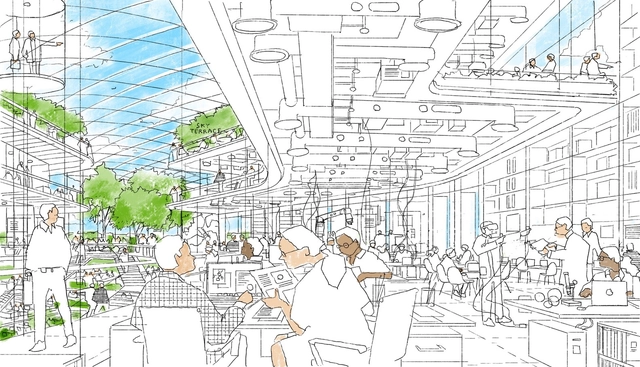
For architects, says Narinder Sagoo, Head of Design Communications at Foster + Partners, drawings are about story telling. They are also a highly effective way of raising questions about design projects. Although the history of architecture—certainly since the Italian Renaissance—has been mapped by compelling drawings asserting the primacy, and reflecting the glory, of fully resolved buildings, there is another strain of visualisation that has allowed architects to think through projects free of preconceptions.
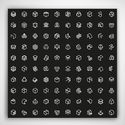
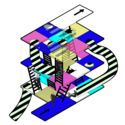
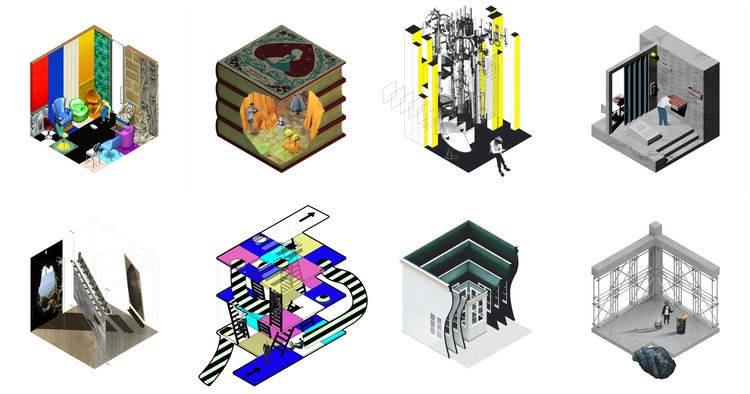
Former architect Yannick Martin, who has previously confined architecture's most famous houses to a cube, is a graphic designer who explores line and geometric shapes to examine the language of the diagram. By fragmenting simple shapes, Martin seeks to offer new ways of looking at an icon so commonplace and ubiquitously used that, for most, the sheer potential and variety of its application can be overlooked.
This short essay, written by the author and critic Jonathan Glancey, coincides with the launch of the inaugural Architecture Drawing Prize – a competition curated by the World Architecture Festival, the Sir John Soane's Museum, and Make. The deadline for the award is the 18th September 2017 and successful entries will be exhibited in both London and Berlin.
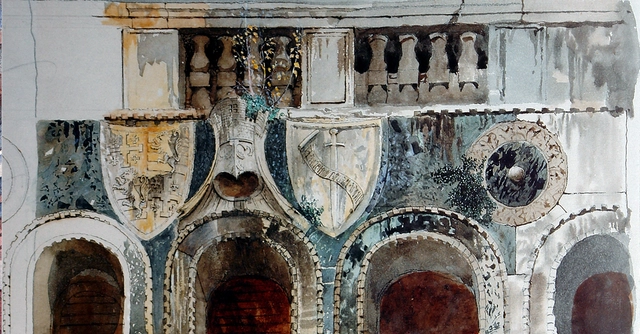
For John Ruskin, Venetian Gothic design in the guise of polychromatic gasworks in Brentford, ornate factory chimneys in Croydon, glistering gin palaces in Bloomsbury and even the well-meaning Reform Club in Manchester was nothing short of anathema. Even at their risible best, these flamboyant Victorian buildings were idle travesties of the influential 19th Century critic’s beloved Ca’ d’Oro and Palazzo Ducale adorning the Grand Canal.
London-based artist, illustrator, and animator Patrick Vale, known for his panoramic drawings of cities, completed another complex mural at design company IDEO’s studio in San Francisco, California. Vale’s time-lapse videos such as “Empire State of Pen” and his drawing of Manhattan, show the process of creating his detailed illustrations that take from several hours to months to complete. Vale spent 13 days at the downtown San Francisco office to complete the drawing.
From the first moment you enter architectural education, tutors tell you repeatedly and often passionately that the learning never stops; this is how it is going to be from now on. Student platforms are an example of our efforts to share our discoveries, many emerging out of the tension between academia and independent learning. From the post-digital advocate KoozA/rch to university publications like The Bartlett's Lobby, AA files, or Yale School of Architecture’s Perspecta, research and media platforms represent the creative consciousness of our generation today. Volume64 is a recent newcomer born out of this tension, and behind it is a team myself and my colleagues have founded and run. Through ArchDaily, we’re sharing a little bit of our story so far.
Through his sketches, Renzo Piano communicates the true intentions of his projects, pointing to the specific concepts that will become the protagonists of his works, including concern for the human scale and comfort, solar studies, and dialogue with the immediate environment. We compile here ten projects by the architect accompanied by their sketches, through which it is possible to see how the 1998 Pritzker Prize winner takes his designs from paper to reality.
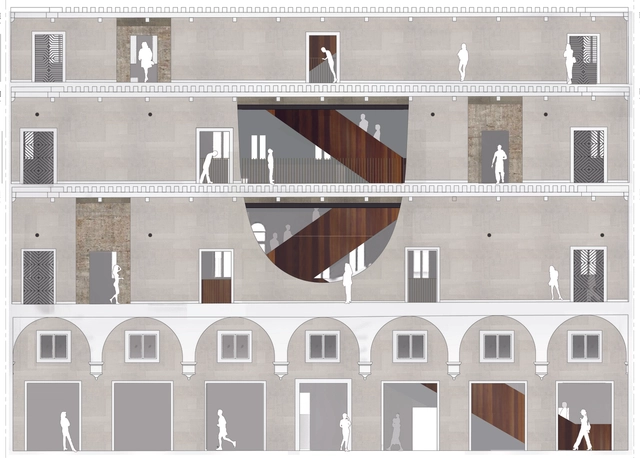
In the thousands of posts we publish yearly, we have the privilege of seeing a large number of impressive architecture drawings. They are submitted by established practices, architecture students, artists and, occasionally, our readers. From precise, old-school hand drawings to architectural representation that pushes the boundary of collage, photography and digital sketching, drawings hold a particular intrigue in the hearts of architecture lovers.
Since inspiration is at the heart of ArchDaily's mission, we'd like to invite all members to submit their best drawing for inclusion in our 2017 "Best Drawings" post.
https://www.archdaily.com/876044/call-for-submissions-best-architecture-drawings-2017AD Editorial Team
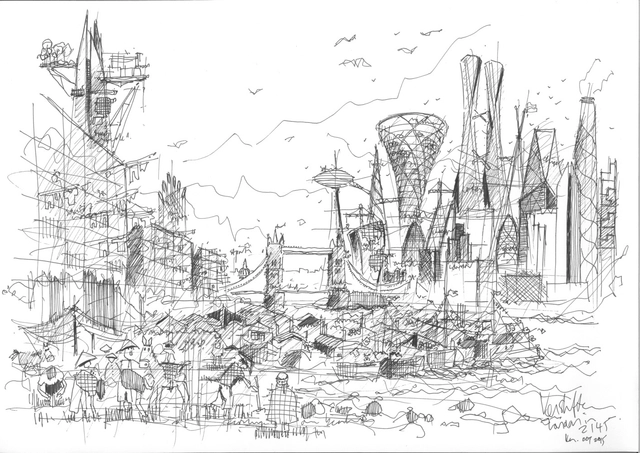
"London in 2145" by Ken Shuttleworth, pen drawing by hand (2015)
Update: the deadline for this competition has been extended to September, 25, 2017 at 23:30 BST.
Make, the Sir John Soane’s Museum and the World Architecture Festival (WAF) have come together to create a prize for architectural drawing. The Prize recognises the continuing importance of hand drawing but also embraces creative use of digitally produced renderings.
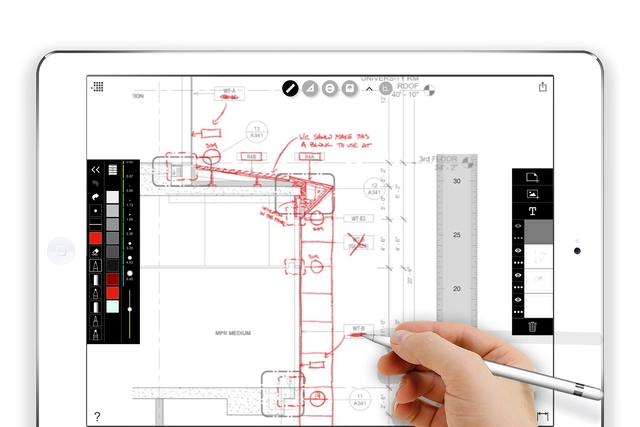
A view of Sean Gallagher's work as seen in Morpholio's Trace App. Image Courtesy of Morpholio
If you visit an architecture office today, you may sense a slight change. The days of bulky desktops, ergonomic mouse pads and tower-high stacks of drawing sets are slowly giving way to digital pencils, tablets, and tons of architects’ hand-drawings—both physical and digital. Architects across the globe are clearing their desks, literally, and utilizing emerging touchscreen tools and software for designing, sharing and collaborating. It seems possible that, for the first time in years, the architecture profession could revisit Bernard Tschumi’s “paperless” studio which formed a key part of his tenure as dean of Columbia University’s GSAPP in the mid-1990s. However, this time, “paperless” starts with a pencil, instead of a click.
The ever-growing realm of “post-digital” drawing is currently at the forefront of a healthy dosage of discourse, appreciation and even criticism, as professionals and students alike continue to push the envelope of accepted architectural representation and exchange a waning hyperrealism for the quirks and character of alternative visual narratives. Central to this new wave of illustration is the inclusion and appropriation of specific icons and characters from famous pieces of modern art, selected in particular from the works of David Hockney, Edward Hopper and Henri Rousseau, whose work undoubtedly remains at the forefront of their individual crafts and styles.
https://www.archdaily.com/874948/painting-the-post-digital-the-meaning-behind-the-motifsOsman Bari
The representation of architecture is important in the absence of tangible space. Throughout a lifetime, even the most devoted, well-travelled design enthusiast will experience only a small percentage of architectural works with their own eyes. Consider that we exist in only one era of architectural history, and the percentage reduces even further. Many architectural works go unbuilt, and the buildings we experience in person amount to a grain of sand in a vast desert.
Then we consider the architecture of the future. For buildings not yet built, representation is not a luxury, but a necessity to test, communicate and sell an idea. Fortunately, today’s designers have unprecedented means to depict ideas, with an explosion in technology giving us computer-aided drafting, photo-realistic rendering, and virtual reality. Despite these vast strides, however, the tools of representation are a blend of old and new – from techniques which have existed for centuries, to the technology of our century alone. Below, we give five answers to the question of how architecture should be depicted before it is built.
You may know about Lynda.com, the online education platform that hosts thousands of video courses for learning how to use software. But did you know that Lynda also has some great drawing, animation, and design courses? The best part (if you're a current student or local library card owner)? Lynda can be accessed for free from many universities, colleges, and libraries! If your backpack-toting, library-visiting days are behind you, the platform offers a free 10-day trial.
If you're looking to perfect your ability to capture or project building interiors and exteriors, Amy Wynne's hour-long course "Drawing 2-Point Perspective" is a solid option.
Drawing on a touchscreen or trackpad can be a huge pain – but when you’re on the go, sometimes that may be your only option to quickly convey an image. To the rescue, Google has unveiled its latest AI experiment, AutoDraw, which uses machine learning to pair your wobbly doodle with a corresponding artist-drawn image – like autocorrect for sketching.
https://www.archdaily.com/869005/googles-new-autodraw-feature-will-complete-your-drawings-for-youAD Editorial Team
The following excerpt was originally published in Natascha Meuser's Construction and Design Manual: Architecture Drawings (DOM Publishers). With our industry's technological advances, "the designing architect is not simultaneously the drawing architect." Meuser's manual aims to help architects develop and hone their technical drawing skills as the "practical basis and form of communication for architects, artists, and engineers." Read on for ten freehand drawing exercises that tackle issues ranging from proportion and order to perspective and space.
What is beauty? A few years ago, a group of international researchers sought to unravel the mysteries of human beauty. They used state-of-the-art, totally impartial computer technology and a huge dataset to establish once and for all why particular faces are perceived as beautiful, and whether beauty exists independently of ethnic, social and cultural background; in other words, whether it can be calculated mathematically. The scientists input countless photos of faces from all over the world, each described by survey respondents as particularly beautiful, into a powerful computer. The resulting information, they believed, could be used to generate a face that would be recognized by any human being as possessing absolute beauty. But what the computer eventually spat out was a picture of an ordinary face, neither beautiful nor ugly, devoid of both life and character. It left most viewers cold. The accumulated data had created not superhuman beauty, but a statistically correct average.







.gif)