Nike recently acquired RTFKT, a design studio that was founded in Jan 2020, and is known for its virtual “metaverse-ready sneakers and collectibles”. Metaverse land purchases are making headlines with multi-million dollar price tags. We’ve also seen mainstream adoption for NFT art this year and the sales are expected to surge to $17.7 billion by the end of 2021.
Beneath the hype and frenzy, we can spot a fundamental shift that unlocks a new creator economy. It provides the creators with direct access to the market, builds ongoing relationships with fans, and unites strangers in self-governed communities. In this article, we will discuss why every 3D designer/architect should embrace the Web 3.0 movement to adopt a new business logic and benefit from the creator economy in the metaverse?
Courtesy of Balenciaga Launches a Video Game for Its Fall 2021 Collection
You might have heard that Mark Zuckerberg wants Facebook to become a Metaverse Company, and earlier this year, Epic Games, the company that develops the Unreal Engine announced that it completed a 1 billion round of funding to support the long-term vision for the metaverse. Metaverse is definitely the hottest buzzword in the tech scene. In this article, we will briefly discuss what is Metaverse, who will build it, and most importantly why it matters for architects, and how can designers play a significant role in this upcoming digital economy?
Collage by Matthew Maganga. Image Courtesy of Forbes Massie-Heatherwick Studio
Fifty-one years ago, in 1970, a Japanese roboticist named Masahiro Mori came up with the concept of the “Uncanny Valley”. Around the same time, architectural renderings done using analog methods were still in vogue – collages and photomontages used to get ideas across to clients. A decade later, personal computers came along, and that saw the emergence of CAD and the wider adoption of digital rendering. Today’s architectural renderings are almost imperceptible from reality, with the increase in sophistication of rendering sofware. We struggle to tell the difference between what is a rendering and what is not – or rather we are able to tell a slight difference and it leaves us slightly uncomfortable, which brings us to Mori’s uncanny valley.
Believing firmly that "architecture is [...] too important to leave solely to architects", Ole Bouman embarked on diverse activities throughout his three decades of work, reflecting on “architecture, not so much as the art or technique of making buildings, but architecture as the intelligent way to organize our lives on earth, and infuse it with purpose”.
After having shared Bouman's essay Finding Measure, ArchDaily had the chance to discuss with DesignSociety’s founding director his thoughts on the role of architecture, the current challenges of the world, the digital revolution, and many other thought-provoking topics.
If someone tried to sell you a virtual building, would you buy it? That’s right- a virtual building. Not something that will ever be built in the physical world, or something you can occupy, but an image you can look at, or a video you could watch. This is exactly what’s being proposed as architecture enters the realm of NFTs (non-fungible tokens) that have taken the world by storm. And in the design profession, which continuously seeks to redefine what it means to be an architect, NFTs have big implications for the future of digitization and commoditization of the unbuilt environment.
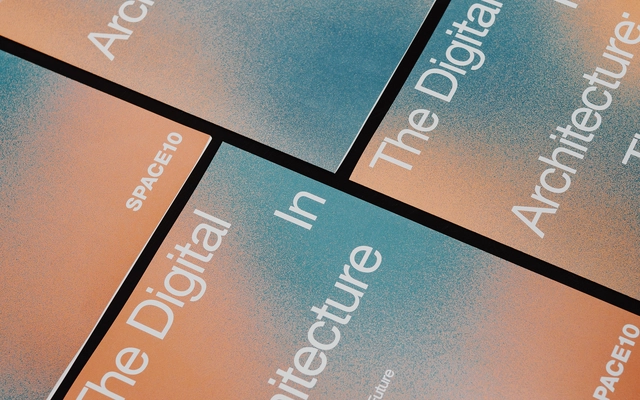
New digital advancements and technologies are redefining how we design. Looking at how these tools are becoming more ubiquitous and pervasive, IKEA's research and design lab SPACE10 published The Digital in Architecture report to explore the impact of digital technology and its larger movements. Authored by architecture theorist Mollie Claypool, the report illustrates these changes through data research, concepts, and visualisation by Pentagram.
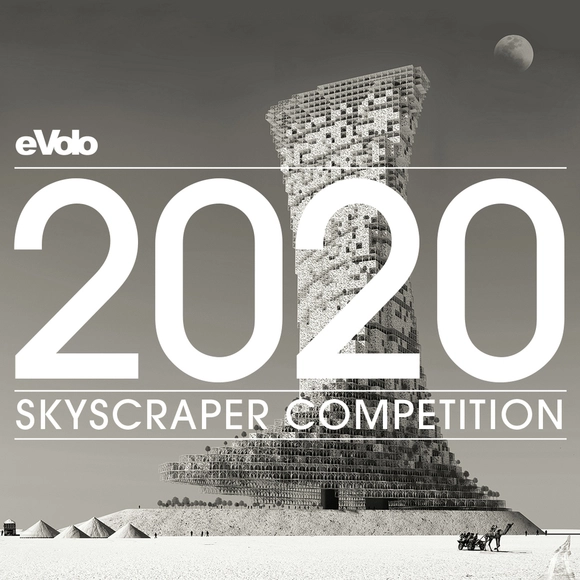
eVolo Magazine is pleased to invite architects, students, engineers, designers, and artists from around the globe to take part in the 2020 Skyscraper Competition. Established in 2006, the annual Skyscraper Competition is one of the world’s most prestigious awards for high-rise architecture. It recognizes outstanding ideas that redefine skyscraper design through the implementation of novel technologies, materials, programs, aesthetics, and spatial organizations; along with studies on globalization, flexibility, adaptability, and the digital revolution. It is a forum that examines the relationship between the skyscraper and the natural world, the skyscraper and the community, and the skyscraper and the city.
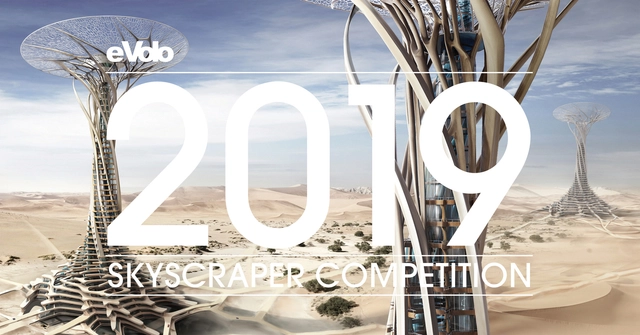
eVolo Magazine is pleased to invite architects, students, engineers, designers, and artists from around the globe to take part in the 2019 Skyscraper Competition. Established in 2006, the annual Skyscraper Competition is one of the world’s most prestigious awards for high-rise architecture. It recognizes outstanding ideas that redefine skyscraper design through the implementation of novel technologies, materials, programs, aesthetics, and spatial organizations along with studies on globalization, flexibility, adaptability, and the digital revolution. It is a forum that examines the relationship between the skyscraper and the natural world, the skyscraper and the community, and the skyscraper and the city.
Digital technology has broken into the timber construction scene at ETH Zurich, where a research team is using programmed robots to construct load-bearing timber modules. These modules are being used to stabilize the top two levels of their DFAB HOUSE project, a three-story residential unit located in Dübendorf, which aims to bring a variety of digital construction methods together under one roof.
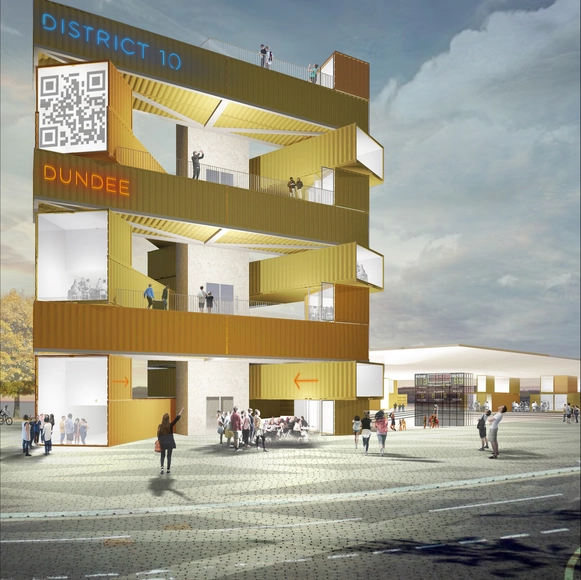
Flexible studios to aid Dundee's thriving digital creative sector. Image Courtesy of Studioshaw
London-based firm Studioshaw has won a competition to design a hub facility for children and young people in Dundee, Scotland. The Interactive Hub will be located on the site of a former railway depot at the Seabraes Yards Digital Media Park. The competition, hosted by the Dundee Institute of Architects (DIA) and Scottish Enterprise, was one of 400 events taking place across Scotland as part of the RIAS 2016 Festival of Architecture.
eVolo Magazine is pleased to invite architects, students, engineers, designers, and artists from around the globe to take part in the 2017 Skyscraper Competition. Established in 2006, the annual Skyscraper Competition is one of the world’s most prestigious awards for high-rise architecture. It recognizes outstanding ideas that redefine skyscraper design through the implementation of novel technologies, materials, programs, aesthetics, and spatial organizations along with studies on globalization, flexibility, adaptability, and the digital revolution. It is a forum that examines the relationship between the skyscraper and the natural world, the skyscraper and the community, and the skyscraper and the city.
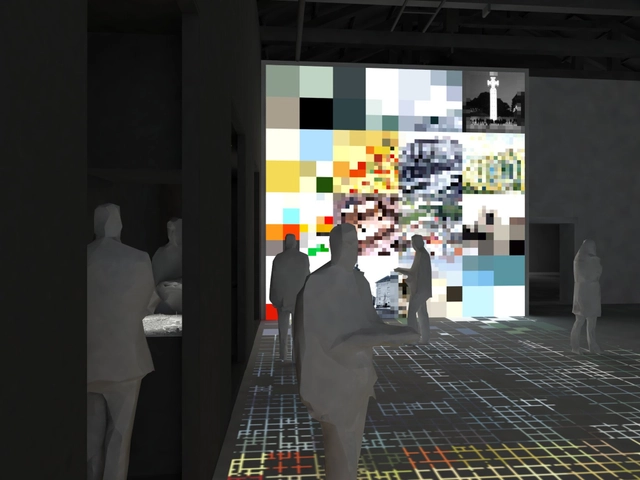
The rise of the internet has radically changed how we inhabit space. Thus, for the 2014 Venice Architecture Biennale, Estonia’s pavilion will focus on how this change is applied to the practice of architecture. Titled Interspace, the exhibition will be a single room that digitally showcases the physical act of placemaking.
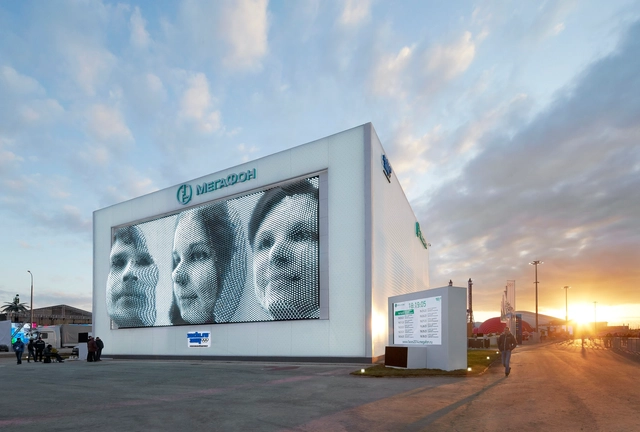
The Olympics are in full swing and, although the "Coastal Cluster" of stadiums has attracted a considerable amount of attention, there is one installation demanding interaction from every spectator. Built at the entrance of Sochi's Olympic Park isAsif Khan Studio's "MegaFaces," a pavilion that "contorts itself to recreate 3D images of the faces of visitors relayed via digital face scans made in photo booths installed within the building."
Comprised of 11,000 actuators sitting underneath the cube's stretchy fabric membrane, the installation allows for three, eight meter tall faces to emerge from the wall at a time (the faces that emerge from the side of the pavilion are enlarged by 3500%). According to the designers, this feature of the building "has been likened to a giant pin screen and a digital, architectural Mount Rushmore."
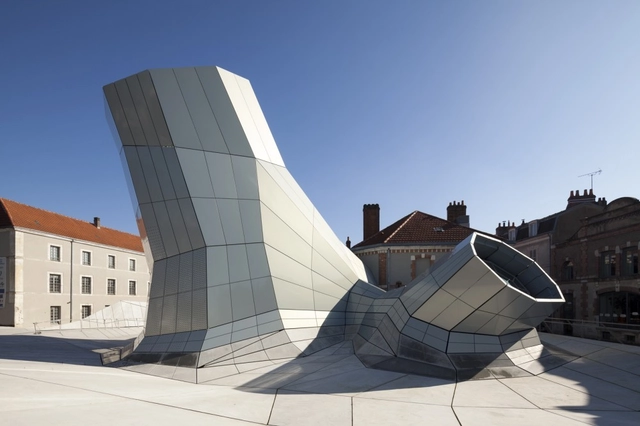
This past September marked the commencement of ArchiLab 2013 at the newly completed FRAC Centre in Orleans, France. Forty architects, designers and artists gathered for the annual architectural exposition and conference’s ninth edition to discuss the deepening overlap between digital architecture and the sciences, particularly molecular biology. Under the theme “Naturalizing Architecture,” two international symposiums took place which provided the opportuntiy for architects and scientists to present, and debate, the latest research revolving this subject and its ever-evolving role within the living world.
To encourage the continuation of discourse, we have complied a video list of all the discussions from the symposium for your viewing pleasure. Enjoy them, after the break, and feel free to share your thoughts in the comment section below.


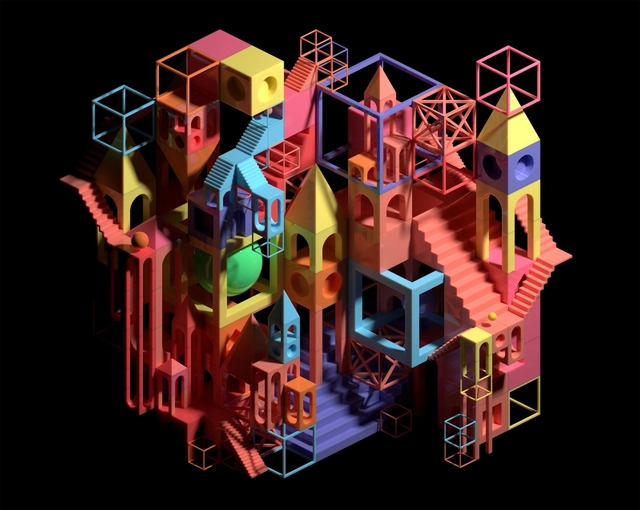


.jpg?1632299699&format=webp&width=640&height=580)
.jpg?1632299688 "Courtesy of Mars House")
.jpg?1632299564 "Courtesy of Refik Anadol installation")
.jpg?1632299617 "Courtesy of User interface of City Engine")
.jpg?1632299643 "Courtesy of Townscraper, developed by Oskar Stålberg")
.jpg?1632299699)
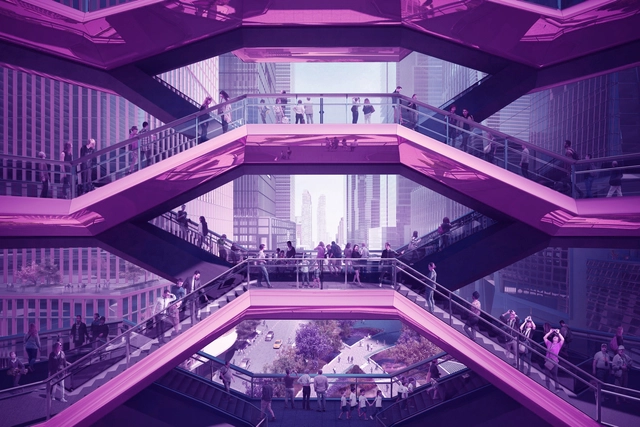


.jpg?1618071837 "Courtesy of BIG")
.jpg?1618071843 "Courtesy of Alexis Christodoulou")