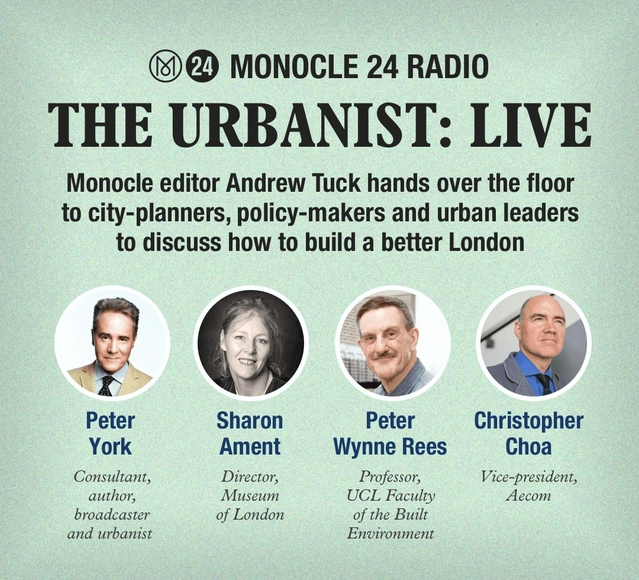
Join us for this special live episode of The Urbanist at our Marylebone HQ, where Monocle editor Andrew Tuck hands over the floor to city-planners, policy-makers and urban leaders to discuss how to build a better London. How would you fix the capital? We’ll look at transport, culture, housing, business, the night-time economy and much more. Be part of the debate following the election of the city’s new mayor.
Can architects have a truly active role in pressing social problems? Malkit Shoshan, the curator of the Dutch Pavilion at the 2016 Venice Biennale, thinks so. Her career is evidence of this: advocating for the incorporation of a fourth 'D' in the criteria of the UN (Defence, Diplomacy and Development) in its peacekeeping missions around the world, Shoshan has sat at the same table as military engineers and policy makers to analyze the urban impact peacekeepers have left around the world.
For the Dutch Pavilion, Shoshan has focused on the case of the joint mission of the Netherlands and the UN in Gao (Mali). In 2012, Gao was declared capital of the Independent State of Azawad, a nation not recognized by the international authorities, following Mali's Tuareg rebellion. "Although [these peacekeeping missions] occupy large plots of land in hundreds of different cities around the world, it is rarely discussed or addressed by our profession," says Soshan in the following interview.
We spoke with the curator of the Dutch pavilion after her recent visit to Mali to discuss the principles of the Netherlands in the next Venice Biennale; the impact of military drones in public spaces and why, according Shoshan, there is a close relationship between architecture, public policy and ideology. "[With design,] we can make resources available to communities that are exhausted by militarized conflicts, long periods of drought, famine and disease," she says.
The city has been explored as a theme in movies since the early days of cinema, appearing as both a setting and a protagonist in films by renowned directors like Fritz Lang, Jean-Luc Godard, François Truffaut, Roberto Rossellini and Quentin Tarantino. In one of the first films ever made, Arrival of a Train at La Ciotat (1925), the Lumière brothers already show the modern urban environment as an important element and part of the contextualization.
Yet the cinema and the city have an extensive relationship, each influencing one another. The influence of architecture (especially modern) in the settings and cities of films can be seen in movies like Jacques Tati’s My Uncle (1958) and Ridley Scott’s Blade Runner (1982), while the influence of cinema in architecture and buildings can be seen in the work of architects like Rem Koolhaas, Jean Nouvel and Bernard Tschumi.
We have compiled a list of 10 films in which the city plays a much more important role than just the mere setting, acting as a true protagonist of the plot.
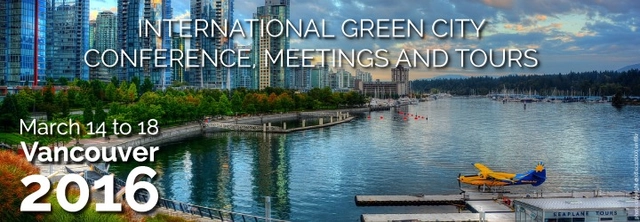
AIPH and Canadian Nursery Landscape Association (CNLA) invites all those with an interest in making our cities healthier and happier to join them in Vancouver, Canada on 16-18 March 2016 for the AIPH International Green City Conference, sponsored by TD Canada. The event will be held in conjunction with the AIPH Spring Meetings, the ELCA Board Meetings and the Landscape Canada Summit. The conference will give delegates a chance to see innovations in urban green infrastructure and planning on a global scale.
Australia to host landmark gathering of architects from Asia Pacific. As the Asia Pacific experiences unprecedented urban growth, architects will play a critical role in shaping the future of cities across the region. The diversity of its people and countries will be explored in the Asia Pacific Architecture Forum, taking place in Brisbane from 1 to 14 March 2016.
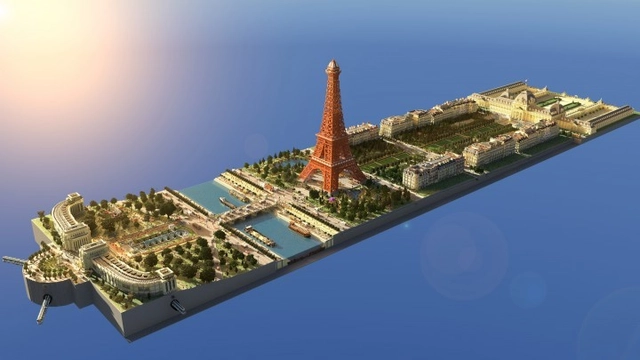
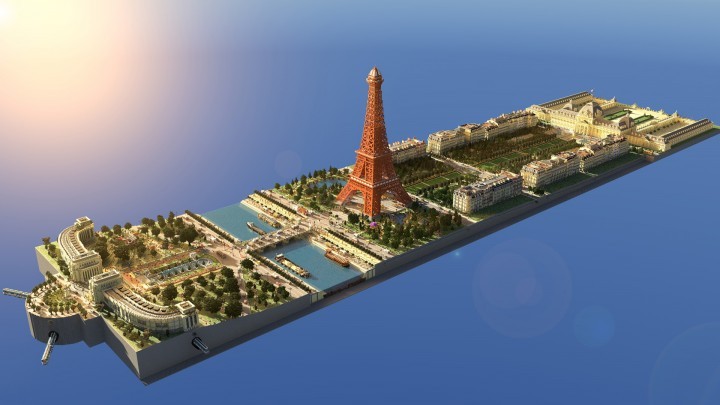
Model of the Eiffel Tower in Minecraft. Image via LanguageCraft
With more than 70 million copies sold worldwide, it would be unfair to refer to Minecraft as just a simple game of textured boxes in a pixelated 3D world. After acquiring the makers of the game (Mojang) in 2014, Microsoft announced on Tuesday, January 19 that it also acquired MinecraftEdu, the official educational version of Minecraft, which is used as a creative tool in more than 10,000 classrooms in 45 countries around the world.
The infinite possibilities that the game offers have led millions of people around the world to make and share their greatest creations: cities, buildings and even the reinterpretation of historical structures. Minecraft's impact was recognized in 2015 when the Centre Pompidou dedicated an exhibition to its creative potential for children and adolescents.
We've rounded up 15 of the best models created on the platform. And if you use Minecraft, you can download most of them (via an external link provided by the creator) to add to your own account.
Since time immemorial, and more recently, humans have wondered what the world looks like from above. This fascination has historically manifested in the plan drawing and aerial photography. In this vein, and using a motorized paraglider, National Geographic photographer George Steinmetz has captured a stunning bird’s-eye view of the ancient city of Ghadames, in Libya.
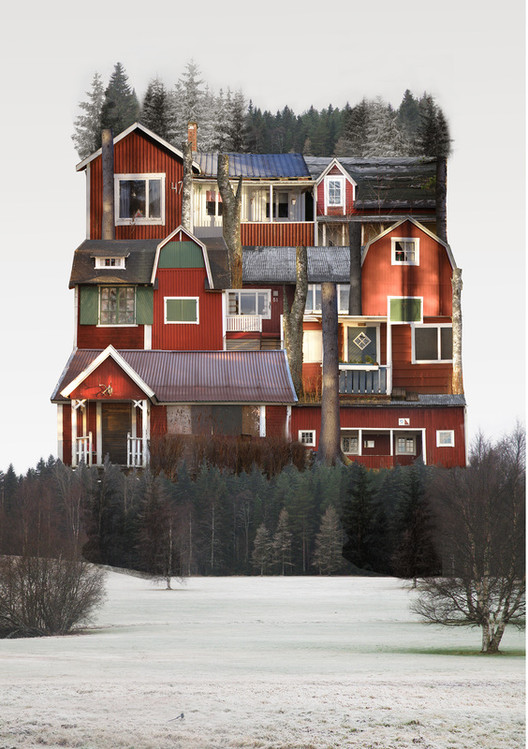
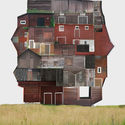
Sweden based visual artist, Anastasia Savinova, has created a series of collages that seek to capture the spirit of cities. Titled “Genius Loci,” her collages form a big house that is composed of many buildings characteristic of each city, visualizing the way of life, the atmosphere, and the feeling of each place. Photographs of architecture are the foundational components of her art work, representing the feeling as a whole.
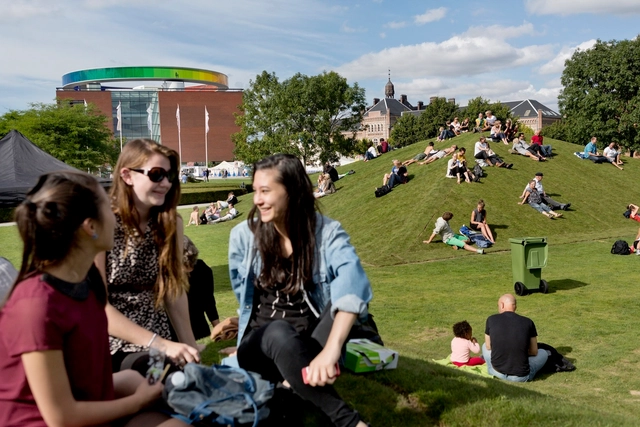
Since 2010, the Danish architects from Schønherrhave been developing a series of large-scale urban interventions for the Aarhus Festival, the largest cultural festival in Denmark. These temporary projects have transformed the streets and parks into extraordinary public spaces, changing the natural topography of the city to attract citizens and bring them together.
We present their last four projects: "The Forest" (2010), "The City Park" (2012), "The Plaza" (2014) and "Bishops Square" (to be completed this 2016).
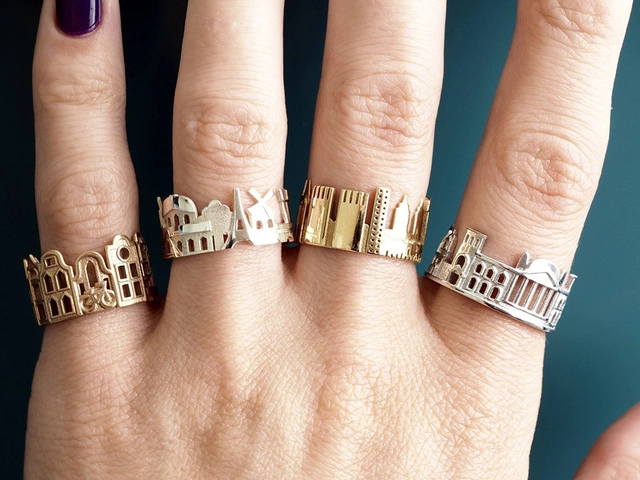
Have you ever fallen in love with a city, and wished you could carry the image of the skyline with you everywhere you go? Now you can turn that longing into a reality with these cityscape-inspired rings by North Carolina-based jewelry maker, Ola Shekhtman.
2015 Winning Entry by Jacques Gaffigan. Image Courtesy of The Knight Foundation
The John S. and James L. Knight Foundation has announced the names of the 158 finalists in the Knight Cities Challenge. The nation wide call was for innovative ideas to make the 26 communities where the Knight Foundation invests more social and vibrant places to live. More than 4,500 entries were submitted proposing a range of ideas from opening the world’s largest African American history museum in Detroit to a card game that encourages residents of Charlotte to visit new neighborhoods. The winners, who will split a prize of $5 million, will be announced in the spring of 2016.
When comparing 44 major cities, Arcadis' 2016 International Construction Costs Index has found New York to be the world's most expensive city to build in. London came in as a close second, reporting cost of building prices (on average) 20 percent higher than Paris. In contrast, Taipei was labeled as the "cheapest" city for construction. According to the study, "strong currencies and significant resource constraints" were a result in higher prices. Read on for the complete lists of most expensive, and least expensive, cities for construction.
We all know exercise and being in close proximity to nature boosts our happiness and overall heath. However, the impact of the "environmental aesthetics" of our cities has never been studied, until now.
A new study suggests that beautiful architecture is considered just as "scenic" and beneficial to our health and psyche as "greenery."
Landscape architect Cornelia Hahn Oberlander has won the 2015 Margolese National Design for Living Prize for her impact on Canadian cities. The School of Architecture and Landscape Architecture at the University of British Columbia, who awards the annual $50,000 prize, chose Oberlander for her "breathtaking, poetic, unforgettable, charged with meaning, and above all, Modernist" designs that have made "outstanding contributions to the development or improvement of living environments for Canadians of all economic classes."
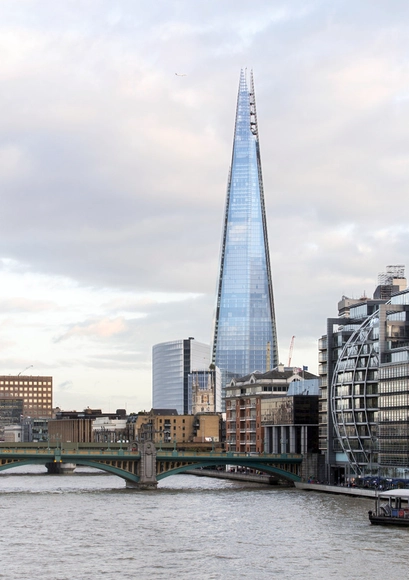
"Cities face a choice of building up or building out," says Renzo Piano, according to a recent article on the Daily Mail. Responding to backlash led by the Skyline Campaign, a campaign spearheaded by architect Barbara Weiss that "aims to stop the devastation of London by badly designed and poorly placed tall buildings," Piano is defending London's controversial skyscraper boom by saying it's giving the one thing the city needs most: "space on the ground."
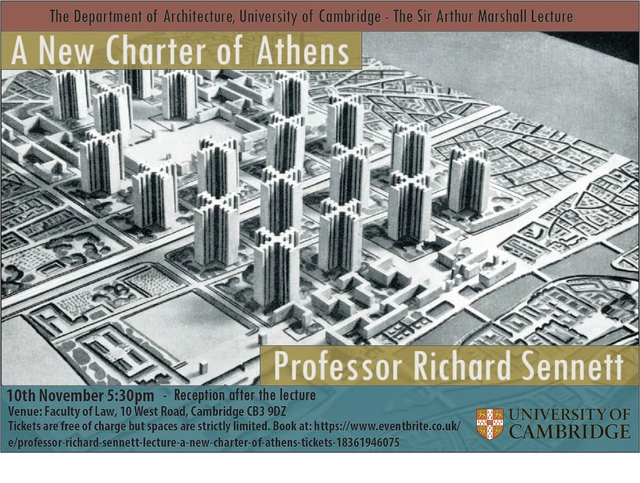
'Next year sees the opening of Habitat III, the environmental congress held every twenty years by the United Nations. For this event, a manifesto is being prepared about the design of cities. It aims to replace the guidance given by Le Corbusier and others nearly a century ago, in document they called "The Charter of Athens." The new Charter of Athens addresses issues emerging in the 21st Century about environmental crises, the uses of technology and big data, and the challenge of social inclusion. The lecture serves as an introduction to this modest proposal.'
The Urban Development Institute of Australia NSW office wants to create more affordable, connected and livable cities and it wants your help. The CityLife Project competition presents the opportunity for three organisations or research teams to partner with the UDIA NSW on research projects in exchange for cash and promotional opportunities worth up to $145,000 AUD each. As part of the CityLife Project competition, we want one research partner to work with us on liveable cities, encouraging better health and well-being.
.jpg?1460846971&format=webp&width=640&height=580)






.jpg?1451588728&format=webp&width=640&height=580)