Courtesy of ODA - Renderings are based upon preliminary iterations of the design and do not reflect the final approved design.
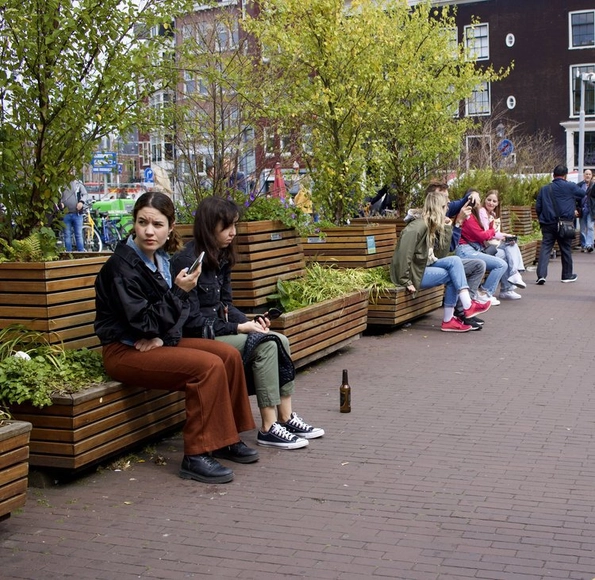
If street culture is the glue that holds together an urban environment, what happens when its denizens no longer need to go outside? This is one of the fundamental questions faced by architects today, decades after the New Urbanist movement first popularized, or rather brought back, the concept of mixed-use streetscapes—and more than sixty years since Jane Jacobs famously championed walkable streets as essential to building vibrant urban communities.
Long gone, of course, are the days when city streets were our only outlet or option for access to retail and other services. Now, the internet gives us all that and more: remote shopping, banking, education, and even healthcare. Meanwhile, social media has transformed the way we communicate with friends and neighbors. All of which is to say: we no longer need to go out for social interaction or to procure services, we choose to.
Cities evolve over countless years, each moment of change building up to larger societal and architectural shifts. Metropolises across the world are constantly subject to social, political, economic, or environmental forces that alter their fundamental identity - a character that is meant to be dynamic. As cities develop in size and impact, advancements in the understanding of cities and urbanism grow more complex.
Cities are formed from a sequence of narratives, characteristics, relations, and socio-spatial values that reflect the identity of the place. The livelihood of the city also depends on its people and a mutual relationship with them. Along with their communities and their circumstances, cities morph to reflect their residents' needs and values.
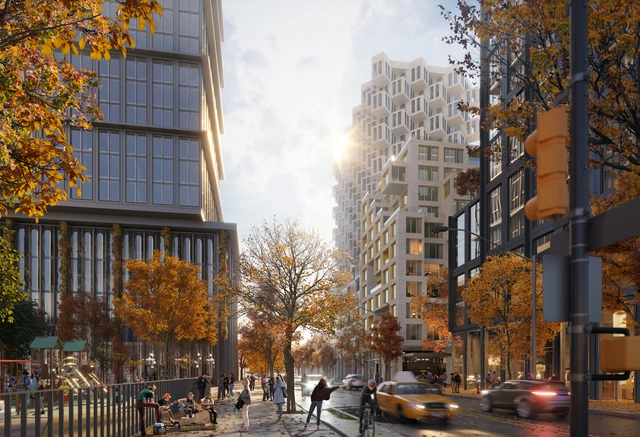
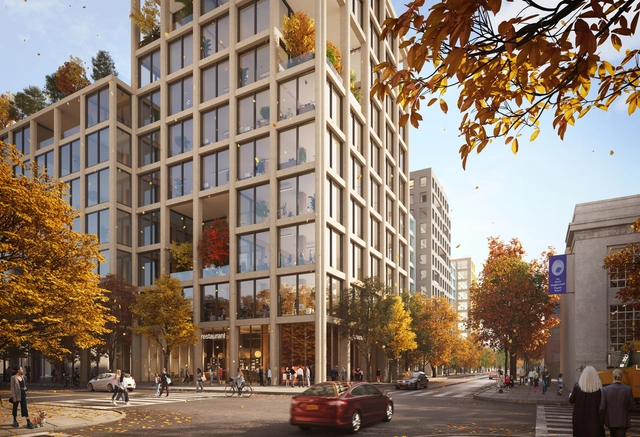
New York City Council has approved Innovation QNS, a neighborhood-focused initiative in Western Queens, designed by ODA. The five-block master plan generates two acres of open space, community health & wellness facilities, hundreds of affordable apartments, and thousands of jobs. The project was initiated in 2020 as part of New York's effort to recover from the impact of the COvid-19 pandemic, and it aimed to revitalize a largely dormant block area in Astoria, Queens, and transform it into a vibrant, walkable, and diverse creative district.
Teen girls are neither children nor adults, meaning they have specific needs and behaviours different from both these groups. Unfortunately, like many marginalized groups, these needs and behaviours have not been met or encouraged through our built environment as it has for others. For example, playgrounds are built for children to let off steam and sports courts that foster competition are targeted at men and teen boys.
Accordingly, not building public spaces with the needs of teen girls in mind allows other groups of people, predominantly men who already take up 80% of public spaces, to continue to dominate them. Making teen girls feel ten times less secure in public spaces. Not only does this absence affect their social, physical, and mental development, but it also complicates how they see where they belong in public spaces.
Unconstrained by the dogmas of established offices, new architectural practices can often challenge building norms and redefine living standards. The Young European Architecture Festival (YEAH!) is an event dedicated to highlighting these new and emerging practices and bringing their contributions to the built environment into focus. Many of these practices are challenging and redefining typologies of residential architecture. They are building upon ideas such as cooperative housing schemes, community-initiated developments, and circular economy. Others are exploring local identities and resources as a way to reinvigorate the profession while creating respectful and regionally relevant works of architecture.
It is a great privilege to amplify the voice of architects and other built environment professionals. It is also an enormous challenge as it requires a lot of investigation and time from our content team. However, the effort is gratifying. It puts us in contact with some of the most prominent talents in our field who have been discussing subjects such as cities, metaverse, community, environment, democracy, sustainability, building technology and interiors, to mention just a few.
It was in the early 1960s that the young architects Plínio Croce and Roberto Aflalo joined Gian Carlo Gasperini to participate in the biggest international competition at the time, organized by the UIA (International Association of Architects). The challenge was to design the tallest office tower in Latin America, which would house Peugeot's headquarters in Buenos Aires. Winning the competition with the 55-story building was the incentive that was needed to create aflalo/gasperini arquitetos, betting on contemporary projects, focused on technological aspects and, as they define it, presenting a clear and honest language,
La torre de usos múltiples más alta de Decentraland con la plataforma de observación más alta del metaverso. Image via Crystal City
Felipe Escudero, founder, and principal of Quito-based Estudio Felipe Escudero (EFE), has unveiled Crystal City, his latest metaverse design for LEDY, one of the discipline's leading developers, and Decent Amusements, the district manager. In addition to a high-rise observation deck, an ice-covered marketplace, and a packed snow gallery, this new metaverse destination will feature Decentraland's tallest multi-purpose tower, Crystal Tower.
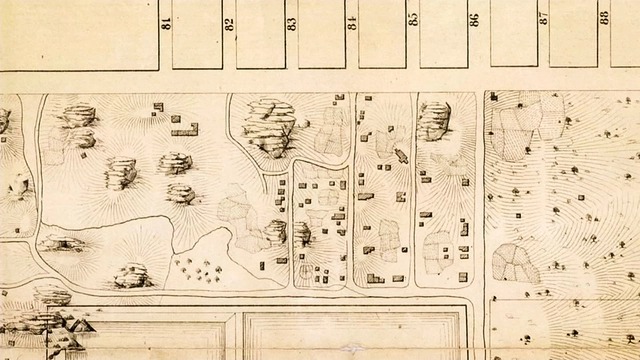
“Seneca Village was an important community. It was 40 acres, two-thirds African American, and had a church and school,” explained Sara Zewde, ASLA, founder of Studio Zewde and assistant professor at the Harvard Graduate School of Design, during a session at the ASLA 2022 Conference on Landscape Architecture in San Francisco.
The 225 residents of Seneca Village were displaced by the New York City government in the mid 1800s to make way for Central Park, which is considered one of the masterpieces of landscape architect Frederick Law Olmsted and architect Calvert Vaux.
Ambitious technologists have claimed for decades that self-driving cars are the future. Yet, looking at recent years, the biggest revolution has come from vehicles on two wheels, not four. Fueled by the pandemic, increased oil prices, climate change and the desire for healthier lifestyles, we are now living in the midst of a bicycle renaissance. But to understand how we got here, it is crucial to look back. When the automobile became more widespread in the early 1900s, it quickly became a symbol of progress along with all it entailed: speed, privatisation and segregation. Adopting a car-centric approach, urban planners had to reorganise entire cities to separate traffic. Cars took over public spaces that used to host dynamic city life and parking lots, highways and gas stations became common landscapes. Pedestrians that once ruled the streets were herded into sidewalks and children relegated to fenced playgrounds. Ironically, cities were being designed for cars (not humans).
Home to architectural styles spanning almost three hundred years, the is no city like New Orleans. The meld of French, Spanish, and Caribbean architectural influences, in conjunction with the demands of the hot and humid climate, has impacted the urban fabric as much as the culture itself. Located along the Mississippi River and close to the Gulf of Mexico coast, the construction of ports, NOLA’s trading history, and forceful natural phenomena like Hurricane Katrina in 2005 illustrate how water has shaped the city.
Following Hurricane Katrina, Orleans adapted its values to respond to the changing needs of its recovering community. Although reconstruction is not only architectural responsibility, New Orleanspublic architecture has contributed to revitalizing and reinhabiting the city after the disaster. Museums, parks, and churches, each of these places connects people to each other in ways that define and support community.
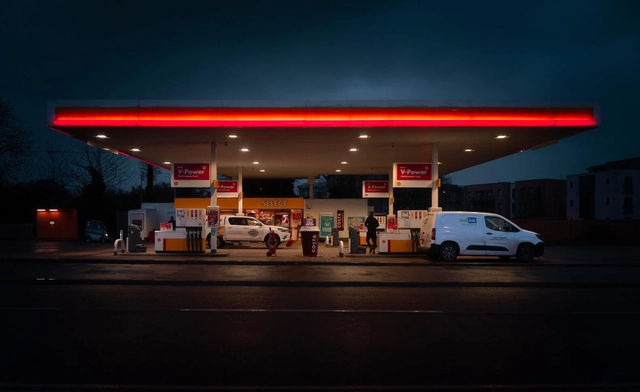
The era of petrol cars is coming to an end with the advent of batteries and electric cars – and so is the era of gas stations and the pollution they bring to communities.
Gas stations, by their very nature, are environmental hazards. Of the 450,000 hazardous locations in the US alone, half are contaminated by oil, with much of it coming from underground tanks leaking from former gas stations, creating risks of leaks and explosions.
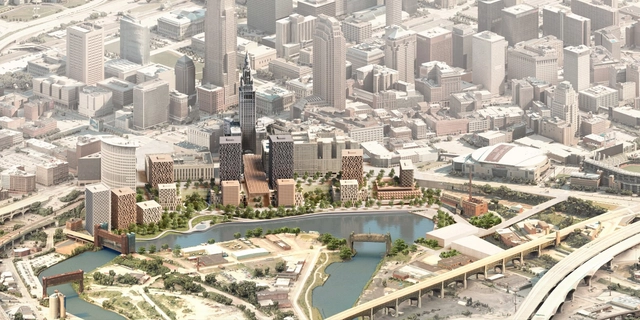
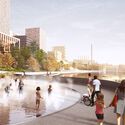
David Adjaye, in partnership with Bedrock and the city of Cleveland, unveiled the masterplan for the Cuyahoga Riverfront, a 15-to-20-year vision that will transform 35 acres of the riverfront to improve accessibility, equity, sustainability, and resilience of the downtown area. The design embraces the city’s rich history and connection to nature and creates a sustainable infrastructure that prioritizes pedestrian movement and activates open public spaces. David Adjaye, a British-Ghanian architect, has been awarded Britain’s Order of Merit, making him the fifth architect to be appointed the honor.
Authenticity seems impossible today, with places and the buildings in them assembled with products from the Industrial Development Complex that could be assembled almost anywhere else on Earth in a debauchery of placelessness, disharmony with nature, and meaninglessness that doesn’t age well. So how is authenticity in the built environment achieved?
Fundamental for the development of large metropolises as we know them today, cement is a material used historically, whose technological advances have revolutionized construction technique and technology of civil construction, enabling the verticalization of construction and the densification of urban centers. Cement, both added to water and sand to make mortar and combined with steel and aggregate to form concrete, performs different functions in a work, from structure to finish.
As of today, over 50% of the world’s population lives in urban areas, and by 2050, this urban population will almost double in size, and 7 of 10 people in the world will live in cities. As cities have continued to grow and expand throughout history, a new vocabulary has also emerged, often to better communicate the scale of urban living in a relatively contemporary context. One such example is the term megalopolis – typically defined as a network of large cities that have been interconnected with surrounding metropolitan areas by infrastructure or transportation. In effect, it’s a region perceived as an encompassing urban area, within which there is a constant flow of commerce and migration.
Blair Kamin stepped down as architecture critic for the Chicago Tribune in January 2021, after a nearly 30-year run in the post. He won a Pulitzer Prize in 1999 for a body of work highlighted by a series on Chicago’s lakefront, including a story that documented the race- and class-based disparity between the city’s north and south lakefronts. He has previously published two collections of his work: Why Architecture Matters (2001) and Terror and Wonder (2010), both from the University of Chicago Press. His third collection, Who is the City For? Architecture, Equity, and the Public Realm in Chicago, was released last week. Recently I talked to Kamin about the new book, the state of post-pandemic Chicago, and the need for more mainstream architecture criticism. I will post the second of our conversations tomorrow, in which the critic pushes the need for a redefinition of the phrase “design equity.”
Envision your ideal neighborhood. Maybe it’s on a cul-de-sac in the suburbs, where every neighbor has a well-manicured lawn, a two-car garage, and everyone gives each other a friendly wave on their way to work. Or maybe you live in a high-rise building in a dense urban center, where you take public transit to the office five days a week and say hello to your doorman on your way out. Whatever your neighborhood might look like, there’s always a sense of wanting to know the people who live around your- or at least an unspoken reliance on one another to ensure that your surroundings are safe. What happens when technology brings you and your neighbors together to report on local happenings? Is it a good thing, or does it create a vigilante situation gone awry?