Architecture practice Rogers Stirk Harbour + Partners (RSHP) has won the international competition to design a new nearly net zero operational carbon business center in the city of Vilnius, Lithuania. The competition, organized by the Lithuanian Union of Architects and the Right Bank Development Fund, requested the design of a 19,200-square meters office space in the Central Business District of the city. One of the key ambitions of the project was the reduction of embodies carbon, achieved through a number of strategies, including the use of cross-laminated timber floor planks and locally sourced materials.
The first Monday of October of every year marks World Architecture Day and World Habitat Day. Celebrated simultaneously, they both seek to shed light on the built environment and its challenges, taking on a different theme with each new edition. This year, through its World Architecture Day, the UIA is focusing on “Architecture for well-being”, in line with the designation of 2022 as the UIA Year of Design for Health in buildings and cities. In parallel, the UN’s World Habitat Day, is centered on “Mind the Gap. Leave No One and Place Behind”, looking at the problem of growing inequality and challenges in cities and human settlements, due to the triple ‘C’ crises – COVID-19, climate and conflict.
Introducing Urban October, 31 days to promote a better urban future, World Architecture Day and World Habitat Day push forward the debates on urban sustainability. Joining the conversation every year, ArchDaily takes part in this occasion by promoting content that tackles the main objectives of this day, raising awareness, presenting solutions, engaging the international community, and “empowering everyone who makes architecture happen to create a better quality of life”.
Byzantium, Constantinople and now Istanbul, the many names this city has had over the centuries are proof of the central role it has played throughout history. Founded by Greek settlers in the 7th century, the city served as an imperial capital for a cumulated period of over 1600 years. During the Roman/Byzantine, it played a crucial role in the advancement of Christianity before its transformation into an Islamic center and becoming the sear of the Ottoman Caliphate. Today, Istanbul is a vibrant city with a rich cultural scene and multiple historical layers to be discovered.
Straddling the Bosphorus strait, the city lies in both Europe and Asia, integrating architectural masterpieces that reflect the meeting of European and Asian cultures over the centuries. As the largest city in Turkey with a population of over 15 million residents, Istanbul also serves as the country’s economic, cultural, and historic center. Istanbul is the 15th largest city and the eighth most visited city in the world. The city is also home to several UNESCO World Heritage Sites.
The Lusail Stadium, the largest stadium in Qatar and the centerpiece venue for the FIFA World Cup Qatar 2022™, is now open to the public. On 9 September, the stadium hosted the Lusail Super Cup final between Al Hilal SFC and Zamalek, an event seen as the precursor to the FIFA World Cup Qatar that will be played later this year. Located in Lusail City, 15 kilometers north of Doha, the 80,000-seat stadium aims to create an immersive atmosphere for both players and spectators. The building was designed with Foster + Partners’ joint venture partner Arup, and sports specialist Populous.
Studio Gang's founder, Jeanne Gang, is the winner of the 2022 ULI Prize for Visionaries in Urban Development, the most prestigious and respected honor in the real estate, land use, and development community. From museums and skyscrapers, including the Arkansas Museum of Fine Arts and the St. Regis Tower in Chicago, Gang has demonstrated her work in creating and implementing better practices in sustainable reuse, ecological biodiversity, and social equity. Gang, the first woman architect to get the prize for Visionaries in Urban Development, joins the ULI laureates list along with Alejandro Aravena, Richard Rogers, and Vincent Scully.
Architecture offices OMA, led by Partner Shohei Shigematsu, and Jacobs have unveiled the design for the new headquarters for the Discovery Partners Institute, part of the University of Illinois System. The building is planned to anchor an innovation district at “The 78”, along the Chicago River. The eight-story building, located on a one-acre site southwest of the Loop, will provide more than 200,000 square feet of office, classroom, lab, and event space for DPI and its university and industry partners.
Los Manantiales by Felix Candela. Image Courtesy of Alexander Eisenschmid
Architecture is often an ambitious profession, with many architects hoping to positively contribute to the social life of the communities, create emotional responses, and add moments of delight and solace to our daily experiences. However, market forces have a way of applying constant pressure on this field, often being the deciding factor in many design choices. Costs and economic value are generally a good indicator of how, when, and to what extent certain materials are being used: the standard rule is the cheaper, the better. But materials are only part of the equation. Site labor, management, and design costs are also considered, depicting a complex picture of the balance between the cost of materials and the cost of labor and its effect on the architectural product.
The fourth edition of the Timișoara Architecture Biennial, or Beta, is focusing on the theme of “the City as Common Good”. Through a wide range of events, Beta aims to address topics that are relevant and urgent globally and explore their impact on the local built environment and its response to the needs of the communities. Taking place at various locations in the city of Timișoara, Romania, this year’s festival begins on September 23rd and ends one month later, on October 23rd.
Architecture is not simply building. Over 2,000 years ago, Roman architect Marcus Vitruvius Pollio defined two base realities in building: “Firmness” (Safety) and “Commodity” (Use) and then offered what turns building into architecture: “Delight” (Beauty).
“Firmness” has been recoined in this century as “Resilience”. After being unscathed in five hurricanes over thirty years, does this building have “Delight” beyond its “Firmness”? The property of “Commodity” is found in any design’s usefulness and fit: is this archive, in constant use, have “Delight” beyond its “Commodity”?
The Chicago Architecture Biennial (CAB) has announced the art collective Floating Museum as the leading artistic team of CAB’s fifth edition, opening in September 2023. For this edition, titled “This is a Rehearsal”, the Biennial explores environmental, political, and economic issues present in today’s society, yet addressed differently around the world through art, architecture, infrastructure, and civic participation. The Floating Museum, a collective of artists, designers, poets, and educators, aims to push the CAB 5 exhibition and program model to prioritize presenting innovative ideas that could shape the future of architecture and design.
Future planning methods for sidewalks and public transit space. Image via Global Designing Cities Initiative
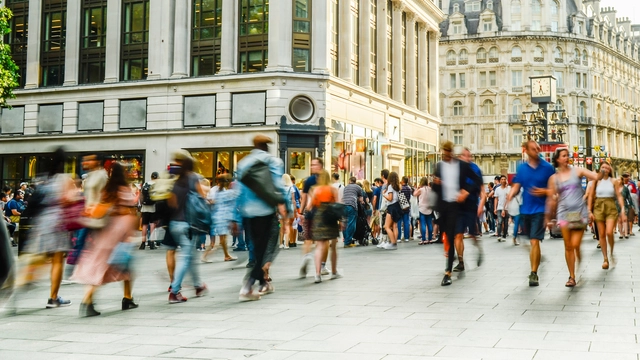
Whether you live in an urban, suburban, or rural area, there’s a good chance that using a sidewalk, in some capacity, is part of your everyday routine. Whether crossing over a sidewalk to get to your car in a parking lot or walking several blocks on your commute to your office downtown, sidewalks are critical for creating safe places for pedestrians away from the streets. But what happens when cities don’t take ownership over sidewalk maintenance, and they’re left to be protected by the people who just use them?
Exterior perspective from Saint-Laurent Boulevard. Image Courtesy of KPMB Architects + Daoust Lestage Lizotte Stecker Architecture
Following an international competition, the Montreal Holocaust Museum (MHM) has selected architecture offices KPMB Architects and Daoust Lestage Lizotte Stecker Architecture to design the new downtown museum building. Located on Blvd. St-Laurent, the museum is scheduled for opening in 2025. The MHM chose to move from its current location in response to the growing demand for its educational programs, which tackle important subjects such as the Holocaust, genocide, and human rights. The new building will contain multiple exhibition spaces, classrooms, an auditorium, a memorial garden, and a dedicated survivor testimony room.
Have you ever thought that practically all the cities in the world, since the dawn of humanity, were and continue to be created and designed by men? From urban design to building projects, from public transport to chairs – women have not been part of the process of creating everything around us.
The newly transformed Arkansas Museum of Fine Arts in Little Rock, US, is ready to open to the public on April 22, 2023. Designed by architecture practice Studio Gang in collaboration with Polk Stanley Wilcox and landscape architecture and urban design practice SCAPE, The Museum’s new architectural identity aims to signify its role as a leading arts institution in the region. One of the Museum’s most recognizable features, the folded plate concrete roof, is now complete. The new roofline spans the length of the building, connecting the new construction and the renovated spaces to create a coherent architectural character for the cultural institution.
Kuwait is planning a 1,600-hectare development that will provide residential units, jobs, and amenities for 100,000 residents. Developed by URB, the ambitious project aims to promote a sustainable lifestyle with high standards of living, yet a low impact on the environment. The masterplan for the smart city is designed to optimize density and amenities distribution to create a walkable city, while also optimizing the green space ratio. This will help mitigate the effects of rising temperatures and the urban heat island effect. The green transportation systems and dedicated cycling tracks will make this a car-free city, apart from a ring road that allows for limited vehicular access. The city also promotes a circular economy that aims to provide food and energy security for the residents.
New York-based architecture studio ODA has revealed the design of its newest project in Fort Lauderdale, Florida. The 47-story tower is located south of the New River in the Rio Vista neighborhood. The program comprises 830 residential units, studios with two bedrooms, while also offering ample space for amenities and commercial use, measuring 13,000 square feet. At ground level, the project incorporates a large corner plaza. By placing functions for the public at the lower levels, the project aims to activate the walkways and public spaces, thus adding to the life of the neighborhood.
Herzog & de Meuron and landscape designer Piet Oudolf are collaborating to create Calder Gardens, which will house and display artworks by American sculptor Alexander Calder. Located between Vine Street and Benjamin Franklin Parkway in Philadelphia, the 6,500 square meter site will house a two-story building, half of which is developed underground. Instead of developing the site as a typical museum, the team decided to transform it into a garden as an attractive alternative for the people of Philadelphia.
Dubrovnik, Croatia. Drone photo by @spencerdavisphoto
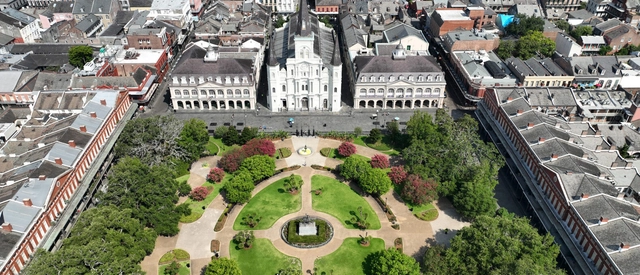
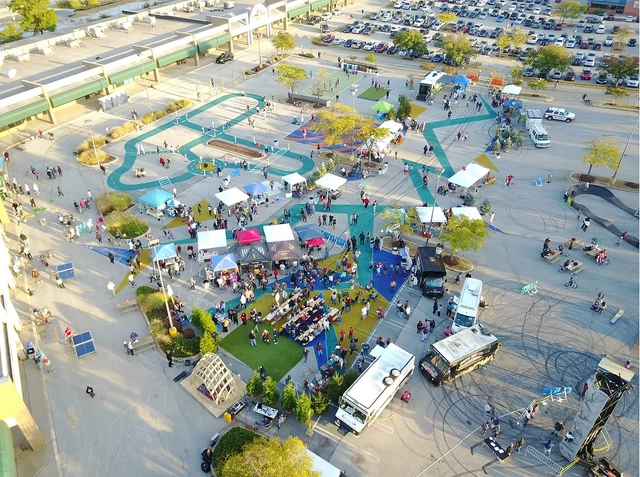
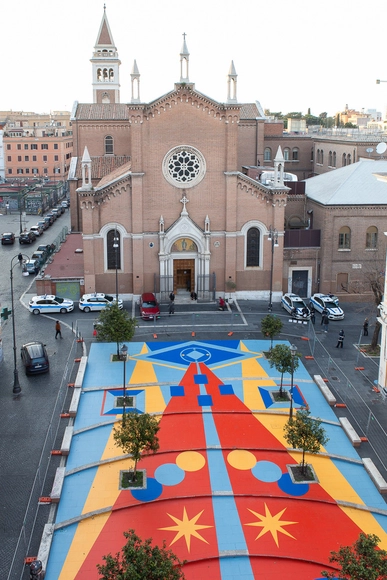
Some of the most characteristic features of city squares are related to the presence of people in the space and the purposes they are given, such as places for socializing, sports, tourism, and demonstrations. These different uses, often not foreseen in the project, are closely associated with the ground level, where people can walk around and experience the space. Viewed from an aerial perspective, on the other hand, squares can reveal other aspects related to their architectural design and their placement in the urban context.