Architecture firm SOM has designed Kinematic Sculpture, an origami-like pavilion installation for Chicago Design Week. Exploring kinematics as the science of motion, the sculpture was formed as one of the firm's ongoing interdisciplinary research projects. As a test in integrated design, the structure aims to establish ideas that foster new architectural and structural solutions for pressing challenges in the built environment.
In the last few years something has happened to architects’ willingness to strive for originality. The boldest visions now often come from the old guard of architecture - and frankly, I enjoy conversations with them much more. The current insistence on having common ground pushed so many younger architects into a zombie-like copycat state of mind. But to me, common ground means not to think alike – then there is space for discourse.
My most recent conversation with Helmut Jahn at his Chicago office is a case in point. “Architecture is all about going with your gut. I prefer when form follows force rather than function,” he told me. His distinguished career has been one of twists and turns, and he is not planning to give up exploring new ideas any time soon. His 1985 quadrant-in-plan Thompson Center reinvented a mundane government typology into a soaring public place, with its curved colored glass facade decisively welcoming a postmodernist period to Chicago (one we thought had finished, but now seems to be ongoing, encompassing all of post-Modern movements as its mere shades and variations.) Jahn’s architecture shook and modernized a number of global cities, and with time and experience, what began as a rebellion against Mies’s “less is more” modus operandi matured into nuanced, measured, though unquestionably gutsy, production of towers, airports, convention centers, headquarters, and, most importantly, public spaces. As Jahn himself says, “...anything you don’t need is a benefit. Not only you have to have less things but with the things you have left you have to do more.”
Viewed from the far end of the Great Basin, the Administration Building looms over the court of honor and the surrounding great buildings of the fair. ImageCourtesy of Wikimedia user RillkeBot (Public Domain)
The United States had made an admirable showing for itself at the very first World’s Fair, the Crystal Palace Exhibition, held in the United Kingdom in 1851. British newspapers were unreserved in their praise, declaring America’s displayed inventions to be more ingenious and useful than any others at the Fair; the Liverpool Times asserted “no longer to be ridiculed, much less despised.” Unlike various European governments, which spent lavishly on their national displays in the exhibitions that followed, the US Congress was hesitant to contribute funds, forcing exhibitors to rely on individuals for support. Interest in international exhibitions fell during the nation’s bloody Civil War; things recovered quickly enough in the wake of the conflict, however, that the country could host the Philadelphia Centennial Exhibition in 1876. Celebrating both American patriotism and technological progress, the Centennial Exhibition was a resounding success which set the stage for another great American fair: the World’s Columbian Exposition of 1893.[1]
This article was originally published on September 28, 2013. To read the stories behind other celebrated architecture projects, visit our AD Classics section.
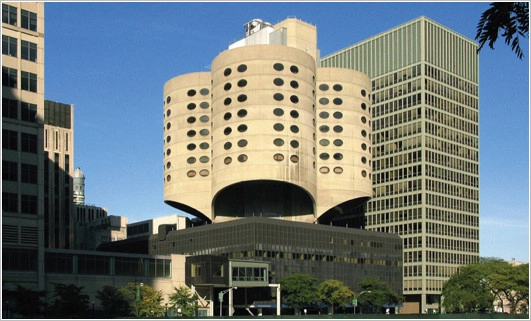
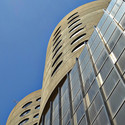
Hospital buildings, with their high standards of hygiene and efficiency, are a restrictive brief for architects, who all too often end up designing uninspiring corridors of patient rooms constructed from a limited palette of materials. However, this was not the case in Bertrand Goldberg's 1975 Prentice Women's Hospital. The hospital is the best example of a series of Goldberg-designed medical facilities, which all adhere to a similar form: a tower containing rooms for patient care, placed atop a rectilinear plinth containing the hospital's other functions.
After graduating from Tecnológico de Monterrey, a leading technical school in Mexico, Francisco Gonzalez Pulido worked on design-build projects for six years before leaving for the US where he earned his Master’s degree from Harvard’s GSD in 1999. The same year the architect started working with Helmut Jahn in Chicago where he stayed for 18 years – from intern to becoming the president of the company in 2012, at which point he renamed the firm into Jahn. By then he developed his own body of work there. Last year Gonzalez Pulido started FGP Atelier in his adopted home city.
Today the studio, counts a dozen of architects and is overseeing the design of a couple of high-rises in China, a baseball stadium in Mexico City, and university buildings in Monterrey, among other projects. The following interview was conducted at FGP Atelier in Chicago, during which the architect was explicit about transmitting his view: “Architecture is too rigid, too formal. It is time to break free…I want to build lighter. I want to build smarter.”
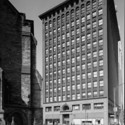
Known as Chicago's "Father of Skyscrapers," Louis Sullivan (September 3, 1856 – April 14, 1924) foreshadowed modernism with his famous phrase "form follows function." Sullivan was an architectural prodigy even as a young man, graduating high school and beginning his studies at MIT when he was just 16. After just a year of study he dropped out of MIT, and by the time he was just 24 he had joined forces with Dankmar Adler as a full partner of Adler and Sullivan.
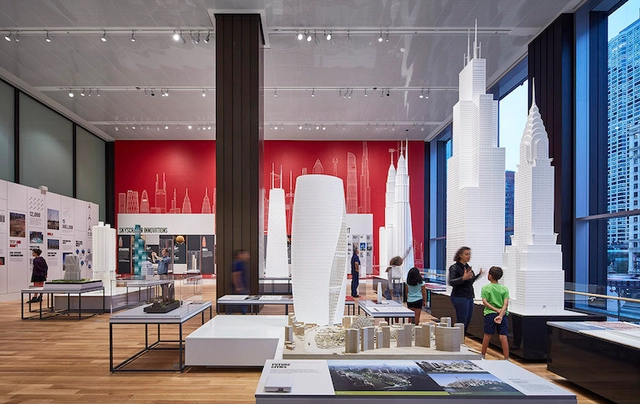
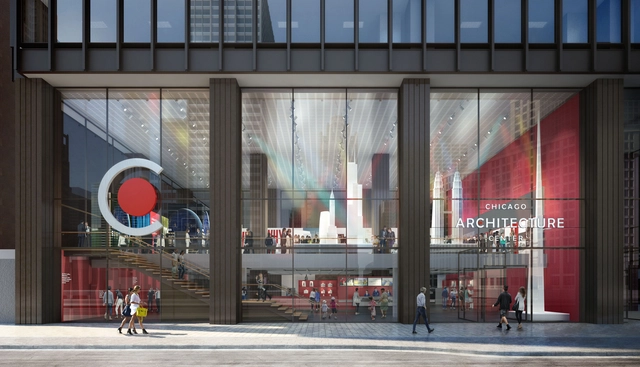
Chicago Architecture Center. Image Courtesy of Chicago Architecture Center
After their previous announcement back in January, the Chicago Architecture Center (CAC) is officially open to the public this Friday, August 31st. Formerly known as the Chicago Architecture Foundation, the 20,000 square foot CAC opens in a new location at 111 East Wacker Drive. Featuring programs, exhibitions and tours, the center aims to be "home to everything architecture in Chicago." The CAC includes a range of custom designed spaces, from an architecture store and lecture hall to interactive exhibits.
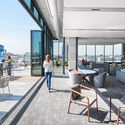
At a new corporate headquarters in Chicago’s West Loop neighborhood, there’s a double-height lobby filled with green walls and massive art installations. Travel to its top floor roof deck and you’ll find a cozy fire pit next to a fitness center and bar (happy hours are on Thursday). Elsewhere, stair-seating terraces face floor-to-ceiling windows with views of the Chicago skyline. This vertical campus settles in peaceably among its tony Randolph Street neighbors—Michelin stars, tech giants, and boutique hotels. At first glance, it’s refined and tasteful enough to be any one of these.
The Athens Architecture Club seeks to resurrect the historical architecture clubs of the 19th century, functioning as an “open forum, an infrastructural framework, and support platform for architects, artists, and writers to discuss, challenge and enrich a dialogue among practitioners and scholars.
https://www.archdaily.com/900323/drawings-by-tchoban-holl-and-calatrava-among-stunning-entries-for-the-first-athens-architecture-club-exhibitionNiall Patrick Walsh
Manufacturers: Big Ass Fans, ACDC Lighting, American Standard, Benjamin Moore, Birchwood Lighting, +12CornellCookson, Edge, Edge, Ives, LCN, Litelab, National Guard Products, Optic Arts, Pure Lighting, Schlage, Trim-Tex, Trufig-12
The Chicago Architecture Foundation (CAF) has announced the opening date for their new home, the Chicago Architecture Center (CAC). Set to open August 31 of this year, the CAC will be the "home to everything architecture in Chicago." The 20,000-square-foot structure is located at 111 East Wacker Drive, just above the dock for the River Cruise offered by the CAF.
Lynn Osmond, the CAF's president and CEO, said of the new Center, "We can't wait for people to visit and experience how Chicago architects have influenced the world through their innovation and vision. We've engineered a stimulating and immersive space where visitors can have fun discovering Chicago's groundbreaking architecture and appreciate its profound impact on the world."
Designed by Chicago-based firm Adrian Smith + Gordon Gill Architecture (AS+GG), the CAC will feature custom spaces designed for education, tour orientation, and other public programs, as well as a store and interactive exhibits.
Read on for more about the Chicago Architecture Center and its unique design experience.


_Benny_Chan_(4).jpg?1540293180&format=webp&width=640&height=580)
_SOM_(1-LR).jpg?1540293091 "Kinematic Sculpture. Image © SOM")
_Benny_Chan_(3).jpg?1540293165 "Kinematic Sculpture. Image © Benny Chan")
_Benny_Chan_(2).jpg?1540293149 "Kinematic Sculpture. Image © Benny Chan")
_Benny_Chan_(1).jpg?1540293132 "Kinematic Sculpture. Image © Benny Chan")
_Benny_Chan_(4).jpg?1540293180)




_-_Administration_and_Cour_d'Honneur.jpg?1497053167&format=webp&width=640&height=580)
_-_Midway_2.jpg?1497053349 "Courtesy of Wikimedia user RillkeBot (Public Domain)")
_-_USG_Building_and_Ho_O_den.jpg?1497053430 "Although the building itself was handsome, the exhibits of the United States Government Building failed to entice many of the fair’s visitors. In the foreground stands the Ho-O-Den, a replica medieval Japanese palace. ImageCourtesy of Wikimedia user RillkeBot (Public Domain)")
_-_Birds_Eye.jpg?1497053224 "Courtesy of Wikimedia user scewing (Public Domain")
_-_Map.jpg?1497053293 "A map of the 1893 Exposition shows how much of the fair’s buildings were laid out on axis with the court of honor. ImageCourtesy of Wikimedia user scewing (Public Domain)")
_-_Administration_and_Cour_d'Honneur.jpg?1497053167)






















_at_111_E._Wacker_above_dock_for_CAF_River_Cruise_aboard_Chicago's_First_Lady_Cruises.jpg?1535683781 "Chicago Architecture Center. Image Courtesy of Chicago Architecture Center")






.jpg?1534440141&format=webp&width=640&height=580)
.jpg?1534440166 "Monster / Alessandro Mendini. Image Courtesy of The Chicago Athenaeum Museum of Architecture and Design")
.jpg?1534440176 "View of Lyon / James Von Klemperer. Image Courtesy of The Chicago Athenaeum Museum of Architecture and Design")
.jpg?1534440156 "Concept Sketch of Imperial War Museum North / Daniel Libeskind. Image Courtesy of The Chicago Athenaeum Museum of Architecture and Design")
.jpg?1534440147 "The Dance / Santiago Calatrava. Image Courtesy of The Chicago Athenaeum Museum of Architecture and Design")
.jpg?1534440141)
.jpg?1533177722&format=webp&width=640&height=580)
.jpg?1533177759 "Courtesy of COS")
.jpg?1533177543 "Courtesy of COS")
.jpg?1533177327 "Courtesy of COS")

.jpg?1533177722)













_at_111_E._Wacker_above_dock_for_CAF_River_Cruise_aboard_Chicago's_First_Lady_Cruises.jpg?1529636740 "Courtesy of Chicago Architecture Foundation")
