


-
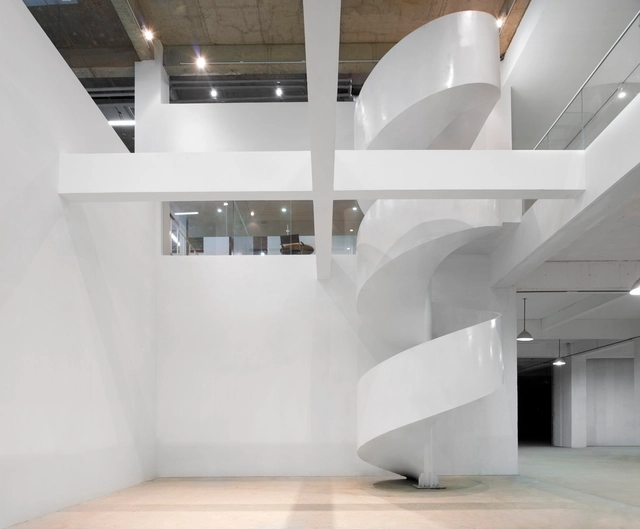
Architects: Origin Architect
- Year: 2014
-
Professionals: Ren Aidong, Sunshine Firm


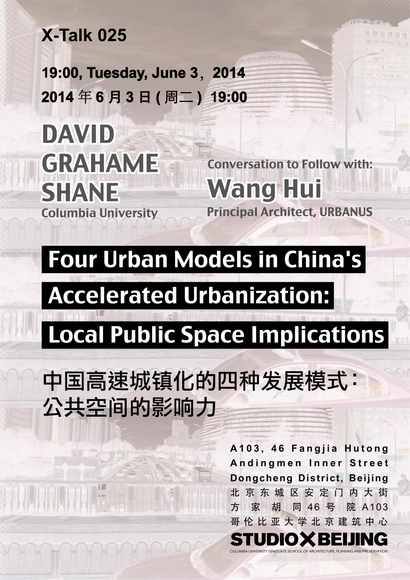
China's accelerated urbanization juxtaposes many local and global urban models in the contemporary urban space of the mega-city/metacity region. Since 1945 the global and local discourse on urban design and development has been dominated by four conceptual models. These four models, the metropolis, the megalopolis, the fragmented metropolis and the megacity/metacity have appeared in Asia with local characteristics and with special, hybrid characteristics. China's rapid urbanization has been based on an equally rapid industrialization that has telescoped the historical development pattern of western nations into 60 years.
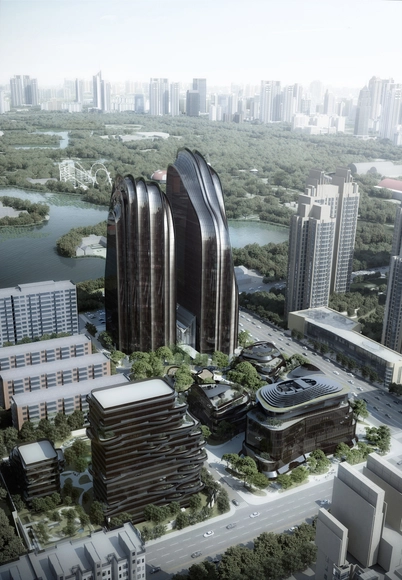
Construction has commenced on MAD’s Chaoyang Park Plaza within one of Beijing’s largest public parks and central business district. A continuation of Ma Yansong’s “Shan-Shui City” concept, which aims reintroduce nature into the urban realm, the mixed-use complex reinterprets natural formations illustrated in traditional Chinese paintings as contemporary “city landscapes.”
“Like the tall mountain cliffs and river landscapes of China, a pair of asymmetrical towers creates a dramatic skyline in front of the park,” described MAD. “Ridges and valleys define the shape of the exterior glass facade, as if the natural forces of erosion wore down the tower into a few thin lines.”
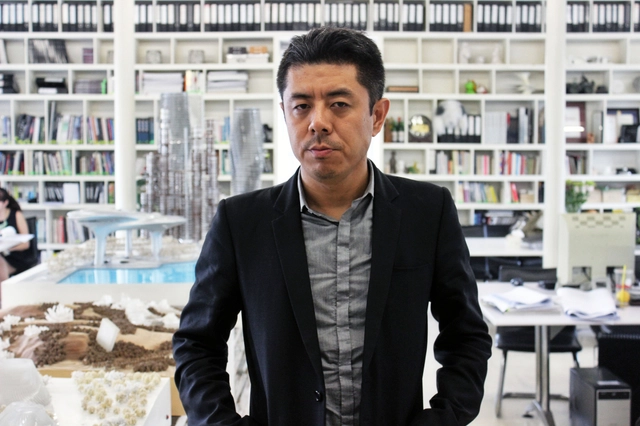
I look into myself, trying to express myself. I think sometimes maybe you have an idea from a dream. It sounds ridiculous but you draw something out of your dream. Where does this dream come from? It must somehow relate to some situation. So what I'm interested in is to keep discovering what is really inside of me. I'm not a genius that from the first moment I already know what I want. - Ma Yansong -
Beixinqiao district, in Beijing, is changing fast: the ancient urban tissue is being demolished as new high-rises are growing.Located in this environment, Ma Yansong’s office sits within an old and anonymous construction. In contrast to its exterior, the inside is characterized by wood, white walls and plants that transform the place into a sophisticated environment.International young architects are busy modeling new organic-shaped buildings on the other side of the world; meanwhile a golden fish swims in the eternal loop of the “fish tank” in the centre of the room.
In the following interview, Ma Yansong explains contemporary cities as environments that are out-of-scale with nature. He believes a new approach must be used, one that breaks the monotonous “chessboard” of contemporary Urban China and re-establishes the balance between human beings and the natural world.


Text description provided by the architects. The Cube, a sixteen meter tall painted steel and rope installation designed for the 2013 Beijing Biennale by the Oyler Wu Collaborative, challenges the volumetric perception of its own archetypal geometry. The aspiration of the installation is to achieve the transcendence of the first dimension - the line - by simulating warping two-dimensional planes, which penetrate and populate the object framework, to create the perception of inhabitable three-dimensional space.

Latitude Studio, based in Barcelona and Beijing, have unveiled designs for a showroom exhibition centre in China's capital city. Integral to the design is how visitors circulate and interact with the spaces centred around the "future shopping mall". Including an auditorium, model spaces and views onto an area which is expected to see enormous retail development, the building's central atrium and "thematic sightseeing walk" offer a unique journey for the visitor.
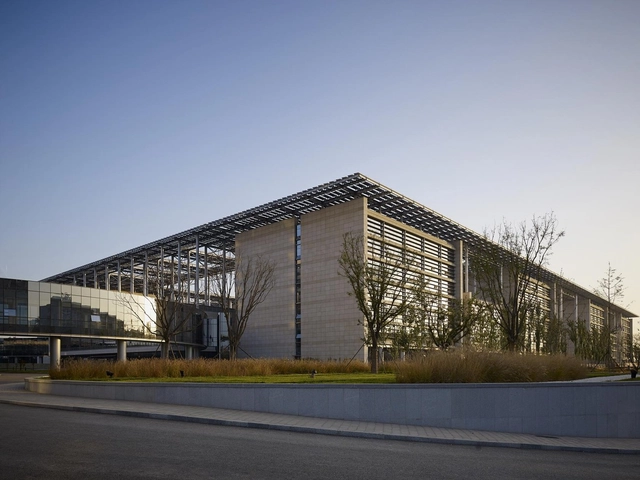
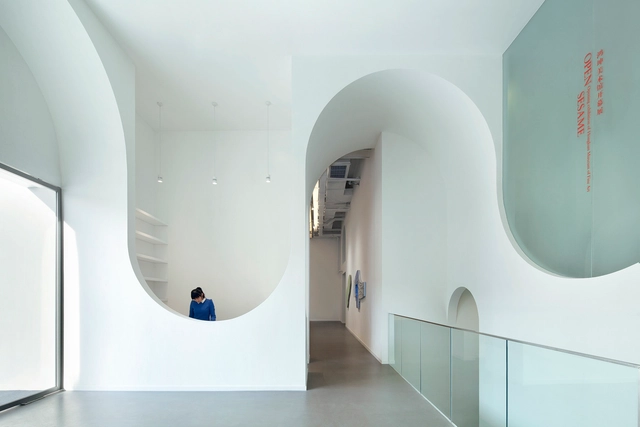

.jpg?1389137893&format=webp&width=640&height=580)
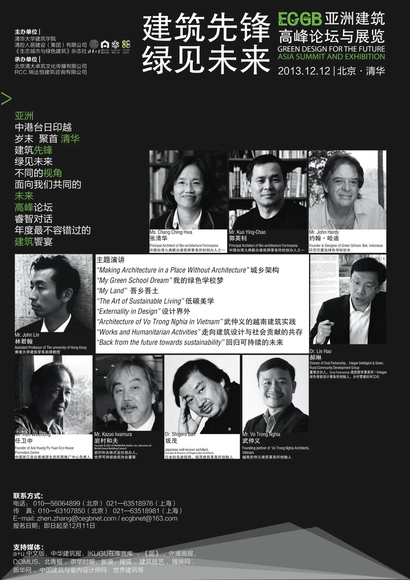
Tsinghua-ECGB Asia Architecture Summit & Exhibition will be held December 12-13, 2013 at Tsinghua University in Beijing City. Jointly sponsored by School of Architecture, Tsinghua University, Tsinghua Holdings Human Settlements Construction (Group) Co., Ltd, Editorial Office of Eco-city and Green Building (ECGB) magazine, the Summit will bring together eight award winning Asian architects to share their design thinking and key projects on creative sustainability. Keynote speakers include Vo Trong Nghia, Principal Architect of Vo Trong Nghia Architects and Shigeru Ban, Founder of Shigeru Ban Architects.
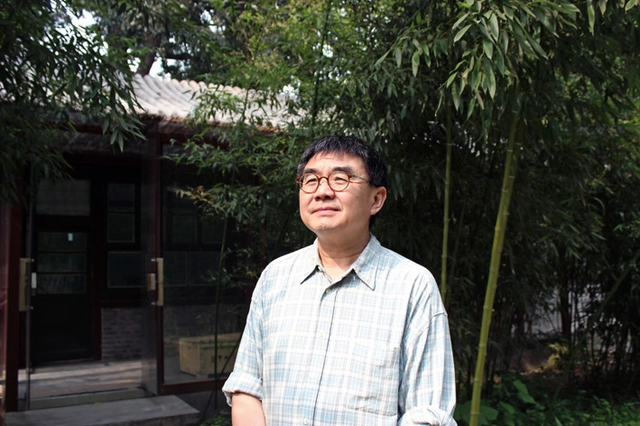
"When you find a piece of stone which is three or four hundreds years old, then you understand the notion of time as more than what we can experience as human beings. At that moment the old thing might be beautiful, it might be ugly. It doesn't matter, but it gives you a sense of profound time, and then you understand your history and ancestors that lived in a different world, different from the one we are in now."-Yung Ho Chang
Located in Beijing’s Yuanming Yuan Park, next to the ruins of the mixed-style Baroque Palace, Yung Ho Chang's office is in an ancient wooden dwelling, surrounded by vegetable gardens grown by the architects of the studio.
In this conversation, Yung Ho, who established China’s first independent architectural office, Atelier FCJZ in 1993, laying the foundation of contemporary practice in China, talks about his story, describing a Beijing which has disappeared as well as the contemporary Beijing and its "New Beijing Sky." He talks about architecture using references from movies, literature, art and artists, describing his approach to architecture in accordance with his philosophy of life.


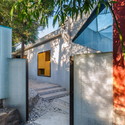
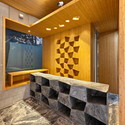
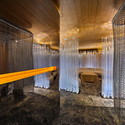


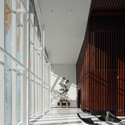
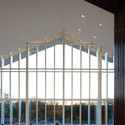
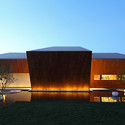
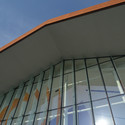


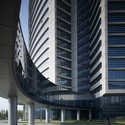


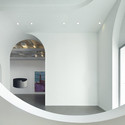
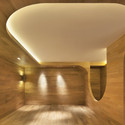
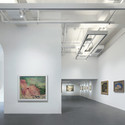

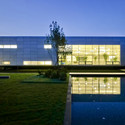


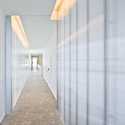

.jpg?1389137745 "© GU Yunduan")
.jpg?1389137647 "© GU Yunduan")
.jpg?1389137490 "© GU Yunduan")
.jpg?1389137256 "© GU Yunduan")
.jpg?1389137893)