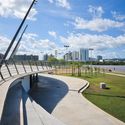
Paris City Council granted final approval to Gustafson Porter + Bowman's landscape design for the Eiffel Tower site. The project is the result of a 2019 international competition that sought to redesign the 2-kilometre axis leading up to the Eiffel Tower, connecting Place du Trocadéro, Palais de Chaillot, Pont d'Iéna, Champ de Mars and the Military Academy. The landscape plan redefines this iconic green space in Paris by increasing green areas by 35% and adding over 200 new trees, in addition to pedestrianizing the Iena bridge.
Nowadays, the role of architects exceeds the limits of construction, reaching fields that are often unthinkable, but which nonetheless demonstrate a close relationship with the profession. If we go back in time, the fact is that many buildings, houses, monuments and even cities have been built intuitively without urban planning or renowned architects. Undoubtedly, today's architects are facing a great challenge that goes beyond demonstrating our skills and knowledge and extends to other areas that involve us, but we still don't know it. So we ask ourselves, what will be the profile of the architect of the future?
John Chapman House. Image Courtesy of Plus Architecture
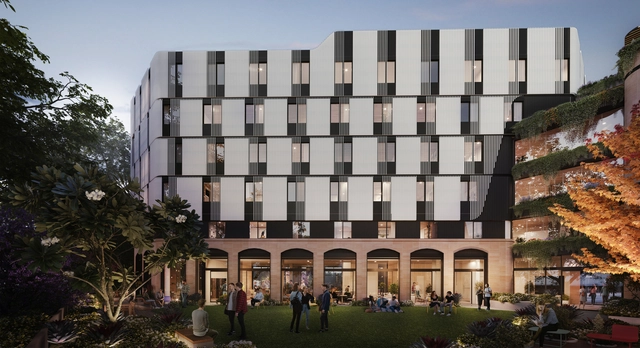
Student housing takes on many forms around the world, but most commonly, it’s envisioned as close quarters in a bleakly designed dormitory. While prospective students choose universities based on academic rigor, athletic programs, extracurricular activities, and future career opportunities, they’re now wanting to know what living on and off-campus will be like- and it has forced designers to rethink the traditional designs of dormitories into something more innovative that better reflects what students want (and expect) in their university homes.
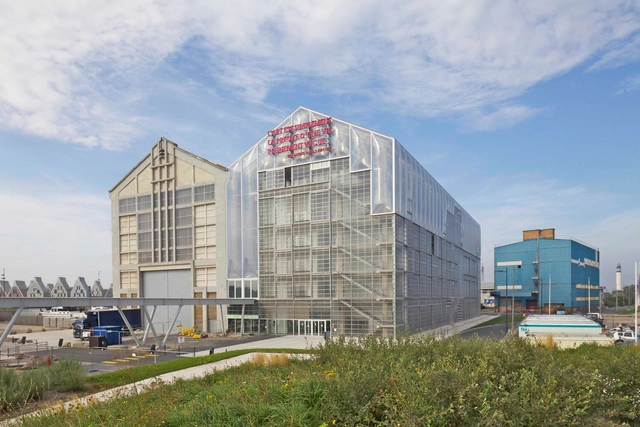
FRAC Nord-Pas de Calais- Anne Lacaton and Jean-Philippe Vassal . Image Courtesy of Philippe Ruault
The "2022 Pritzker Architecture Prize Laureate will be announced on March 15th at 10 am EST", states the official website of the Prize. Architecture's most relevant recognition is set to reveal its laureate(s) next week, aligned with the usual March announcement. “Architecture’s Nobel Prize” has been honoring every year, since 1979, a living architect or architects with significant achievements to humanity and the built environment.
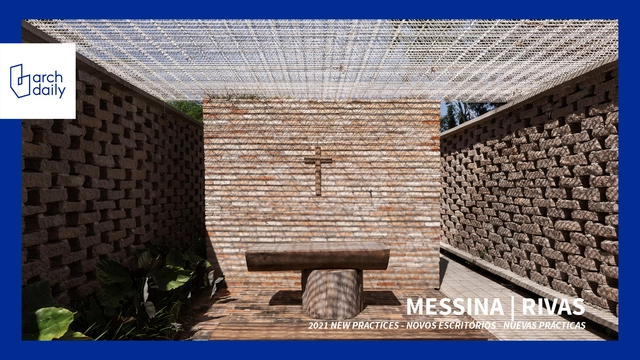
The act of designing implies not only drawing, but building. It carries – or should carry – with it the same rigor and complexity as the execution on the construction site. That's what Francisco Rivas and Rodrigo Messina believe, partners at messina in | rivas, a São Paulo-based firm that has already gained national and international recognition, also selected among the best new practices of 2021 by ArchDaily.
Formed by a Brazilian and an Argentine who met in Paraguay while working at Gabinete de Arquitectura, the office is known for works such as The Chapel Ingá-Mirim, finalist for the Instituto Tomie Ohtake AkzoNobel Architecture Prize 2020 and the Oscar Niemeyer Prize 2020, and São Roque Sauna. More recently, it was elected the winner of the competition for the Maritime Museum of Brazil with the Argentine office Ben-Avid.
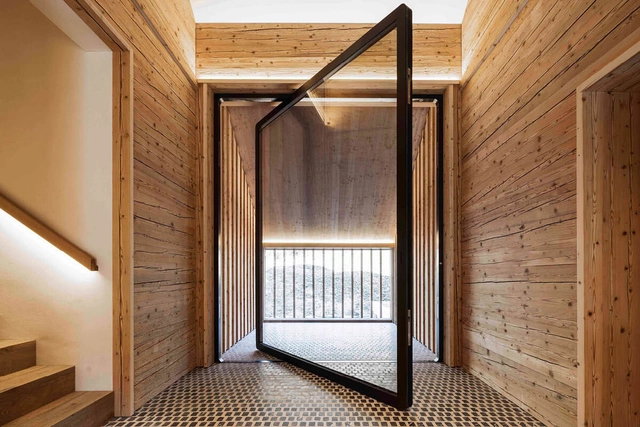
Exterior doors provide a sense of security and define first impressions, which is beautifully demonstrated in the pivot door presented above (designed and crafted in Europe by Air-Lux). On the other hand, inside of a house, interior doors are capable of generating privacy, buffering noise, separating rooms and enhancing a room’s architecture. Therefore, in order to fulfill these needs – and considering that they are used multiple times a day – interior doors must be durable and timeless without sacrificing beauty and style. Among all the options that meet these criteria, pivot doors stand out because of their elegant movement, aesthetics and versatility. With a sleek contemporary design that exceeds the regular function of a traditional door, these swinging doors rotate on a vertical axis with nearly invisible hardware, taking on any type of décor, use and measurement with endless creative possibilities.
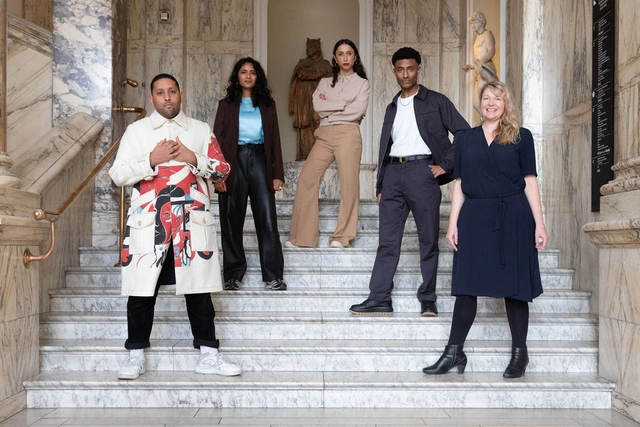
Pictured (from left) are: Joseph Henry, Meneesha Kaur Kellay, Sumitra Upham, Jayden Ali and Sevra Davis (Director of Architecture Design Fashion at the British Council). Image Courtesy of British Council
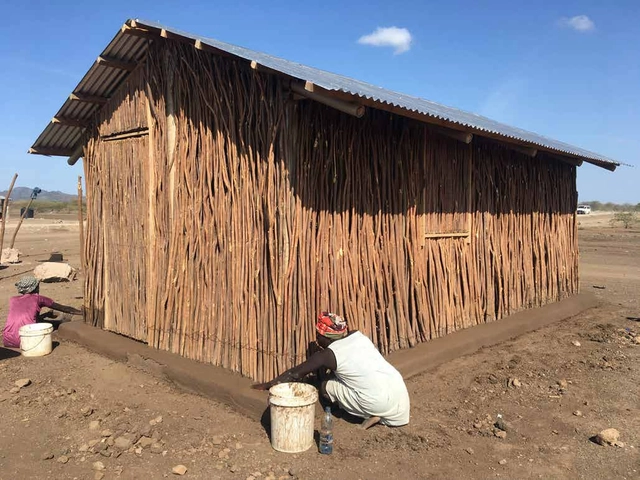
Since 2017, UN-Habitat, together with Shigeru Ban Architects, Philippe Monteil and the NGO Voluntary Architects' Network, developed several shelter typologies for a pilot neighborhood in Kalobeyei Settlement in Kenya. The Turkana Houses are meant to house South Sudanese and other refugees living in Northern Kenya who could not return to their original villages due to endless civil wars and conflicts. Unlike typical refugee shelters, these structures were meant to provide a home for long periods of displacement and the four typologies developed are informed by the extensive experience of Shigeru Ban Architects with disaster relief projects and the local building techniques of local people.
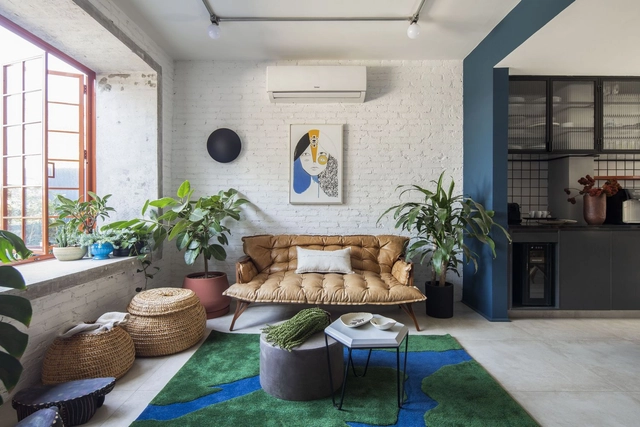
In apartments and small houses, the rest and entertainment spaces tend to share the same environment, making the living room fully oriented towards the television. But what to do when television is removed from space? Here are ideas on how to organize the living room without having the television as the main object of the room.
Modern interior living environments’ fine-tuned lightscapes feature a delicate mix of ambient, task, and accent lighting to perfectly balance performance and pleasure. But one area of a home’s visibility that’s still so easily overlooked is the exterior.
The importance of the use of advanced technologies, such as the likes of virtual reality in the scene of architecture, is becoming increasingly necessary. No matter how beautiful a rendered image may be, it will always lack the capacity to fully convey the scope and feel of a project as a whole, further perpetuating the necessity to incorporate the use of these technologies at a professional practice level.
Architects who choose not to adopt the use of virtual reality technologies into their design process fall victim to being at a significant disadvantage, and the problem no longer even lies within accessibility, as VR is very much a possibility for architects of all backgrounds in the present age.
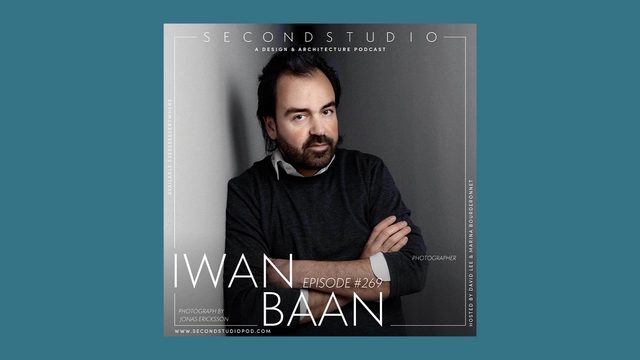
The Second Studio (formerly The Midnight Charette) is an explicit podcast about design, architecture, and the everyday. Hosted by Architects David Lee and Marina Bourderonnet, it features different creative professionals in unscripted conversations that allow for thoughtful takes and personal discussions.
A variety of subjects are covered with honesty and humor: some episodes are interviews, while others are tips for fellow designers, reviews of buildings and other projects, or casual explorations of everyday life and design. The Second Studio is also available on iTunes, Spotify, and YouTube.
This week David and Marina are joined by Photographer Iwan Baan to discuss his career, how he became a most sought-after architectural photographer, working with Rem Koolhaas, his process, his style of architectural photography, documenting structures during construction and after completion, vernacular architecture, and more.
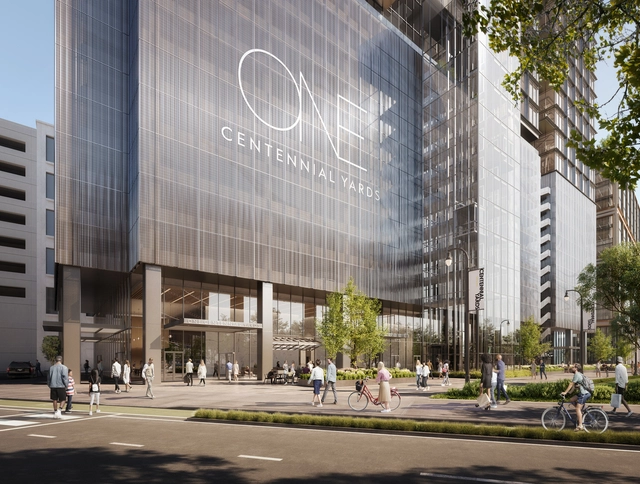
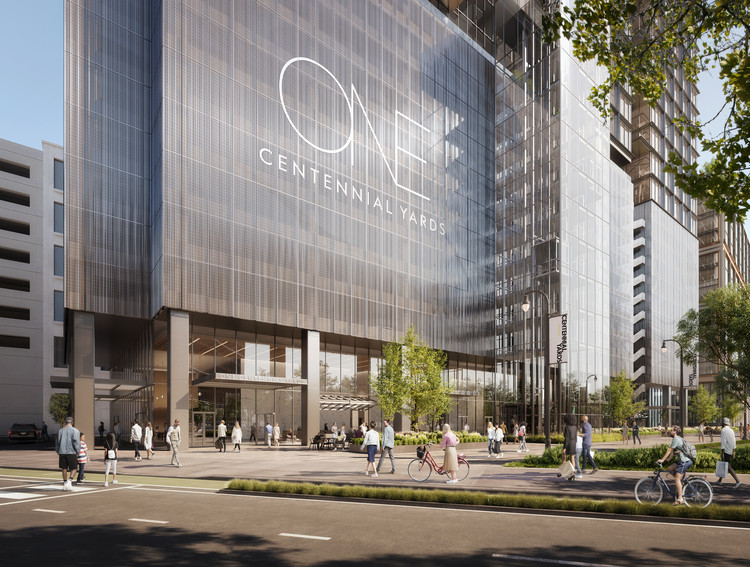
Skidmore, Owings & Merrill, in partnership with Atlanta’s Goode Van Slyke Architecture (GVSA), have unveiled Centennial Yards' first ground-up tower. Titled One Centennial Yards, the project will feature 28 stories and over 500,000 square feet of office space, 19,000 square feet of amenities, and 21,980 square feet of outdoor spaces, all aligned with the innovative, health, and wellness goals of the Foster + Partners designed master plan.
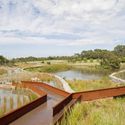
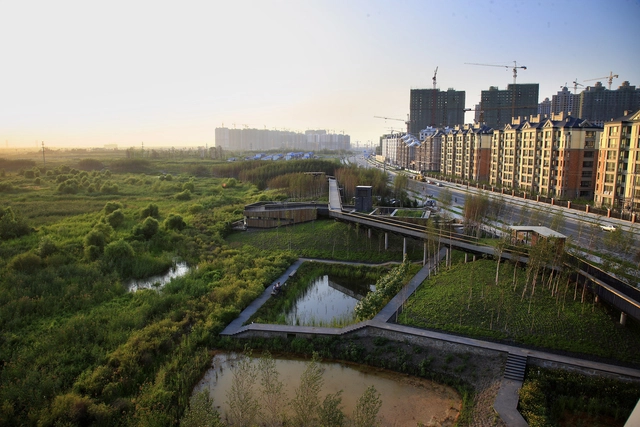
Parque Manancial de Águas Pluviais / Turenscape. Imagem cortesia de Turenscape
According to the architect and researcher Patrícia Akinaga, ecological urbanism emerged at the end of the 20th century as a strategy to create a paradigm shift with regard to the design of cities. With this, urban projects should be designed from the potential and limitations of existing natural resources. Unlike other previous movements, in ecological urbanism architecture is not the structuring element of the city — the landscape itself is. In other words, green areas should not only exist to beautify spaces, but as true engineering artifacts with the potential to dampen, retain and treat rainwater, for example. With ecological urbanism, urban design becomes defined by the natural elements intrinsic to its fabric.
In case you missed it, our world continues, after two years, to suffer cultural spasms in response to unseen, unrelenting, and deadly infective agents that continue to wash over entire populations, spreading fear, illness, and death.
The U.S. is also suffering a quieter—but equally invasive—architectural plague, metastasizing into every part of the country. This architectural contagion has largely escaped criticism, but not since the raised ranch has an architectural “type” so fully transformed communities. In the 1950s, thousands upon thousands of dumbed-down Prairie Home allusions swept across fallow suburban farm fields like a wildfire. More than style, the half-buried lower level and split floors (one half-stair run apart) were a new way to explore how buildings could house people, especially in rapidly suburbanizing America.
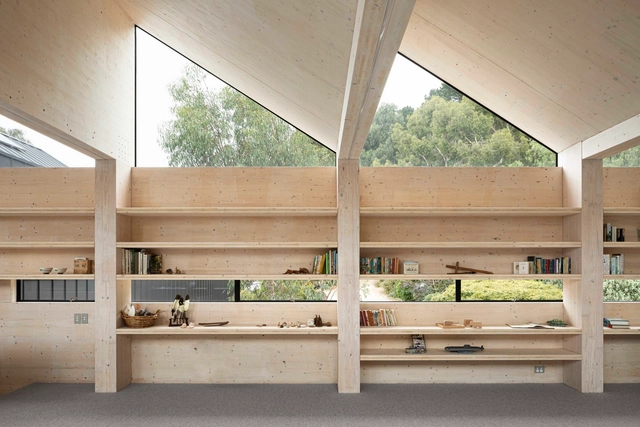
Cross-laminated timber (CLT) has been dubbed the concrete of the future. As a highly resilient form of engineered wood made by gluing layers of solid-sawn lumber together, CLT is reshaping how we understand architecture and design today. As a material with a high degree of flexibility, CLT has to undergo great deformations to break and collapse, unlike concrete. In turn, it's a material chosen for its warmth and natural properties.
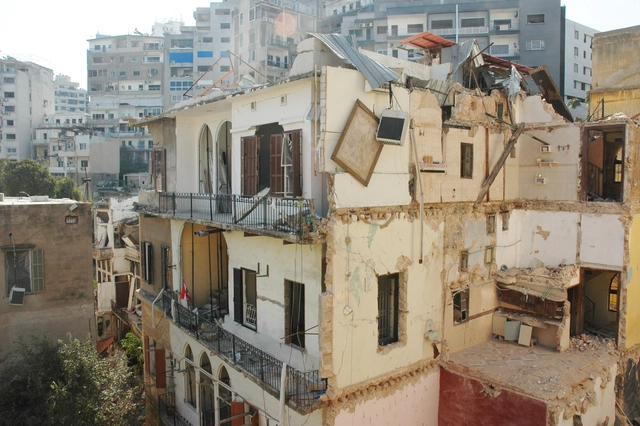
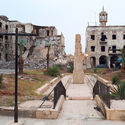
Heritage Buildings of Beirut, Lebanon. Image Courtesy of World Monuments Fund
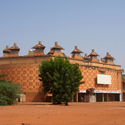
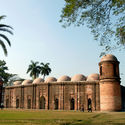
The World Monuments Fund has released its 2022 World Monuments Watch list, a selection of 25 sites from across the globe that hold great cultural and heritage significance but are being faced with economic, political or natural threats. This year's selection highlights themes of global issues such as climate change, imbalanced tourism, underrepresentation, and recovery from crisis, urging for prompt preservation plans.
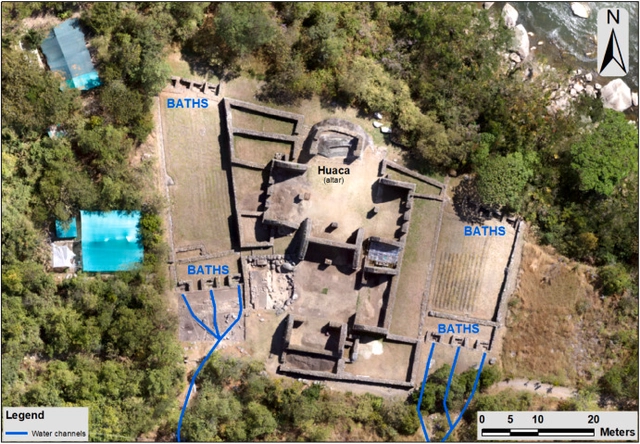
Machu Picchu, also known as "The Lost City of the Incas", located high in the Peruvian Andes (2430 m.a.s.l.) in Cuzco, is one of the most famous archaeological complexes and one of the 7 wonders of the modern world. It is here, under the dense foliage of the surrounding jungle, that a network of hidden river channels has been discovered.



















.jpg?1645660187 "Cidade colombiana transformou 18 ruas e 12 hidrovias em paraísos verdes. Imagem cortesia de CicloVivo")