Courtesy of Juan Barrios Duarte (Labrantía Estudio)
With an increasing amount of architectural visualizations being published on social media, it’s easy to get overwhelmed. Adding this to how the famous algorithm works, we end up always being exposed to social media publications that are, in many ways, similar to each other. But for us as architects, designers, and students, social media is not only a platform for networking and sharing our works. It also serves as a source of inspiration. If the algorithm isn’t helping us to discover new and different ideas, then it’s up to us to go out of our way and look for them.
There’s a famous quote—it’s usually attributed to Winston Churchill—that goes, “History is written by the victors.” This cynical and largely erroneous belief could only be true if history was fixed, settled, static. It never is, and that’s precisely why we have historians. It might be more accurately said that history’s first draft is written by the victors. But first drafts, as any writer will tell you, are famously unreliable. So it is with architectural history. Women have played significant roles in the field since the start of the profession, but that is not how history has recorded it. A new book, The Women Who Changed Architecture (Princeton Architectural Press), a collection of more than 100 mini-biographies of important women architects, covering more than a century, hopes to take a step toward correcting that oversight. Recently, I spoke to Jan Cigliano Hartman, the editor of the volume, about creating the book, important and overlooked figures, and why this isn’t a definitive list.
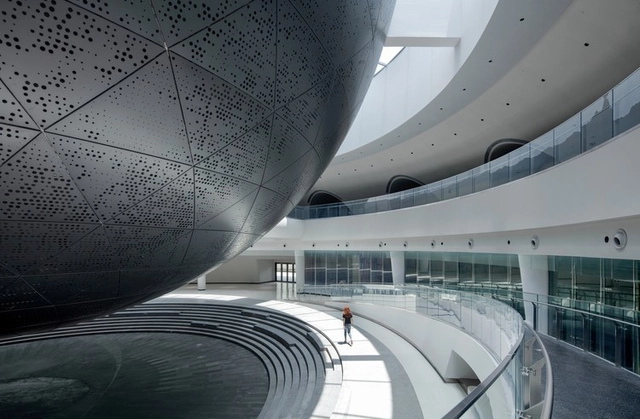
Planetariums are designed for discovery and exploration. Created around immersive experiences, these projects draw our imaginations to new worlds. As theaters for education and entertainment, they also bring people together. Today, architects and designers are reimagining what the modem planetarium can be, and in turn, are inspiring new investigations into the universe and the vast ocean above us.
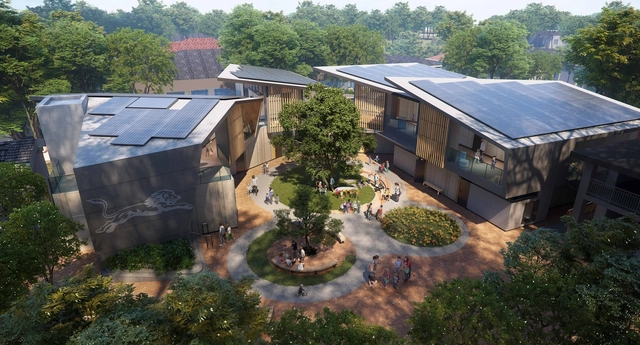
Aiming to transform the learning experience for neurodiverse students through a nature-centric environment, NBBJ has unveiled a net-zero school in Encino, California. Titled "Westmark Lower School", the new campus will foster an inclusive and engaging learning experience for students and teachers, responding to the critical condition of U.S students, where 2.3 million were diagnosed with learning differences between 2019 - 2020.
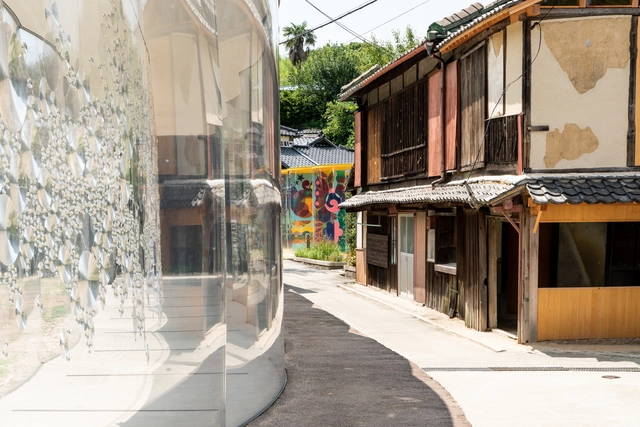
A new exhibition at the Japan House in London explores the large-scale art and architecture project driving the transformation of the Japanese island of Inujima for the past 13 years. Titled Symbiosis: Living Island, the show co-curated by the project's artistic director Yūko Hasegawa and architect Kazuyo Sejima showcases how the innovative scheme of accessible art, pavilions and creative projects brought together artists and locals in the effort to revitalize and secure a future for this island in the Seto Inland Sea confronted with diminishing population. Running from 21 May to 4 September 2022, the exhibition takes visitors on a journey around the island that illustrates the transformative impact of the Inujima' Art House Project' through architectural models, photography, videos and testimonies of the residents.
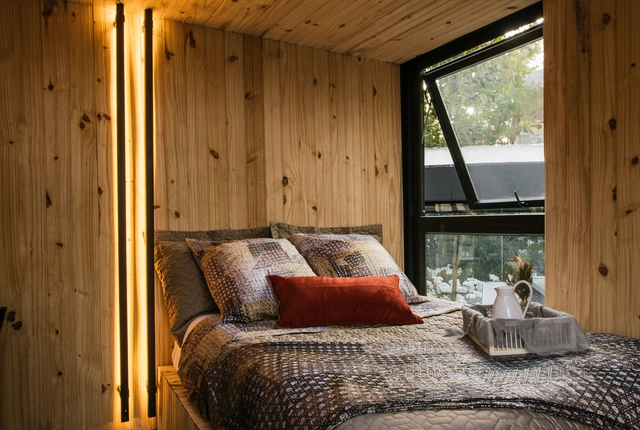
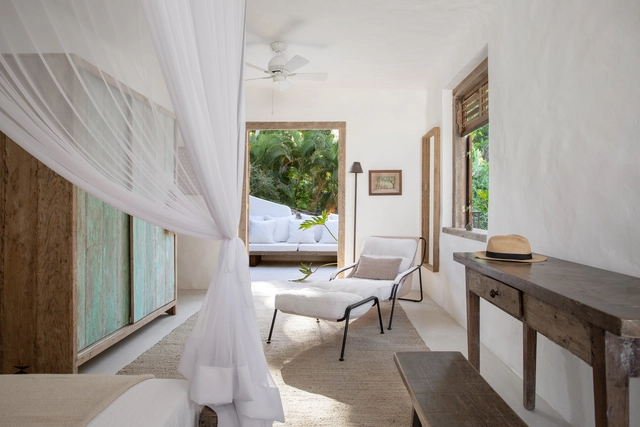
Plywood, laminated timber, MDF sheets and OSB boards are all good, can be economically viable and efficiently fulfill certain functions, but none of them offer the same atmosphere as solid wood. The nobility of this material is usually accompanied by a high cost, but the aesthetic and sensory qualities are unparalleled.
Below, we have gathered examples of projects that use solid wood in furniture elements. Tables and chairs, beds and cabinets made with wood of different species, new or from demolition, refined or rustic, with different textures and colors that can serve as inspiration for your architectural or interior design.
For quaint riverfront views, historical fortifications, and castles, head to Luxembourg. For sky-high remnants of the steel industry, there’s the country’s second largest city, Esch-sur-Alzette. Suffering, until recently, from the 1970’s steel manufacturing exodus, Esch, 10 miles to the northeast of the border of France, is emerging as an unexpected cultural mecca, where industrial infrastructure is being converted en masse into cultural and learning space. This rebirth is being celebrated thanks to a generous flow of cash via its designation as Esch2022: Esch-sur-Alzette European Capital of Culture 2022 (Kaunas, Lithuania and Novi Sad, Serbia, also named European Capital of Cultures this year, share the designation for 2022). For Esch, the title comes with $54.8 million in funds from EU, national, local, and private sources.
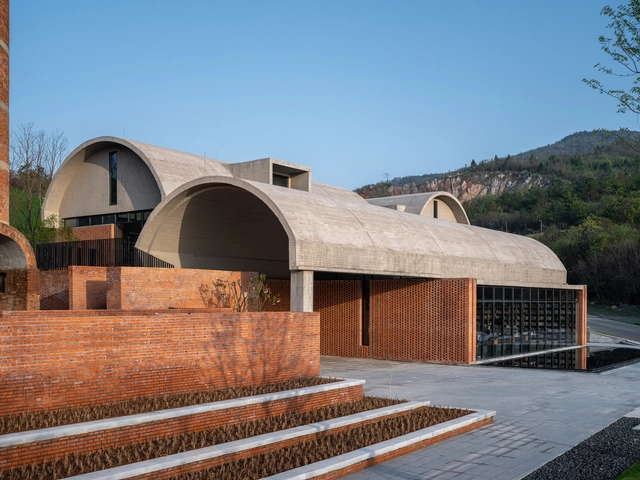
The oldest record of barrel vaults is estimated to date back to 4000 BC. These provided the spans in the Sumerian ziggurat at Nippur in Babylonia, built from fired bricks amalgamated with clay mortar. This type of vault was built as a continuous round arch and became a characteristic architectural element of Roman architecture, later used also in Renaissance architecture.
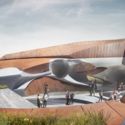
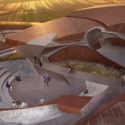
The Pritzker Military Museum & Library has selected Los Angeles-based Oyler Wu Collaborative as the winner of an international design competition that aims to honor members of the United States Armed Forces who served during the Cold War. The winning design, titled Orbits, embodies the "dedication, optimism, and hope that is emblematic of the veterans' enduring spirit", as the structure emerges from the ground to become an architectural tribute to the war veterans.
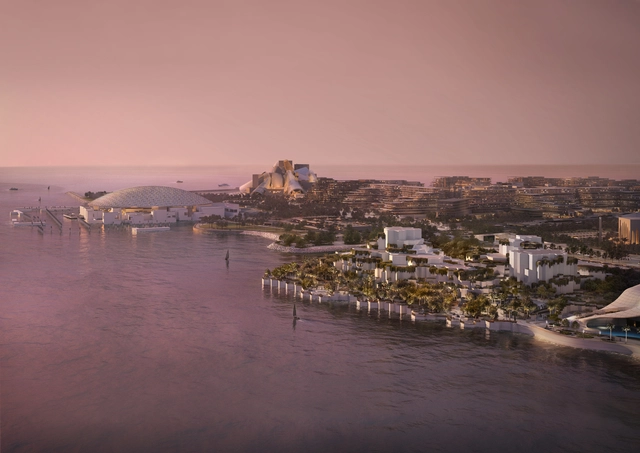
Abu Dhabi unveiled plans for a Natural History Museum designed by Dutch practice Mecanoo. The project resembles natural rock formations, and geometric shapes are present across all design elements, accompanied by the presence of water and vegetation. The 35,000 square-meter venue will feature gallery display areas, temporary exhibition spaces and theatre spaces, as well as an innovative research facility for the study of zoology, palaeontology, marine biology, molecular research and earth sciences. The new institution is intended as a space for education and, at the same time, as a think-tank for future innovation in these respective fields.
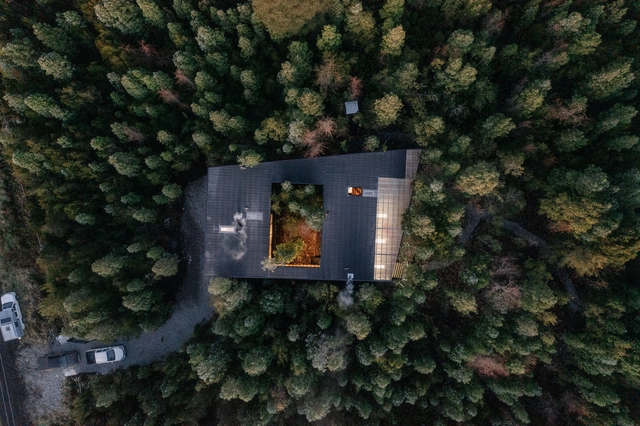
What role do forests play in our daily lives? In what ways can they be converted into living spaces? What strategies can be implemented to reduce the environmental impact of our buildings? On the International Day of Forests, which is celebrated every 21st of March, this year we propose to raise awareness of the links between forests and our daily lives. Even though deforestation continues to advance, forests represent a source of great economic, social and ecological benefits.
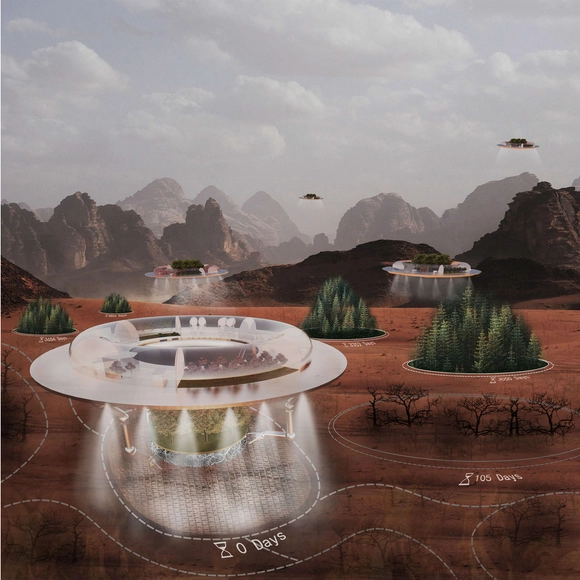
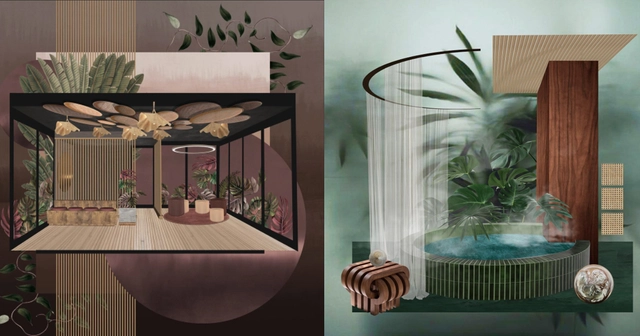
Alternate Realities | AR 2022. Image Courtesy of Charette _ By Lau Yee Mu, Ang Hui Yi, Melissa Ho Er Shwen _ Chia Hui Yen - First Prize
Along with several other imperative factors, the success of an architectural project relies heavily on how it is communicated to its users and builders. Most architects opt for realistic computer generated renders to showcase their projects, while others choose to explore different techniques, translating their architectural narratives through photo collages, sketches, animation, hyper-realistic miniature models, walkthroughs, diagrams, and occasionally, script.
This week’s curated selection of Best Unbuilt Architecture highlights projects submitted by the ArchDaily community that are presented through different media. From a hand-drawn sketch of a coastal redevelopment in Norway to an abstract composition of photography and architectural drawings in Poland, this round up of unbuilt projects showcases diverse architectural typologies and their unique visualizations. The article also includes projects from the Netherlands, Hungary, Poland, United Arab Emirates, and Uzbekistan.
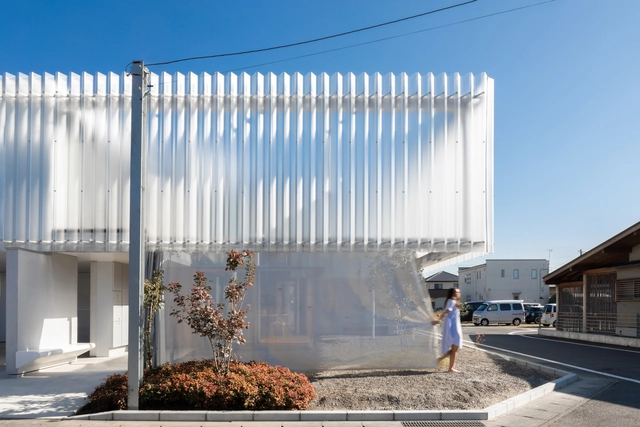
Whether blending in or standing out, embodying transparency or solidity, expressing coarseness or softness, a façade is the medium through which we engage with architecture. It tells a story and can often set the tone for the rest of the interior. But apart from defining a purely visual experience, a building’s envelope must also be practical, durable and have the ability to properly manage natural lighting and ventilation needs. After all, by being the point of contact with the outside, it is responsible for mitigating sounds and providing protection from climatic conditions, such as wind, rain, heat and humidity. Therefore, when designing a facade, it is important to consider a balance between performance and a beautiful aesthetic. Of course, many materials successfully meet these criteria. But when it comes to creating a comforting, light-filled ambiance while ensuring resistance, ease of installation and versatility, the properties of translucent polycarbonate panels seem to be unparalleled.
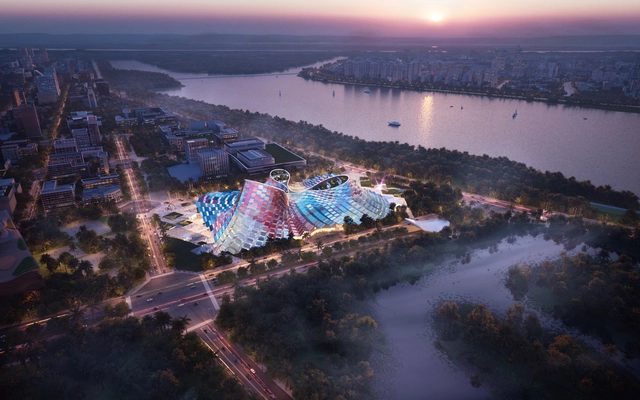
Heatherwick Studio has been selected to design a tropical opera house for the island province of Hainan at the southernmost point of China, the studio's first opera house or music venue project. The design features three performance spaces: an opera house, a concert hall, and a theatre, that come together under a sweeping canopy referencing to the island’s unique geology.
Russia’s invasion of Ukraine unleashed a major humanitarian and refugee crisis, with 4.2 million people fleeing into neighbouring countries and 6.5 displaced internally. According to the United Nations Office for the Coordination of Humanitarian Affairs (UNOCHA), 18 million people are projected to become affected in the near future with the current scale and direction of the ongoing military violence. In addition to the threat to human lives, Ukraine’s culture is also at risk, as cities and historic buildings are being destroyed. In March, the United Nations Educational, Scientific, and Cultural Organization (UNESCO) has expressed concern over the damage caused to historic landmarks in Ukraine and called for the protection of its cultural heritage. The following are some of Ukraine’s most prominent architectural landmarks, which are now in danger of being destroyed amid the conflict.
PVC, as the synthetic material Polyvinyl Chloride is called, or Polyvinyl Chloride, is one of the most produced plastics in the world, reaching 40 million tons per year. Its application is quite varied and in construction it has found different branches, serving both as an input for infrastructure and for finishing.
15-minute cities are a trending urban planning topic that has long been discussed academically and is now slowly being implemented across existing cities in Europe. But now, the first 15-minute city is being designed and built from scratch in Utah. Dubbed “The Point”, the new 600-acre city will be located just outside Salt Lake City, and will be a redeveloped former state prison site where new jobs, housing, public spaces, amenities, and transportation will serve almost 15,000 people in an attempt to explore a prototype for how innovative urban planning concepts can improve the public health and wellness.
Daniel Libeskind (b. 1946, Lodz, Poland) studied architecture at Cooper Union in New York, graduating in 1970, and received his post-graduate degree from Essex University in England in 1972. While pursuing a teaching career he won the 1989 international competition to design the Jewish Museum in Berlin before ever realizing a single building. He then moved his family there to establish a practice with his wife Nina and devoted the next decade to the completion of the museum that opened in 2001. The project led to a series of other museum commissions that explored such notions as memory and history in architecture.




















_Maureen_M._Evans.jpg?1646840531 "© Maureen M. Evans")