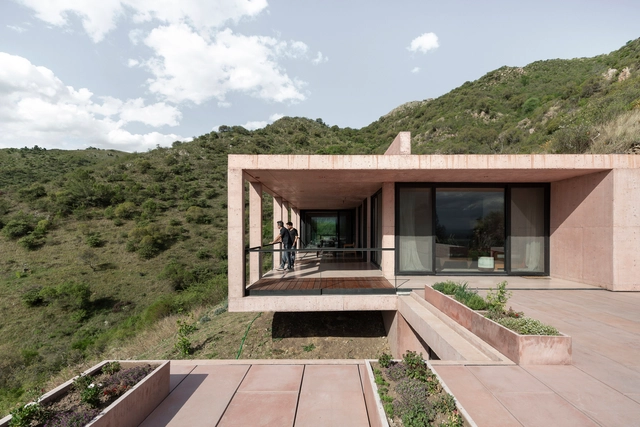
One of the great challenges that architects have to face every day when designing begins with the conditions of the site where the architectural project is to be implemented. This involves the analysis and study of a series of factors ranging from sunlight, topography, surrounding vegetation, context, and others, all variables that are capable of guiding and/or defining the direction of the architecture to be developed.
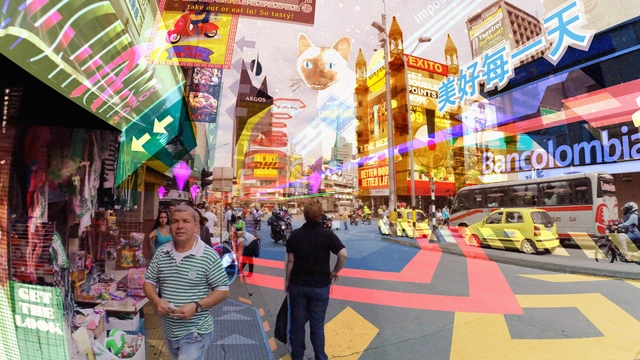
Everyone’s experience of a city is unique. Whether one is visiting a place for the first time or has lived there all their life, their experiences are shaped by their personal interactions with the built environment. Buildings, landscapes, and streets come together to offer an opportunity for sensory stimulation, however, most of them are unable to provide inspiration. While a city’s infrastructure accounts for livability, equal importance isn’t given to enjoyability. Play and games embedded in the city’s fabric can help improve user engagement with urban spaces.
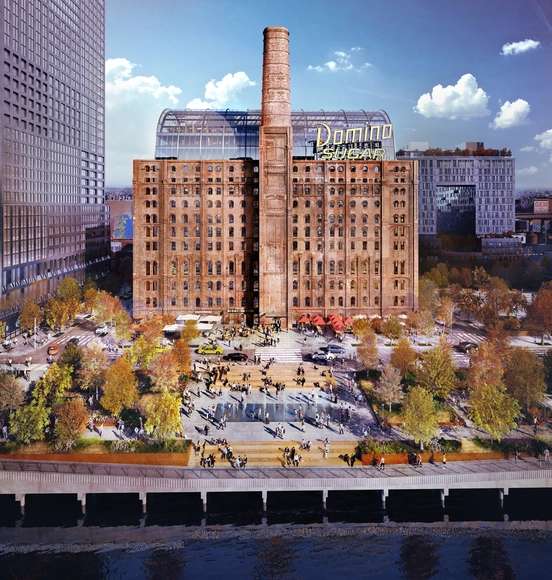
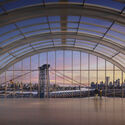
Domino Refinery. Image Courtesy of Practice for Architecture and Urbanism (PAU)
Adaam James Levin-Areddy and Vanessa M. Quirk, the hosts and producers of the Uncertain Things podcast, interview people from diverse backgrounds and a wide range of expertise to ask the question: “now what? What is happening and how did we get here?”. In this episode, they talk with urbanist, architect, and professor Vishaan Chakrabarti, founder of Practice for Architecture and Urbanism, to seek to understand how the cities got so expensive. Together they delve into the affordability crisis, the detrimental effect of progress, and what we need to do to have better cities.
Videos
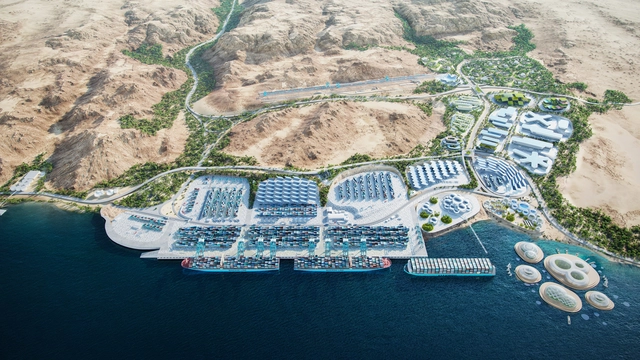
Courtesy of BIG – Image by Ping-Pong Visualization
BIG – Bjarke Ingels Group supports APM Terminals and Maersk in reimagining the shipping industry's future with a master plan for the AqabaPort Terminal in Jordan, expected by 2040. Considered one of the most strategic ports in the country and an important gateway to the Levant region, the 3 square kilometers plan will merge different strategic approaches at the regional scale, starting from the terminal refurbishment, expansion of the logistics functions, and connecting to the broader port's community and natural environment.
There was a time when buildings wanted to be mountains, roofs wanted to be forests, and pillars wanted to be trees. As the world began to go into a state of alert with the melting of glaciers and the consequent rise of Earth’s temperature, architecture – from a general perspective – was concerned with imitating the shapes of nature. Something close to human-made “ecosystems”, seen by many as allegoric and decorative, in service of marketable images of “sustainable development”.
As the growing complexity of our world presents us with ever-growing challenges at an unprecedented speed, our built environment has become one of our society’s most critical questions. From energy scarcity to inequality, density, diversity, waste, food production, circular economy, and identity—it all converges into the built environment. To face this, architecture needs to evolve and scale.
During the last century, our profession has followed a linear evolution since the breakthrough of modernism, but the growing pressures have laid out the perfect scenario to push architecture to take its next leap. We see an increasing number of architects questioning the way we organize and practice, seeking to have a wider, stronger, faster, and more scalable impact. And they are choosing to do things in a new way, creating new practices, companies, collectives, or startups that are leading the revolution with their new approaches, proposals, and solutions, and inspiring others to join.
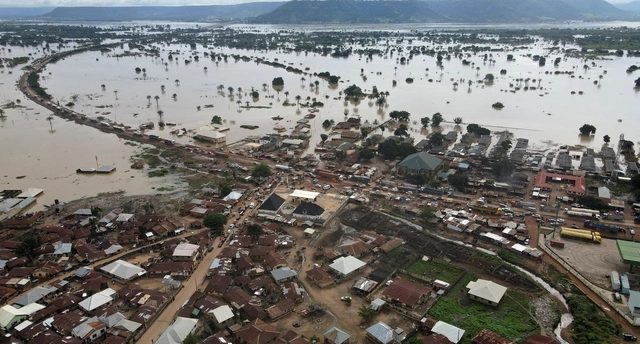
A few days ago, the world gathered at Sharm El Sheik, Egypt, for its annual climate change summit: COP27. Like the rest of Africa, Nigeria is represented by its retinue of bureaucrats, climate advocates, and other interest groups. Since the last meeting in Scotland (COP26), Nigeria signed the Climate Change Act into law, setting a target of attaining net-zero greenhouse gas emissions between 2050 and 2070. In the interim, Nigeria has developed an ambitious energy plan that would see it transition from fossil fuels to renewable energy, using its vast reserve of natural gas as a hedge. The country is at the forefront of the African Carbon Markets Initiative and plans to raise at least $500 million from carbon crediting trading to offset emitted carbon.
https://www.archdaily.com/992422/nigerias-ambitious-climate-agenda-and-its-misplaced-fixation-on-carbon-footprintMathias Agbo, Jr.
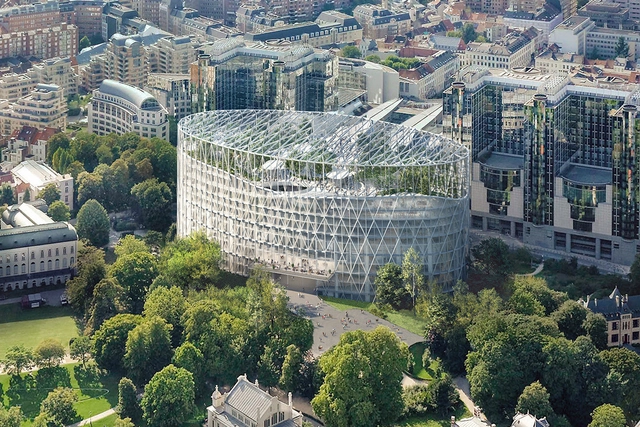
EUROPARC, a pan-European design collective, has been announced as the winners of the international competition to renew the Paul Henri SPAAK Building in Brussels, Belgium. The building housing the Parliament of the European Union has many shortcomings, yet the winners of the competition recognize that demolishing and replacing it might not be a responsible or sustainable solution. The existing building is, therefore, reimagined and adapted better to fit the needs and the identity of the EU. EUROPARC is made up of five architectural studios from five European countries: JDS Architects (DK/BE), Coldefy (FR), CRA-Carlo Ratti Associati (IT), NL Architects (NL), and Ensamble Studio (SP), with the support of engineering companies from UTIL (BE) and Ramboll (DK).
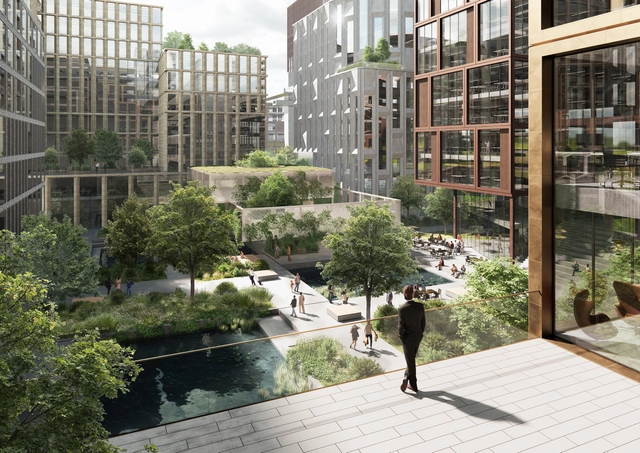
Danish design studio CEBRA won the planning competition to develop the business district at Hannemanns Allé, in Ørestad Syd, Copenhagen, Denmark. With a project emphasizing urban quality, urban life, and area identity, the 150,000 square meters plan will define the framework for future design and completion of the area between the Royal Arena and the Øresund motorway. Expected for completion in 2024, the project is commissioned by Copenhagen Municipality and By&Havn, an organization tasked with developing Ørestad and the city's port.
Expanded polystyrene (EPS) was discovered in 1839 in Berlin and became a widely used material in airplanes manufactured for World War II due to its extremely low density. It is this characteristic that makes it a suitable material for thermal and acoustic insulation, often specified in buildings, but also widely used in packaging. A rigid cellular plastic, it is the result of polymerizing styrene in water, whose end product are expandable beads that have a diameter of up to 3 millimeters. Unfortunately though, this material takes more than 500 years to decompose and, in the process, leaches harmful chemicals into the environment. Recycling is possible, but it is complex and costly. This means that most of the Styrofoam produced to date still remains on the planet, taking up valuable space in landfills, or worse, broken into tiny pieces and interfering with ocean life. "Decomposition Farm: Stairway" is a temporary installation that offers a possible solution to the environmental issues related to construction waste in the architectural field.
550 Madison Avenue (née the AT&T Building, more recently Sony Plaza) is among the more recognizable figures on New York’s skyline. Designed by architect-provocateur Philip Johnson, the 37-story skyscraper stands out thanks to its curious headgear: a classical pediment broken by a circular notch, inviting frequent comparisons to the top of a Chippendale grandfather clock. A singular, if largely inoffensive presence on today’s icon-heavy streetscape, the design was positively shocking on its debut in 1979, when Johnson himself appeared on the cover of Time holding a model of the project, then still four years from completion. The image heralded the arrival of something new in American architecture: the fading of the flat-crowned Modernist towers of the midcentury and the onset of the Postmodernist wave.
"Understanding precedes action." That is the motto of the Urban Observatory, an interactive installation and web app created by TED founder Richard Saul Wurman that compiled a wide range of urban data for over 150 cities, allowing users to compare various characteristics of those cities – from population density to traffic speed limits – side-by-side. Urban Observatory was first created in 2013, a banner year for news about urban big data; later that same year, Waag made headlines with its interactive map visualising the age of every building in the Netherlands. The emergence of such platforms allowed people to see the world around them in new ways.
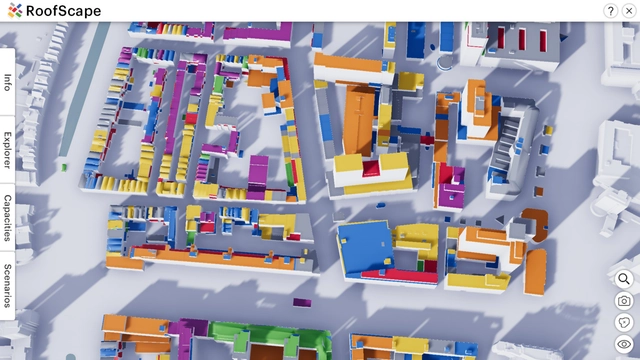
With the rise of Google Earth and other GIS tools, and platforms like envelope.city, or environmental simulations based on digital twin models of cities, urban big data has quietly come to underpin a wide range of tools used by professionals who shape our cities, with both the amount of data collected and the influence it has over decision-making expanding dramatically. However, these advances typically happen behind closed doors and in undemocratic spaces. How long must we wait for software that has all the user-friendliness, accessibility, and appeal of those older platforms, but which provides the average person with the tools to shape their city? In other words, if "understanding precedes action", then why after almost a decade are we not seeing big-data-driven apps that encourage the public to actually do something?
According to the World Population Clock, the human population reached 8 billion on November 15th. According to the UN, this milestone represents a celebration of human longevity due to improvements in public health and medicine, but it also comes with warnings about inequality, limited access to food and resources, and environmental damage. Despite the impressive number, the annual World Population Prospect report shows that the global population is growing at the slowest rate since 1950, and it predicts a continued deceleration in the second half of this century.
As more than half of the worldpopulation lives in cities, an estimated 55.7%, according to UN-Habitat’s latest reports, the urban challenges are growing exponentially. The UN expects this number to increase to 68% by 2050, with close to 90% of this increase taking place in Asia and Africa. Accelerated urbanization can pose significant risks, such as increasing inequality, poverty, sectorized development, social exclusion, and pollution. In this context, a well-balanced urban agenda becomes crucially important in achieving inclusive, safe, and sustainable cities.
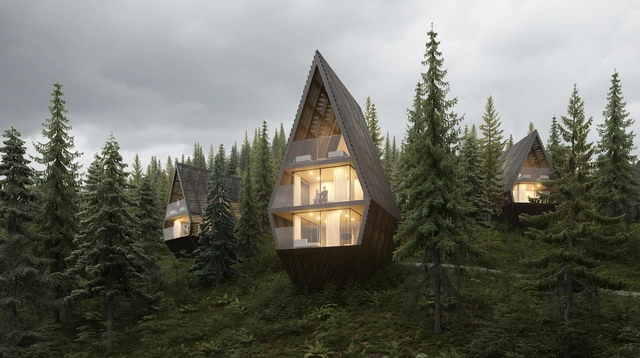
Milan-based architecture studio Peter Pichler has designed an eco-resort to develop a new concept of hospitality in the European Alpine region. Dubbed the YOUNA Nature Resorts, the complex follows the mountain’s silhouette to offer a maximized relaxation experience. The A-shape typology allows wide opens the front facade to connect with nature while reaching high-private interiors under the same roof. The resort is the last of the studio’s series of projects in the Italian rural area, including a hotel in Maranza and a prototype of a treehouse in the forest of the Dolomites.
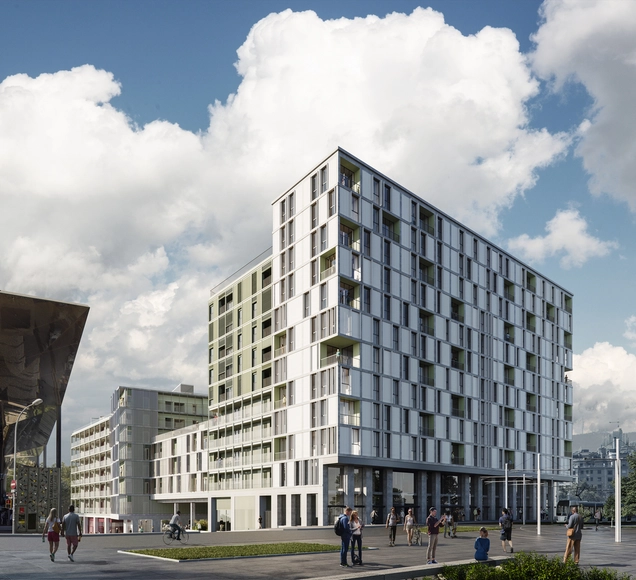
Illa Glories / CIERTO ESTUDIO. Image Cortesía de CIERTO ESTUDIO
CIERTO ESTUDIO was founded by six young architects in 2014. Since then, the team has not stopped growing and thus consolidating its professional practice in Barcelona. These six women architects are: Marta Benedicto, Ivet Gasol, Carlota de Gispert, Anna Llonch, Lucia Millet, and Clara Vidal.
The studio was born from plurality, therefore its thinking is inevitably diverse and this is reflected in its collaborative work methodology, always looking for the maximum architectural claim and its own character.
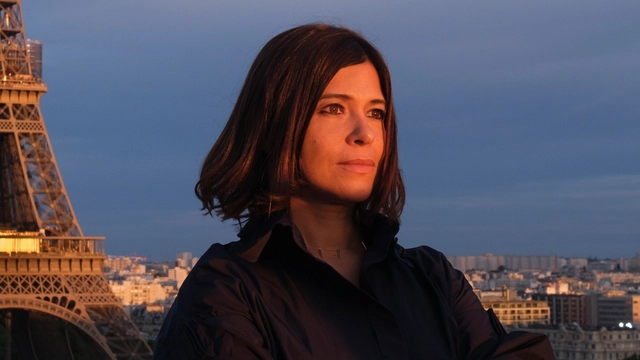
Rozana Montiel has been awarded the 2022 International Prize for Women Architects, organized by ARVHA (Association for Research on Cities and housing) with the support of the Ile de France Region, the French Higher Council of Architects Associations (CNOA), the Pavillon de l'Arsenal and the City of Paris.
https://www.archdaily.com/992247/rozana-montiel-wins-arvha-international-prize-for-women-architects-2022ArchDaily Team
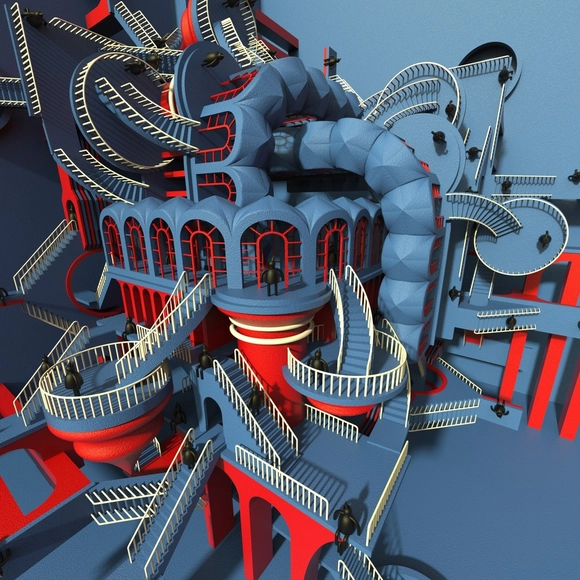
In this episode of “Behind the Scenes”, where we showcase the work of visionary artists and ask about their experiences beyond what is seen by the public, we are presenting Nicolás Sánchez: a designer from Pehuajo, Buenos Aires (Argentina). Nicolás defines himself as an eccentric person with a strong obsession with symmetry and mathematics applied to the objects and spaces that surround him, which awakens in him the curiosity of wanting to understand everything and to find the reason for things. Through his illustrations and animations, he transmits and shares everything he perceives and feels with playful, surreal, and impossible spaces.
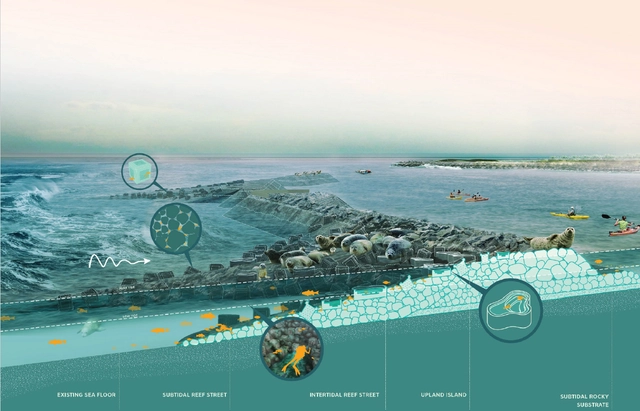
Living Breakwaters, Staten Island, NYC. Image Courtesy of SCRAPE
“Superstorm Sandy in 2012 was a wake-up call for NYC and made the city realize it needed to better prepare for climate change,” said Adrian Smith, FASLA, vice president at ASLA and team leader of Staten Island capital projects with NYC Parks. Due to storm surges from Sandy, “several people in Staten Island perished, and millions in property damage were sustained.”
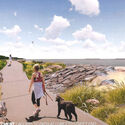
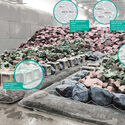
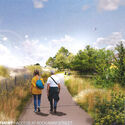
On the 10th anniversary of Sandy, Smith, along with Pippa Brashear, ASLA, principal at SCAPE, and Donna Walcavage, FASLA, principal at Stantec, explained how designing with nature can lead to more resilient shoreline communities. During Climate Week NYC, they walked an online crowd of hundreds through two interconnected projects on the southwestern end of the island: Living Breakwaters and its companion on land — the Tottenville Shoreline Protection Project.