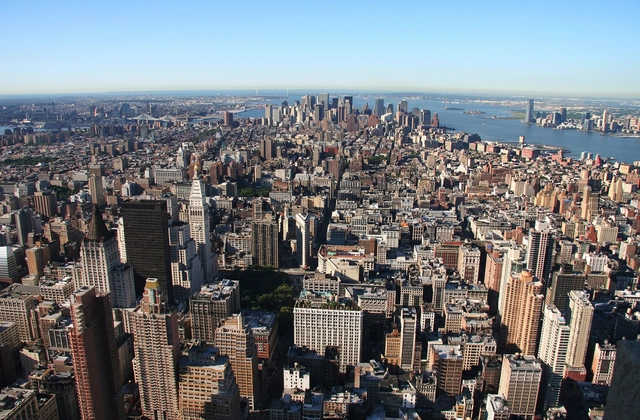
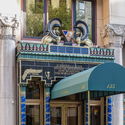
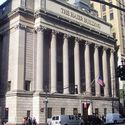
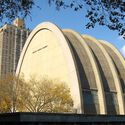
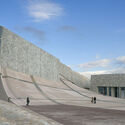
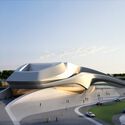
New York City is one of the most exciting places in the world. As an epicenter for the arts, media, and culture, New York has a rich history and a promising future, told mainly through its architecture. Perhaps more known for iconic buildings like the Empire State Building and the Chrysler Building, or even mega-tall residential towers like 432 Park Avenue that have been on the rise, New York also has an abundance of buildings that tell a different story about the history of the Big Apple.
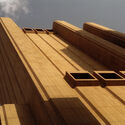
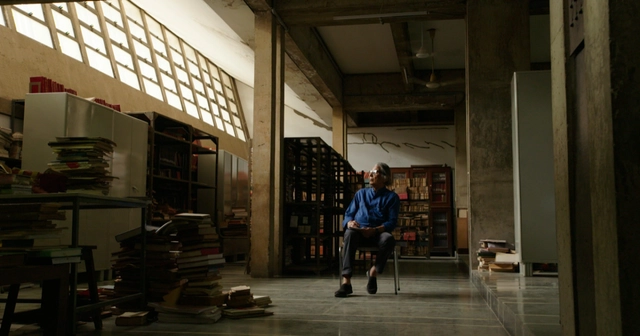
“I am not an architect,” he says with a sparkle in his eyes, “I am merely a person seeking out their destiny.” To the late pioneer of Indian modernism, Balkrishna Vithaldas Doshi, architecture was a practice of self-discovery. The veteran’s stellar works of poetic functionality resulted from a humanist philosophy bearing the influence of modernist principles, Mahatma Gandhi, and Indian spiritual texts. Doshi believed that architecture was synonymous with life - a vehicle for constant celebration; a medium for heightened experiences. His greatest contribution to the architecture community was his powerful words of wisdom that echo the timelessness of his structures.
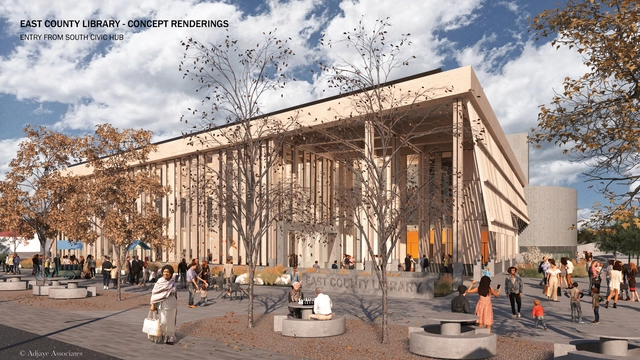
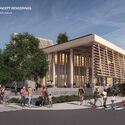
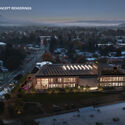
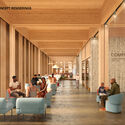
Adjaye Associates, in collaboration with Holst Architecture, the prime architect of record, have unveiled the first renderings for the new East County Library in Portland, Oregon, a new facility that will provide a diverse range of services and programming. The design of the 95,000-square-foot building is informed through extensive community engagement and feedback. Several local organizations aid these efforts by organizing public community events, focus groups, teen outreach, and surveys. As the project is currently in the schematic design phase, the images presented are early drafts, likely to change to reflect the input received.
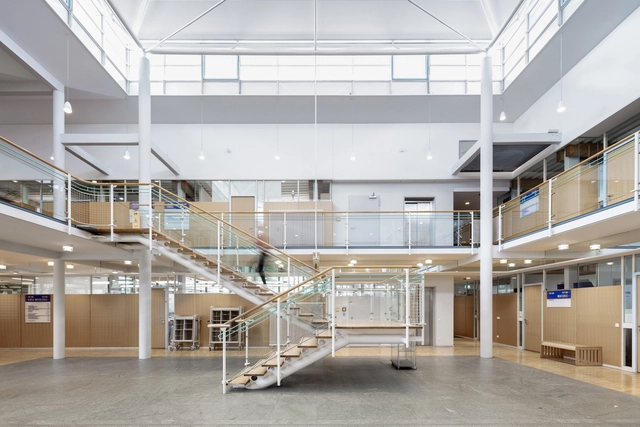
The DAM Preis for Architecture in Germany 2023 has been awarded to Auer Weber for the Extension of the Starnberg District Office. Honoring yearly outstanding buildings in Germany since 2007, the DAM Prize has been bestowed by Deutsches Architekturmuseum (DAM) for the seventh time, in close cooperation with JUNG as a cooperation partner. Fritz Auer and Dominik Fahr from Auer Weber as well as Stefan Frey from Starnberg District Office as the client's representatives received the award, during a ceremony held on January 27, 2023. This year's finalist projects included works by Allmann Sattler Wappner, ELEMENT·A Architekten and Hiendl Schineis Architektenpartnerschaft, Hütten & Paläste Architekten, and LRO Lederer Ragnarsdóttir Oei.
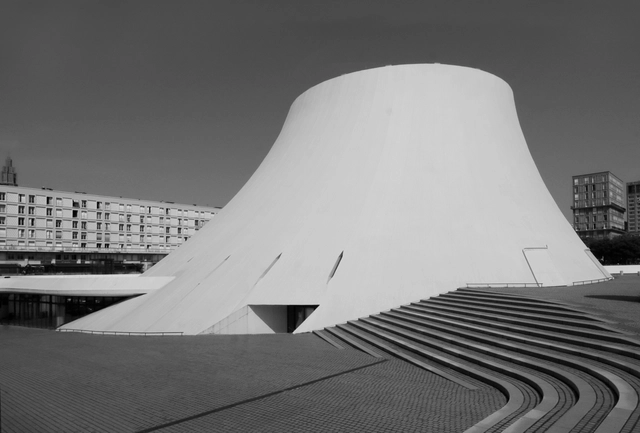
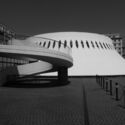
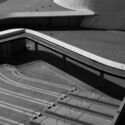
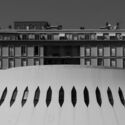
Espace Oscar Niemeyer is a cultural center designed by Oscar Niemeyer in the port city of Le Havre, France. The project’s location is inside the urban reconstruction area conceived by the rationalist architect Auguste Perret after the destruction of the city’s downtown area in World War II.
Somewhere between 1914 and 1915, Le Corbusier designed the Maison Dom-Ino, a groundbreaking modular structure that replaced the heavy load-bearing walls with reinforced concrete columns and slabs. The open floor plan with minimal thin elements, coupled with large glass facades, would ensure healthy natural daylight for the interior spaces as well as desirable architectural transparency that could blur the boundaries between interior and exterior —at least metaphorically.
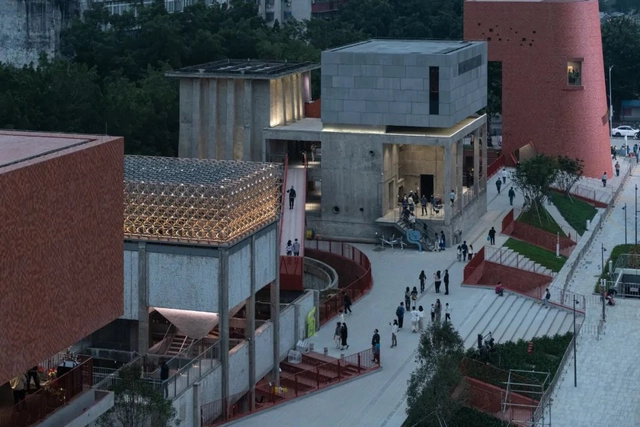
The 9th edition of the Urbanism\Architecture Bi-City Biennale (UABB) of Shenzhen and Hong Kong opened on December 10, 2022. Curated by Lu Andong, Prince Gong, and Aric Chen, the exhibition features hundreds of artists, designers, and architects from fifteen countries. The exhibition will last for three months.
The Biennale's theme, "Urban Cosmologies," encompasses both spatial symbiosis and the temporal rhythms of life. It is a source of ancient Chinese wisdom as well as a cosmology that looks to the future. The "Cosmology of the City" is a field of symbiosis, a part of the "community of life between man and nature".
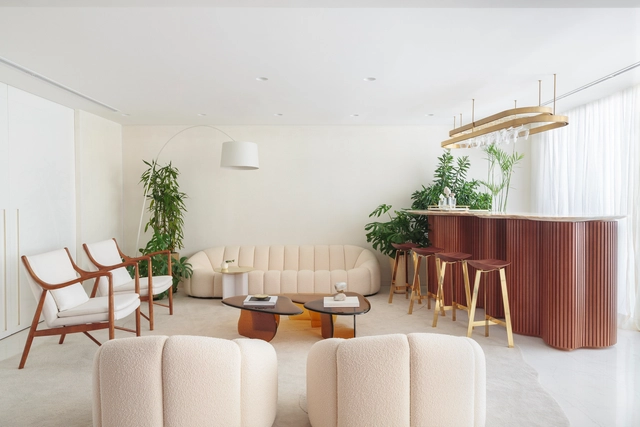
The rationality of orthogonal shapes dominates architecture, despite grand gestures that have sought to oppose themselves throughout history. In large-scale production, the right angles, repetition and modularity of the block or grid of pillars help in the efficiency of construction, despite reproducing the same spatial solutions. Unlike buildings, interior architecture can propose alternatives to break this rationality, whether from partitions or decorative objects.
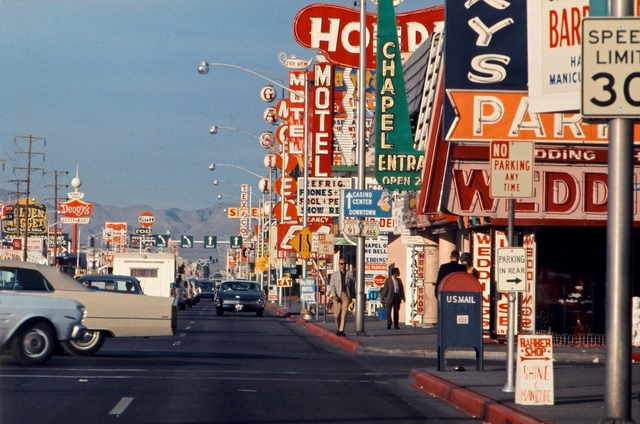
Las Vegas, sometimes known as Sin City, is perhaps the most famous desert metropolis where people gamble, and indulge in entertainment, and other vices. Each year, the city is visited by hundreds of millions of tourists who come to see its flashing lights and round-the-clock nightlife. Las Vegas has garnered so much attention that even Robert Venturi and Denise Scott Brownsought to study its urbanism, concluding with their theories on duck and decorated shed buildings in the early 1970s. But 50 years later, Vegas is still a city that constantly reinvents its architectural identity.
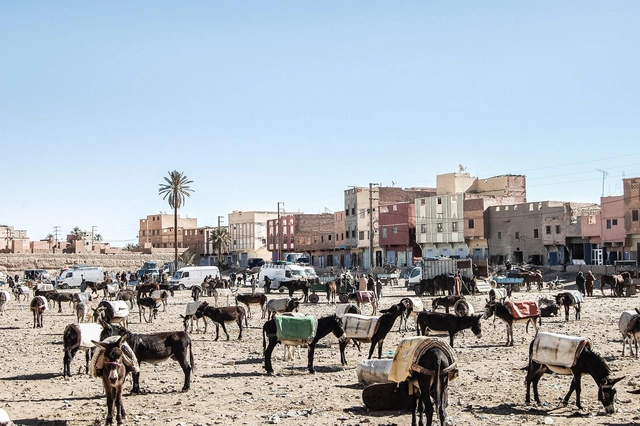
As populations continue to migrate from rural to urban areas, space is at a premium. Many settlements are becoming ever-more congested – with adequate, affordable housing in short supply and transport systems struggling to serve their respective residents. But as much the conversation about urbanization is about people, it is sometimes also about the animals that come with those people – urban livestock that play a key role at providing sustenance on an individual level, in addition to becoming an avenue for communal trade.
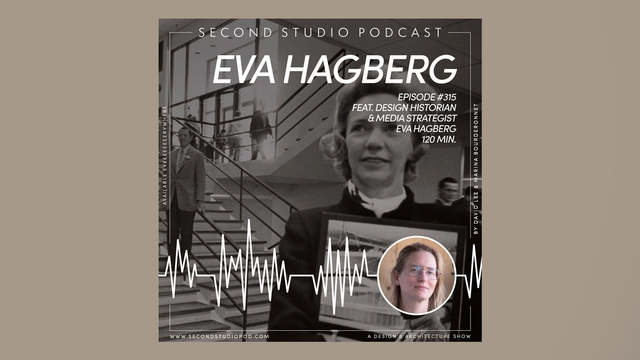
The Second Studio (formerly The Midnight Charette) is an explicit podcast about design, architecture, and the everyday. Hosted by Architects David Lee and Marina Bourderonnet, it features different creative professionals in unscripted conversations that allow for thoughtful takes and personal discussions.
A variety of subjects are covered with honesty and humor: some episodes are interviews, while others are tips for fellow designers, reviews of buildings and other projects, or casual explorations of everyday life and design. The Second Studio is also available on iTunes, Spotify, and YouTube.
https://www.archdaily.com/995571/the-second-studio-podcast-interview-with-eva-hagbergThe Second Studio Podcast
In recent years, the term “co-creation,” a buzzword in the business and management sector, has made its way into the architecture and urban planning discourse. The termis used to define a large concept that describes working intentionally with others to create something jointly. But architecture is already the result of a collaboration between multiple actors, architects, clients, investors, developers, and local administration, to name a few. Can the term still apply to this field, can it bring forth new forms of knowledge, and does it differ from the concept of participatory design?
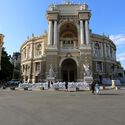
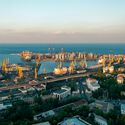
The World Heritage Committee decided to inscribe the Historic Center of the Port City Odesa, Ukraine, on the World Heritage List. The decision symbolizes the recognition of the outstanding value of the site and the commitment of the 194 States Party of the Convention not to undertake any deliberate step that may damage it and to help protect it. The site has also been inscribed on the List of World Heritage in Danger, which gives it access to international financial or technical assistance to ensure its protection and, if necessary, assist in its rehabilitation, according to UNESCO.
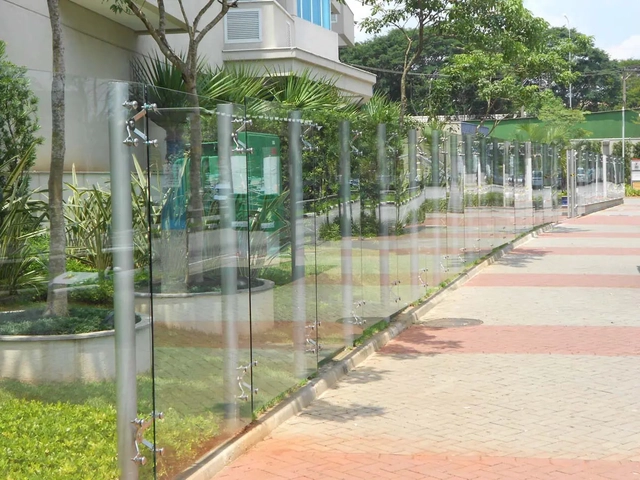
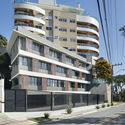
Via construcaoemvidros.com.br. Image used under fair use terms.
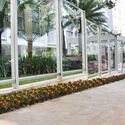
In the past, in a less densely populated urban context, houses and buildings were built with a direct connection to the street, with no need for walls and front fences. Over time, the urban fabric was transformed, and the division between public and private spaces became increasingly evident and — under the argument of public safety — necessary. Although this division occurs in different ways in Brazilian cities, in general, walls, fences and railings are used on the facades, creating a transitional space between the building and the street, transforming the relationship between them.
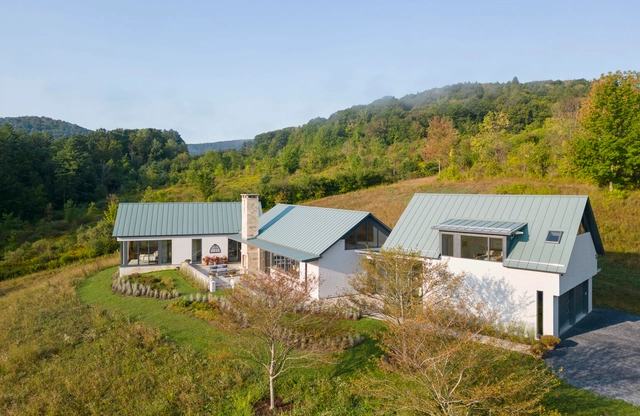
About 50 years ago, the renowned architect, educator, and author Charles Moore was hired by Frederick and Dorothy Rudolph to design a vacation house on Captiva Island, Florida, and about a decade later, in the late 1970s, they hired him again to design their permanent residence in Williamstown, Massachusetts.
Moore was often called the father of Postmodernism and was a prolific proponent through such books as The Place of Houses. With the exception of his small houses, however, I was never a big fan of his work. But I still have a tattered copy of that book, because when I read it, it was the first time that someone had articulated the process of designing a house, including a programmatic checklist to follow.
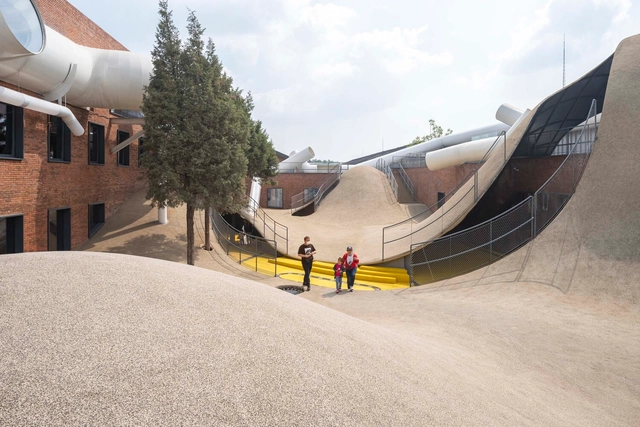
"The flat floor is an invention of architects. It suits machines, not humans." Inspired by the Viennese Secessionists and Austrian artists Egon Schiele and Gustav Klimt, as well as bold Gaudinian forms, the author of this phrase, Friedensreich Hundertwasser (1928-2000), was a prolific painter, sculptor and architect. His works are marked by the dualities between discipline and indiscipline, the predictable and the unexpected, rational and irrational. In his creative adventure, Hundertwasser was not just an enemy of the straight line. He despised architectural rationalism, claiming fluid forms and striking colors.
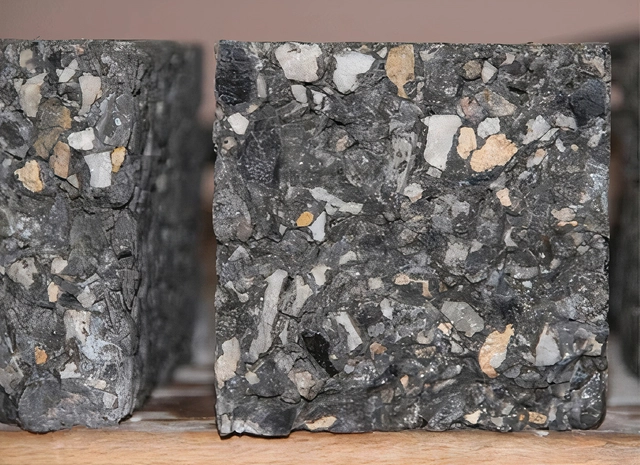
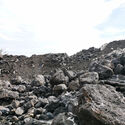
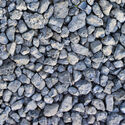
No-Fines Concrete with Steel Slag Samples by L.Korat et al. (2015). Image via ResearchGate. Licensed Under CC BY-SA 3.0
The construction industry is one of the largest in the world, and cement and concrete are literally the building blocks of its success. Evolving from prehistoric caves to today’s towering skyscrapers, concrete structures have and will continue to be vital components of modern civilization, providing long-lasting, reliable support for buildings, roads, bridges, tunnels and dams. So much so that concrete is the most consumed material on Earth, second only to water, while the steel used to reinforce it is by far the most commonly used metal. But this doesn’t come without high environmental costs: concrete accounts for 8% of global CO2 emissions, much of which come from the extraction and transportation of aggregate materials such as sand, gravel and crushed stone.
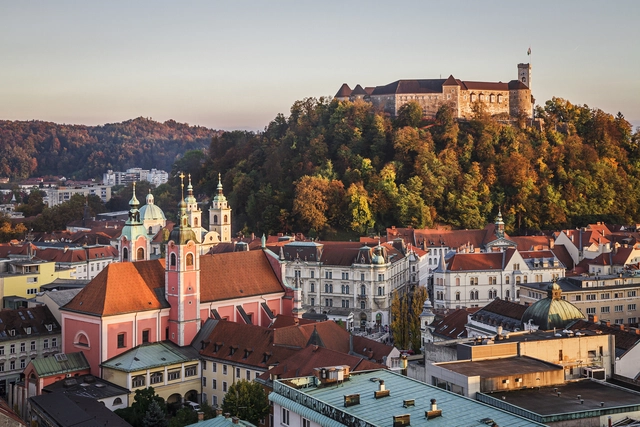
Ljubljana is Europe’s little secret. This small capital city (less than 300,000 inhabitants) is perhaps surprisingly big in terms of architecture, and the variety of its built history makes it a mandatory stop in your architectural journey. From richly painted churches to sobering Brutalism. From classical Baroque and Habsburg-inspired architecture to delightful Art Nouveau façades and interiors. And of course, abundant greenery (Ljubljana is Slovenia’s – and now Europe’s – green capital) and food.
Ljubljana is a city that has many layers. Its beginnings as a Roman city are still visible (a wall, the world’s oldest wooden wheel, and the roads in and out of the city to name a few). Its contemporary vestiges might have aged, but their meaning hasn’t – think of the Republic Square or Brutalist petrol stations. It’s when we visit in person that we are able to truly feel these places and understand these layers.