Videos
Osaka, Japan. Image Courtesy of Norihito Nakatani Seminar
Created by Japanese architectural historian Norihito Nakatani, the film "A City of Columns" explores the distinctive dwelling culture of nagaya, a housing typology that flourished in the Japanese early modern period. The video depicts one of the few remaining nagaya neighbourhoods in Osaka, revealing the standardization embedded in all aspects of this form of housing and documenting how architectural elements transition between different spatial configurations.
Videos
Screenshot from the On Reflection teaser. Image Courtesy of Morris+Company
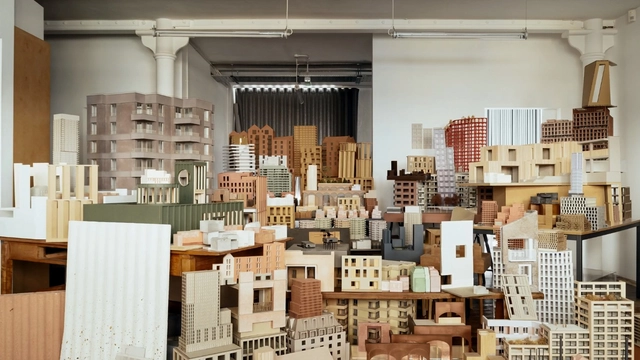
As lockdown provided architects with the opportunity to reflect on their design processes, it prompted Morris + Company founder, Joe Morris, to create On reflection, a series of short films discussing the fundamentals of the practice, centring the conversation around model making as a critical element of design thinking and a wide-ranging architectural tool.
Videos
Scene from "Enter Through The Balcony" trailer. Image Courtesy of Minimal Movie
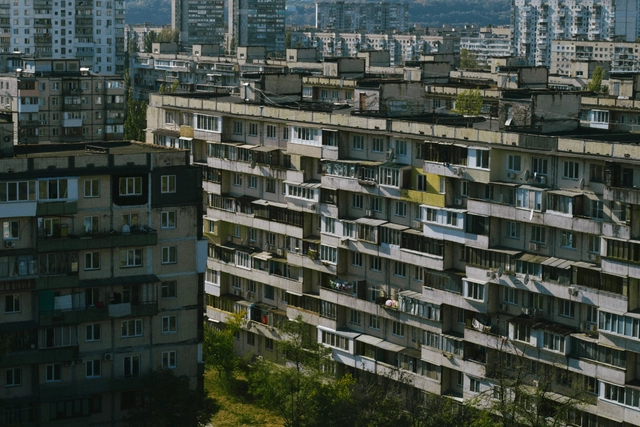
Taking advantage of a lack of governmental regulations, many Ukrainians turn to their balconies to compensate for the shortage of space in prefab-Soviet housing, rebuilding them in a variety of shapes and sizes. The short documentary Enter Through The Balcony explores this phenomenon in Ukrainian architecture, revealing a compelling image of post-Soviet history through local everyday life and culture.
In addition to showcasing a unique attitude towards private versus public space, the makeshift balconies phenomenon is also a symptom of the dramatic pendulum swing from mass uniformity and anonymity, to freedom of expression and ownership of private space, which shaped attitudes and architectures across the former Eastern bloc after 1991.
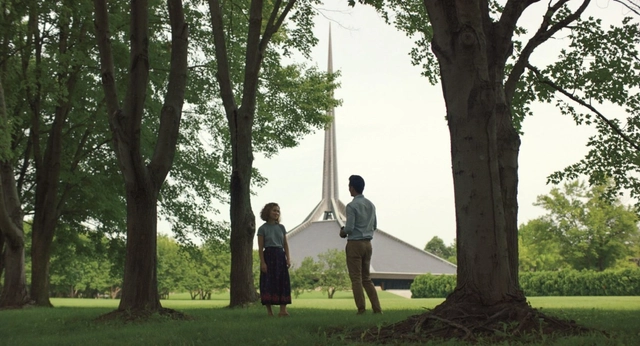
Creative duo another : have collaborated with music composer Yu Miyashita and released a short film that explores the geometric composition of the museum's structure in an exceptional way.
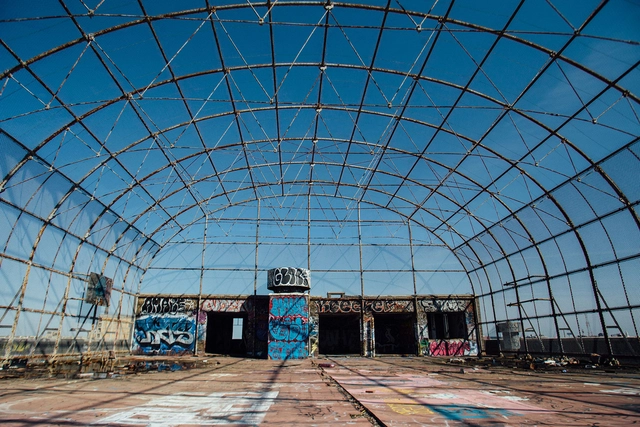
Lebanon-based firm JPAG has created a short architectural movie titled “Coming Back to Life” which uses an abandoned icon from the Lebanese civil war to generate a modern day fairy tale. The Burj El Murr (Tower of Bitterness) has been reimagined in a cinematic narrative loaded with emotional content and dramatic sceneries, in an attempt to generate new understandings of what an architectural concept is.
https://www.archdaily.com/917347/this-architectural-movie-uses-an-abandoned-building-in-lebanon-to-create-a-modern-fairy-taleNiall Patrick Walsh
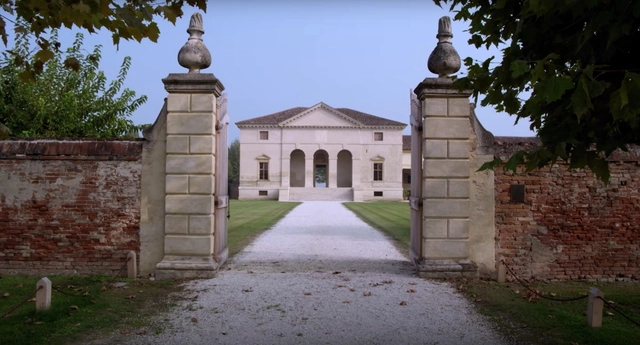
Though only the Italian screenings have officially been announced, for May 20-22, international screenings of the upcoming 97-minute docu-film are promised to be announced soon. Created by Giacomo Gatti together with Scientific Director and Co-author Gregorio Carboni Maestri, “Palladio” features well-known scholars and aficionados of Palladian architecture, including Kenneth Frampton and Peter Eisenman, discussing the great architect’s legacy.
The year 2019 marks the centennial anniversary of the Bauhaus' founding. Founded by Walter Gropius in 1919, the school sought to reimagine material reality. Considered by many to be the most visionary school of early 20th-century art and design, the Bauhaus would spark a global movement in a period of world history otherwise marred by war and economic devastation.
In 1933, The Nazi Party took over Germany and eventually closed the Bauhaus school. Many of the Bauhaus’ leading visionaries emigrated to the United States – bringing the movement with them. László Moholy-Nagy brought the Bauhaus to Chicago, starting a new chapter in the Bauhaus’ history by establishing a school – The New Bauhaus.
Videos
Courtesy of American Institute of Architects
The American Institute of Architects have released the winning films for the 2018 Film Challenge. As part of the institute's larger Blueprint for Better campaign, the film challenge asked participants to produce, shoot, and edit 3 to 5 minute documentary-style short films. The AIA invited architects and filmmakers to collaborate in telling stories of architects, civic leaders and communities working together toward positive community impact.
How does the built environment--whether fictitious or entirely founded in reality--impact how we experience and process film? From lesser-known indies to blockbuster movies, the ways in which architecture and the built environment inform everything from scene and setting, to dialogue and character development has far-reaching effects on the audience’s cinematic experience. Below, a roundup of everything from recent releases to classic cinephile favorites uncovers the myriad ways in which film utilizes architecture as a means of achieving a more authentic and all-encompassing form of storytelling.
If a work can be photographed, drawn, or expressed in words, it can also be the star of a film. This can be seen in Arquitectura en Corto, a Spanish cycle of short films about innovation and trends in contemporary architecture.
"The eruption and widespread availability of social media/mobile videos coupled with the need to illustrate and present innovative projects drives the union between architecture and these mediums," explains Roca Gallery and Technal, the organizers behind Arquitectura en Corto.








_-_after.jpg?1558111235)