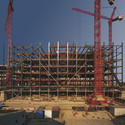
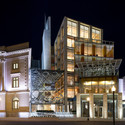
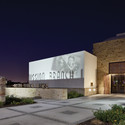
The American Institute of Architects (AIA) has revealed six libraries they believe to be the year's best. In collaboration with the American Library Association (ALA), the AIA/ALA Library Building Awards are intended to promote and honor exceptional designs in library architecture. Taking into account the evolving role of the library, these six award recipients are believed to have elevated the institution to one of congregation and community-specific programs.
The Latrobe Prize, named for architect Benjamin Henry Latrobe, is awarded biennially by the AIA College of Fellows for a two-year program of research leading to significant advances in the architecture profession. The $100,000 award will enable the Arid Lands Institute (ALI) and its cross-disciplinary partners to further develop and test a proprietary digital design tool, known as “Hazel,” that eventually will enable arid communities anywhere to design and build the infrastructure needed to capture, retain and distribute stormwater runoff.
As reported by the Architect's Newspaper, AIANY and The Center for Architecture have released a joint statement announcing the resignation of Executive Director of the AIANY Rick Bell, effective immediately. Bell helped to lead the AIA's New York Chapter to a period of success, with significant growth during his tenure. The statement explains:
“Rick Bell has offered, and the organization’s Board of Directors has accepted, his immediate resignation. An interim Executive Director will be named next week and a search to find a new Executive Director will also begin at that time.”
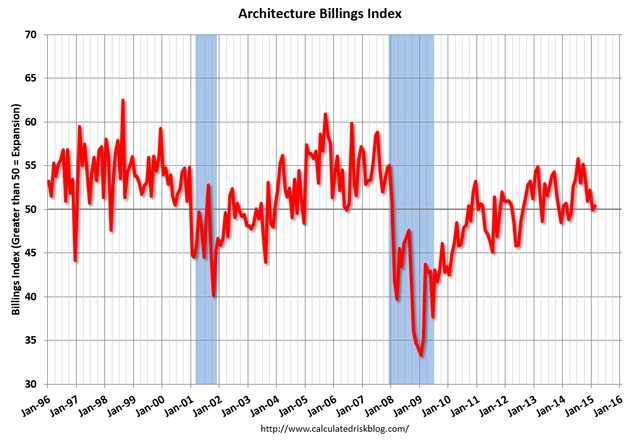
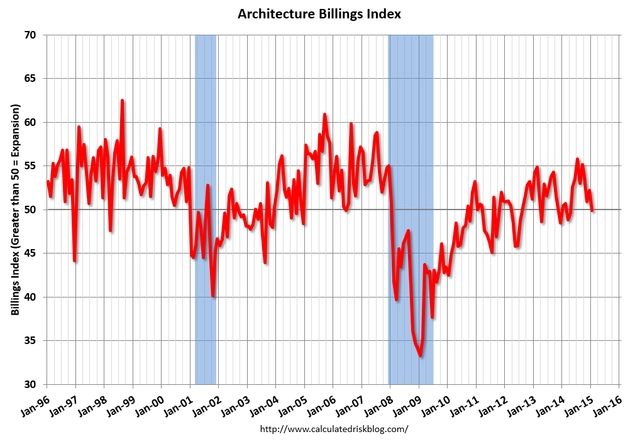
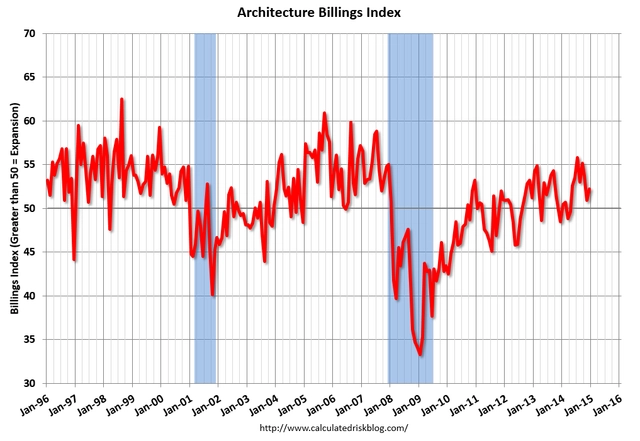
January 2015 ABI. Image via CalculatedRiskBlog.com
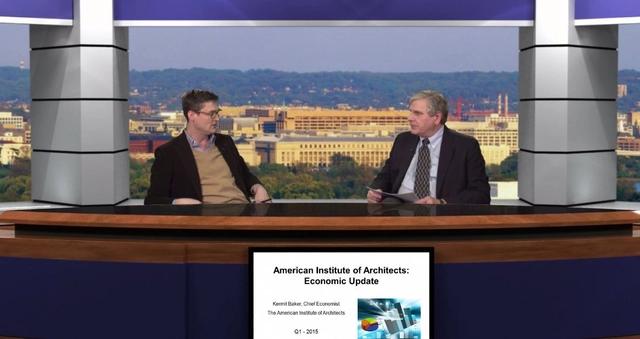
After nine consecutive months of growth, January’s Architecture Billing Index (ABI) reported a “softening” in US design activity. According to the American Institute of Architects (AIA), the January ABI score was 49.9, down from a mark of 52.7 in December. This score reflects a “very modest decrease” in design services (any score above 50 indicates an increase in billings). The new projects inquiry index was 58.7, down from the reading of 59.1 the previous month.
“This easing in demand for design services is a bit of a surprise given the overall strength of the market over the past nine months,” said AIA Chief Economist Kermit Baker, Hon. AIA, PhD. “Likely some of this can be attributed to severe weather conditions in January. We will have a better sense if there is a reason for more serious concern over the next couple of months.”
A breakdown of regional highlights, after the break.
The 2015 Jury of Fellows from the American Institute of Architects (AIA) has elevated five international members to its prestigious College of Fellows, including two architects from the Spanish firm Nieto Sobejano Arquitectos that recently won the 2015 Alvar Aalto Medal. The award is given to those who have made significant contributions to the profession. All Fellows will be honored at an investiture ceremony at the 2015 National AIA Convention and Design Exposition in Atlanta. The complete list of newly inducted Honorary Fellows, after the break.
This week, the American Institute of Architects (AIA) released the results of its first Consensus Construction Forecast of the year. The forecast is compiled based on predictions of the industry's leading forecasters and is conducted bi-annually to anticipate shifting business conditions in the construction industry. The dominant trend in this forecast (projected for 2015 and 2016) is an overall increase in spending in the construction sector.
The American Institute of Architects’ (AIA) recent rejection of a proposed amendment to its existing ethics code has sparked debate over the issue of design and human rights violations. The proposed addendum was drawn up late last summer by Architects/Designers/Planners for Social Responsibility (ADPSR), a nonprofit organization advocating social consciousness in the design field. It stipulated that all AIA members would refrain from designing spaces involving human-rights violations, specifically those "intended for execution or for torture or other cruel, inhuman, or degrading treatment or punishment, including prolonged solitary confinement." This would include execution chambers, interrogation rooms intended for torture, and "supermax" security prisons in which prolonged solitary confinement take place.
However, the main controversy arose when considering whether or not the amendment would be an attainable goal for the AIA. Although the content of the amendment was never in question, its clarity and ability to be enforced were.
Read more about the AIA’s decision to reject the ethics amendment, after the break.
Global, the Winter 2014 issue of ArchitectureBoston magazine, out now, is an examination of the challenges and opportunities facing architects working abroad, from the Middle East to Africa to Asia. The topics explored in this issue include how to value resource-constrained approaches, honor local vernacular, and learn from the urbanization precedents set in other parts of the world. In this article, Jay Wickersham FAIA examines how in a globalized market, architecture firms can take steps to ensure that their designs act in the best interests of the foreign communities they affect.
The signs of architecture’s globalization are all around us. Foreign students flock to Boston to study architecture, prominent buildings are designed by foreign architects, American firms build practices around international projects. Globalization has allowed architects to work outside their own regions and cultures, at a scale and with a freedom of design they might never enjoy at home. But beneath the excitement and glamour of international practice, I sense an unease. Are we creating vital and original new architectures, or are we homogenizing cities and landscapes and obliterating regional differences? Are architects helping to strengthen and develop the economies of host communities, or are they acting as unwitting tools of inequality and repression?
“Business conditions continue to be the strongest at architecture firms in the South and the Western regions,” said AIA Chief Economist Kermit Baker, Hon. AIA, PhD. “Particularly encouraging is the continued solid upturn in design activity at institutional firms, since public sector facilities were the last nonresidential building project type to recover from the downturn.”
A breakdown of regional highlights, after the break.
Registration is now open for AIA Convention 2015, one of the largest and annual gatherings of architects and design professionals in the US. This year's much-anticipated schedule includes: President Bill Clinton's day one keynote address, 300+ career-changing workshops, seminars, tours, and events led by visionaries, grassroots champions, change agents, and rising stars. A dynamic expo floor turned into a temporary built environment with hundreds of exhibitors, first looks, and surprises. All the details can be found, here. ArchDaily will see you there!
The AIA Small Project Practitioners (SPP) invites architects and architecture students to submit design ideas to the 2015 SPP Small Project Design Competition – POP-UP 2015: “A Safe Space.” In this unique design competition, submitters are asked to design a discreet, compact and efficient shelter for the homeless. The fully constructed and completed winning design will be donated to the local non-for-profit partner, The Mad Housers, for use by their clients and program participants.
Four projects have been selected by the American Institute of Architects’ (AIA) for honorably expanding the role of the architect beyond the building and into the realms of urban design, regional and city planning, and community development. These projects will be honored with the AIA’s Institute Honor Awards for Regional and Urban Design at the 2015 National Convention and Design Exposition in Atlanta. See the winners, after the break.
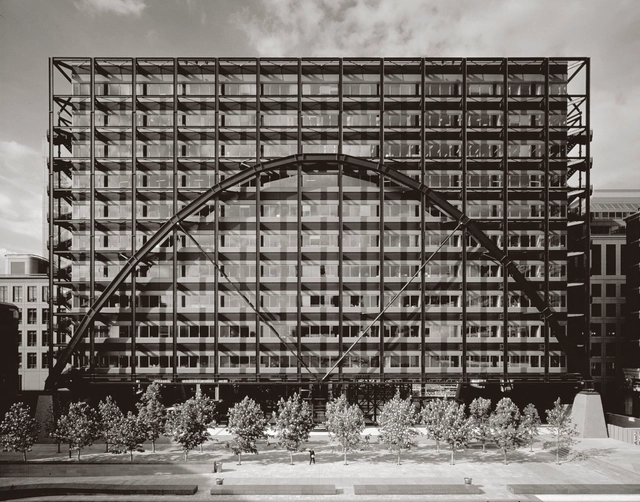
Skidmore, Owings & Merrill’s Broadgate Exchange House (1990) in London has been announced as the 2015 recipient of the American Institute of Architects’ 25-Year Award. The first UK project to ever win the award, the ten-story Exchange House was commended for “standing the test of time” with its “simple yet ingenious structural system that unifies design and function in the mid-century Modernist tradition.”
.jpg?1428002512&format=webp&width=640&height=580)


.jpg?1428002512)
.jpg?1428000940&format=webp&width=640&height=580)

















.jpg?1420836447&format=webp&width=640&height=580)

.jpg?1420836358 "© BIG")


.jpg?1420836447)