Positive Signs of Growth Reflected in Steady ABI and Higher Intern Employment Rates

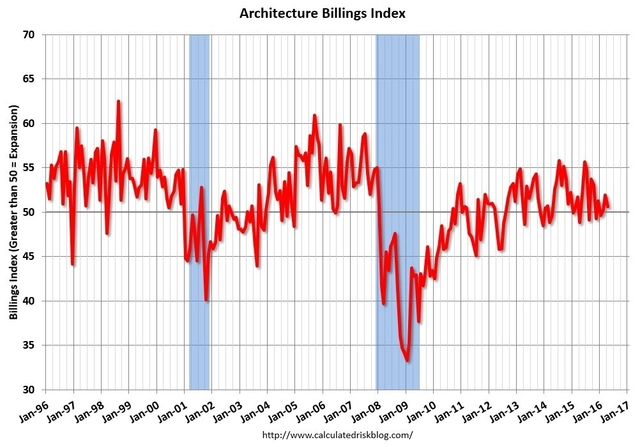
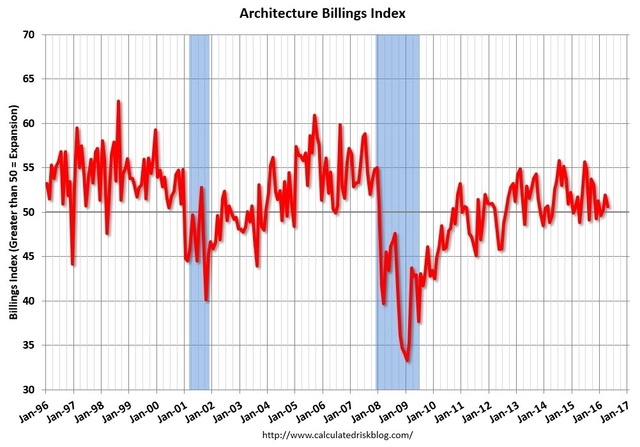
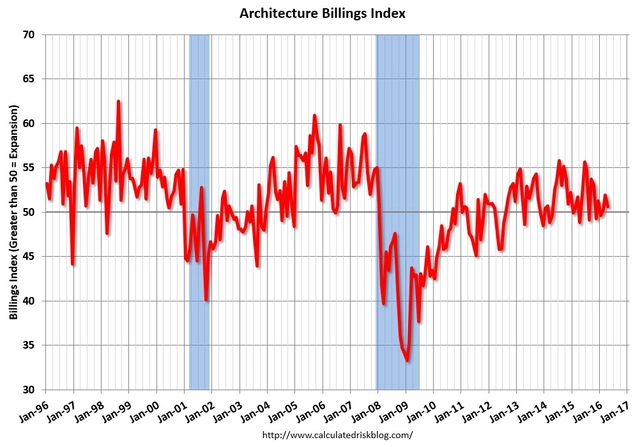
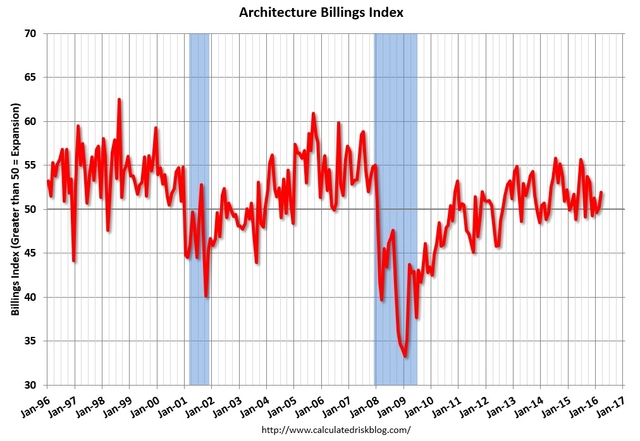
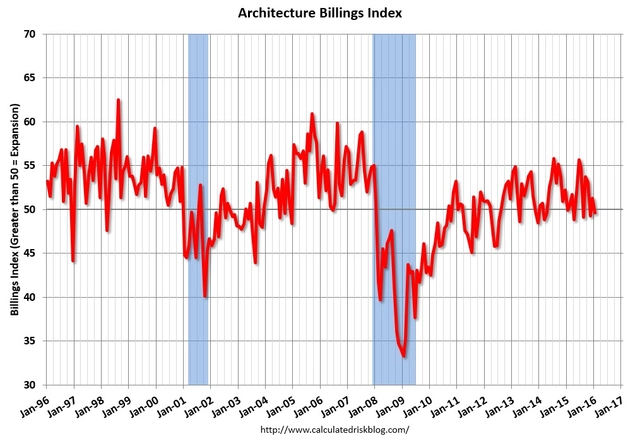
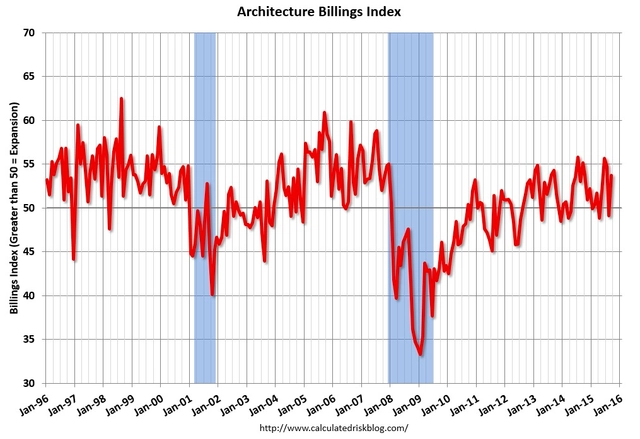
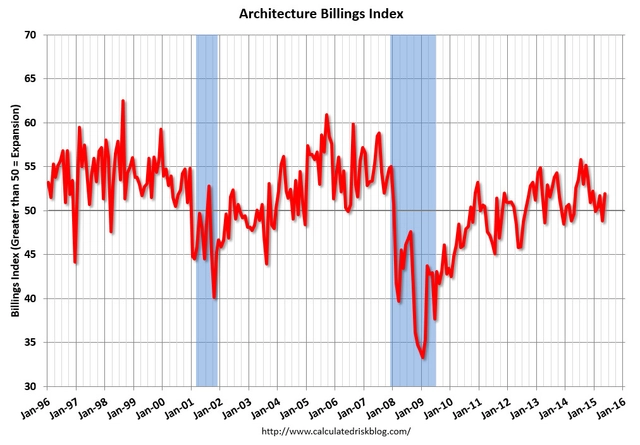
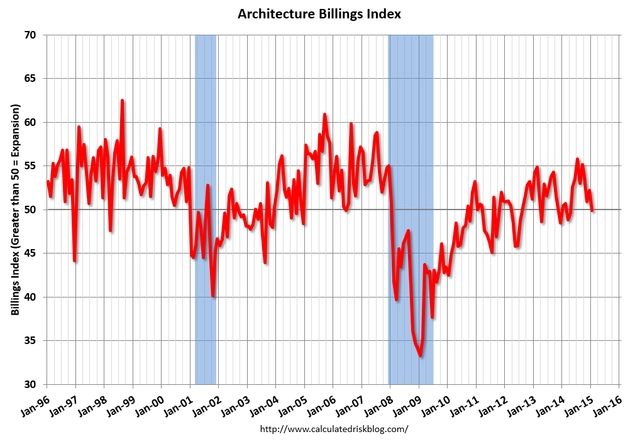
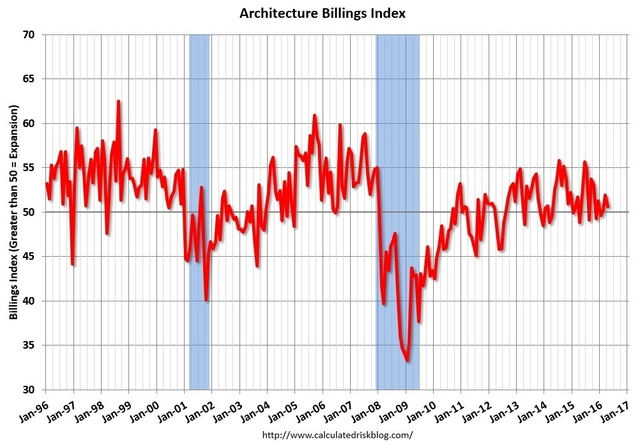
For the eight consecutive month, the Architecture Billings Index (ABI) is reflecting a steady upturn in design activity. As a leading economic indicator of construction activity, the ABI reflects the approximate nine to twelve month lag time between architecture billings and construction spending. Although the American Institute of Architects (AIA) reported the March ABI score was 51.9, down from a mark of 54.9 in February, this score still reflects an increase in demand for design services (any score above 50 indicates an increase in billings). In addition, the new projects inquiry index was 60.1, down from the reading of 64.8 the previous month.
“Business conditions in the construction industry have generally been improving over the last several months,” said AIA Chief Economist, Kermit Baker, PhD, Hon. AIA. “But as we have continued to report, the recovery has been uneven across the major construction sectors so it’s not a big surprise that there was some easing in the pace of growth in March compared to previous months.”
Key ABI highlights and details indicating higher employment rates for intern architects after the break…
ABI Continues to Steadily Climb for Seventh Straight Month

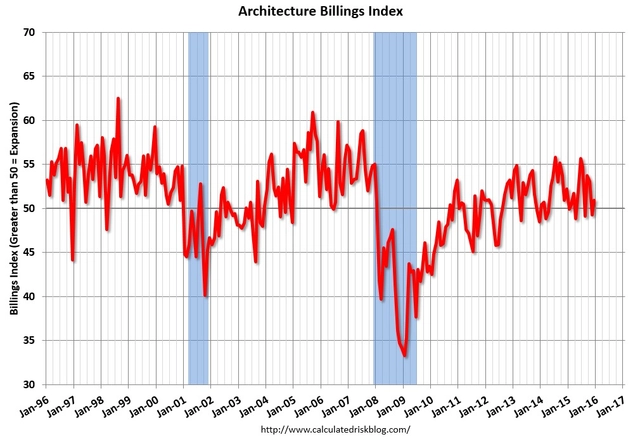
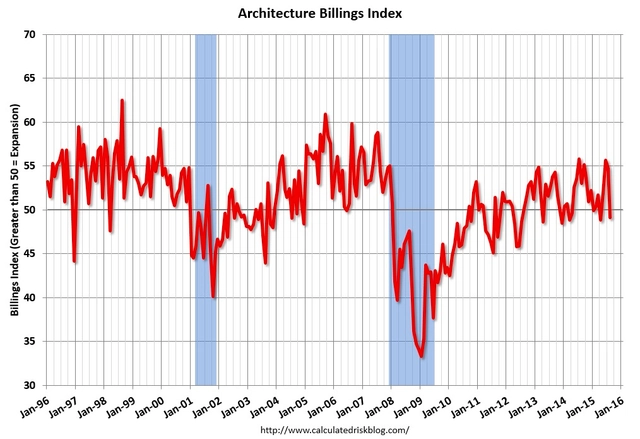
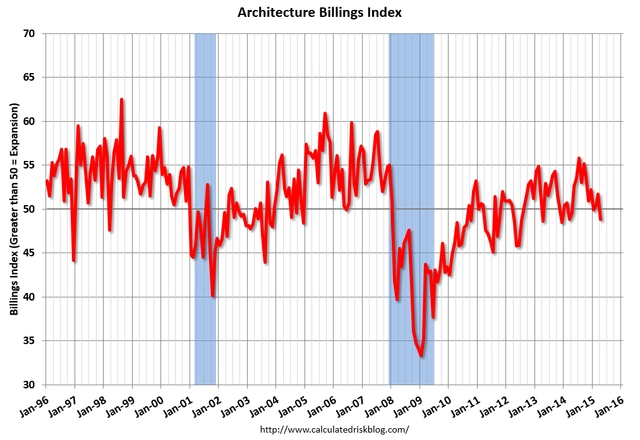
An increasing demand for design services in the United States continues to strengthen the Architecture Billings Index (ABI). As a leading economic indicator of construction activity, the ABI reflects the approximate nine to twelve month lag time between architecture billings and construction spending. The American Institute of Architects (AIA) has reported the February ABI score as 54.9, up slightly from a mark of 54.2 in January. This score reflects a strong increase in demand for design services (any score above 50 indicates an increase in billings). In addition, the new projects inquiry index was 64.8, higher than the reading of 63.2 the previous month and its highest mark since January 2007.
“Conditions have been strengthening in all regions and construction sectors for the last several months,” said AIA Chief Economist, Kermit Baker, PhD, Hon. AIA. “Still, we also continue to hear a mix of business conditions in the marketplace as this hesitant recovery continues to unfold.”
Key February ABI highlights:
ABI Reports Six Consecutive Month of Growth and Best Conditions Since 2007

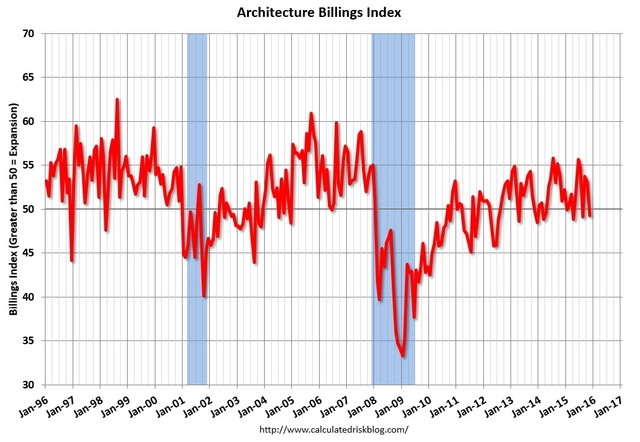
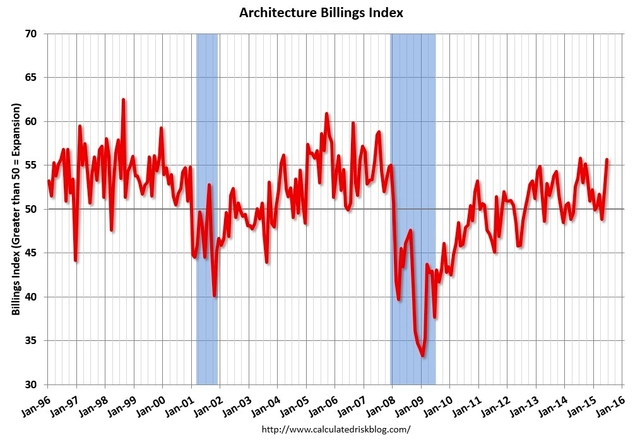
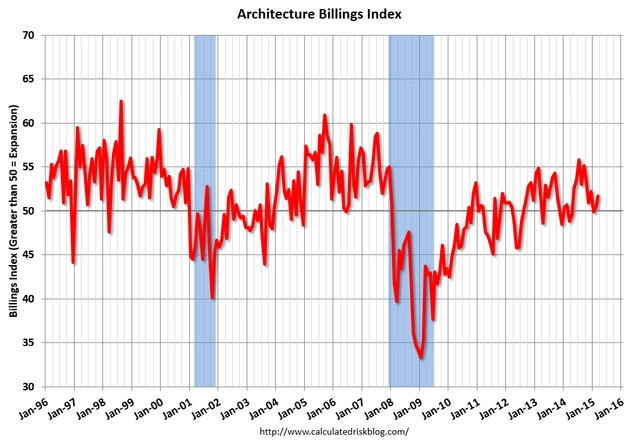
Reflecting the strongest growth since November 2007, the January Architecture Billings Index (ABI) surged to a score of 54.2 – a sharp and welcomed increase from December’s 51.2* mark. Released by the American Institute of Architects (AIA), the ABI is a leading economic indicator of construction activity that reflects the approximate nine to twelve month lag time between architecture billings and construction spending. By remaining above 50, January’s score illustrates the six consecutive month of growth for the United State’s design and construction industry. This trend doesn’t seem to be going away any time soon, as the new projects inquiry index accelerated beyond last month’s reading of 57.9 and reached a score of 63.2.
“We have been pointing in this direction for the last several months, but this is the strongest indication that there will be an upturn in construction activity in the coming months,” said AIA Chief Economist, Kermit Baker, PhD, Hon. AIA. “But as we continue to hear about overall improving economic conditions and that there are more inquiries for new design projects in the marketplace, a continued reservation by lending institutions to supply financing for construction projects is preventing a more widespread recovery in the industry.”
Review the ABI Highlights in greater detail, after the break…
ABI Reports Five Consecutive Months of Growth

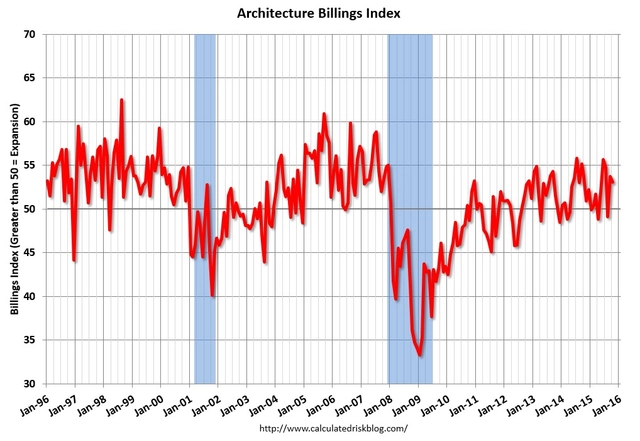
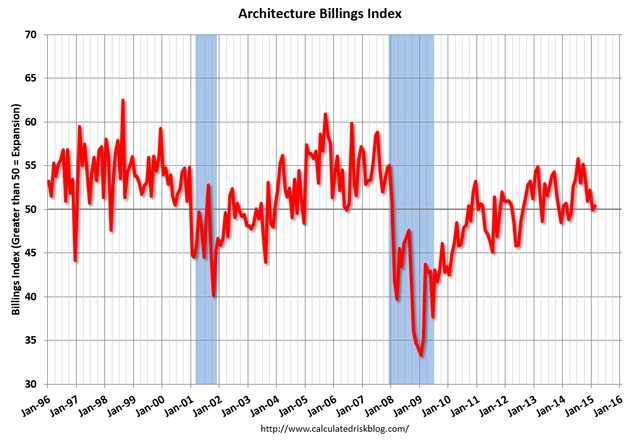
Concluding 2012 with strong business conditions, the December Architecture Billings Index (ABI) marks five consecutive months of growth with a score of 52.0. Released by the American Institute of Architects (AIA), the ABI is a leading economic indicator of construction activity that reflects the approximate nine to twelve month lag time between architecture billings and construction spending. By remaining above 50, December’s score reflects an increase in demand for design services. However, growth is slightly slower than the previous month, whose mark at 53.2 brought the strongest business conditions since 2007. Additionally, the new projects inquiry index remains in positive territory with a score of 59.4, also down slightly from the 59.6 mark of November.
A five-month run of growth is a trend that has repeated itself since 2010. However, analysts are optimistic. Growth in 2012 began earlier in the year, picking up speed in early August rather than late Fall.
“While it’s not an across the board recovery, we are hearing a much more positive outlook in terms of demand for design services,” said AIA Chief Economist, Kermit Baker, PhD, Hon. AIA. “Moving into 2013 we are expecting this trend to continue and conditions improve at a slow and steady rate. That said, we remain concerned that continued uncertainty over the outcomes of budget sequestration and the debt ceiling could impact further economic growth.”
View the ABI highlights in greater detail, after the break…
ABI Reports Strongest Business Conditions Since 2007

The numbers are in and the American Institute of Architects’ November Architecture Billings Index (ABI) has revealed positive business conditions for all building sectors for the fourth consecutive month.
As a leading economic indicator of construction activity, the ABI reflects the approximate nine to twelve month lag time between architecture billings and construction spending. Understanding this, the AIA is pleased to report that November has reached a five-year high with a score of 53.2, slightly up from 52.8 in October. Since August, the national billings index has continued to increased above 50.0 – the break-even point between contraction and growth – reflecting a steady rise in demand for design services. The West seems to be the only region in contraction, coming in at a score of 49.6.
Additionally, November also sees the Project Inquiry Index at 59.6, marking the 47th straight month in which inquiries into architectural services has been increasing.
“These are the strongest business conditions we have seen since the end of 2007 before the construction market collapse,” said AIA Chief Economist, Kermit Baker, PhD, Hon. AIA. “The real question now is if the federal budget situation gets cleared up which will likely lead to the green lighting of numerous projects currently on hold. If we do end up going off the ‘fiscal cliff’ then we can expect a significant setback for the entire design and construction industry.”
View the ABI highlights in greater detail, after the break…
ABI Remains Positive for Third Straight Month

Billings at architecture firms accelerated to their strongest pace of growth since December 2010. As a leading economic indicator of construction activity, the Architecture Billings Index (ABI) reflects the approximate nine to twelve month lag time between architecture billings and construction spending. The American Institute of Architects (AIA) reported the October ABI score was 52.8, up from the mark of 51.6 in September. This score reflects an increase in demand for design services (any score above 50 indicates an increase in billings). The new projects inquiry index was 59.4, compared to a mark of 57.3 the previous month.
“With three straight monthly gains – and the past two being quite strong – it’s beginning to look like demand for design services has turned the corner,” said AIA Chief Economist, Kermit Baker, PhD, Hon. AIA. “With 2012 winding down on an upnote, and with the national elections finally behind us, there is a general sense of optimism. However, this is balanced by a tremendous amount of anxiety and uncertainty in the marketplace, which likely means that we’ll have a few more bumps before we enter a full-blown expansion.”
Update: ABI September

We are happy to share on the beginning of this working week that the Architecture Billings Index has moved into positive territory for the first time in five months! The drastic three-point leap has launched the ABI to 50.2, up from last month’s 48.4, and the new project inquiry index moved to 57.2, up from mark of 56.3. As we have reported previously, the ABI is our profession’s economic indicator and any score above 50 indicates an increase in billings. Regionally, the South leads with 52.2, followed by the West with 51.2, Northeast at 45.5, and Midwest at 45.3. In terms of architectural sectors, multi-family residential and institutional place above 50 while institutional, commercial/industrial, and mixed practice all remain above 46. “Until the economy is on firmer ground, there aren’t likely to be strong increases in demand for design services,” said AIA Chief Economist, Kermit Baker, PhD, Hon. AIA. “In the meantime, we can expect to see design activity alternate between modest growth and modest decline.”
We hope this positive score will let your Monday be a little bit merrier.
Update: ABI July

In continuing our coverage of the Architecture Billings Index, we share this past month’s score of 48.7 While such a mark still falls in negative territory (any score under 50 indicates a decline in billings), July’s activity was a considerable jump from June’s meager 45.9. And, even better, July’s new projects inquiry index moved up almost two full points to 56.3. Regionally, the South is surprisingly leading the averages with 52.7, followed by the Midwest with 46.7, the West with 45.3, and lastly, the Northeast region capping out at 44.3. In terms of the sector breakdown, multi-family residential remains strong with 51.4 followed by commercial/industrial projects and institutional projects. AIA Chief Economist, Kermit Baker, PhD, Hon. AIA, explained, “Even though architecture firm billings nationally were down again in July, the downturn moderated substantially. As long as overall economic conditions continue to show improvement, modest declines should shift over to growth in design activity over the coming months.”
Hopefully, we can hold on to this slight momentum upward and push toward higher numbers as we approach the Fall.
Update: ABI June

The June ABI has proven that we still have not been able to shake the weak activity of May - the score capped out at 45.9 from 45.8, marking the third month in negative territory. The market continues to show a drop in demand across all design services, in all regions. The poor conditions suggest upcoming weakness in spending on nonresidential construction projects, as each sector of construction shows negative growth commercial/industrial 46.9, institutional 46.0, and mixed practice 45.9. “The downturn in design activity that began in April and accelerated in May has continued into June, likely extending the weak market conditions we’ve seen in nonresidential building activity ,” said AIA Chief Economist, Kermit Baker, PhD, Hon. AIA. “While not all firms are experiencing negative conditions, a large share is still coping with a sluggish and erratic marketplace.”
Sorry for such harsh news to start the work week – but if it is any consolation, there’s always next month….and, the Olympics begin Friday.
Update: ABI May

We continue our coverage of the Architecture Billings Index with a not-so optimistic report for May. The economic indicator showed a substantial drop in the Index (which had previously been inching upward over the past five months). In fact, all regions reported a decline in demand for design services and all regions fell below 50 (any score above 50 indicates an increase in billings). The official report for May was 45.8, with the regional breakdown as follows: Northeast (48.6), West (47.6), Midwest (46.8), South (46.1). “For the second year in a row, we’re seeing declines in springtime design activity after a healthy first quarter. Given the ongoing uncertainly in the economic outlook, particularly the weak job growth numbers in recent months, this should be an alarm bell going off for the design and construction industry,” said AIA Chief Economist, Kermit Baker, PhD, Hon. AIA. “The commercial/industrial sector is the only one recording gains in design activity at present, and even this sector has slowed significantly. Construction forecasters will have to reassess what conditions will look like moving forward.”
We will keep you updated and hope for some different news for June.
Update: ABI April

And, we are back with our monthly updates of the Architecture Billings Index. Last month looked promising as March marked the fifth consecutive positive rating. However, April’s index has been calculated as 48.4 – a drop from March’s 50.4. The index has been a roller coaster ride of slight positive trends followed by negative setbacks, and AIA Chief Economist, Kermit Baker, explains, “Considering the continued volatility in the overall economy, this decline in demand for design services isn’t terribly surprising. Also, favorable conditions during the winter months may have accelerated design billings, producing a pause in projects that have moved ahead faster than expected.”
More about April’s index after the break.
Update: ABI March
In keeping with our coverage of the ABI, the index scored 50.4 for March, marking the fifth consecutive month showing positive conditions.
The billings index is our industry’s leading indicator of construction activity, and for March, the commercial sector is continuing its positive run with a score of 56.0. Although scores above 50 reflect a positive showing, the new projects inquiry dropped to 56.6 from a high 63.4 reported in February. “We are starting to hear more about improving conditions in the marketplace, with a greater sense of optimism that there will be greater demand for design services,” said AIA Chief Economist, Kermit Baker, PhD, Hon. AIA. “But that is not across the board and there are still a number of architecture firms struggling so progress is likely to be measured in inches rather than miles for the next few months.” Regionally, the Midwest leads with 54.1, following by the Northeast, South and West with scores of 53.9, 50.1 and 46.6, respectively.
While the five month run seems to show promising conditions, the index is barely above the cutoff score of 50 and conditions have remained volatile throughout this post recession period. And, although we enjoying sharing the statistics, we understand the numbers don’t tell the whole story, so we would like to hear how your firms are fairing. Have your projects included an increase in commercial programs recently? Let us know in the comments below.
Update: ABI / February
Last month, our reporting of the Architecture Billings Index was a little pessimistic, as the slight upward movement was no sure sign of a stable recovery. Yet, February marks the fourth month the Billings Index has remained in positive territory (a score of 50 or more indicates as such), and while we are cautious to mark the volatile index’s movement as a trend, we sure hope it is! February reported a score of 51.0 and a significant jump was reached in the new project inquiry index (up from 61.2 to 63.4). In fact, the 63.4 score is the highest inquires for new projects since July of 2007. “This is more good news for the design and construction industry that continues to see improving business conditions,” said AIA Chief Economist, Kermit Baker, PhD, Hon. AIA. “The factors that are preventing a more accelerated recovery are persistent caution from clients to move ahead with new projects, and a continued difficulty in accessing financing for projects that developers have decided to pursue.” Breaking the index down regionally, the Midwest leads with 56.0, followed by the South, Northeast and finally the West with scores of 51.3, 51.0, 45.6, respectively.
Update: ABI January

The Architecture Billings Index (ABI) has clocked in at a positive 50.9 for January. Although the score brings the ABI into positive territories for the past three months, 50.9 is slightly over the positive measuring marker and actually, just under December’s mark of 51.0. Regional averages place the Midwest as the leading area with 53.7; followed by the South (51.6), Northeast (50.7), and West (45.6). AIA Chief Economist, Kermit Baker, PhD, Hon. AIA explained that even though the index is showing a similar upturn in design billings to the late 2010 and early 2011, firms are still having a hard time staying on their feet. “We still continue to hear about struggling firms and some continued uncertainly in the market, we expect that overall economic improvements in the design and construction sector to be modest in the coming months.”
We want to know if you are seeing positive effects of an increased ABI over the past three months. Are your offices acquiring more projects? Hiring new people? Or, has the situation remained similar over the past months?
Nonresidential Construction Spending Expected to Increase in 2012

In 2011, a volatile Architecture Billings Index (ABI) reflected the unstable conditions U.S. practices were struggling to deal with. However, the year ended optimistically as the ABI remained at 52.0 for the month of December. So far, January has prolonged the hopeful outlook for the American design and construction industry, as many reports highlight a “modest recovery” in the nonresidential sector for 2012 and an even stronger upturn in 2013.
“Spending on hotels, industrial plants and commercial properties are going to set the pace for the construction industry over the next two years,” said AIA Chief Economist, Kermit Baker, PhD, Hon. AIA. “The institutional market won’t experience the same growth, but healthcare facilities and places of worship are poised for a positive economic outlook in that sector.”
Continue reading for more.
Update: ABI December

We are happy to report another positive showing for the ABI this month as the index remained at 52.0 for the month of December. Prior to November, the volatile ABI showed the struggling and unstable conditions many practices were experiencing throughout 2011; yet, this month brings another bit of hope for the profession. “We saw nearly identical conditions in November and December of 2010 only to see momentum sputter and billings fall into negative territory as we moved through 2011, so it’s too early to be sure that we are in a full recovery mode,” said AIA Chief Economist, Kermit Baker, PhD, Hon. AIA. “Nevertheless, this is very good news for the design and construction industry and it’s entirely possible conditions will slowly continue to improve as the year progresses.” Regional breakdowns are as follows: Regional averages: South (54.2), Midwest (53.1), Northeast (52.6), West (45.1) and Multim-family residential led the sector index breakdown with 54.3. It was nice to finish the rocky year of 2011 with a consecutive positive index, and we’re optimistic for more improvement in 2012.
Update: ABI / November

Finally! Amidst all the holiday cheer, we are happy to report a positive Architecture Billings Index this month. From August through October, the ABI has had a crazy run with large dips in the index, but November has changed that with a score a 52.0. Up from 49.4 in October, the 52.0 teamed with a new projects inquiry index of 65.0 rounds out a strong November. Interesting to note, the South led the regional averages with 54.4 followed by the Midwest (50.9) and then the Northeast (49.1) and the West (45.6). And, the sector breakdown measured multi-family residential at 55.8 while industrial/commercial tallied 53.9/ “This is a heartening development for the design and construction industry that only a few years ago accounted for nearly ten percent of overall GDP but has fallen to slightly less than six percent,” said AIA Chief Economist, Kermit Baker, PhD, Hon. AIA. “Hopefully, this uptick in billings is a sign that a recovery phase is in the works. However, given the volatility that we’ve seen nationally and internationally recently, we’ll need to see several more months of positive readings before we’ll have much confidence that the U.S. construction recession is ending.”
Update: ABI September

The AIA just reported September’s Architecture Billings Index measuring 46.9, a sharp drop since August’s 51.4. Such a low index reflects a decrease in demand for design services, and the new projects inquiry index was 54.3, down from a reading of 56.9 the previous month. “It appears that the positive conditions seen last month were more of an aberration,” said AIA Chief Economist, Kermit Baker, PhD, Hon. AIA. “The economy is weak enough at present that design activity is bouncing around more than usual; one strong month can be followed by a weak one. The economy needs to be stronger to generate sustained growth in design activity.” Regional averages place the Midwest first with as score of 51.0, with the Northeast following at 50.8, South at 47.3 and West at 46.7. As we’ve been seeing, the commercial/industrial sector is leading with 52.4.
Update: ABI July

The statistics are in for the ABI July, and as we shared in our coverage for June, the numbers are quite bleak. After June’s 46.3, July measured in more than a full point lower at 45.1. The new projects inquiry index dropped dramatically from 58.1 in June down to 53.7.“Business conditions for architecture firms have turned down sharply,” said AIA Chief Economist, Kermit Baker, PhD, Hon. AIA. “Late last year and in the first couple of months of this year there was a sense that we were slowly pulling out of the downturn, but now the concern is that we haven’t yet reached the bottom of the cycle. Current high levels of uncertainly in the economy don’t point to an immediate turnaround.” Regional averages include the South at 46.9, West at 46.6, Northeast at 46.4, and the Midwest at 44.9. Hopefully, for our coverage of the ABI August, we’ll have more positive data to share.
Via @fedenegro.
Update: New Database for Stalled Projects + ABI June

The architectural profession has been greatly influenced by the recession that began over three years ago. With hundreds of projects, on a variety of scales, being stalled or completely canceled, and firms forced to lay off extreme numbers of employees, many estimate that our profession has taken one of the hardest hits of this economic downturn.
We are constantly, and optimistically, seeking that metaphorical silver lining to get back on our feet hoping our industry will revive itself. Yet, back in March of this year, the Chief economist for the AIA, Kermit Baker, warned, “We’ve been preaching patience and cautious optimism for a full recovery because there continues to be a wide range of business conditions for architecture firms that are also influenced by firm size, practice specialties and regional location. We still expect the road to recovery to move at a slow, but steady pace.”
More after the break.
Update: Stalled Projects / ABI April

We have been covering the fluctuating Architecture Billing Index for several months, anxious to see steady improvement in our economy and our profession’s field. In the month of April, a survey was included in the Billings Index and the AIA recently released the findings. As John Schneidawind reported, almost two-thirds of the surveyed architects reported at least one stalled project due to lack of financing, despite record low interest rates.
More after the break.